


With a deep understanding of your business alongside clear and honest communication, we help clients face challenges fearlessly.
Learn more about our services and how we help clients.


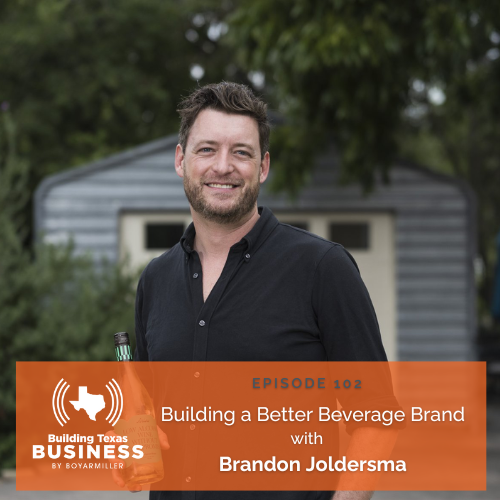
In this episode of Building Texas Business, host Chris Hanslik sits down with Brandon Joldersma, CEO of Surely Wines and Arlow Wines, to talk about how innovation, discipline, and Texas energy are driving the next wave of beverage growth.
Brandon shares how Surely became a leader in non-alcoholic wine and why nearly 90 percent of its customers still drink alcohol. Rather than targeting only those who are sober, the brand connects with people who want to enjoy wine on their own terms. He also introduces Arlow, the first legally recognized low-alcohol wine brand in the United States, offering half the calories and zero sugar while maintaining the full-bodied experience wine lovers expect.
Listeners will learn how Arlow’s concept grew from Brandon’s deep understanding of consumer behavior and his curiosity about where the market was heading. He explains the technical challenges of dealcoholization, how his California-based team perfected the process, and what it takes to create a wine that meets both taste and quality standards in this emerging space.
Beyond product development, Brandon discusses how Surely and Arlow have scaled from direct-to-consumer beginnings to major retail success. Today, Surely can be found in Target, Sprouts, Total Wine & More, and Spec’s. He explains how the company’s focus on profitability and sustainable growth has allowed it to thrive in a changing industry where investors now value lean operations over rapid expansion.
As the conversation continues, Brandon shares leadership lessons from two distinct growth phases: one centered on fast-paced scaling and another built around operational discipline. He offers insights into the importance of communication, team alignment, and company culture, noting that even high-performing employees can hold a business back if they are not the right cultural fit.
Brandon also reflects on his journey as a leader, emphasizing the need for transparency and collaboration, both with his team and with his investors. His approach to management highlights how curiosity, accountability, and clear communication can drive consistent results without compromising values.
Now rooted in Austin with his family, Brandon talks about what makes Texas the perfect home for entrepreneurs like him. From the state’s unique energy to its strong business community and culinary culture, he shares why Texas has become the ideal place to grow both personally and professionally.
Whether you are interested in brand strategy, leadership, or the evolving world of consumer products, this episode offers a thoughtful look at how clarity of purpose and innovative thinking can build a business that lasts.
Transcripts are generated by machine learning, so typos may be present.
Chris Hanslik:
Okay, Brandon welcome to Building Texas Business. Thanks for taking the time to join me today.
Brandon Joldersma:
Yeah, thank you Chris. Happy to be here.
Chris Hanslik:
Good. So let’s start by just introduce yourself to the audience and the listeners. Tell us what your company or companies are and what are they known for.
Brandon Joldersma:
Sure. So I’m the CEO of two different brands. Surely Wines and Arlow Wines. We operate in the know and low alcohol space respectively. Surely is been around for about fI’ve years or so. A well established non-alcoholic wine brand in the space. Kinda emerged in the post COVID era transition with a lot of people being curious about moderating their alcohol consumption and drinking a little more thoughtfully. And then Arlow is a brand that I built over the last two years that’s relatively new. Little smaller, just getting started in the market. That’s a low alcohol wine.
Brandon Joldersma:
So it is the first brand actually here in the United States that could legally call itself low alcohol one. And so we’re very much, operating in the kind of better for you health and wellness space. Beverage adjacent. My, my background is all in alcoholic beverage and so this was a little bit of a transition for me.
Brandon Joldersma:
Kind of operating in a space I’m very familiar with, but with the kinda new and low twist on things.
Chris Hanslik:
Very interesting. What was the inspiration to get into this space?
Brandon Joldersma:
So I moved to Texas about six and a half years ago or so to run a whiskey distillery. I live in Austin. I ran still Austin Whiskey Company for a while.
Brandon Joldersma:
I had been in whiskey prior to that for about three years. I’ve done wine, beer, hard cider, my whole career, so always had my ear to the ground when it comes to what’s happening in the beverage industry. And as we know, COVID was extremely disruptive for a lot of industries, but it was really interesting for the alcohol industry.
Brandon Joldersma:
Sure. You simultaneously had the on-premise kind of shutting down, right? So bars and restaurants and things like that were closing, but retail stores had a bit of a heyday like during that period because people were buying and consuming at home and a lot of people’s alcohol intake in that period of time increased, right? We found people drinking more.
Chris Hanslik:
There’s a lot written about that and talked about in that time. And I may or may not have been part of that movement.
Brandon Joldersma:
Absolutely. I was running a whiskey distillery at the time. It was occasionally nice to have access to free whiskey, but paid really close attention to what had happened then in what you saw when.
Brandon Joldersma:
So when COVID started declining and states started opening back up a little bit more, you saw the on-premise come back, there was a pretty aggressive like course correction in people’s behavior, right? I think a lot of people I think there’s been a lot written about people going sober, right?
Brandon Joldersma:
Since COVID, but that’s really a very small portion of the population that has done that. What a lot of people have done is just started drinking more mindfully. And so there’s a lot of implications in consumer behavior that’s come with that. Premiumization was one thing, especially earlier, like right outta COVID, people started being more selective about what they were buying and started spending more money more thoughtfully on it.
Brandon Joldersma:
And drinking less frequently. I was really interested in that space. And my initial love in the beverage alcohol industry was wine. So I was a sommelier in my early twenties. I ran restaurants. I was deep into the hospitality space and I had been out of wine for, I dunno, maybe 12, 13, 14 years or so, and was kinda curious to dip back in.
Brandon Joldersma:
I saw what was happening with non-alcoholic beer. Sure. So you had a lot of the initial growth in the non-alcoholic category was with athletic brewing and some of the other larger beer producers started releasing non-alcoholic versions of their product. And I started looking into what was happening with wine, and it seemed like that category was much more nascent, than beer.
Brandon Joldersma:
And I ended up finding, I got connected to a company that had started and was still in earlier stages here in Austin, in the non-alcoholic wine space. It is a bit of a long story, but I ended up coming on board becoming a shareholder in the company taking over as CEO almost exactly two years ago now.
Chris Hanslik:
Okay.
Brandon Joldersma:
So it was just really bullish I guess on the future of that space. I think non-alcoholic wine is still quite a bit smaller than beer. But has a huge opportunity for growth. A little more trickier with quality control and a few other things than it is with beer. But just super bullish on that as a category, I think is health and wellness has become more and more important for consumers. The sky is a bit the limit for this category.
Chris Hanslik:
It certainly seems to, to your point, I’ve certainly seen and read a lot about how the non-alcoholic beer is gone through the roof as far as sales and continued expectations of growth.
Brandon Joldersma:
Yep.
Chris Hanslik:
And as someone who also loves wine and but wants to watch that because of the sugar and the other things that so I can understand where Tthere could be a growth opportunity for non-alcoholic wine.
Chris Hanslik:
So I guess when you said you took over two years ago, that was Surely then?
Brandon Joldersma:
Yeah. So that was Surely. And then me and my team built Arlow as a separate brand. So the thesis there was this, we found that. Almost 90% of people buying Surely still drink alcohol, right?
Brandon Joldersma:
So it wasn’t sober people or people abstaining altogether that were interested in our brand. It was people who wanted to just cut back, right? They might just be drinking wine on weekends, and, but they still want a glass on a weeknight. And not to get too into the weeds with this. I could if you wanted to, but
Chris Hanslik:
Yeah.
Brandon Joldersma:
It’s really difficult to make a non-alcoholic wine that will fool you that it is a regular glass of wine. When you have something that’s 13, 14, sometimes 15% alcohol, you pull all that alcohol out, it’s going to taste different.
Chris Hanslik:
Right.
Brandon Joldersma:
We surely have, I’ll stand by it, the best quality non-alcoholic wine in the market.
Brandon Joldersma:
But if I gave that to you, you wouldn’t be fooled. With Arlow, the reason we were so intrigued there is I was able to, again, I got a really talented team out in California that deals with all of our production stuff. We were able to make a wine with half the alcohol, which then means half the calories, zero sugar.
Brandon Joldersma:
That would be it, it just straight up fools people. You could come over to my house and I’d pour you a glass and you wouldn’t think twice and it’s like I said, half the alcohol.. So where normally if you wanted two glasses of wine on a Tuesday night, you can do that now with Arlow. Not have to worry about how you’re gonna feel the next morning.
Chris Hanslik:
Yeah. Little bit guilt free.
Brandon Joldersma:
Yes. Yes.
Chris Hanslik:
It’s fascinating that you found that 90% of Surely drinkers still drink alcohol, so it was just kinda almost like a habit of. Used to having a glass of wine at a meal. So still need that, just don’t want alcohol. But interesting.
Chris Hanslik:
So I guess you left the whiskey business and then joined Surely, and helped grow that, gimme some I guess size and scope of the company, over the last two years, how have you grown that as far as employees and sales and what do you attribute that growth to.
Brandon Joldersma:
These, this is the only category in the wine industry that’s actually growing at the moment. Like that’s part of the narrative of the alcohol industry is, it’s been really difficult for all types of alcohol, over the last four or five years or so. That course correction kind of, that happened after COVID was pretty rough for spirits brands, for wine brands, for especially, craft beer brands.
Brandon Joldersma:
And for us the last couple years have been mostly about streamlining the company’s operations to grow profitably. So that’s been most of the work that I’ve done is focusing on what are the major growth levers like we have to pull. And that we’re able to pull and how do we focus primarily on that.
Brandon Joldersma:
The company prior to my arrival had been mostly a direct to consumer company, so they had sold a lot of their product online. That’s a really difficult proposition for beverage in general. Mostly because of just shipping costs, the actual like weight to revenue ratio, like selling beverages online makes direct to consumer extremely difficult.
Brandon Joldersma:
And so for us, we’ve mainly been focusing on growing in the national account space. Okay, so Surely is currently distributed in Target. We’re in 600 Targets right now in March. They’re doubling that, so we’ll be in 1200 targets nationally. We are in every Sprouts nationally, we’re in Total Wine and more, and so that’s most of the company’s focus right now is growing in that way.
Brandon Joldersma:
Okay. Then we have another play that we’ve just begun in localizing our attention on a specific market. So for the last two years we haven’t done that at all. It’s been all just focused on these national accounts. We’re in nearly all 50 states. We have distribution in all of those states. But we’re actually focusing on Texas right now as like a specific market to go deeper.
Brandon Joldersma:
In one aspect of that national distribution is, we’re mostly retail, right? So we sell to distributors who then sell to Targets, Sprouts, Total Wine, those places that I mentioned. What we don’t have a lot of distribution in right now, and non alc wine doesn’t in general is on-premise. So bars and restaurants, it’s a completely different proposition to your distributor partners and different selling avenues to make that happen. I get asked from fans all the time people reach out and be like, okay, I’m buying you in Target, but why can’t I get you at the restaurant down the street? For a company, for a beverage company to actually perform and show up and be able to get meaningful distribution at on-premise places like that is a massive lift.
Brandon Joldersma:
Both, financially hiring the right people, pushing in that way. And so for us right now, we are focused on doing that in Texas.
Chris Hanslik:
Okay.
Brandon Joldersma:
So we just launched 75 Spec stores like with the product here Texas exclusive retailer. And we’re working on pushing more into the on-premise phase.
Brandon Joldersma:
Two of the businesses right now are demonstrating the level of depth that we can go into, like with the brand in this specific market, and then we’ll work on doing that in other markets going forward.
Chris Hanslik:
And so from a strategic standpoint, are you, as you’re making inroads with Surely, are you trying to bring Arlow right behind in those same distribution channels?
Brandon Joldersma:
We need to be careful with that. I got asked that from some investors early on why don’t you just plug Arlow into the same pipeline that Surely has, like you.
Chris Hanslik:
Yeah.
Brandon Joldersma:
Why don’t you get Arlow in Target, get Arlow and Sprouts. I was fairly convinced early on that that would be a bad idea.
Brandon Joldersma:
And that’s been validated since then. And the reason for that being. So Surely operates really well in this national account platform because non-alcoholic wine is such a specific and tight shelf set, right? So you go into Target, you go into Total Wine, and there’s a non-A section. It’s displayed right up there.
Brandon Joldersma:
Often we’re the only wine brand that’s for sale there. And so the product sells, like it moves without, and this is a rare thing in beverage. To be able to get a high turn rate and perform well without a whole lot of proactive marketing support. So lemme give you an example. At Still Austin, for instance, here in Texas, in our heyday, we were spending hundreds of thousands of dollars a month at one point doing tastings at retail stores, right?
Brandon Joldersma:
So you’d go into Specs, you’d go into Total Wine. You’re under whatever, and there would be somebody there saying, Hey, please taste Still Austin.
Chris Hanslik:
Sure.
Brandon Joldersma:
And that’s completely necessary because there’s a billion bourbon brands out there and how do you stand out? How do you get people to care about you? You need to be hitting them over the head and saying here we are.
Brandon Joldersma:
This is us. The tasty stuff’s delicious. Now please buy a bottle. Tremendously expensive. We’re, we don’t have to do that with Surely because you have people going to stores specifically looking for non-alcoholic products. And there’s not a lot of options there. And so our product just sells. With Arlow, we are like I mentioned earlier, we are the only brand that can legally call itself low alcohol wine.
Brandon Joldersma:
Right now we are introducing a new category to consumers, and retailers don’t have a space built out for this,
Chris Hanslik:
Right.
Brandon Joldersma:
So the brand exists on shelf. Without any communication concerns of what this is. And so the play with Arlow is a little bit slower. So we’re for sale in New York right now, and we have retail partners in New York that are, we are specifically introducing them and we have to explain it to some degree, this is low alcohol wine and this is what this is.
Brandon Joldersma:
And so I think I do believe that what I would call, like low proof alcohol products will become a big thing eventually. You have some low alcohol beers coming out, you have some low alcohol. We’re the first low alcohol wine brand of low alcohol spirits. This is happening in the UK, for instance.
Brandon Joldersma:
It’s exploding there. It’s not here yet. Yeah.
Brandon Joldersma:
And so we’re with Arlow slow playing it until we get to the point where there’s maybe a few other brands out there. One of the bigger national players is spending millions of dollars a year on their marketing budget to blow up this category, and then we’ll continue being able to grow along with that.
Chris Hanslik:
Yeah. I can see too, there needs to be some understanding of what defines low, right? Just as, I guess in the consumer products and groceries, like organic and, or how does it, what do you have to do to meet that definition? To get the buying public to, okay. That’s understanding.
Brandon Joldersma:
The key innovation for us was being below 7% alcohol. So that was, it’s completely regulated legally in a different way by the federal government. And we were the first wine to release to be sub 7% alcohol and still be a hundred percent wine.
Brandon Joldersma:
So that was our ability then to call ourselves legally low alcohol wine was unlocked if we were above 7%. Alcohol. We can’t do it.
Chris Hanslik:
Yeah. So the process, let’s talk a little bit about, I guess what I would call innovation and the process of research development, whatever, to get to a low alcohol wine or a no alcohol wine.
Chris Hanslik:
What kind of things were you and your team doing, or are you doing to make that happen and be able to do it on a consistent basis so you have good quality?
Brandon Joldersma:
So one common misconception with the non-alcoholic wine is people think we’re making juice, right? Like we’re making fake wine, right?
Brandon Joldersma:
Adding flavors and different stuff. There are plenty of brands that do that. We have partners in California, different vineyards, different growers there that we source wine from. We dealcoholize it. And then we blend it and package it. So what’s interesting about that process is dealcoholization kind of fundamentally changes the flavor of the wine.
Brandon Joldersma:
And I was actually on a call with my team yesterday. We were just talking about this, like, why have we been able to make such a great product and for the space? You find the tastiest wines that you can and you buy those and dealcoholize them and you’re golden.
Brandon Joldersma:
Not actually the case. Wines that taste amazing at foolproof might taste pretty weird when you dealcoholize them, and the opposite is true. Wines that taste a little off at full alcohol. Are perfect for dealcoholization. So I have a couple team members, one who is a flavor chemist and beverage developer by trade for the last 20 years in his career.
Brandon Joldersma:
I also have a winemaker on staff who worked for this company called Bev Zero, which is the largest dealcoholizationing facility here in the United States. So she’s both got wine making expertise and dealcoholization expertise. We can taste wines and be like okay, this is a perfect candidate for dealcoholization, and that is our process.
Brandon Joldersma:
I think that is unique to the category. Every year we taste through 500 wines.
Chris Hanslik:
Yeah. See, a lot of people would sign up for that job.
Brandon Joldersma:
That’s true. I will say that after doing that for three days in a row it gets pretty old pretty fast.
Brandon Joldersma:
Yeah. And it’s, when you start at 10:00 AM just doing samples of full alcohol wine, you need a nap at 1:00 PM and it gets rough after a while. But we become really good at that. We sample everything we can get our hands on from California, and then we buy the wines that we know immediately are the right ones for us.
Chris Hanslik:
Very interesting. How have you gone about building this team to help bring, the, both the Surely and the Arlow wines to market?
Brandon Joldersma:
Yeah I inherited a few of the employees actually. So when I took over the company two years ago, there were a few key people there that were great.
Brandon Joldersma:
I’ve brought on a few other people since then, mostly in a fractional capacity. So we are, we’re running very lean right now. We are a small team. Running about $4 million in revenue last year. And it’s been it’s been different for me than anything else in my career in running extremely lean.
Brandon Joldersma:
So you need, our people that we have on board right now are extremely high curiosity, I guess is like the biggest thing. I’ve got a team that has taken on a bunch of stuff that they didn’t know how to do two years ago, but I have the right people, who have wanted to jump in and fully own like all operations of the business in a way.
Brandon Joldersma:
So lemme give you an example. I guess when I took over the company two years ago, we had about 12 people.
Chris Hanslik:
Wow.
Brandon Joldersma:
Yeah. We’ve, and slowly I did not think that was possible. But I’ve been able to lean into the right people in the right ways where we are just blitzing right now, extremely efficiently. And it’s something I’ve not done in my career before.
Chris Hanslik:
Yeah. Yeah, it’s very interesting and not, it’s very unusual. Yeah. I mean that, it’s almost a, I’d love to hear a little more about, I guess getting to the point where you started to almost downsize the staff and be comfortable.
Chris Hanslik:
Doing so that you weren’t sacrificing things?
Brandon Joldersma:
Yeah. So it became clear to me early on that profitability was the goal. Like I have a great board, I have great investors. I’m incredibly grateful for the group that I have behind the company. We have a lot of really kinda high level VCs from California that have invested in the business and that are really great.
Brandon Joldersma:
We decided together, in the last couple years, what we wanted to do going forward. Let me step back and say that the beverage industry and I think consumer packaged goods in general has experienced a huge shift in what fundraising looks like over the last four or five years, back in 2021.
Brandon Joldersma:
You could write a business plan on a napkin and raise $10 million in a month. People were just writing checks like crazy for the entirety of the beverage industry. That’s changed. Money is operating very differently and they wanna see different things out of how you operate. It used to be the mentality.
Brandon Joldersma:
Back when I was running Still Austin, we went from 14 to 75 employees in the four years that I was there. Which was essentially like three different companies and the mentality there, and it was the right thing to do at the time was growth at all costs, right? Like
Chris Hanslik:
yeah,
Brandon Joldersma:
That’s what investors wanted to see was, the number goes up and we don’t care how much cash you burn to do it, let’s just grow.
Brandon Joldersma:
And that was tremendously fun and really interesting to do in a lot of ways. Taking a company from 14 to 75 people in four years is a big adjustment in a lot of ways.
Chris Hanslik:
Sure.
Brandon Joldersma:
And it’s been a completely different mentality here, but that is the story I’m telling you about. Surely now is exactly what’s happened with a ton of brands in this space, like over this period of time.
Brandon Joldersma:
And so our investors and I decided together let’s be lean and profitable. So that’s leaning into the team members. It was about thinking about the major levers that we had to pull for continued growth, right? So we were having some success in the national distribution space, and we knew we could continue leaning into that without an incredibly high lift in expenditures.
Brandon Joldersma:
So that’s, yeah, that, that was the main goal. So streamline the company keep the right people on board that were incredibly high agency and creative and curious and could take on other aspects of the business and learn how to do new things. And so that’s what we’ve done.
Chris Hanslik:
Yeah, so the story that I’m hearing is to get alignment between your investors and your board on what the strategy is for the company.
Chris Hanslik:
And if it’s growth at all costs, then you can develop a strategy and execute on that. If it’s lean because profitability matters most. Then develop that strategy and execute on that and figure out what does that take
Brandon Joldersma:
For sure. Yep.
Chris Hanslik:
So the insight of you as the CEO and the leader I guess just talk about the lessons you learned maybe in both of those roles where it was growth and what you had to do to help execute and facilitate that growth.
Chris Hanslik:
And compare that to, the more recent where you’re trimming things down and having to lose good people if you will. But because that’s the direction the company and the board wanted to go.
Brandon Joldersma:
The word that I’ve used, and this is gonna sound like such a cliche, but what’s become clear to me over running a few different companies over the last, 10, 12 years of my career, there is nothing more important than communication within industry. I think companies will survive and fail off of communication and it sounds like such a simple word. And in such a, like a duh concept,
Brandon Joldersma:
I think in my experience, so many people are so incredibly bad about it. Like I think there’s a lot of people operating with the assumption that things are more clear than they actually are, right? Like they come with their own perspectives, their own biases, and they think other people know more about what’s in their own head than they actually do. And especially at Still Austin going from 14 to 75 people, like I mentioned.
Brandon Joldersma:
We had leaders at that company whose role fundamentally changed a couple times, like during that transition where they had to shift almost the entirety of what their week to week looked like, what they were focusing on. It went from them running direct communication with suppliers and being the go-to person to then having to manage people who are doing that for them.
Chris Hanslik:
Right.
Brandon Joldersma:
And the only way to make that work is to over communicate. So as a leader, that was a lot of the focus. There was just, that by the time I left still Austin, that felt like most of my job was just telling people what their job was and what was expected of them, and making sure we were all rowing in the same direction.
Brandon Joldersma:
Because you let that die for, I had two kids while I was at Still Austin and tried to take, two or three weeks off, like after each kid was born. Realizing oh, I go two or three weeks without communicating to my team what’s going on, what’s expected of them, what the goals are, and things are falling apart.
Brandon Joldersma:
People start running around focusing on the wrong thing, right? It’s not about, it makes me sound like I’m micromanaged. I’m the opposite of a micromanager, but it’s alignment I think is just a constant task, and over communicating is so important. And so that’s what I tell even, with my small team now, like we are just touching base constantly about everything.
Brandon Joldersma:
It’s tremendously important,
Chris Hanslik:
I think, so I’ve heard that from others and I’ve experienced it myself. I think there’s no substitute for frequent and clear communication. There’s a saying that I adopted years ago. I heard someone else that didn’t come from me, but.
Chris Hanslik:
It said, if you want to if you keep people in the dark, they will see monsters.
Chris Hanslik:
And that’s just about communication. And I’m guilty of it. We get busy ’cause everyone’s doing a lot and you either forget to communicate when you meant to, and then a call comes in and you get distracted or you do something short just to get it out and it’s not well thought out.
Chris Hanslik:
So the reader doesn’t take it the right way. There’s all kinds of issues that can come if it’s not consistent and thoughtful communication. It’s hard. It’s much easier to say than actually do on a consistent basis.
Chris Hanslik:
The better people understand what the goals are, understand what is expected of them, the better they’re gonna be at doing their job.
Brandon Joldersma:
Yep. I think there’s been one other huge lesson that I’ve learned over the last, especially the last five or six years, and that’s how important a cultural fit is with the company. Like I think people need to like working together and that matters so much and that’s come out sideways a few times when I’ve been tempted to hire the a plus player that people don’t like.
Brandon Joldersma:
I’ve done that. I’ve done that a couple times. Hired just on experience. And you even know in the interviews and things like this, you’re like, ah, this person’s kind of a dick. But they’re awesome. They’re really good at their job. It’s not a good idea.
Brandon Joldersma:
It’s never a good idea. A company is part of the communication thing too. A company is a combination of network effects, right? People need to rely on other people to get their jobs done. I’ve never worked at a software company, but imagine if you’ve got a bunch of coders or whatever, they can work in the dark and silos by themselves, and it’s fine.
Brandon Joldersma:
Not any of the companies that I’ve ever ran though, right? Like people need to rely on each other, like to work together and an a plus player that people hate working with will drag down performance everywhere. They’re not actually an a plus player
Chris Hanslik:
That’s right.
Chris Hanslik:
I say there’s a book, Jack Welch wrote and he talks about, performance metrics and he would call his definition of high performer, low culture is cancer.
Chris Hanslik:
It’ll kill your culture because people will think the actual culture doesn’t matter if you keep that person and think just performance is all that matters.
Brandon Joldersma:
Yeah. Yeah. I really loved Ray Dalio’s book Principles, which was a favorite of mine. I don’t know if you’ve ever read that or checked that out, but he has a section that talks very similarly. I think it’s the chart. Like the four quadrant chart? Yeah. Like about something similar to that. Yeah.
Chris Hanslik:
I think you’re right. Businesses are made up of people and those people are the ones that are executing on whatever their strategy is to make sure the product is right and the consumer’s happy, et cetera, et cetera. They don’t have to be best friends.
Chris Hanslik:
They just have to get along and respect each other and wanna help each other. If you can’t get that you’re in trouble.
Brandon Joldersma:
Yep, that’s right.
Chris Hanslik:
And when you find that you have that high performer that’s not a fit, the quicker you move to get’em out, the better.
Brandon Joldersma:
Yes. The other thing I’ve learned the hard way is the moment you wonder if you should fire somebody, do it.
Brandon Joldersma:
If that thought occurs to you. I don’t think it’s ever happened to me where I’ve had that thought and it hasn’t played out in that way at some point. And I think it’s hard being a leader when you have empathy and you care about the people you know, you’re in charge of, to make hard decisions sometimes.
Brandon Joldersma:
Yeah. But I think there’s a difference between being, I’m trying to think how this was phrased before when I heard it. There’s a difference between being kind and being nice and sometimes being nice gets in the way of being kind.
Chris Hanslik:
Yeah.
Brandon Joldersma:
You’re being nice and it’s preventing you from making hearted decisions, which is often the kind decision.
Brandon Joldersma:
Does that make sense?
Chris Hanslik:
I’ve heard something similar. It is a balance, right? Because you’re trying to be an empathetic leader and give people maybe the benefit of the doubt and no one’s perfect, but you also have to look out for the betterment of the organization. What I’ve found, Brandon and a couple of those hard personnel decisions that you have angst over ’cause there’s a human involved.
Chris Hanslik:
But it’s just not working out. It is that everyone’s better off. Like they weren’t performing well because something was going on where they either weren’t a fit, they weren’t happy. They maybe felt outta place ’cause they didn’t have the skills to measure up to the rest of the coworkers around them.
Chris Hanslik:
And so they were almost in a box. And when you had that hard conversation, it freed them up and they ended up in a place where they were meant to be.
Brandon Joldersma:
Yeah.
Chris Hanslik:
And having experienced that a few times, it helps make that decision to go faster the next time you experience it. Everyone’s gonna be better off, even though this is a tough conversation.
Chris Hanslik:
Everyone’s gonna be better off in the end.
Brandon Joldersma:
That’s exactly right. Yep.
Chris Hanslik:
So what, as we wrap up, anything as you, you think about, leading organizations, being an entrepreneur, any thing or two that you might share with the listeners on a lesson learned that maybe you wish you’d have known ahead of time, but you either stubbed your toe or went through a very difficult period of time but you learned and grew from that.
Brandon Joldersma:
I am not sure if I can share a specific example here, but I think the thing that took me the longest to learn was the importance of managing up, I guess at a job. I tend to speak freely and share my opinions readily. I think I’ve done, and I, no matter who you are, like in a company, I’m the CEO of this company right now, but I still have people I’m beholden to, right?
Brandon Joldersma:
I have investors, I have a board. And I think me, eight years ago, 10 years ago, would’ve handled those relationships very differently than I’m handling them now. And I think I had made plenty of mistakes earlier in my career with direct reports, and I think it’s really important no matter who you are and where you are to be think about what is best for the person you are working for or you are beholden to, and manage information carefully, as a result of that, make their life easy.
Brandon Joldersma:
Right.
Chris Hanslik:
Yeah.
Brandon Joldersma:
I think I’m used to expecting that from my own employees, and I had gotten out of the mentality of knowing how to operate like that myself. And I think it’s, yeah I hope that’s not too vague,.
Chris Hanslik:
No, I think that’s helpful. I, because as easy as you go up to lose sight of that and, and I think part of that, is inside of, being a servant leader as well. That kind of mentality. Another thing I’m interested in asking you about,’cause you’re relatively new to Texas, is how would you describe that experience and leading businesses in Texas?
Chris Hanslik:
Versus, being in, in other states. Any advantages or have experienced in being in the Lone Star State and starting and running businesses?
Brandon Joldersma:
Let me just say we’re kind of Texas forever now at this point. Go Texas, awesome. I’m from Michigan. My wife is from Illinois.
Brandon Joldersma:
We moved to Austin specifically for a job, and we loved it immediately, but we didn’t necessarily know we were here long term. Like I mentioned, we had two kids. We thought about moving back to the Midwest. My wife, however, just got her graduate degree from UT so Hook ‘Em. We’re a big UT family now.
Chris Hanslik:
Yeah.
Brandon Joldersma:
And we all, we are locked in here in Austin forever. I hope my parents don’t listen to this. We love it here. It’s, I don’t know, there’s something about the spirit here in Austin and in Texas that just feels a little bit different. There’s a different level of energy here and honestly, we’ve felt that in Houston as well. Love Houston. Like I keep, I tell people all the time here in Austin how underrated Houston is.
Brandon Joldersma:
People don’t know how great the dining scene is in Houston, for instance.
Chris Hanslik:
It’s amazing. Look, for whatever reason ’cause humidity and traffic, the other cities in Texas may have look down on us. We don’t care ’cause we love it. And I agree on the restaurant scene. I think it’s, yeah, it’s hard to beat what’s going on here.
Brandon Joldersma:
It’s the best in the state for sure. People in Austin are gonna be offended by this, but I tell people all the time when I have the opportunity, look, the dining scene here in Austin’s good. Houston’s where it’s at though. Way better than Dallas. Better than San Antonio. Yeah. It’s Houston’s probably top 10 food city in the US I think.
Chris Hanslik:
I would agree. Absolutely. That’s great to hear. I love that bias. Some are born and raised, but love that you and your wife are newly adopted, full on Texans.
Brandon Joldersma:
Our kids are Texas kids, right? They’re both born here.
Chris Hanslik:
There you go.
Brandon Joldersma:
They’re being raised here.
Brandon Joldersma:
They’re all into hook ‘em horns. They learned how to hook ‘em horns when they were two years old.
Chris Hanslik:
I love it. So that leads me to a question. You were talking about the dining scene. So now that you’re here, what do you prefer? Tex-Mex or barbecue?
Brandon Joldersma:
Oh, I think, I gotta say Tex-Mex.
Brandon Joldersma:
Barbecue is great. I don’t need barbecue more than maybe once a month or something though. Barbecue is a special occasion thing. LeRoy and Louis here in Austin is incredible. Just had dinner there two nights ago. It was insane. I live across the street basically from Styles Switch here in the north side of Austin, which is a top 50 barbecue place.
Brandon Joldersma:
from Austin monthly? Is that who does it? Yeah. Whoever. The barbecue list. Texas monthly.
Chris Hanslik:
Texas monthly.
Brandon Joldersma:
Yeah. But I could eat Tex-Mex every other day.
Chris Hanslik:
Yeah. That makes you, you’re definitely a true Texan. If that’s the case now.
Brandon Joldersma:
Oh good. That is the right answer.
Chris Hanslik:
Good. Brandon, I want to, thank you for taking the time to come on the podcast and share your story and what you’re doing with Surely and Arlow. Really cool stuff. Looking forward to trying the wines to see what it’s all about.
Brandon Joldersma:
Yeah, super happy to be here. Thanks for having me, Chris. It was great to talk to you. If anyone’s interested in Surely, like I mentioned, you can go to Target, Sprouts, Total Wine and more.
Brandon Joldersma:
We’re at those. You can also go on our website. DrinkSurely. com.
Chris Hanslik:
What about Arlow?
Brandon Joldersma:
DrinkArlow.com. Yeah, go order Arlow there.
Chris Hanslik:
Very good. Hopefully people stayed on to listen to that. And again appreciate everything and good luck. And with all both ventures it sounds like they’re gonna be wildly successful.
Brandon Joldersma:
Thank you. Appreciate your time. Have a great day.
Chris Hanslik:
You got it.
With a deep understanding of your business alongside clear and honest communication, we help clients face challenges fearlessly.
Learn more about our services and how we help clients.