With a deep understanding of your business alongside clear and honest communication, we help clients face challenges fearlessly.
Learn more about our services and how we help clients.

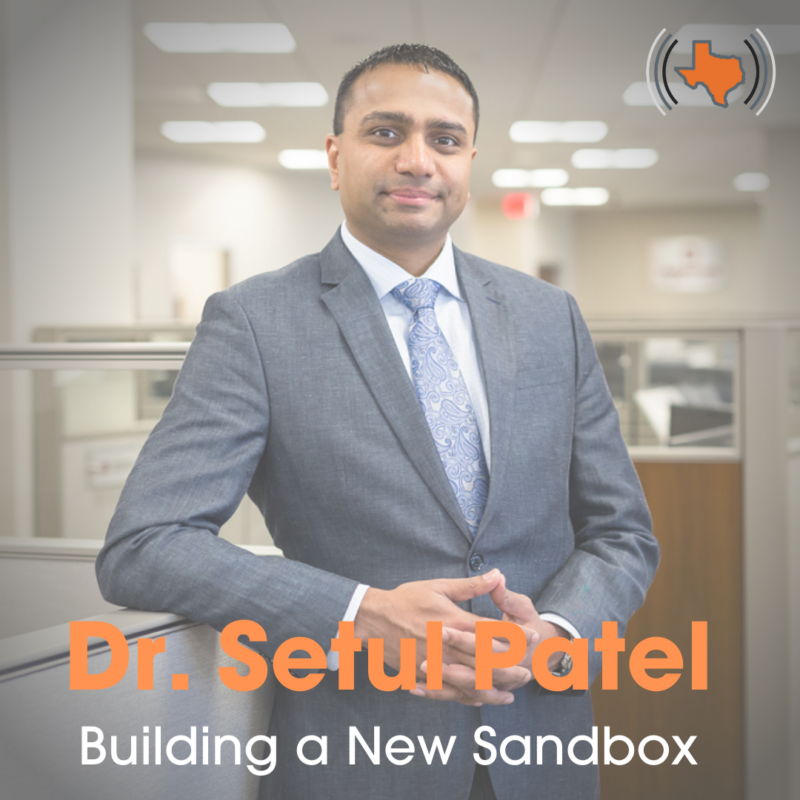
Dr. Setul Patel, Founder and Managing Partner at FormulaMed, a health advocacy company based in Houston shares about how he went from being a physician to an entrepreneur, focusing on disrupting healthcare delivery by building a new sandbox.
Transcripts are generated by machine learning, so typos may be present.
Chris Hanslik: In today’s episode, you will hear from Dr. Satul Patel. and learn how he went from being a physician to an entrepreneur focused on disrupting the delivery of health care by building a new sandbox. My name is Chris Hanslik, and I’m the chairman of BoyarMiller, a midsize law firm in Houston, Texas. I want to welcome you to Building Texas Business, a podcast about corporate innovation, entrepreneurship, and business leadership in the Lone Star State. The goal of this podcast is to learn from some of the best business leaders in Texas in hopes that their stories of growth, challenges, and success will inspire our listeners in their own journey to building a successful business. Today’s guest is Dr. Satul Patel. Satul is an experienced healthcare and business executive, bringing over 20 years of experience to healthcare services. Satul bridges experiences of healthcare administration, clinical emergency medicine, field EMS and business leadership in a purpose-driven and vision-focused environment. He founded Formula Med in 2013 as a healthcare consulting firm and today has focused its purpose on helping clients navigate the post-COVID-19 workforce reintroduction process. He has also held senior management positions at Acute Medical Services and Neighbors Health, where he served as president and CEO for over eight years. In 2014, Satul also founded Girish Capital to assist with capital and venture needs of young entrepreneurs and health care startups, leveraging his ability to successfully scale businesses. Welcome to the podcast, Satul. Good morning, Chris. Thanks for having me. Glad you could be here and got a lot to talk about and want to cover with you. So I’m going to jump right in. You’ve been a part of, founded several companies, including Formula Med today. How would you describe, I guess, what Formula Med does and what it’s known for and how that may be different from some of the other companies you’ve started?
Dr. Setul Patel: Sure. So Formula Med for me, and you know, when you were reading all of that just now, it makes me feel really old, but I guess all that experience has sort of culminated into Formula Med. And what we’re trying to do there is build a separate sandbox. If you consider the sandbox of healthcare now, it’s insurance-based and it’s sort of ritualized in the old ways. And what we’re trying to do is create a whole new ecosystem of revenue cycles, services, and healthcare delivery in the technology world we now live in, particularly due to COVID-19. So what was the inspiration for Formula Med? So Formula Med, the inspiration behind innovation is something that’s been a part of my life for quite some time. And even in my prior role at Neighbors Health, one of my personal goals was to take the business where we’re taking Formula Med now. Due to a variety of market conditions, that wasn’t the right vehicle to do it. And so from a startup perspective, this is allowing us to carry that vision forward.
Chris Hanslik: So when you think about the healthcare industry and the services that are provided by the businesses you’ve been involved with, what are some of the key principles to success for those types of companies?
Dr. Setul Patel: Well, I think, you know, we talk about value and that term I feel is overused in business. But in a way, you have to deliver value to the customer. Now in healthcare, it’s interesting because the customer and the consumer are oftentimes, most of the time, two different sets of groups. So you’ve got the employer who’s usually paying for the bulk of the health care and the employee who’s consuming the health care. And so the employee typically doesn’t have as much of a financial incentive for savings as perhaps the employer or if you’re paying for it all yourself, you in person. That dynamic creates an opportunity to enhance efficiency and also creates an opportunity to abuse the system. And we see both occurring in the marketplace. My personal goal is to help drive efficiency and give better health care to the employees as well as give better financial savings and better outcomes to the employer.
Chris Hanslik: So it sounds like, and you mentioned this a minute ago, that innovation is maybe at the heart of what drives you as an entrepreneur.
Dr. Setul Patel: Absolutely. You know, my whole life, when I see something that can be done better, I usually dive right in and try and improve it. Now, sometimes when you’re not the person in charge of that particular scenario. It’s hard to do. Sometimes it creates friction. But I think innovation is impossible without some friction, right? You have to challenge the system. You have to bump the status quo in order to get any sort of improvement.
Chris Hanslik: So what type of innovations are you driving towards with Formula Med?
Dr. Setul Patel: Yeah, so the biggest thing is we have to work outside of the insurance ecosystem, at least for the primary needs of day-to-day health care. For example, when you take your car to get its oil changed, you don’t use your auto insurance, do you? You just pay your 20, 30 dollars, whatever it is, to change the oil in your car and in the day-to-day maintenance, you kind of just take care of. We’re thinking about that in health care. If you go in just to see your primary care doctor and you just need a prescription refill, instead of paying $25, you’re using your health insurance. So that just doesn’t make any sense. Insurance is supposed to be for catastrophic needs. That’s the history of how insurance came to be, pooled risk. And so what we’re doing is we’re taking it back. We’re taking it back to, hey, let’s think about this. How much should this medicine really cost? Do you really need this x-ray? What is it that we can do to take it down to the basics? So that’s number one. Number two is there’s an excess amount of capacity in the marketplace right now. For example, there are certain countries in Africa that have one or two CAT scanners in the entire country. Whereas in Pearland, where I used to live, there are five CT scanners on the one exit. That makes no sense, and most of those scanners are sitting there unutilized most of the time. So one of the things we’re doing at FormulaMed is we’re taking that excess capacity and putting it in a way where we can deliver that to the consumer, where they can have a choice. Say, hey, I’m going to go here and get my CAT scan and maybe pay a lot less for it. Or I’m going to go over here because it’s convenient to me. But they have a choice. Right now, patients have no choice and need to do the employers. And that empowerment is basically what Formula Med is all about.
Chris Hanslik: So it sounds like then Formula Med is planning to try to use data and analytics to provide the consumer, as you described it, some choices.
Dr. Setul Patel: Absolutely. Right now, healthcare is very disjointed. It’s hard to get a primary care physician. My wife is trying to get a doctor for her mom in California, and it took her days to find somebody that took the PPO Medicare insurance, which is great insurance. and it still took a while. And so for us, there is a bridge between continuity and then being able to leverage resources in the marketplace, be it imaging, labs, physician services, surgical services, at the right price. For example, if you need your gallbladder out, very routine surgery, why can’t that be?
Chris Hanslik: You know from my perspective, there’s no routine surgery.
Dr. Setul Patel: That is a relatively routine surgery, usually uncomplicated. They can easily be commoditized, right? Same thing with an endoscopy, right? So endoscopies are performed all the time. Colonoscopies, we’re both getting old. I’m probably older than you, Chris, even though you look younger. I’m going to let that go. I’ll take that. Colonoscopies are a routine part of getting older. And why can’t we know what the price of that is? Imagine going into a steakhouse. ordering a steak, not knowing what it costs, and then getting a separate bill from the waiter, the hostess, the chef, the sous chef, and you getting these bills and from people, the dishwasher, all these bills from people that you didn’t even know existed, all because you wanted a steak and you don’t even get to know what that steak costs until weeks later. That’s healthcare in America today. And again, that transparency and empowerment needs to be shifted back to the people who are using and consuming those services, the people who are paying for it, Chris. $20 trillion is the GDP of the United States as of a couple of years ago. Healthcare spend was at $3.7 trillion of that. $3.7 trillion is greater than the GDP of most European nations of the entire country. And that’s just what we spend on healthcare. Yet our outcomes aren’t that good. That’s staggering.
Chris Hanslik: So are there trends that you see that are either headwinds for you at Formula Med or trends that you see that are helping you realize the vision you have for the company?
Dr. Setul Patel: I guess all good leaders tend to be polarizing. I’m not saying I’m a good leader, but I am polarizing. Self-awareness is an important quality.
Chris Hanslik: It is.
Dr. Setul Patel: So I think for those players in healthcare that get it, that understand where this is going, they’re going to be allies. It’s going to be a very symbiotic relationship. Even in the industry I was formerly involved in, the freestanding years, I think they can play an integral part of delivering this service. However, the people that oppose such innovation usually are the people who have the most to lose. And I think from a financial incentive, those people are going to be the people who are opposing it, large healthcare institutions, anybody who is financially taking advantage of the current system. You know, I’ve had people tell me the health care system in the United States is designed horribly. And my retort to that is usually if you’re a capitalist, it’s designed perfectly, right? Because you don’t know that the people who are paying have no control on what’s going on. The people who are consuming have no idea of how the revenue cycle works. And it’s just like, hey, build insurance, build insurance. and the people who are administering the care, be it hospitals or physicians, are incentivized for overutilization. If you give me a second, I’ll dive deep into that just for a quick second. Please do. As a physician, when I see you, say you come in to see me, it’s better if I order more tests. Let’s think about this. You feel like I’m a better physician. Dr. Patel was thorough. He ordered all these tests. He’s the best. That decreases my personal risk as a physician, because say there is a mishap and you do end up having a heart attack. Well, anybody who’s looking at the case is going to be like, well, Dr. Patel did everything. Look at all the tests he ordered. And now, because I ordered more tests, the way the health care system is set up, I get paid more. So let’s review. I get paid more. I have lower risk. And you as my customer are happier person. Why wouldn’t I order more tests? So we are incentivized on a sickness-based system in the United States instead of a wellness-based system. And so, you know, those are the people who have the most to lose, the people who can take advantage of that. Now there’s certain ethics that I believe that most physicians follow and they have a lot of integrity. You know, I think physicians and lawyers both get a bad rap sometimes, but most attorneys and physicians I’ve worked with generally tend to be good people. However, there are people that can sometimes skirt those lines.
Chris Hanslik: No, as you were describing the incentive to do more, it definitely resonated with me because, you’re right, lawyers can be accused of that by skeptics, but so I can understand where you’re coming from. So you’ve started and run companies from startup as an entrepreneur. You’re doing it again. When you think about whether it’s related to Formula Med or neighbor’s health, Can you think of some setbacks that you faced and how you overcame those that maybe a listener out there is dealing with something similar, they might learn from that?
Dr. Setul Patel: Yeah, so Neighbors is a great story, both up and, well, not a great story, but it was a story of learning and we ended up helping a ton of patients. When we were going back and we were going out to market for capital raises, we did a map of every address of every patient that was seen at our facilities. At one point, we had 34 facilities across three states. And that map spanned the entire United States, Canada, Mexico, and parts of the world. And that was very empowering for me to see. We touched people in all of these places. But it was, you know, we learned a lot. We started with just one center. And over several years, we grew it to, again, 34 sites. We had over $300 million of top line revenue. We were set to make a private equity deal with CBC Capital Partners. A very big deal. We were down to documents. You know all about that. Lots of trees lost their lives. We had one public company competitor called Adeptus Health. They had a bad quarter, bad conference call. Our revenue cycle got adjusted because of what the insurance companies were doing to us. Anyway, long story short, we had to go back and revise our numbers because of that. Our private equity deal fell through, and then everything went downhill from there. That whole process, I learned a lot. And I think the biggest thing is have backup capital lined up. I went back out to market. It ended up being a Chapter 11 deal at the end. And finding capital and having that ready dry powder is key, even on the downhill side.
Chris Hanslik: That had to be a difficult season to go through.
Dr. Setul Patel: It was a difficult season. Our investors, our patients, our employees, you end up developing a bond with your employees. As you know, you do a great job of leadership here at BoyarMiller. Those employees end up becoming family, and so taking care of them and making sure they’re put first, even before our patients, in my opinion. I think your employees come first. Without the employees, we can’t take care of our patients. Uh, and our investors as well, but, you know, it, uh, long story short, you know, that, that came through the centers got sold and there are some, most of them are thriving again. And the ones we had to close, we closed. But the industry is still going strong and I think what I’m doing at Formula Med is going to help maybe bring some of that industry back together and also bridge it with urgent care, telehealth, hospitals, etc. So a lot more to come. I can’t kind of go into all of our entire business plan. We are out raising capital right now. And so look for that second venture round coming up soon.
Chris Hanslik: That’s good. I’m sure a lot of people out there listening are also in a stage, whatever industry they’re in, in this raising capital or hope to, what would be some of the things, the lessons learned that you would say if you’re in that stage or you see that stage coming in your near future? Here’s some things that you would suggest. Yeah, absolutely. Great question.
Dr. Setul Patel: a lot of young entrepreneurs and as I work with them through Gersh Capital, my sort of angel fund that I run, as well as things I’ve learned through YPO, Young Presidents Organization, know your journey. You know, starting a company in your mind as the CEO or as a visionary, you should have that company from seed to its exit and that exit could be an IPO it could be a strategic sale but know that path and you know have multiple paths but whatever your primary path is know the full journey because you only have so much equity to give and you have to dole that equity out in tranches and have enough left for those bigger fish later on and so know your numbers know that what that path looks like and when you’re out raising capital if you can communicate to that investor that you have that vision and you have that path already set out, you actually look like a sophisticated leader and that investor is more likely to invest in you. Because at a startup phase, you’re not investing in the company, you’re investing in your vision. You may only have certain things that you’ve proved, but they’re investing in you. And if you don’t have that journey mapped out,
Chris Hanslik: they’re going to walk away. Great advice. And I think you’re right. At that early stage, it’s the vision and it’s the person that they’re looking at and whether they believe in that or not. Absolutely. So you mentioned this a minute ago about how important it is to take care of your employees and said another way, right? Culture is king. Tell us about your kind of philosophy on culture, how you built it in the companies that you’ve been involved with and what you’re doing to establish and build culture at Formula Med? Sure, great question.
Dr. Setul Patel: I think culture is a lot bigger than the CEO, right? I think culture is what parameters you set, what behaviors you tolerate, and what philosophies you entrench in your organization. We all know what culture is. It’s something intangible, but you can feel it, right? When you walk into a business, you can tell it’s the differences between going to McDonald’s or Chick-fil-A. Different foods, but it’s just different, right? The employees are more engaged, they’re happier. So for me, it’s transparency and making sure people’s worth is valued and then also communicated to them. One of my favorite books is The Five Languages of Love, and although it’s more of a romantic book, I think those philosophies can easily be applied in the business world, right? So if you’ve had somebody that employed and does something really well, they may just need a public accommodation. Hey, great job, Chris, on that project. You know, you knock it out of the park. Whereas some people, hey, here’s a $5 Starbucks card, and here’s a reward, a gift. And so knowing what drives and incents your workforce, I think, breeds that loyalty. And that’s one of the secrets that I’ve used all the time is I understand what those incents are. I used to randomly take people out to breakfast at Neighbors, and then my assistant, Cynthia, once she came up to me, she was like, oh man, that’s really good. So-and-so in the IT department was just so happy you took them out. I’m like, I was just hungry. I was just the first person I saw. And I hate eating alone. And so that became sort of a thing where I started taking people out. I just kind of didn’t really realize what value that sent. I think that transparency and making sure people’s worth is valued is what I like to instill.
Chris Hanslik: Great. So that kind of segues into leadership style, leadership philosophy. How would you describe your leadership style?
Dr. Setul Patel: My leadership style tends to be benevolent, but aggressive. Any organization that I’ve been involved with, it’s usually been a growth organization. I think as leaders, you really have to kind of know where your sweet spot is, right? I’m not trying to be the CEO of a $2 billion publicly traded company. That’s just not my sweet spot. That’s not what I enjoy, not that I’ve done it, but from my friends that are in that situation, I don’t want to be there. For me, it’s that growth, that accelerated growth And so, you know, I’m in the hair salon business, we’re in healthcare, we’re in hospitality. And so all these industries, it’s all about growth. And so for me, it’s always been about how can I take this concept and share it and help as many people as possible. And if you look at the bell curve, I like to be on both ends. So in healthcare, for example, I don’t want to lead a hospital system. That’s in the middle. I either want to help people one at a time as a physician or I want to change the entire system and be on one end of the bell curve or the other. I don’t like that middle area.
Chris Hanslik: That’s good. What do you think the most effective or most important quality for a leader is?
Dr. Setul Patel: I think a good leader has to be able to lead and that sounds sort of like duh but you know I think if you look over your shoulder and nobody is following then you’re really not leading right people have to be inspired by you you have to have the ability to take a vision hold it up and and have that light attract people and as you move forward those people have to be lockstep with you Following you and I find that a lot of people who try to be leaders They just have ideas, but they’re not really leading.
Chris Hanslik: There’s nobody behind them okay, so you mentioned kind of the the story of neighbors as a setback and I want to ask a similar but different question about you know kind of as a leader and as a visionary and I think it might be more personal, like a failure that you’ve encountered and what you learned from that and how it made you better going forward.
Dr. Setul Patel: I think for me, you know, risk management both on a personal and professional level is probably the the biggest key that I’ve learned, right? As an entrepreneur, we jump off a cliff and we build an airplane on the way down. That’s what an entrepreneur does. And I think in my personal life, as well as in my professional life, learning from those near misses as a physician, I’ve had patients, particularly in my early career, where you’re like, oh, there’s nothing wrong with this patient. We’re going to get a few tests and we’ll let them go home. And then five minutes later, they’re having a massive heart attack. Wow, it’s important to take risk and look at the downside as well as the upside and make sure that’s balanced. And even in my personal life, be it financial decisions, personal decisions, career decisions, it’s managing that risk. And I’m much better managing the risk now than I’ve ever been before.
Chris Hanslik: That shows you’ve been learning along the way.
Dr. Setul Patel: Yes, a lot of mistakes, a lot of learning and working towards that lack of hubris is sort of a goal of mine.
Chris Hanslik: There’s definitely a saying that I ascribe to and that is, no bad experiences in life, just learning experiences.
Dr. Setul Patel: You never lose, either win or you learn. That’s just sort of how I’ve stumbled through.
Chris Hanslik: Take us inside kind of your, your journey, your thought process, because I think it’s unique, uh, in a sense to going from med school and being a doctor to deciding that you’re going to be a kind of entrepreneur business owner. Cause those, those don’t typically go in hand in hand. And usually the middle saying is, you know, doctors are the worst business people.
Dr. Setul Patel: Yeah, that is a saying and it’s funny when when I’m talking to banks or investors and somebody says, Mr. Patel, I usually don’t correct them. Right. It’s for that very reason. And the reason is simple. Right. Doctors are trained in medical school to risk minimize. Right. You come in for a chest pain. I got to make sure you’re not having a heart attack or have a massive blood clatter. My job is to make sure your risk is low as possible. Run all those tests. Run all those tests. But in business, it’s all about taking a calculated risk. And so physicians typically don’t have the training on taking calculated business risks. And so for me, going back to answering your question, I grew up in the hospitality industry. My parents were immigrants from India. I grew up on a motel in Virginia. A lot of Indian Americans typically went into the hotel motel industry. We had a small 20-room motel and what my father and my mother taught me was all about hospitality. And there’s one incident I remember we were completely sold out except for one room had one king-size bed in it and we had a family of six that came. And what my parents did is actually, and we lived in an apartment literally attached to the back of the motel. We lived there, that was our home. And my parents took our personal bedding and gave it to that family so it’s to sleep on the floor. And I remember that was so powerful to me as like I think I was 10 or 11 years old and I saw that. And I saw the joy that it brought that family and they were just on a trip somewhere trying to crash for the evening. And I saw that and it inspired me. I said, okay, I’m going to be in the service industry. I’m not a product guy. I’m not a manufacturing guy. I’m a health care, I’m a services guy. And so, and then, you know, every everybody wants their kid to be a doctor. So I ended up going to medical school because I wanted to serve. I watched a show ER, which was my big, big show in the 90s. George Clooney, I was going to be the ER doc. Anyway, long story short, I went to med school. But being having that business background growing up, I ended up practicing for a little while, went to business school, came out, became an entrepreneur.
Chris Hanslik: Okay, good. Thanks for sharing that. Along the way. I’m assuming you’ve had some at least one, if not several mentors along the way. Assuming that’s true, what made those individuals such an influential and powerful mentor to you?
Dr. Setul Patel: I’ve only had a few mentors. I’ve had a lot of people who have inspired me. I think mentorship is hard to find in mentors. A mentor is somebody who takes you under their wing. I’ve sort of learned through the school of hard knocks. I’ve got all these degrees plastered on my wall, but that’s the one that that I think gave me the most education. But I think my father definitely taught me hospitality and how to serve people. This is a story I just shared. And I had another mentor, Dr. Jasani. He was sort of a father figure to me after my dad passed away. And he taught me the value of education and to educate your customers. So for example, the word doctor in Latin Most people think it means to heal. It actually means to teach, right? That’s why PhDs are doctors, so-and-so, professors, et cetera. And so there’s so many times where patients just don’t know about their illness, or companies don’t know how their health care plan works, or how there’s better ways to save money there. And so for me, I try and educate, and what that mentor taught me was educate as much as possible. Information should never be used to hold people hostage. Information should be free flowing, right? Then how do you help people with that information? That’s the key. Otherwise your customers will never trust you.
Chris Hanslik: That’s great. You mentioned inspiration. So who, some of the people that have inspired you?
Dr. Setul Patel: So any great thought leaders inspire me, so Elon Musk is a great example, right? This guy said, we’re going to buck the system with NASA, and he was able to successfully do it. We’re going to build electric cars. So great innovators like that are the people who inspire me. I think healthcare in the United States is broken. It needs a new sandbox. That’s what we’re doing at Formula Med. Stay tuned. You’re going to be seeing a lot of really cool things come out of this, especially post-pandemic with everybody now accustomed to being online. I think there’s a great bridge that’s available. It’s potentially there to bridge healthcare services with an online component. More so know just what the telehealth people are doing. Then it’s just like, hey, I got a cough or a cold or a bladder infection. Here’s some scripts. That’s basic. You got to take it to the next level. And that’s what we’re doing.
Chris Hanslik: Very good. So what advice would you give then to an entrepreneur that’s out there or new business owner as far as something to think about, a takeaway, whether that’s just from your school of hard knocks or maybe a book you’ve read that said this really was a good go-to for me.
Dr. Setul Patel: So know your journey, know your numbers. Anybody who’s watched Shark Tank knows that. Know your numbers for sure. And then build a good team, right? So the team I like to build is a team that can look at my blind spots. Right. We all have blind spots. Absolutely. And so to build a great team, one of my favorite books is a book by Les McEwen called Predictable Success. And it talks about the different types of people that are involved in an organization, from visionaries to operators to processors and synergists. And it’s a great book. If you haven’t read it to your listeners out there, I highly recommend it. But what that book has taught me is to build a good balanced team that can all look at each other’s blind spots. And that well-balanced team will then slowly take your company forward. If you get a whole bunch of people that are excited about the future, nobody to do the work now, you’re going to fail. If you focus on the work now and not know where you’re going, you’re going to fail. And so have that well-rounded team that can look everywhere.
Chris Hanslik: Very thoughtful advice and very true. So let’s wrap things up, kind of take it on the lighter side. What was your first job outside the family hotel?
Dr. Setul Patel: Yeah, so the first job was baking hotel rooms, cleaning bathrooms. But no, my first real job actually worked on the assembly line of a modem manufacturer. For those of you listeners out there who don’t know what a modem is, that’s how we used to dial into the internet.
Chris Hanslik: I was going to say that if you hadn’t.
Dr. Setul Patel: So they literally came down the assembly line. I had to take them, put them in the tester, but then I quickly moved up to tech support, you know, and it went from there. But yeah, it was, I think, six bucks an hour. I think it was my first wage.
Chris Hanslik: Very good. Okay. So Texas based podcast that you’re appearing on right now. So question on food is Tex-Mex or barbecue? Tex-Mex, papasitos all day long. Okay. Shameless plug there for your favorite. Oh, yeah.
Dr. Setul Patel: Shameless plug. I have no financial incentives, but it’s really good. Also, Texas firecrackers. If you never had those, I think you can get them at several HUB.
Chris Hanslik: If you haven’t had that, I’ll look that up. So if you could take a sabbatical for a month, where would you go? What would you do?
Dr. Setul Patel: I would go on a world tour for photography. That is my other passion. I love photography. I just got back from Hawaii. Just took some amazing pictures there. I was up on Mount Haleakala, 10,000 feet above the cloud deck, took some astro pics. But yeah, I would traverse the world and just take pictures.
Chris Hanslik: Very good. Satul, I want to thank you for taking the time to be on the show. Your insights and perspectives were wonderful. I think listeners out there take away a lot of value. So thanks for doing this. Thanks for having me, Chris. All right. Thank you guys. And there we have it. Another great episode. Don’t forget to check out the show notes at boyarmiller.com forward slash podcast. and you can find out more about all the ways our firm can help you at boyarmiller.com. That’s it for this episode. Have a great week and we’ll talk to you next time.
With a deep understanding of your business alongside clear and honest communication, we help clients face challenges fearlessly.
Learn more about our services and how we help clients.