Cross Icon
EP 006 – From Pilot to Restauranteur with Jerry Lasco

EP 006 - From Pilot to Restauranteur with Jerry Lasco

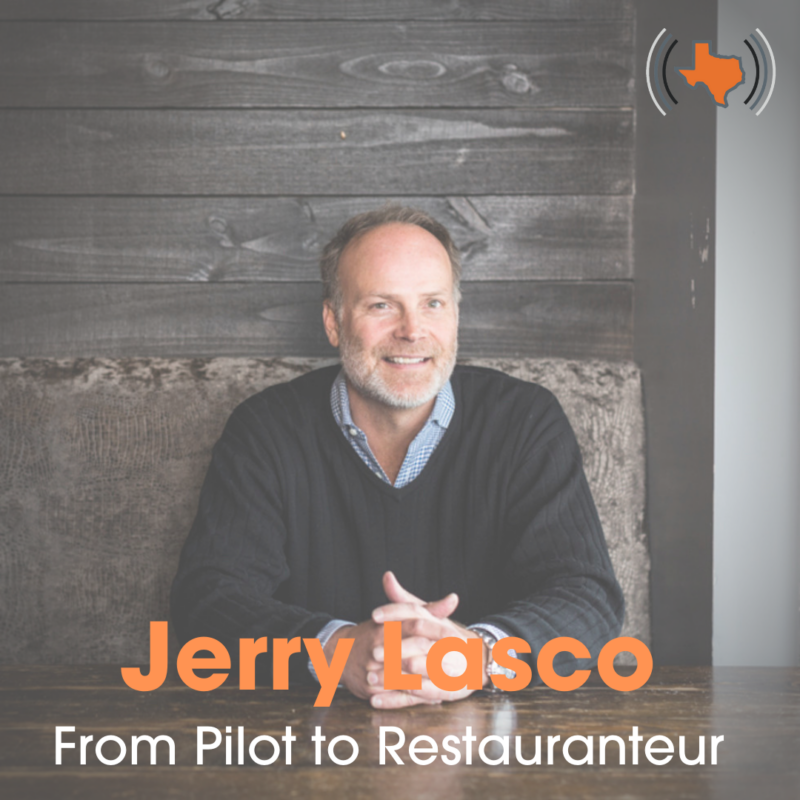
From Pilot to Restauranteur with Jerry Lasco

Jerry Lasco, Founder and CEO of Lasco Enterprises, parent company for 4 successful food and beverage concepts talks about his transition from being a pilot for the US Air Force to becoming a sommelier and ultimately a restaurant entrepreneur.

Jerry talks about how he instills leadership at all levels and its contribution to the success of his concepts. He also discusses the lessons learned in his military career that apply surprisingly well to running the restaurants.

Transcript

Transcripts are generated by machine learning, so typos may be present.

Chris Hanslik: Hello, everyone. My name is Chris Hanslik and I’m the chairman of BoyarMiller. a mid-size law firm in Houston, Texas. I want to welcome you to Building Texas Business, a podcast about corporate innovation, entrepreneurship, and business leadership in the Lone Star State. The goal of this podcast is to learn from some of the best business leaders in Texas in hopes that their stories of growth, challenges, and success will inspire our listeners in their own journey to building a successful business. Today’s guest is Jerry Lasko. Jerry is the founder of Lasco Enterprises. He graduated from the United States Air Force Academy and then spent 13 years as a pilot with the Air Force and later Continental Airlines. Before moving to Houston in 2001, Jerry lived in New York City where he attended Peter Kump’s cooking school and pursued his sommelier certification with the court of master sommeliers based in London. In 2014, Jerry was named Ernst & Young’s Entrepreneur of the Year for the Gulf Coast States. Welcome to the podcast, Jerry. Thanks, Chris. Great to be here, man. I appreciate you taking time out of your day and kind of want to jump right into it. Can you tell the listeners what businesses you currently have operating or have had operating in the past?

Jerry Lasco: So our company’s in the restaurant hospitality business. We have here in Houston, the Tasty Room and a couple Max’s Wine Dive. In San Antonio, we have a restaurant called the Boiler House and another Max’s Wanda. Very good. So what inspired you to start these businesses? Well, a little bit of luck. I don’t know if it was good luck or bad luck, but after September 11th, I was furloughed from my job. I was a pilot with Continental Airlines at the time and I was pretty new. It was in my third or fourth year with the company. 9-11 happens and you know all of a sudden I see Gordon Bethune and their CEO on TV saying he’s going to let 25% of the company go at least on a temporary basis. So I knew that was coming and I started scratching my head figuring out what I was going to do and I thought well I always wanted to have a business. You know my career at the time was an airline pilot and the airline pilot is one of those funny jobs that You’re either working or you’re not working. When you’re not working, you have complete free time. So I thought it would be cool to have a business on the side. After doing a little brainstorming with my wife, we put together a list of all the things that I love. I love food, I love wine, I love to travel. And we created this concept of having a wine bar that serves a little bit of food and this and that. The travel would come from having to go all over the world searching out new wines and good foods.

Chris Hanslik: That’s great. So out of tragedy came an opportunity. Yeah, that’s right. And so where was the first location?

Jerry Lasco: Uptown Park. It was the original tasting room in Uptown Park. And we opened that. Started working on it late 2001 and opened it in 2003.

Chris Hanslik: And from the tasting room, how did things evolve for you opening up the second concept of Max’s Wine Dive?

Jerry Lasco: Yeah, well the tasting room, if anyone remembers the original concept, it was very small. We didn’t have a kitchen. We had a little employee break room and we had a refrigerator and freezer in there. And if somebody ordered a cheese plate, I’d leave the bar. I’d say, you know, watch the cash register, Chris, as I go back and make you a cheese plate. So we started expanding that fairly quickly and we got, you know, I figured I could sell more wine if people weren’t leaving our place to go somewhere else for dinner. So we started getting more into the food. And then a couple of years in, we were growing. We had a couple of tasting rooms, I think, at that time. And I wanted to start a real restaurant. You kind of get your foot in the door, and all of a sudden, I’m like, all right, I want to serve real food. I want to have a full kitchen. And that’s where the concept of Max’s Wine Dive came into play. Gotcha.

Chris Hanslik: So what were the keys for you to building these types of businesses in the restaurant hospitality space?

Jerry Lasco: Well, I think first off, once I got started, I realized that, you know, I was an entrepreneur at heart. I was, I liked the creative aspect of it, which was a little different than my past jobs, you know, flying and, you know, engineering pretty much in college. Didn’t have that. It was more of a linear, you know, you stay one step ahead of the jet, so to speak. Whereas, you know, on the food, the culinary and the wine side, and the restaurant industry, it was people, it was creating things. So I got hooked on it and really got into it, loved it, and decided I wasn’t going to go back and fly. It was a tough decision. When I remember making it, I was nervous because it was a safety net. Continental was calling me back to come fly, maintain my seniority, things for all intents of for all practical purposes, things would have been great going back at, you know, I had six years off, but now all of a sudden I’m going to be a 10 year veteran in the company and making, you know, that 10 year pay. And from that aspect, it was tough cutting the court, but the entrepreneurial bug got ahold of me and that was it.

Chris Hanslik: What, what challenges or setbacks have you had to overcome since starting in the restaurant business? Man, there’s a long list there. We are limited on time, so pick up maybe the top two.

Jerry Lasco: Yeah, that’s tough. Well, I think that the biggest challenges for me were closing down concepts. I felt like when you create a new concept and I don’t want to get piss off half of my audience by comparing it to giving birth. But in a sense, you know, you’re creating this thing from, you know, an inspiration. And so when you get in there, and you do all that, and you go through all the stress and the strain, and you get the people involved, and you get those people motivated and they’re buying in, And then it doesn’t work, which I’ve had, you know, several that haven’t shutting it down is really tough. And it took me, it took a pound of flesh, you know, the first time we had to shut a restaurant down. And I think I’ve come to accept that’s part of the game a little bit more. It’s kind of like a baseball hitter. You’re going to strike out sometimes and you got to learn to deal with it. You got to learn to deal with that failure. and not let it bog you down, right? Yeah, you gotta get back on the horse, as the cliche says.

Chris Hanslik: So speaking of those concepts, I mean, I think by anybody’s definition, Tasting Room and Max’s Wine Dime have been successes for you. Can you name some of those concepts you’ve had to shut down to give the listeners kind of some context and perspective on the things you’ve started to shut down and you’re left with two really bright stars?

Jerry Lasco: Well, the first big one was in Yeho. So we created this Tex-Mex concept in the Uptown Park area and we really put a lot into it. We wanted it to be, we have high aspirations, we want it to be the absolute best Tex-Mex restaurant in the world. We wanted to have the best tequila menu in the world. We had over 100 tequilas on the list and we did all of these things with just the highest bar. I remember seeing around in a room with the folks that I was creating it with and we would say, you know, what should we do? Should we go for broke or should we, you know, do something that we think has the best opportunity to be commercially viable, which generally kind of means more compromise. This is more suited to the middle of the bell curve. And we all just kept feeling, let’s go for broke. Let’s go all out and buy more expensive products. And more expensive products mean you have to charge more for those products and all of this. We struggled for a couple years. We opened up to some pretty good fanfare, some solid ratings I think. we had good feedback from some of our guests and others thought, hey, this is too much. You know, Tex-Mex is supposed to be, you know, fun things on the wall and, you know, cheap margaritas and this and that. And it’s not supposed to, you’re not supposed to wear a jacket and it looks too fancy in here and this and that. And this is not what Tex-Mex is about. So, you know, we battled that because we were, we had chandelier over every table and, you know, white tablecloth and we were asking you at what temperature you wanted your fajita served. And, you know, medium rare was what we were hoping to hear. And we were ordering prime beef and things like that resonated with a few, but didn’t resonate with enough. And so after a couple of years, we just, we couldn’t take the red ink anymore and shut it down.

Chris Hanslik: I remember also, I guess the grocery store concept that you tried. Oh, that’s true. I forgot about that.

Jerry Lasco: And wasn’t there also like a juice bar? Well, there were there was a juice bar and then there were four juice bars. There was an Asian restaurant concept called Sing based off of the idea of Singapore. It’s a little bit of a double entendre there. So there have been plenty. that didn’t work out. But it didn’t keep you from trying more. That’s what I love about it. No, it didn’t.

Chris Hanslik: But there was definitely some mourning period after each one. So thinking about Tasting Room and Max’s innovation, what are you doing or have you done recently that you think has been innovative to kind of keep those businesses successful and ongoing?

Jerry Lasco: Well, as you know, last year was a unique year for probably just about every industry and some industries that affected in a good way, but most, most pretty negative and hospitality industry, restaurant industry was really hard hit. So, you know, right out of the gates, we started thinking about pivoting. And one of the things that, that we really decided to do is focus on the fact that we’ve been part of the community for a long time. And we didn’t want to go away. So, and we didn’t want to let our team completely go away. We had spent, you know, over 15 years building up some key players on our team. So we created ways to keep the lights on and keep people busy. And at first it was really just giving out food. We gave out over 10,000 meals to the hospitality industry. We’d show up and get the whole kitchen back there cooking and literally all of us would be making lasagna and salads and putting them in bags. And all you had to do is drive up and would hand you a bag for a family. It was a family of four people. And so we did about 10,000 of those in a two month span. And we expanded that to emergency workers, hospital, emergency services, your cops, firemen, EMS, then nurses. Then if you were in the hospitality industry, we weren’t going to turn you away either. just about anybody. And we did one of those in parallel at Max’s Wine Dive. And that was fantastic. We could bring people in. We did this. We raised money through a GoFundMe page to help, you know, buy some of the product that went into those meals. And it really got the community involved. It kept our folks busy and not just sitting at home feeling, you know, feeling the weight of this strange pandemic where nobody knows what’s going to happen. It was great for camaraderie. It was really fun and positive experience. In fact, thinking back over, I almost missed that bonding experience we had because it was great. It’s neat to see how a cause like that can bring your team together. Yeah, it really is amazing. I think one, definitely one of the bright spots. Just now you reminded me, because you’re a member, we also created this wine club called the Black Door Wine Club. And that’s going strong now. So that was something that it gave us away. Nobody was eating out. So we were doing a little bit of takeout business as, you know, a lot of different restaurants pivoted to that because eating in the restaurant was banned for a good portion of time. So we decided to start this wine club where, you know, every month you get a case of wine from us. And since we have a lot of time on our hands, we created a model that really isn’t scalable but it’s different than you know any other wine club model out there in the sense that we literally hand pick every wine that goes into each individual’s case. So most clubs in the model that you would get from a business book is pick something that’s that you can automate and you can scale. Okay you buy these wines and everybody that’s in the club gets a case of these wines every month and that’s how it works. But we decided we were going to ask you what you liked and you fill that out and you give us feedback. And each month we would select it specifically on your taste. So you could get 12 reds, 12 whites, a group of each, if you like California, if you like Italy, if you like France. So we did that and it’s going strong. I still don’t think it’s scalable, but we’ve got about 100 plus members and they’re all really enjoying it.

Chris Hanslik: That’s been a lot of fun. Well, I was going to ask you about that because I remember last May kind of talking to you about bringing that concept alive and that something you did in the middle of the pandemic to create a whole new business concept and bring it to market. So glad to hear that’s still so successful. Thanks. What you’re thinking about your industry and how things are hopefully starting to shift back and now that more people are out and the vaccines are at the level they are, are there any trends you’re seeing?

Jerry Lasco: Yeah, I think the trend that is definitely going to stick, and it started a little bit pre-COVID, so I don’t think COVID created this, but it accelerated it probably a few years. And that’s the eating at home, the dining in. And not only are people cooking more at home, but they’re ordering more to go and take up. So I think restaurants these days have an opportunity to, you know, do a good job with takeout food and whatnot. That I think is going to be a positive for the long term because there’s only a trend that I was noticing and it was becoming disconcerting in our industry and I heard it from a lot of peers is that our margins were really tightening through the years. Costs were going up, But the prices we were charging weren’t. So labor, all the overhead, the rent structure, everything was going up. Insurance, every year, double digits. So this, I think, is going to give a lifeline to a lot of restaurants out there that can put food in your home that you can eat on the couch, binge watching Netflix.

Chris Hanslik: makes sense because you’re not limited to the square footage of your space or anymore for revenue. That’s right. So you touched on this, I think, a little bit when you’re talking about the charitable aspect and the work you did during the pandemic and how you brought your team together. What’s your philosophy on corporate culture within Lascaux Enterprises?

Jerry Lasco: Yeah, I think culture is king. That’s been said before. But yeah, I think culture really is king. And if there’s Anything that I still really feel focused and work hard on is building that culture. And I’ll go to whatever extreme necessary to keep the culture strong and to stomp out anything that I think is going to be bad for the culture. How would you describe the culture within the Lascaux Enterprise family of companies? I think it’s great. I think it’s better than it’s ever been. We really push leadership. and leadership at every level. So, obviously, in the restaurant industry, the general manager is an extremely important individual, and the general manager has to be able to deal with all kinds of mishaps and challenges. There’s challenges every day. Some of those challenges, the most difficult challenges are always people challenges. You think somebody’s going to work out, but that individual has their own life and has their own issues. sometimes running parallel, sometimes they’re running perpendicular to the needs of the company. So general manager is critically important, but going all the way down to, I don’t think there is a lowest job, but sometimes there’s lower paying jobs to the bussers and the dishwashers. Some of our best employees and the keys to a great team are our bussers. And, you know, Laura and I just went to the original Tasty Room the other week. We’ve got a gentleman that’s been there for almost 14 years and Really, he gets so much credit for that. If he’s in, he can carry this place on his shoulders. He can solve all kinds of problems. So yes, leadership at every single level, I think, is the culture that we try to promote. That’s great.

Chris Hanslik: So speaking of leadership, how would you describe your leadership style, your leadership philosophy?

Jerry Lasco: I think it’s really morphed over the years. It’s a lot less hands-on than it used to be. I probably over micromanaged for a time and then so when I first started I was, I think, very intense and very driven and very focused. And if an employee wasn’t as intense or driven and focused, we had issues. And then I had to learn that doesn’t work. I’m not sitting in a vacuum where I could find people with the same personality type. I’ve got to mold my personality type. It would be more effective if I can mold my personality type to whomever’s coming in instead of trying to get them to be a clone of me or exactly what I wanted. So I had to lose that technique or improve upon that. And then I went through a period of time where we were getting large enough that I delegated probably too much and I call it abdicated too much responsibility on other people. And then, and hopefully that’s now, I’m trying to figure out the happy medium there. And really I rely a lot on our general managers. What the vision right now and I share this vision with the team is to create this really employee ownership mentality where if you’re running the location and your team, you’re running it as your team, you stand the benefit as it does well. There’s a profit sharing process that’s super transparent and you know my hope and it’s again really transparent. I say Chris what behooves you, what’s good for you is going to be good for me and what’s good for me is going to be good for you. I’m going to give you all this autonomy. I don’t provide as much support as I possibly can but it’s going to be Low-touch support if you need to help or if it’s something that’s, you know, easily managed with a very small now corporate office will help you out with it. Otherwise, it’s your team. You hire, you fire, you take accountability and you reap the benefits of your labors.

Chris Hanslik: So it sounds like you’ve gone from one extreme to the other and kind of settled somewhere now in the middle. And it sounds like that’s working pretty well for you.

Jerry Lasco: I think so. And knock on wood, it makes perfect sense to me. I really think that one of the keys or biggest key that I could think of to leadership is aligning your team’s vision. So really people would get fired up momentarily. You can be the best cheerleader in the world and get your team super excited. And that’s great for, you know, what I call a tactical mission, like taking a hill in battle. But when you’re talking about a year or two years or 10 years, you really need your people to be self-motivated. And the best way to be self-motivated is to have your interests aligned.

Chris Hanslik: Very good. That’s great, great advice. So we talked about some of the concepts that didn’t work. I mean, can you think about a failure that you’ve had since you started the tasting room and what you, what you learned from it and how it made you either a better leader or the company better, depending on what the failure was?

Jerry Lasco: Great question. And I think that’s exactly how it has to work if you’re going to do it. You’ve got to improve from them and you’ve got to become better. So I’ll just pick one example. I’ll pick the latest tough one and that was Sing. So Sing was In my mind, this theoretical experiment is pre COVID, but it was using what I felt were the next generation techniques of what, what the restaurant industry is going to turn into a very small footprint, very small employee base. So you’re reducing your overhead costs and we wanted to get food out to as many people as we possibly could. we wanted as broad a palette as we possibly could. So we took our favorite foods as like a best of, you know, our feeling was if you like this certain band, you probably like to listen to their greatest hits. So we were taking, you know, we were pulling the greatest hits from Asia, you know, all over and Singapore is this melding pod of Asia. So that worked for us. And pretty early on, so I had this, list of things that I really wanted to do and that really needed to be done well for this model to succeed. And if those things were done well, a lot of them had to do with marketing. Those things were done well, then I thought this is gonna be the ultimate scalable. Doesn’t cost as much to open. It has a high return on investment. So this could be the scalable model. Early on, found an individual, a partner, And I think the challenge that I did is I put too much weight, too much responsibility on this partner shoulders, because I was still running 10 other restaurant concepts at the time. And I think the real lesson is we underestimated the amount of work it was going to be, especially in the beginning. So we came in. with a on paper idealism, like this works on paper. It’s the playbook. It should work perfectly. And it’s still a Mike Tyson quote, you know, everybody has a plan until they’re punched in the mouth. So we get in there, we get punched in the mouth. We don’t have enough, you know, people to do it all. And we learned a dire lesson from that. We should have over, overbuilt it, particularly the first one. If I could go back and do that over again. So, how does that relate to business now? I think one of the ways is I’ve learned that I tend to underestimate the amount of effort that’s going to go into things. So, I personally try not to do that now. If I think, man, that’s going to be fairly easy and I’ve got that in a bag, we don’t need that. I second-guess myself, I do that. And I also really preach into our team. And I think this is something that they really appreciate the team out there is don’t understaff yourselves because you have to have that balance in life, that life balance. So even though you think you can hold the fort down right now, you don’t know how long right now is going to be. And at some point in time, if you’re understaffed, it’s going to kill you and you’re going to burn out. You’re either going to quit, you’re going to get fired. Something bad is going to happen. So lesson-wise, we’ve really learned that you have to be well prepared.

Chris Hanslik: That’s great. So I’m guessing that to get where you are today, you’ve had some mentors along the way. What’s one of the mentors you’ve had that’s made a significant impact kind of in your life and in your career that you can tell us about?

Jerry Lasco: Yeah, so it’s funny because I don’t feel like I’ve had I haven’t been very collaborative in the restaurant in the second career of mine, which has been almost the last 20 years. And I don’t think this industry is overly collaborative. And I think if I could go back and do it over again. I’ve, you know, my mindset right now is to be more collaborative and less isolated. But I’ll tell you the individual that motivated me right out of the gates and I still admire a tremendous amount was Johnny Caraba. I got to know him when I was still a pilot at Continental, just from the restaurant. He kind of took me under his wing. And whenever I saw him in action, I thought this is the consummate. restaurateur. He’s so great with people. He’s a great people person, has attention to the detail, has a really good understanding of the business model. So again, him and I didn’t collaborate a lot over the years, but you know, I kind of hold him in my mind or in my esteem as that pinnacle of the model and obviously he did quite well you know, with carabas and I think it was a very well-run concept and, you know, he got what he deserved from that. Really, I fall more back or I fall back more on, you know, my military career probably than anything. I had a ops officer. I was a young captain and this guy was a lieutenant colonel and I’ve I was an instructor pilot and I loved to fly. So I’d come in and work every day and flying would be my priority and I’d take students up and we’d go do fun things. But you get to a point where, in the military at least, as soon as you get really good at what you’re doing, the military says, okay, now it’s time for you to do less of that and to be a leader. So this guy picked me and talked me into becoming a flight commander. And a flight commander now all of a sudden has all this responsibility. He’s got about 30 instructor pilots. And the instructor pilots are going out, like I said, playing every day and having fun. And now I’m babysitting these guys and, you know, a hundred or so students and this and that. Anyways, this guy’s, he was a Lieutenant Colonel. His name was Muddy Waters. And I’ve never told him this because. I think at the time I always felt, man, I’m a burden on this guy. I don’t want to work as hard as he wants me to work. And I don’t want to do this. But he was really great at motivating people in a non-harsh, non-typical military way of getting the best out of them. So he would tell you the answer. but he’d tell you that you could figure it out and encourage you to do it and almost challenge you to do it and say, I know you got this. I know you’ve got this. I still think about that finesse that he used with me for my last two years in the military to get me to do something that I really didn’t want to do because I knew it was going to be a lot more work than I wanted to coast on my way out and this and that, but he’s a good leader. I think that’s a sign of a great leader sometimes to get you to do what you don’t want to do and to do it well. That’s great.

Chris Hanslik: Yeah, and he has a name you’ll never forget. Muddy Waters. This is the perfect flying name, right? Well, maybe you can send him this to listen to and he’ll hear the compliment you just gave him. He’ll be like, Lasco said no. So kind of last thing would be, is there any advice you would give to the entrepreneurs, business owners out there, this verbal book you read, seminar you went to, you know, anything kind of as a takeaway from your 20 plus years as an entrepreneur?

Jerry Lasco: Yeah, I think to really give some thought to skill sets, your own and the people that you need to surround yourself with. It’s very difficult to be the best at everything in your company and the entrepreneurial mind is is somewhat unique and generally fairly creative and sometimes a little bit aloof and doesn’t want to dig into the details wants wants to be on the creative side and the big picture side so you know if everybody kind of understands who they are and what piece of the puzzle they are and then what pieces of the puzzle they need to surround themselves with i think it’s really key so if you’re not a detailed person you’re a big picture person You don’t want to go out and find another big picture person because you guys have butt heads and this and that. You need to find a detailed person or the complementary skill sets.

Chris Hanslik: That’s great advice. So enough of that. Let’s have, let’s close up, have a little bit of fun. So what was your first job?

Jerry Lasco: Literally my first job was, well, okay. So my first job in high school, I was a house painter. And I stumbled onto this guy we knew, a dad in our community had apartment complexes. And he said, hey, I’ll pay you guys X dollars an hour to paint these apartments. So I think he was hoping to save some money. And we were looking to make some money and we had really good autonomy. And that worked out great until we discovered beer and beer started mixing in with paint.

Chris Hanslik: So since this is a Texas based podcast, I’m going to ask you one or the other Tex-Mex or barbecue if you had to pick.

Jerry Lasco: Well, I love them both. I’m going to go with Tex-Mex because I particularly love Margaritas and Margaritas go fantastic with Tex-Mex.

Chris Hanslik: And this one is tailor made to you because we were just talking before we got on air. If you could take a month sabbatical, where would you go? What would you do?

Jerry Lasco: Yeah. So I feel a draw to the mountains. So, and as we said, I’m actually heading to Park City in a couple of weeks and I’m going to spend some, you know, the longest amount of alone time I’ve had in 20 years up there, just hanging out. But I also love the sea. I, at this point in life, I really feel that jaw to nature and just being out there and, you know, reckoning.

Chris Hanslik: That’s great. Well, Jerry, I. Thank you so much for the time to come on and answer the questions and share your story with our listeners. Appreciate your friendship and thanks again.

Jerry Lasco: Yeah. Our friendship goes back to the very beginning and it’s been a compliment. We’ve had a good partner in the BoyarMiller law firm and you, Chris. So thank you for all the help you’ve given us. It’s been my pleasure.

Chris Hanslik: Thank you. Thank you. And there we have it. Another great episode. Don’t forget to check out the show notes at boyarmiller.com forward slash podcast. and you can find out more about all the ways our firm can help you at boyarmiller.com. That’s it for this episode. Have a great week and we’ll talk to you next time.

We provide clarity for complex problems.

With a deep understanding of your business alongside clear and honest communication, we help clients face challenges fearlessly.


Learn more about our services and how we help clients.