With a deep understanding of your business alongside clear and honest communication, we help clients face challenges fearlessly.
Learn more about our services and how we help clients.

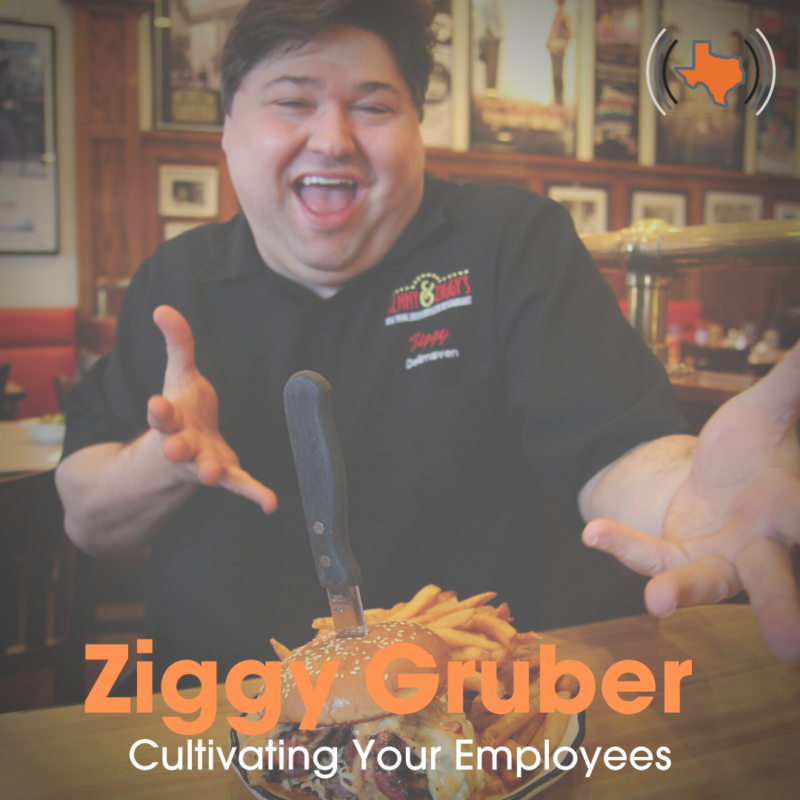
Ziggy Gruber, Restaurateur and self-proclaimed “Delimaven” of Kenny & Ziggy’s, a traditional New York Delicatessen Restaurant and Bakery specializing in Eastern European Jewish cuisine in Houston, TX shares his passion for his craft and community.
Kenny & Ziggy’s is the heart of the local community, and Ziggy believes cultivating your employees helps build a strong family-oriented culture.
Transcripts are generated by machine learning, so typos may be present.
Chris Hanslik: In today’s episode, you will hear from Ziggy Gruber and learn how he believes cultivating your employees helps build a strong family-oriented culture. Hello, everyone. My name is Chris Hanslik, and I’m the chairman of Warrior Miller, a mid-size law firm in Houston, Texas. I want to welcome you to Building Texas Business, a podcast about corporate innovation, entrepreneurship, and business leadership in the Lone Star State. The goal of this podcast is to learn from some of the best business leaders in Texas in hopes that their stories of growth, challenges, and success will inspire our listeners in their own journey to building a successful business. Today’s guest is Ziggy Gruber, a third generation deli man. Originally from New York, he has owned and operated the traditional New York delicatessen restaurant and bakery, Kitty and Ziggy’s for 22 years here in Houston. From first donning an apron at age eight at his family’s deli to training at a Michelin star restaurant in London, Ziggy has brought his love for food and passion for service to Texas with the goal to bring joy and unique experiences to customers far and wide. Welcome to the podcast, Ziggy.
Ziggy Gruber: Chris, thank you very much for inviting me to come onto your show.
Chris Hanslik: I love having you here and excited to hear more about your story. Kenny and Ziggy’s New York Gala contestant seems obvious, but tell us, what are you really known for?
Ziggy Gruber: What are we known for? We are really known for being an oasis because of traditional Eastern European Jewish cuisine. That is what we’re known for. So even though we’re famous for our corned beef and bashrami, which we make ourselves, things like stuffed cabbage, Hungarian goulash, kasabanishkas, blintzes, all kinds of smoked fish, different types of pastries, that’s what people really know us about. And that’s what separates us different than any other delicatessen restaurant in the United States. Great. So what inspired you to start your own delicatessen? Well, I’m third generation. I don’t know any better. I grew up in it. Okay. And I had a grandfather who was from Budapest, Hungary. And when I was eight years old and I was sitting in a booth, he threw an apron at me and he says, you know, you’re old enough. It’s time to make a living. So I always listened to my grandfather. I put on the apron and I went back in the kitchen and he taught me how to, you know, prep and pickle our own meats and cure our own, you know, pastrami and corned beef and also taught me how to smoke fish and all kinds of stuff like that. So it was an apprenticeship and and it was also a loving apprenticeship because I adored and loved my grandfather so much.
Chris Hanslik: Yes, he had spent quality time with him.
Ziggy Gruber: Oh, it was wonderful. He was my best friend and mentor and everything else. He was just such a he was a very smart businessman, but he was a very humble person and he knew how to cultivate loyalty with his staff and also with his purveyors and people that really helped in business and I have learned from that and that’s what has helped me through my years of being in business. So where did you open your first location? Well, my first ELE contestant that I had was I came back from Europe. I was working, my grandfather died when I was at the age of 15 years old and I took it very, very badly. And I was not, you know, listen, I wasn’t a rocket scientist. I knew I wasn’t going to go into the medical field or even be a lawyer, like you said. I knew what I wanted to do and wanted to open up a delicatessen at 16. But like all parents, education, education, education, my mother happened to be English and she said, look, I’d like to take you over to meet your cousins, to get your mind off of the loss of your grandfather. And you can meet them. And then when we get back, we’ll figure out what, where we go from there. So I said, okay, I went to Europe and I met a cousin of mine and he informed me that he was going to culinary school. And I said, well, if you’re going, and he was 15 too. I said, if you’re going, I’m going too. So I went over to the culinary school and. It was during the summertime and I met the headmaster there and I said, listen, I would like to join the school. Is it too late for the next semester in the fall? And he goes, well, first of all, do you have A levels or O levels? That was the English equivalent of a high school diploma. And I said, no, I don’t. Do you have a high school diploma? I said, no, I don’t. At that point, you know, you don’t graduate high school at that age. So I said, but look, how about this? If I could make a donation to your discretionary fund, do you think you would find it in your heart to let me into your fine school? So he thought about it and he said, sure. So I made a nice donation and I got into the school in the fall.
Chris Hanslik: Okay. And you didn’t fake being on a rowing team or anything like that. Okay. No. So that wasn’t… Fascinating story shows how your passion for your business Started way back.
Ziggy Gruber: Yeah, I mean passion for business and also, you know when you grow up in New York City Especially on the Lower East Side and being surrounded like with my grandfather and these immigrants and stuff like that You do get highly educated in street smarts.
Chris Hanslik: Okay so we when you look at a restaurant, what are some of the key factors you think are important to help making that business successful?
Ziggy Gruber: Well, making it successful in the point is it really depends on your staff. Your employees can make you or break you. There is no doubt about it. And over the years, I am lucky that I have basically amassed a very good core of employees. Most of my people have been with me for almost 20 years and, and they are not employees to me. They’re more like family. And if it wasn’t for them, I wouldn’t be in business because like I said, you know, they, they, they, they create. the culture and they create the atmosphere of what is going to go on. For example, my servers have been with me for so long. They know every single customer that comes into that store. They also know, you know, better than the ancestry.com. They know everyone’s genealogy. So they know this one’s related to this one and this one’s related to that. And this one has five kids and this one has two kids over here. So they know everybody and they on top of it, they know what everybody likes to eat. And when you can do that to a customer and make them feel like a king or a queen. And they come in there, it’s all about recognition. We all as human beings want to be recognized. It doesn’t matter if you’re the biggest CEO or if you’re a person that is a dishwasher. Everyone wants to be recognized. And if you can acknowledge that you know what you want, that creates a service that’s unparalleled. And that’s what my staff does. Also, my deli guys the same way. They know exactly. Okay, Mrs. Goldberg over here, she likes her pashrami not too lean, not too fatty. Make sure that it’s cut to this side, not cut to that side. They get that and that’s what they do. They tailor make the experience to the customer. And that’s what makes it a real good success.
Chris Hanslik: Yeah. So sounds like keenly focused on the customer experience.
Ziggy Gruber: It is. It’s all about the customer. The customer is king. They’re the one. Look, we all work for the customer. We are all employees, including myself, of the customer.
Chris Hanslik: Very good. What are some of the things you do then to foster that engagement with your employees that then allows that culture to kind of permeate your organization?
Ziggy Gruber: Well, I mean, first of all, everybody sees the way the core staff has done over the years. So when we bring somebody new into our place, first of all, they’re trained that this is what it is. They’re also introduced to all the customers because whenever we get somebody new, first thing our customer goes, who’s that? Because no one really comes in that’s new. So when we do have somebody new, everyone wants to know why and we train them why and we explain, look, my customers are fantastic customers. They love us like nobody’s business, but my customers are also very demanding. and they have an expectation of things to be a certain way. And we have to fulfill that expectation of all the time. We cannot be less than that or they’re going to be unhappy and chances are we might even lose a customer like that. So who wants to be in that position?
Chris Hanslik: Sure. You mentioned culture a minute ago and I’m just curious to know how would you describe the culture at your restaurant?
Ziggy Gruber: front is a very family oriented culture. We treat our guests like they are family. The guests treat our staff like they are an extension of their family because they know them for so long. So that is definitely, you know, what it’s all about. So it’s not like you’re coming into a restaurant. You’re coming into Ziggy’s home and you’re eating at Ziggy’s table over there. And everyone is like an aunt or an uncle or a cousin. And we’re serving you and we’re all breaking bread together. And that’s the way I can experience the experience of Kenny and Ziggy’s. I mean, if you look at my portions, we’re like your grandmother or your aunt, you know, we don’t allow anyone to leave there going hungry. I promise you that.
Chris Hanslik: I certainly feel the plate out those portions.
Ziggy Gruber: Oh, yeah. Listen, you know, if someone would have left there hungry, I wouldn’t sleep at night.
Chris Hanslik: Is there? anything that you have done since you started 22 years ago, or that you’re doing as things evolve that you would describe as innovative in the restaurant business or the, you know, delicatessen space.
Ziggy Gruber: Yeah. I mean, look, delicatessen and restaurants, you know, the one thing we have in common, if you are complacent and you run things the same way, it’s like a living, breathing organism. It will die on you. You always have to be innovative. You always have to think out of the box. You have to get creative and things change, trends and food change, all kinds of things like that. So we have to evolve and we do. I mean, we might have probably the most extensive traditional menu in the United States for Jewish food. But we have so much other kinds of food that isn’t Jewish. Like we have all kinds of healthy salads. We’ve got quinoa, power bowls. We’ve got schnitzel and waffle towers and all kinds of fancy pancakes, which you never saw years ago, because you need to do that in order to have an edge and stay on top of it. We will be moving into a new spot about a block away. And we are really changing it up there. We are bringing our bakery from Longpoint. We will be bringing it into the store and we will have a full bakery as well as a larger, delicate testing counter. We are going to put an old fashioned soda fountain. in there, which no one’s seen in a long time, because sometimes you’ve got to bring some retro stuff back, because the kids have never seen anything with all kinds of milkshakes and ice creams and sundaes and stuff. And we are going to be putting a full bar, which we didn’t have before, because this new generation is not like the generation that was my dad’s or my grandma’s. They drink a lot more. So, and they like breakfast cocktails and stuff like that. So we always have to be relevant because it doesn’t matter if you’re a restaurant or a delicatessen like mine, you have to be relevant to what’s going on.
Chris Hanslik: So true. You mentioned trends. What are, maybe you’ve already touched on some, but what are some of the current trends you’re seeing in your industry?
Ziggy Gruber: In my industry? Well, I definitely see on the weekends, breakfast is different. It’s not a straight forward breakfast. Like years ago, people would just come in and give me two eggs over medium, you know, a side of bacon and a bagel or some toast or something. That’s gone. Like I said, people want these creative breakfasts. So we do blueberry cheesecake pancakes, or an apple scuttle pancake. We’re going to have a pineapple rum one. You know, I mean, then we did this, you know, you know, chicken and waffles and the thing. Well, we make schnitzel, which is basically pound out breaded chicken, fried. Right. So we decided to make it like a tower. So it looks like the Williams tower and it’s that high. And what was it? Yes, you have to creatively dismantle it while you’re eating it, but it is delicious. And, and, and. Things like that you need to do. Also, we’ve added a lot of, like I said, you know, I laugh, we have kale and quinoa salad. It’s one of our biggest sellers. Now, if you would have told my grandfather, kale and quinoa, Kale to him was what we used to decorate deli platters, or we would decorate a shell case. If my grandfather would be smiling from above, if he knew that you could repurpose that by washing it and chopping it up and putting it in a salad, he’d be very, very happy. Yeah.
Chris Hanslik: And so, yeah, yeah, I think basis from my dining experience, I think you’re right over the years, the presentation of the food is gone. You know, upscale, I guess.
Ziggy Gruber: We are definitely, our presentation’s more upscale than a traditional deli. There is no doubt. But I agree with you. I think a lot of restaurants today are more, I mean, look, think about it. 20 years ago, or a little bit longer, maybe 25 years ago, you had the invention of like the Food Network, right? So a whole generation has been watching the Food Network and all these foodies and all these other places. And it has raised the bar of what the dining or what people’s, you know, interpretation of what dining should be around the country. So yes, it’s definitely, we’re in a definitely higher evolved way now, but hopefully it will continue that way because I think it makes things better.
Chris Hanslik: Yeah, absolutely. So let’s shift gears a little bit and talk about a setback or a challenge that you had to deal with in running this business and maybe what it was, how you dealt with it and what the positive lesson was you learned from it or how you grew from it?
Ziggy Gruber: Oh, well, I mean, look, we’ve all gone through the pandemic and everything like that. We had a setback. We built a beautiful store in West University. And it was a store that did very well, actually, before the pandemic. And it was growing every year. And for that little square foot per square foot, we were actually outperforming what we were doing at Post Oak, if you go by per square foot. When the pandemic happened, like everyone, the rug was pulled out from behind us. And unfortunately, We couldn’t operate that place with the parameters that you had for COVID with everybody had to be six feet apart and this and that. There’s no way we could operate that store with only five tables. Just couldn’t. It was a, it’s a shotgun store. It was too small. So what did we do? We approached the landlord in a very nice way and we said, look, we’re not on the hook on the lease here and there’s no liens on our our equipment, I said, if you want to put everything on pause, great. If not, you know, just let us know and we’ll vacate. Unfortunately, they’re a national company and they couldn’t do that because it would set a precedent, which I understand 100%. So in a nice way, we basically bubble wrapped everything up, we put it in storage, but it’s one of those things. So we’re concentrating now mostly on now the move because where we are now, our shopping center was sold and they weren’t going to give us a lease for 20 years. We found a 20 year lease. basically a block away at the Levcore’s shopping center there on the corner of San Felipe and Posto. So it really has worked pretty good with us. The funny part is the pandemic then happened and the landlord would love us to stay, but he could only give us about now eight years which is still too short for us. But then he wanted to have us do another concept in that thing. But the reality is, you know, there’s an old Yiddish expression, you know, one took his can’t dance at two weddings. And unfortunately, I can’t dance at two weddings. This is going to be a real undertaking with the new store, because the new store will be a delicatessen that nobody has ever seen before. It’s almost a throwback of when Wolfie Cohen in Miami was in business, which if anyone’s been to Miami and was around during the 50s and 60s, you had these incredible stores with fantastic bakeries and all kinds of food and everything else. This is going to be what those delis were like. Sounds exciting. Oh, it is. It’s beyond exciting. I’m excited myself. Every time I go in, they’re building the store as we speak. And I go in and I look and I can see it. I can see the whole thing, how it’s all laid out and everything else like that. And I know people in Houston are going to be very excited.
Chris Hanslik: That’s great. So now kind of going maybe more from more towards you personally and at the business. How would you describe your leadership style or your leadership philosophy?
Ziggy Gruber: I would say my leadership is very approachable. You know, you can’t believe in your own publicity and you can’t think you are bigger than you are. Because when people do that, they can really, really get themselves in trouble. They make poor business decisions. And what people that work for me, I believe, feel that I am just like them and I am very easy to talk to. So if they have a problem or anything else, they’re not intimidated to say what’s really on their mind. And when you can get the information and everything 100% where people are not trying to either sugarcoat it or people are not you know, trying to make it what you want to hear. You can run your business a lot better. And that’s, I will say, has been very good. Also, the reason is I make people feel good about themselves that work for you. And it’s very important to make people that work for you feel good about themselves, because then they will kill for you, basically. They will work hard, and they feel an obligation to you. They don’t want to let you down. And I would say that just like I don’t want to let my people down and I have an obligation to them. So they see that and they see that I care. Look, we don’t run my business. There’s a lot of chains and they go 100% on all the numbers. And then the restaurant business, especially today, even during this pandemic and after, if you follow all the numbers and everything else, you’re going to make a lot of unhappy people. So the reality is if my bottom line is a little less this month, but it’ll be better down the road. Okay. It’ll be better down the road. You know, you can’t run everything like a, like a serious corporation, because if not, you will lose your people. And also you will also compromise on your quality and that we can’t do. Gotcha. Gotcha.
Chris Hanslik: So yeah, sounds like a lot of humility in the way you lead and transparency. And then you reference that family oriented culture. It sounds like it kind of permeates when you treat your people well and then they don’t want to let you down. I mean, you kind of know which one’s the chicken or the egg, but they help foster
Ziggy Gruber: First of all, look, my people there have seen me get married, have kids. I’ve seen all of them get married, have kids, been to, you know, baby namings, christening, you name it. I’ve been to all their family’s life cycle events and vice versa. So yes, it’s a different atmosphere. I wouldn’t say our store is, it’s not like when my grandfather, it’s not a mom and pop store because we’re too big and we do too much volume, but I would say it’s a throwback where it has the elements of feeling like a mom and pop and feeling like that, but we’re bigger than that, you know? So, so, and that’s the way I liked it. I would never want to be a, a, conglomerate or, or a corporation, people say to me, you know, why, why don’t you have, you know, five, six stores, tens of, you know, you have five or six stores, you got five or six headaches. Now look, if you want to be ambitious, that’s great. But I’ll tell you this, if you have five or six stores, I promise you, they’re not going to be as good as the Kenyan Ziggy’s that everybody knows. Because I think something does get lost a little bit in translation. It’s kind of like playing telephone, you know, at the end, you’re the result. It’s a little bit watered down. You know, I have some friends that have, you know, sold out and have opened up, you know, with the joint ventures with the big conglomerates. And if you taste the food in those stores, it’s a lot different than when you go to the store that they have.
Chris Hanslik: Right. The original stores.
Ziggy Gruber: The original stores. It’s different. And also the staff, it’s a little bit, it’s a little bit different. So, you know, my grandfather used to say, how much does somebody need? You wear one pair of pants at the time, you drive one car at a time, you sleep in one bed. How much does somebody need? I am okay that I never need anything and we’re doing okay. And if my people are happy being my employees and my customers,
Chris Hanslik: That’s great. So you mentioned you went to culinary school. You’re running a business. Where did you pick up the training or lessons to how to run a business, be a good leader? Where did you pick that out?
Ziggy Gruber: Well, I picked that all up from watching my parents and my grandparents and also my uncles and my cousins. We were all in the business. We are actually a delicatessen dynasty in New York. Unfortunately, now I’m the last of the Mohicans because everyone else decided to go out of the restaurant business. They’re all in the entertainment business now. But I learned from my father. My father was always very fair with everybody, very fair with the purveyors and everything like that. My grandfather, like I said, was a total gem. My grandfather He knew how to cultivate people, purveyors, employees, everyone else. He was loved and adored by everybody. And he was very firm in the sense, but in a good way and with a feather, you know, he was, he was, he was very firm in the sense that food had to be like this and everything had to be that. And everybody knew that. But everyone respected that and everyone did that. What they, what, what they need is expectations. I have used those techniques and I have used what I’ve learned from them over the years to help me run my business and, and, and deal with people. I’ll tell you right now, I’ve been doing this for 40 years. This, after this pandemic and during, well, we’re doing this pandemic. It’s not over. The reality is I have never seen things like, for example, food costs and labor costs and taxes, unlike anything I’ve ever seen. And I’ve been doing this now for 40 years. My, my dad wouldn’t like, for example, meat. One day you get a phone call from your purveyor and he says, by the way, The briskets that you’re using are up three dollars a pound. Three dollars a pound. Things used to go up in increments. Twenty five cents. You know, and we thought that was a lot. Twenty five cents. Right. You know, when you’re using briskets like I use, I use seven thousand pounds of brisket a week. My gosh. Yes. Twenty five cents is a serious when you crack in three dollars. You know, you need nerves of steel, you know, and, and even crazy things like, like honey and fryer oil and, and, and things that we would never even think of kosher salt. Yesterday, I got a thing with kosher salt, which is just regular salt, just big crystals, $11 a case. It went up $11. So it, it’s definitely different. So learning how to handle these things. goes back to my father, my grandfather, you know. You have to ride these things up. It’s like being in a storm. You know, you go up, you go down, you go up, you go down, but you just got to continue and ride it out.
Chris Hanslik: So in these moments, you’re kind of thinking about our listeners who are either going through that or will go through something like that. What is it that that you draw on to kind of keep you going? How do you deal with that?
Ziggy Gruber: How do I deal with it to keep going? It’s simple. First of all, I like to eat. Just take one look at me. And second of all, I like, I need to put food on the table for my kids. And that’s my motivation as my family. You know, this is a business and I need to supply for my family. They need to eat. They need to get educated. They need to do that and they rely on me. That’s what it is. Also, I have basically 150 employees. they rely on me to, and their families rely on me to, to make sure they have a vehicle that their parents can put food on their table and supply for their needs. So it’s, it’s that, that’s what motivates me because we have no choice. We have to go forward and look, There are times when it’s good, and there’s times when it’s tough. My grandfather opened up the first delicate test on Broadway in the height of the depression. Walter Winchell used to write his column there every morning. When he first opened up, Walter Winchell wrote, it was either going to be one of the best successes Broadway ever saw, or it’s going to be another sideshow. Thank God it was a big success. Very good.
Chris Hanslik: Thinking about our listeners here, out there, business owners, entrepreneurs, what are two or three things you could share with them to say, wish I’d known this when I started? Or if you’re out there thinking about it, these are a couple of things you should think about or consider if you want to kind of get off the ground or take your business to the next level.
Ziggy Gruber: OK. Well, if you want to take your business to the next level, just know you reap what you sow. And that goes with your employees. Your employees are your backbone. So you must cultivate the stars and cultivate all of the people that work for you. Because, you know, it’s like your spine. You know, you can only stand up if you have a strong spine. If you don’t, you don’t go anywhere. So that’s the most important. If you’re in this business, no, knowing what I, what I do and what you really need to follow the markets of meat, poultry, this, like the futures I do. And what I do is, which is basically saved me many times is I will buy in Two briskets. I will buy into poultry. I will buy in. I have deals with my purveyors where I can buy into it. A lot of people don’t think ahead. You really have to see what the trend is going to be like in six to eight months from now. And because you don’t know. Now, I was lucky I’d worn into some, so I’m riding some things out now. But I’ll tell you, when it runs out, I’m scared to death to think what’s going to look like.
Chris Hanslik: Right. The increased cost.
Ziggy Gruber: Oh my god, yes.
Chris Hanslik: Okay, good. That’s really good advice as we start to wrap things up. Maybe go to a lighter side. So this one, I think it would be fun to hear you answer because you’re in the food business and this is a Texas podcast. So I want to know, do you prefer Tex-Mex or barbecue?
Ziggy Gruber: Oh, I love barbecue. I do. Any particular one? Yes, I do. You know, we have a lot of great barbecues, but there is one place that does not get as much love from the press or anybody else. And I think they have as good as barbecue as anyone else. I’ll put them up against the top of the top here in Houston. There is a guy on Woodway and Augusta. okay and it’s called the brisket house and it’s a small little place and a lot of people get nervous because when you go in there you if you sit in their dining room you’re going to smell like like brisket but his links his his brisket is so juicy and crunchy on the out the bark is great and he does this short rib you know like i know a lot of people but it’s good His side dishes are great. Okay. So I would say it’s a little jet. Now, don’t get me. I love Ronnie’s, Gillen’s stuff and you know, what was it and all the other barbecue places that you go in there. It seems that there’s more springing up every week, but you know, Blood Brothers is another good one. But this guy doesn’t get any, everyone’s always in the press. This poor guy doesn’t get, and I’m telling you, if you’ve never been there. You go there and you try it. I sent Drew Nearpont. He’s the president and CEO of the Myriad Restaurant Group. He and Robert De Niro owned, what’s the sushi place? Nobu in New York. And he owns a lot of other restaurants. And I sent them over there when he came to visit and he says, Oh my God, what a fine. It is now on my list. All right. I never been there. Oh, you got to try it.
Chris Hanslik: So if you could take a sabbatical for a month, where would you go? What would you do?
Ziggy Gruber: God, first of all, I’ve not taken a vacation, I can’t remember, maybe in five years, so I don’t know. You know, a whole month. I wouldn’t know what to do with myself, first of all. I’m adventurous, I’m not one of these people that like to veg out, so I’d like to do something if, I’ll tell you this, if I could go around and trek Around maybe like to get some more ideas for the restaurant and fun like around Eastern Europe, you know places that I haven’t been I’d like to go like, you know, go like Romania and Bulgaria and I’ve been to Hungary many a times and Poland lit the way and just to give me some ideas I think that would be kind of kind of fun. I would also like to do maybe something, you know, I like in Asia, go to Singapore or something like that. I would like to go and see a lot of those great places.
Chris Hanslik: That sounds like it would be fun. You need to break out of your five-year slump.
Ziggy Gruber: With all of this pandemic thing and everything else, I believe me, my mind, and then I’m moving the store. Once I move the store, I am going to take at least a week off when things are running nice again.
Chris Hanslik: So that kind of leads me, other than running the delicatessen, any hobbies or things you do do?
Ziggy Gruber: Hobbies. You know, I’m kind of like my grandfather and my father. We really didn’t have any hobbies. I mean, our whole world is two things. our family and our business. I will come every day. I’m there almost, even if it’s my day off, I’m there in the store one time or two times, you know, each day there. So I work I do finish and then I go home to my family and then I watch a little TV, get a little sleep and then I do it all over again.
Chris Hanslik: Rinse and repeat?
Ziggy Gruber: Yeah. That’s what I do.
Chris Hanslik: That’s great. Well, it certainly has done well for you because you’ve been very successful. You’re a delicatess and it’s well known not just for great food, but I think as you said, great service.
Ziggy Gruber: We try our best. What’s amazing to us is the food critics from Los Angeles to New York have all claimed this is the best New York style Jewish deli in the country. The funny part is we are in Houston, Texas.
Chris Hanslik: Well, Ziggy, I can’t thank you enough for coming on the show. It’s been very inspirational to hear your story in the family lineage and how you’ve taken it to this kind of national level.
Ziggy Gruber: Thank you. It’s my pleasure. I enjoyed this very much, though. Right.
Chris Hanslik: And there we have it, another great episode. Don’t forget to check out the show notes at boyarmiller.com forward slash podcast. And you can find out more about all the ways our firm can help you at boyarmiller.com. That’s it for this episode. Have a great week and we’ll talk to you next time.
With a deep understanding of your business alongside clear and honest communication, we help clients face challenges fearlessly.
Learn more about our services and how we help clients.