Cross Icon
Ep 020 – Fail Fast and Move On with Isaac Johnson

Ep 020 - Fail Fast and Move On with Isaac Johnson

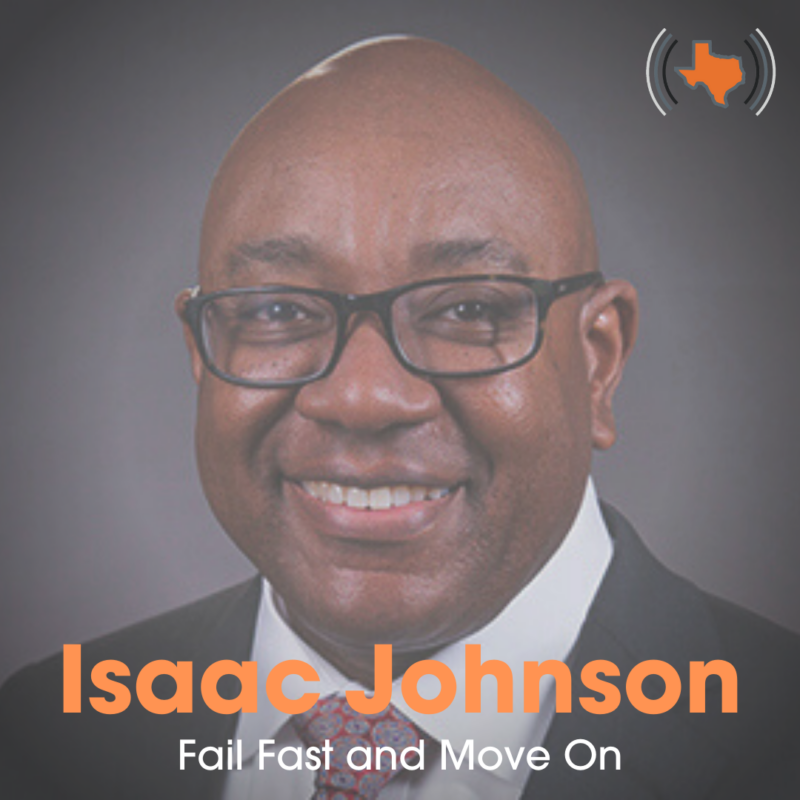
Fail Fast and Move On with Isaac Johnson

Isaac Johnson, President, and CEO of TDECU, a credit union in the Houston area talks about his fascinating story. He shares how he built a parallel career in the military, serving in the US Army Reserves and the corporate world, coming up through law firms and then banking.

Hear Isaac talk about failure and why it’s important to fail fast and move on, as well as his approach to culture, which comes from his military training and the mental of ‘One Team’.

Transcript

Transcripts are generated by machine learning, so typos may be present.

Chris Hanslik: Hello, everyone. I’m really excited about today’s guest, who is Isaac Johnson. Isaac’s the president and CEO of TDECU, a credit union here in the Houston area. Isaac has a great and interesting story because he has built a career on a parallel path, both in the military serving in the U.S. Army Reserves, as well as a corporate career coming up through law firms and then banking. In this episode, you’ll hear Isaac talk about how when you fail, it’s important to fail fast and move on, as well as his approach to culture, which comes from his military training and the mentality of one team. Isaac, I want to thank you for agreeing to take some time out of your day and come visit with me on the podcast.

Isaac Johnson: All right. It’s a pleasure to be here, Chris. And good to see you. It’s been a while.

Chris Hanslik: It has been a while. It’s good to see you as well. Good to catch up. So let’s just kind of start. You’re the president and CEO of TDECU. Could you tell us a little bit about what that company is, what it does?

Isaac Johnson: OK. Well, thank you. So TDECU, your credit union, is the largest credit union in greater Houston, the fourth largest in Texas. And we provide full financial from any banking products all the way to investments, insurance, to commercial lending. So we have full service. Now, something that’s interesting, as you know, about a credit union is we’re not for profit. So many of those services and products that we provide, we can provide them at a low cost. And we passed all those costs, those savings back to them. And one last thing I’ll share about TDECU is As long as you’re walking and breathing in Texas, you can become a member.

Chris Hanslik: Okay, that’s good to know. And for everyone’s edification, it’s Texas Dow Employers Credit Union, right? Yes. TDECU for short. TDECU for short, yes. Very good. So you’ve been in this role now for less than a year as the president. A lot of times I’m talking to someone that’s an entrepreneur that maybe founded a company. Certainly not your journey in this role, but tell us a little bit about your journey professionally and how it came to be that in June of 2021, you became the president and CEO of this credit union.

Isaac Johnson: Well, thank you, Chris. You know, my story, I think, is not unique to any business leader that’s out there. But, you know, I will share a couple of twists and turns, too, with my career. And that is, so, you know, I start off banking and finance. You may tell from my Southern drawdown, Mississippi guy. So I graduated from Mississippi State and banking and finance and went into a Bank management training program after school and that’s that was with the largest bank at the time in Mississippi with Trustmark National Bank and so started there as a banker and went through their management training program and and so alone there became a branch manager commercial lender and then went into business development. And at some point when I was closing deal, I’ll hand them over to the attorneys and then they’ll close the door. And then I’ll go back and start going out, trying to get new business. So, you know, I was intrigued to find out what was going on behind the door. So I decided to go to law school. So I went to law school, came here to Houston, to Texas Southern, the Thurgood Marshall School of Law. So curiosity led you to law school? Yeah, curiosity led me to law school. And so yeah, so had a wonderful time there and clerked all the way through law school. And I thought, you know, I was going to be a litigator. And so, but when I was in law school, I clerked at JP Morgan Chase in their banking group. And of course, when I graduated, upon getting ready to graduate from law school, of course, I clerked at Thompson and Knight where we first met and went through that summer associate program. And Chris, unless you knew the story, but so what I clerked at Thompson and Knight, I split my time between the securities group and banking. At this time, I’m thinking maybe I want to be a securities lawyer. So when I finished law school and reported to the law firm, I got my file and said, hey, the banking group is down there to the right. You didn’t have a choice. I had been a banker and I knew banking and knew how to develop relationships and had a wonderful tenure there. And so practice law for several years, as you know, and then ultimately after my private law experience went into in-house at Wells Fargo, where I led the hip lead the business banking group and some of the commercial lending there. And I’ll tell you, you know, so while I’m doing all that, I have, so I’m at Wells Fargo now. And I also had another career that was parallel to that. I was going to say, because you’re leaving part out.

Chris Hanslik: I was going to bring you back to it. Yeah.

Isaac Johnson: So the parallel to that is when I graduated from Mississippi State, I commissioned as a second lieutenant in the Army Reserve. And so I was a finance officer. And so it kind of made sense, a banking degree, finance officer. And so I’ve had a dual career in the Army Reserve and in practicing law and then now here at TDECU. And so my career just continued. And so I was promoted second lieutenant, first lieutenant. When I became captain in the reserves, I branch transferred to the civil affairs. Civil Affairs at the time is in the Army Reserves, but it was part of the Special Operations Command too at the time. What Civil Affairs officers do is when we go into other countries, we’re pretty much the liaisons between the military and the host nation. We can help with foreign disasters. We can help with foreign humanitarian assistance. And clearly in combat times, we helped de-conflict between the military and the civilian population to make sure that we’re supporting that government and definitely supporting the goals of that commander on the ground. So yeah, I went to, became a civil affairs officer. And so at the time now, the backtrack little bit, so I’m at Thompson and Knight and now the time is around 2000. 14 2005 and as you know, we’re heavy in Afghanistan 2004 2004. I’m sorry. Yeah, 2004.

Chris Hanslik: Let me just stop real quick on behalf of myself and all the listeners. Thank you for your service.

Isaac Johnson: Oh, well, thank you. Well, it’s a privilege and honor to serve and in So, you know, 2005, 2004, there’s heavy rotations in Iraq and Afghanistan. So I’m getting mobilized at this point. And so I’m leaving, you know, I have to depart the law firm and I’m having deployments in Afghanistan, later Kuwait, later Africa, and spend time in Haiti after 2010, after the earthquake there, I was there on the ground to help with the Haitian government. So I’ve had several deployments and then, and ultimately my last deployment was with, was in Korea. So, so I’ve had, you know, I’ve had that military on that dual career and, and Chris, if you don’t mind, I’m trying to jump back and forth.

Chris Hanslik: Absolutely.

Isaac Johnson: So now I’m back on the civilian side. So I met Wells Fargo and then I go join TDECU as their first general council. in Chief Risk Officer and in, you know, so I’m helping the leadership, the leadership team at the time with risk. And of course, with general counsel matters. And while I’m there, things are great. And I get called to active duty again. And this time, it’s to Korea. And initially, my orders were for three months. So while I’m in Korea, I was working for General Benson Brooks at the time. I got promoted to Brigadier General.

Chris Hanslik: So I’m going to stop and let everybody know. Can you go over that? You’re a brigadier general in the Army Reserve. Yes. Yes. Which is amazing. Yes.

Isaac Johnson: Well, thank you.

Chris Hanslik: Really an honor to have someone like that as a guest on this show.

Isaac Johnson: Well, I tell you, you know, I had my bumps and bruises along the way, but it’s become, you know, a love for the profession of arms. And at this point, I love service. And so I’m in Korea and I’m there and I get promoted. Now, I like to share our waltz in to General Brooks office. I said, Hey, sir. I’ve come out on a general officer list and I have a command back in Pensacola in the state. So I’ll be leaving early to go take that command. And he said, I want you to sit down for a second. And I saw my spider sisters went up. I knew something was up. So I sit down and he explains that. He said, hey, I need you here. I need I need someone to lead the civil military operations here in on in Korea. Tensions were high at the time. It’s 2018. in 1718, and so I stayed, and it became a two-year assignment, and as many of your listeners may know, in Korea we also have families, military families that are there. So I transferred my family, we sold a house in Houston, and they moved to Seoul. Wow. Yeah. And so that was, it was a wonderful experience.

Chris Hanslik: Well, you know, it sounds amazing. And yeah, I’m glad you went into details. I wanted the listeners to hear your, everyone’s story is unique. Yours, you know, to me is, is especially unique because it comes with a service to our country. And I think it’s maybe not how most people would think you end up being the president and CEO of a company, a bank, credit union, whatever it may be. But I know we’ll get into some of this as we talk, but that dual parallel track, I think is would have to have shaped you in ways that just, you know, in the way you think about problems, problem solving, team building. So kind of want to hear from you on some of those things. And let’s just start, you know, when you’re when you’re thinking about what it takes to have a successful business. What are some of the key fundamentals that you really try to put into place to ensure success?

Isaac Johnson: Well, thank you for that. And these trends in, you know, from the military to my civilian capacity here at TDECU. And so, you know, I think along the terms of long term plans, short term plans and execution. So when we think about those long term plans, looking over the horizon and make sure that your business is here, 20 years from now. How do you remain competitive? What’s going on in the market? How do you innovate? How do you remain relevant to your members for 20 years from now? So I had that long ball. And just to back up a little bit, even before I started looking at that long term, I’m looking for that purpose, that purpose of that North Star. And when you settle on that, and here, you know, I have a board of directors. And so I like to tell folks, I went from one boss to 10 bosses. When I came into the seat, we did an assessment, and the board and I, we worked together, and we came up with that purpose, that North Star. For us, it is helping people on their financial journey. helping people on their financial journeys. So wherever you are on your financial journey, TDCU can support it. From opening up an account if you’re in high school, from a checking account all the way to your first house, all the way to retirement, to your retirement years. So that’s that North Star long-term plan. And then there’s this always this shorter-term planning, between one and three years. What are we doing? What’s our plan for the next one to three years? So once we set that, and then we back into executing. And Chris, I’ll tell you, I take some terms from my military, I violently execute. So we got a plan, we’re going to execute. We look at, we track, we have milestones, and we do those things. you know, just developing long-term plans, get some short-term plans and executing. It’s about you do those things to become a better organization, to provide value to your members, to provide the best customer service that we can, to make sure we’re relevant in the products that we bring. So we don’t do all that just to keep work, but it’s always trying to better the enterprise.

Chris Hanslik: Right. Well, that’s great. And I have to believe you being an Army guy that in your violent execution, you’re also doing after action reviews, right? To assess and learn so that if you need to align or adjust before you continue the execution, you know what went right, what went wrong, and why. Oh, you’re talking my terms. That’s right.

Isaac Johnson: We call it AARs. That’s right. After action reviews, AAR. Now, some folks say this more morbid, say post mortems or whatever, you know, but I’d like to go AARs at the Action Reviews. And we have. For all the successes that we’ve had, we’ve had some setbacks. And I’m not going to air all our dirty laundry for our competitors out there. But I’ll tell you one of the biggest trends, if you would mind me just talking about it.

Chris Hanslik: No, no. One of the questions I was going to ask you is about setbacks. So you kind of dovetailed right into it. So yeah, please share to the extent you can.

Isaac Johnson: Well, I would tell you that in the financial industry now, many of the products are almost commoditized at this point. I mean, everybody has a checking account, savings account. Everybody can make loans to a certain degree, but the entry into our market is now lowered because of fintechs, these internet banking companies that are coming in. And frankly, they’re not under the same regulatory scrutiny that a traditional credit union or bank is under. Now, clearly, I can’t speak for them, but I can say for us, our deposits are are insured by the Federal Reserve. And so for us, it’s the NCUA, the National Credit Union Administrator, insures our funds just like the FDIC does for a bank. So, you know, but the fintechs can provide other services that are very competitive. And so we’ve been, so we’ve been challenging, it’s been challenging as an organization to make sure that we stay abreast of the latest innovation out there, delivering products and services to our members. And, you know, we’ve implemented, we’ve gone out and we might have hooked up with a startup and said, hey, you can do this? Oh, they’re like, yes, we can do this. And then they start implementing like, wait a minute, you know, I’m not sure you can scale this. And so, so, you know, we, we, I think we’re in a really good place where we are, but we have in that space, you have a lot of startups, you have a lot of entrepreneur spirit. And so we tried to where, you know, where we win, we win and where we, we, we fall short, we fail fast and we move on. And so I think many other financial institutions are embarking upon those too, as far as delivering in a digital space, delivering services and products.

Chris Hanslik: I can see where it’s been a disruptor in your industry, making you have to rethink the way things just used to be done or have always been done.

Isaac Johnson: That’s exactly right. I mean, so the traditional model was, you know, you have a branch or you have several branches. We call them member centers and for our members have these member centers. People come in, you know, and they stand in line and they cast a check or make a withdrawal or they may peek over and see a service representative sitting at the desk and walk over and inquire about a CD. But, you know, for And Chris, I don’t want to be just generational, because at first, we said, well, we have this gen X or whatever the latest generation gen. Maybe we’re in Z now. We’re in Z now, yeah. So they want to do everything online. Well, I can tell you right now, my mom, I’m not going to tell her age, but you know, you know, she likes to do everything online, especially in this COVID environment. So, you know, she got her iPad and she’s doing banking online. So it’s not this generational thing anymore. So we have to meet members the way they want to be served. Right. And if they want to come into a branch, we’ll serve them there. They want to be online. We’ll serve them there. So customer service. Right.

Chris Hanslik: This is the end of the day.

Isaac Johnson: Exactly right.

Chris Hanslik: So Speaker, you mentioned innovation. What are some of the things you’re currently doing or at least trying to implement that you believe are innovative for your business?

Isaac Johnson: Well, that’s a great question. So if you go to our website today, tddecu.org, tddecu.org, I mean, you go there and you can pretty much do all of your banking right there. start a loan, you can go all the way through the approval process, you can start mortgage applications from beginning to end. So we really have tried to be innovative in having that high-tech, high-touch. So it’s not sterile. If we send your email, it’s going to be tailored to you. It’s not going to be a box. A box is BOT, right? That you just, you know, automate and send things to you. So we try to have a high tech high touch model and I think that’s somewhat innovative because you can just take something off the shelf and plug it in and it’s just all automated and you never deal with a member but we made it purposeful to say we’re still going to bring in that human touch in that process just to check in on you you know as you’re going through the process. So that’s, I think that’s when it comes to innovation, that’s one of the things we’re investing in a lot to make sure that, and I go back to this COVID environment to make sure even in this COVID environment that we can take care of members without them having to come in to a member center.

Chris Hanslik: That’s great. So let’s talk a little bit about that virus. What have you had to adjust at the business level and the way the way things were done as a result of COVID and the various outbreaks we’ve been experiencing. And we’ll probably continue to experience as we move forward.

Isaac Johnson: OK. Well, Chris, I’ll take that in two ways. I’m going to talk about our teammates, and then I’ll talk about our members. And so let me start with our teammates first. I mean, we wanted to be respectful. to the local ordinance and, you know, rules that were coming out and guidance. And so, like many other businesses, early on, you know, everyone went home. You know, I, you know, I tell, I like to, I’m going to make light of this, but if I went to my team two years ago and I said, hey, everybody’s going to start working from home, you know, in next year, it would probably took us three years to get a plan together, right? Everybody to go home. But in this case, everybody going home next week, everybody went home. And we still kept the business going. That’s the weirdest thing. So I guess that’s agile. That’s the agile part of being agile.

Chris Hanslik: It’s amazing what humans can do when they have no choice. Exactly.

Isaac Johnson: Right. So that’s one time that the plan, you know, the long-term plan, you know, we were agile to develop some big plans.

Chris Hanslik: Maybe too, there was no plan or figure as we went.

Isaac Johnson: That’s exactly right. We were building the plane as we were flying it. I mean, to a certain, I mean, we’ve matured as an organization and I think we know how to manage it better. But back to our teammates, you know, of course they went home and then at some we started looking at ways to continue to provide service to our members. And Chris, I want to give a shout out to my TDEC teammates because our branch network never shut down during COVID. We did not, we kept those branches going. So those employees were on the front line, they were mask up, they’re washing their hands, and they took some personal risks there and we supported them all the way, every way we could. Sorry, I just want to share that. Oh, absolutely. That’s amazing. Yeah. So for our general, for our other employees, like our back office employees or, you know, so most of them went home in the end and they started finding out ways how to continue the team build on you name it from Zoom to. WebEx to I don’t know some people I don’t like this right now. We started or I forget I’ve been on these teams Oh, yeah So it didn’t try to go between all those on your on your computer So so we learned how to continue to team build on you know online and And then as of November 1st, we started, we implemented a new way of working. And so, like many organizations, now we have hybrid. We have hybrid workers that, you know, they come in the office a couple of days a week and they work from home. We have employees that are, you know, that are on site, like our tellers or our member service in our branch, you know, they’re on site. So they’re permanently on site. even we have a rotation there too. And so these different models, the COVID environment and the virus has taught us to manage our talent and our teammates, give them more options.

Chris Hanslik: And I’m really happy where we are with that. Yeah. So there’s been a lot. I mean, I think everyone out there with a company has seen this. I mean, because part of what you’re talking about is how COVID had affected, positively or negatively, your culture, right, amongst those teammates and team members. And so, you know, how would you describe the culture at TDECU, if it’s changed at all over COVID, if so, how? But, you know, tell us a little bit about that and what you’re doing to help sustain it.

Isaac Johnson: Well, I tell you, so our culture, you know, when I came in into the seat, and even before then, I referred to at least the legal team at the time was one team. It was one team. Now I bring that over from the military, so it’s one team, one fight, but I drop off the fight. So we have the one team. And then when I came in the seat, we, you know, our culture is around team. And even our strategic partners are around team. So we have a strategic partnership with the Texans. Every time the Texans go into the red zone, we donate to the Boys and Girls Club. You know, it’s a team. And of course, we have our relationship with the University of Houston. We have the naming rights to the stadium, TDECU Stadium. team. And so we have all these team, you know, these team, these are our partners, our team, you know, come, you know, have this teamwork. And then employees, we start this one team. So the model at TDEC is one team internal. And those values around this, and then we have our TDECU values, and they are as for this embrace change, you know, and our employees and teammates been showing up around that embrace change. Lead with empathy. So every decision that we make either for our teammates or for our members, we lead with empathy to try to think about what they’re going through. Last one is take accountability. The third is take accountability. And the last one, which everybody loves is have fun. So we have fun, you know, we know how to party. So we have, so we do all those things. Embrace change, leave empathy, take accountability and have fun. And that’s the culture that’s driving us forward.

Chris Hanslik: It’s beautiful. It’s beautiful. And you were talking a little bit about COVID and changes to your team. And I know you said you were breaking down, talk about members. Tell us a little bit about that.

Isaac Johnson: Yeah. And so to the member point, you know, our members, we, you know, something that taught us about the COVID and it taught us, it said, hey, we need to meet the members where they are. How would they want to be served? It’s not how we want to provide the service, how they want to be served. And clearly, you know, we went to this, when we went to this hybrid environment, some of our teammates, then we started, we made sure that we start investing more into our online banking and digital banking. You know that competition space with those right. So we need to invest in this. We also shot so opportunities around that branch network, you know, where were our members actually coming into our branches. And so we had to read almost reset some of our branches, our branch network. to make sure that we were showing up for those members. And that includes today building a couple of new, probably repurposing some locations. And so our members today, I think we provide them more channels of delivery for them. And I think without COVID really pushing that issue, you know, we’ll still be on that five-year plan to get done.

Chris Hanslik: I hear you. I hear you. Okay. Well, so, I mean, that’s, I mean, a lot of interesting things you’ve shared with us about the company. Let’s talk a little bit more personal about leadership style and, you know, specifically your style. Kind of how would you describe it? You know, how do you try to show up as a leader? Maybe what influences have you had, you know, in your career to draw from to kind of form your own style?

Isaac Johnson: But hey, it’s a great question and, you know, every now and then I’ve been asked the question. I still ponder, you know, what is my leadership style? I think I’m still a work in progress. But, you know, I will take that from, you know, I had some great mentors and even sponsors, and I think there’s a difference between a mentor and a sponsor. And one great mentor and sponsor, I shared his name earlier, was General Vincent Brooks. And so General Brooks West Point Grad, a distinguished military career, culminated as commander of Combined Forces Korea and United Nations Command Korea. So he had three commands under his purview when he was in Korea, and he led as a servant leader. I mean, he had, he had staff around him. I’m not saying I was one of the smart guys, but he had some smart folks around him. He didn’t leave with like, I know all the answers. He deferred to the expertise around the table. We asked tough questions, and he held leaders accountable for the advice that they read. But he, he led with this service mentality, servant leader mentality. You know, he had four stars. Well, actually eight stars when you count them all together. When he would be wearing something, a jacket or something, there’s a lot of stars on it. But to make a little story short, today, when I lead with I’m not the loudest voice in the room, I don’t lead with I’m the smartest person in the room. some expertise that I can bring to the table. But I do believe in a teamwork where we have proven seasoned leaders that are part of that team. And I rely on their expertise. And as we make decisions, and we collaborate, and we make collaborative decisions. But let’s not be confused with if there’s an urgent matter, clearly I’ll step into that role to say, hey, it can be more directive. Decisive when you need to be. Exactly. Decisive when I need to be. And sometimes I think that the team actually appreciates that. They say, OK, we’ve been spinning. Where are we going to go? But yeah, collaborative leadership. I like to get an input from around the table. And then we make the best decisions that we can and hold ourselves accountable for them.

Chris Hanslik: Any books on leadership or anything you’ve read in your career or that you would say that, you know, really got some good learning from this you might pass on?

Isaac Johnson: Yeah. Well, you know, there, there, there are a ton of leadership books from military to civilian, but I’ll tell you what the book I’ve been spending a lot of time with lately. And that is, I told you I have 10 bosses. You told me. Yeah. If we’re in fact, I have two advisory bosses too. So I have, 10 board members, two advisory board members, and it’s phenomenal, phenomenal. And every one of those individuals are leaders in their own, I mean, are leaders. They’re experts in their fields. We’re all leaders. And so, you know, what I’ve been reading is, When you’re, I guess, in my position as a new CEO, and I’m trying to build a team and have that relationship with the board, it’s like, how can we be more effective? How do we bring all these high-performing people together? And so I’ve been reading this book, Building Better Boards, by David Natler, and it’s around effective board government. And I think it’s very critical where I am now, and I’ll share with any new leader of an organization, to make sure that you’re aligned. with your board. In the military, I’ll say I’ll make sure that I’m aligned with the higher command so there comes some similarities there. And so we’re on that journey together. So I want to make sure that we have a high performing board. But you know, I think everybody can always look to improve, right? Always look to improve. Exactly right.

Chris Hanslik: That’s great. So, you know, when you think about You’ve shared a remarkable journey with us. If there were two or three things that you, based on what you’ve learned over your experience, that you would, if you were sitting down across the table from a young entrepreneur or someone looking to start a business, what are two or three things you might impart to them to say, here’s some important things to keep in mind and stay focused on as you start this journey?

Isaac Johnson: Okay. You know, Chris, I’m taking a couple of notes here. One, I would say there’s, there’s no substitute for education. You know, I mean, in the education experience, I look at me two separate, at least for my world, two separate things. And, you know, so there is a baseline of education that I think any entrepreneur or business, you know, starting in the business that you, that you should, I’m not saying it has to be formal education. I’m not saying it’s a degree or something like that, but there is a baseline of education that I think this, and I think those folks who are, are well learned and, and at least know the principles of whatever business they’re embarking upon, you know, I think they can pull upon that when, when they’re in, when it’s decision making or, or when they encounter something that may be new. So I encourage all. I mean, I have four boys and we believe in education. And so, and I think they all believe in education. And I told my son, even if my second old son, he’s a banking and finance major. And I said, even if you want to be an entrepreneur, please get this base of education. I want you to understand that you understand what business is and the principles of business. The next one is experience. If you have experience that’s great, you can lean on some of that experience, but be open to new experiences and be agile enough to continue to learn. I call it having a learner’s mindset. So you have that education, now you have experience and as experience you’re learning new things. And as you learn new things, you know, I think as you learn new things, I think at some point you start making gut decisions because at some point there’s going to be a decision you have to make and you’re going to have to weigh the risk. Do I do this or not do this? And in that experience, I think helps with that.

Chris Hanslik: Yeah, I think that you do your point, right? You’re not always going to have all the information you want, right? You got to draw an experience, a little bit of education, and education could be school of hard knocks. That’s right. But at some point, then you got to get to a decision point.

Isaac Johnson: Exactly right. I tell all entrepreneurs in some of my younger leaders and leaders on my leadership team, there are decision points, and that’s what you get paid the small bucks for. That’s right.

Chris Hanslik: Well, that’s great, great advice. Let’s just kind of get off the business train and talk a little bit, you know, wrap this up, talking about some fun stuff. Tell us what was your first job? Oh, my first job.

Isaac Johnson: My first job. OK, I want to say my first professional job. I’m going to go back to my first job. That’s right. My first job was was working. It was a summer program. I was in the ninth grade at Central Junior High in Gulfport, Mississippi, and I worked on the CB base of the country. The CB base is a Navy base in Gulfport, Mississippi. And I was there helping them, I don’t know, doing computer work where I was saving work on the floppies. Yeah, we used to have. And so I’m in there saving and doing a little programming. I’m not even sure if it’s a program. No disrespect to any programs out there. I was typing stuff in and saving stuff and backing up files.

Chris Hanslik: Probably more than half of the listeners have no idea what a floppy disk is.

Isaac Johnson: Oh, okay, yeah. I would tell you, during that same summer, I worked at Burger King making biscuits. I’ve been there, done that.

Chris Hanslik: I love it. To me, that’s the best way to start. You start at the bottom and it’s motivation to move up. All right. Well, so, you know, Isaac, you’re from Mississippi, but this is a Texas podcast. Oh, yeah, that is true. So I need to know, man, what’s your favorite Tex-Mex or?

Isaac Johnson: Barbecue all the way and barbecue all the way. And I’ll tell you, Chris, so I married a Texas girl. So she’s Demetria, was from Houston. She went away to college to A&M. It came right back and of course you gave me that bumper sticker that hey I wasn’t born here but I got here as quick as I could so you know all that good stuff.

Chris Hanslik: Well then it makes sense that you had your barbecue guy.

Isaac Johnson: That’s right.

Chris Hanslik: So if you could take a one month sabbatical where would you go what would you do?

Isaac Johnson: Hmm, one month sabbatical, where would I go? I would, of all my travels, I’ve been on the East, I’ve been to Djibouti, Africa. I’ve been to at least eight countries on the Eastern, the Western, I’m sorry, on the Eastern part of Africa. I’ve also done work in Niger, Senegal, on the West side. If I had one month, I would actually take the family and we would spend a month in Tanzania. Well, I mean, Tanzania, and then we’ll go down to Dar es Salaam, Tanzania. So we’ll spend time between Kenya and Tanzania. So yeah, that’s what we do.

Chris Hanslik: Very good. And last, what do you do when you’re not working? What do you do for fun? Interest hobbies?

Isaac Johnson: Oh, well, you know, when I’m, let’s see, Chris, are you saying when I’m not at TDECU and not doing the military, oh, I’m with family. So I’m with my boys. We have football. Well, I have one, an artist in there too. So my oldest is an accountant and he was in, he did his time in the military, then he, with the 101st Airborne, and then he went to school with the college, and he’s an accountant, works with VA Hospital, and he’s still giving back. I’m just, I’m really impressed with David. So he still serves. And my second nose is Bryce. So Bryce, I say he was a banking and finance major. And so I’m not going to say the school he’s at right now because he’s in the transport portal and he’s about to go to another school. More to come. So Bryce is in, he’s a wide receiver. And so he’s a football player. She’s pretty good. So, and then I have Zachary, who’s in the 11th grade. He’s my artist. And then I have Joshua, who’s in the ninth grade, and he’s a big boy. He’s a football player. And so, I mean, he loves football. He loves hunting and fast cars.

Chris Hanslik: There you go. They have plenty to do this past weekend.

Isaac Johnson: Exactly right.

Chris Hanslik: That’s great. Well, Isaac, it is so great to hear from you and see you. And I can’t tell you how much I appreciate you taking time to share your story with us. And thanks again. Thank you, Chris. Thank you. It was a pleasure to be here. And there we have it. Another great episode. Don’t forget to check out the show notes at boyarmiller.com forward slash podcast and you can find out more about all the ways our firm can help you at boyarmiller.com. That’s it for this episode. Have a great week and we’ll talk to you next time.

We provide clarity for complex problems.

With a deep understanding of your business alongside clear and honest communication, we help clients face challenges fearlessly.


Learn more about our services and how we help clients.