


With a deep understanding of your business alongside clear and honest communication, we help clients face challenges fearlessly.
Learn more about our services and how we help clients.



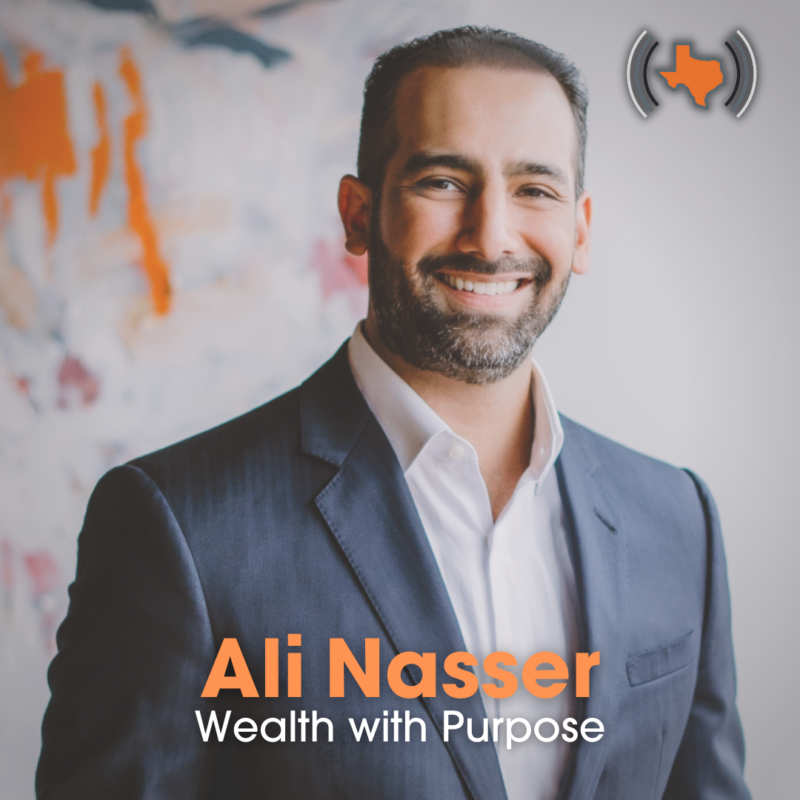
Ali Naser CEO and Founder of AltruVista, a wealth and life planning company for entrepreneurs in Houston discusses how he started his company, as well as how he’s built it over the past 13 years. Additionally, hear about the lesson’s he has learned over the years that led him to write the book he recently launched, “The Business Owner’s Dilemma”.
Transcripts are generated by machine learning, so typos may be present.
Chris Hanslik: In today’s episode, I’m joined by Ali Nasser, CEO and founder of Altravista. Ultra Vista is a wealth and life planning company for entrepreneurs. In this episode, you will hear Ali talk about how he started his company as well as how he’s built it over the past 13 years. And finally, you will hear about the book Ali recently launched called The Business Owner’s Dilemma, which is on Amazon’s best seller list. Ali, I want to thank you for coming on the podcast. It’s great to see you.
Ali Nasser: My pleasure. It’s a pleasure to be here. I appreciate you having me.
Chris Hanslik: Yeah, well, excited. There’s a lot for us to talk about. I want to start with the fact that you’re an entrepreneur and business owner. Tell us a little bit about your company and maybe your inspiration for starting it.
Ali Nasser: Sure. So my company is Autruvista and we’ve been in Houston now for coming on 13 years. And I got started almost by accident in the financial services business almost 20 years ago, 18 years ago. And what inspired me to start my own business is I saw a big gap in the marketplace for entrepreneurs. I saw a big gap in the marketplace for planning. most financial service providers were product jobs. They were either investment based or insurance based and there wasn’t a lot of strategic guidance. And as I worked with clients, as I worked with business owners, I noticed the biggest thing that they needed was guidance, planning, strategy, advice versus the actual and product or solution. And it was a missing piece in the marketplace where everyone was so focused on investments or insurance, there wasn’t really a focus on building that strategic plan. And there was no integration between their advisor team. They’d see their tax advisor, their legal advisor, their financial advisor, everyone in silo. So, Altruvista was formed to essentially provide a couple of different functions. One was planning first, so you can build a strategy before you start executing.
Chris Hanslik: Sure, makes sense.
Ali Nasser: And second, integrating your advisor team. How often do business owners have four or five different advisors that don’t talk? And when their net worths get up to 20 million, 50 million, 100 million, it’s kind of like having a C-suite at your organization and your C-suites never met each other. And from a personal planning standpoint, I noticed that with a lot of business owners. So the process that we built and the firm that we built was really focused on integration, almost like a family office or a family CFO company for business owners. So, seeing those two major gaps in the marketplace and then, of course, the entrepreneurial spirit just itching to build something different, that was the birth of Optruvista.
Chris Hanslik: That’s great. So funny. You’re not surprised by this, but so many entrepreneurs that have come on the podcast started because they saw a gap. In whatever industry they’re in or whatever, they see a gap, they figure out a solution, and then they go after it. And it’s so fun. Those stories, the commonality to them, but how they occur in so many different industries.
Ali Nasser: Yeah, how they get started.
Chris Hanslik: So how big is Altavista at this point, and how have you built it?
Ali Nasser: So the size, I think we’re at 12, I think, today. We just hired someone last week, but about a dozen team members. And the second question was,
Chris Hanslik: just how have you gone about building the business from a team standpoint as well as client base?
Ali Nasser: Sure. So I feel that your best clients kind of always breed your best clients. And our focus on business owners has always been kind of a core niche and it’s been constantly through word of mouth, through I’d say 95% of our clients come through an introduction from an existing client or an attorney or CPA or investment banker or something of that nature that is like, hey, you really need to You’ve kind of outgrown the existing model you’re in, and you might want to look at a more advanced planning service. And that tends to be the growth engine from many years ago up until now. We’ve tried different marketing things. We’ve tried using social media and website-based items. But really, I think that at the end of the day, it’s such a trust, relationship-based business that the vast majority of everything we do is built on trust. I think that’s the pillar to our businesses.
Chris Hanslik: That’s what I was going to say as you were talking. I could see where the other maybe social media things don’t work as much because yours, like many, is so grounded in trust when they’re talking about At your stage, you’re talking about someone that hasn’t had the liquidity event, right? Some have, some haven’t. It just depends on… But most are still running the business and looking for some trusted advisor. Right.
Ali Nasser: Yeah. And that’s the social aspect or the marketing aspect is usually just validation. So I might get someone that says, oh, I read an article that you wrote or I heard you on an interview and Chris spoke highly of you. And that’s why we’re connecting. So it’s kind of like the marketing adds to the personal relationship or gives a gateway. But at the end of the day, it’s built on trust.
Chris Hanslik: So I think it’s interesting though, in doing what you do, you come at it, I think you clearly wear two hats because you’re an entrepreneur yourself. So I think you can speak that language. Not all people in financial services own or have owned or run or really running a business, how has that been able, allowed you to distinguish yourself amongst maybe your competitors to help these business owners see the value you bring to the table?
Ali Nasser: I appreciate the question. That’s been the biggest differentiator is that we are purpose-built for entrepreneurs. So if there’s nothing else different about our firm than the next firm, that one thing alone is such a huge impact. Because when you’re a business owner, your life surrounds around your company. I say that for most business owners, 90% of their wealth is in their company and 200% of their emotion is in their company. And when you have a lifestyle or a life that’s so business-centric, you might have children that are involved in the business, your net worth is tied up in the business, your dreams, thoughts, aspirations, when you have a firm that understands that, I think it creates a very different experience. Every single one of our employees, when they had their first job description, when they applied for the company or recruitment, whatever it was, the very first line on our job descriptions, do you have an appreciation for entrepreneurs? So you’re not even going to get in the door or start if there’s not some love, some appreciation for working with entrepreneurs. And the process we have is purpose book for entrepreneurs. The way that we integrate is for entrepreneurs. The planning strategies and ideas are specific to, hey, with entrepreneurs, you have new levers. It’s not just the traditional Oh, well, we can provide you with investment advice. It’s tax strategy. There’s estate planning. There’s integration with your advisor team. There’s ideas to leverage and continue to grow off of your business opportunities. I think all of that manifests with entrepreneurs being our target client.
Chris Hanslik: So clearly it’s a very hands-on approach, very customer focused, right, in service with your team. So how do you go about in your interview process and bringing these team members on? What are you looking for? What are you describing as the culture for Altravista? And what are you trying to portray as that culture to the outside world?
Ali Nasser: Sure. So the first thing is, of course, do you have an appreciation for entrepreneurs? The second thing is, are you passionate about creating planning and strategy? And most of our professionals are coming out like they want to do this. They went to school for this. They’re passionate about really doing comprehensive wealth planning, family CFO work. We have four core values that we drive our hiring decisions by, our firing decisions by, and kind of our business operation. The first is create a personalized experience. Wealth is highly personal. And every business owner, it’s not, oh, this is the number or here’s how much they have. They built this from scratch or here’s their story, here’s their journey. And every one of them, there’s a personal aspect to it. Money is very personal. Wealth is very personal. So our first core value is create a personalized experience. The second is drive growth and innovation. So constantly looking for ways to do things better, more effectively, kind of challenge the status quo, and how can we create a better solution, both internally and externally. The third core value is do great things together. we do not have a monopoly on great ideas. So working with, you know, you and BoyarMiller, working with a CPA, working with the client’s internal CFO, working with our internal team or resources, we can do great things together. And if you’re kind of this solo lone ranger, this, yeah, I know everything and I’m that’s not the right fit. So the third core value, do great things together. And the fourth is show gratitude. We believe in humility, we believe in giving, whether you’re giving your time, whether you’re just showing appreciation for the opportunity, be a grateful person. And I think we all live a better life when we can show gratitude. And we certainly reinforce that in a positive way to show gratitude is one of our core values.
Chris Hanslik: That’s great. I mean, obviously, as you know, we share kind of like-minded view of having a clarity about your values and your value system is so important to building, sustain company and the culture for your people.
Ali Nasser: It gives them a foundation, right? When you’re ever in doubt and you’re not sure if things feel uncertain or a pandemic hits and you’re thrown off your core, you just go back to your fundamentals.
Chris Hanslik: That’s right.
Ali Nasser: I think Michael Jordan said it, anytime your game goes off course, you go back to your fundamentals. When business, those fundamentals are your core values.
Chris Hanslik: Exactly.
Ali Nasser: And you just stick to them and usually good things happen.
Chris Hanslik: And like you said, it helps in decision making, right? When things can look cloudy and unclear, you go back there and all of a sudden the clouds part a little bit and the decision becomes a little easier to make.
Ali Nasser: That’s wise.
Chris Hanslik: So you have the values, you’ve built this team. Thinking as an entrepreneur, And we have listeners out there that are business owners and aspiring entrepreneurs. What are some of the things that you believe were fundamental for you starting this business 13 years ago and building it to where it is today?
Ali Nasser: Number one is the client experience. Knowing what your customers most, their biggest challenges, where they need guidance, where they don’t know that they need guidance, all aspects of the client experience, that’s where to start. I feel any business, if you told me, Ali, I’m going to make you the CEO of any company in the world, the first thing I would do would be to talk to the best customers and hear what’s on their mind. What’s working? What’s not? What could we do differently? And talk to your best team members and say, you know, what’s working in the organization? What’s not? What could we do differently? I think if you have a pulse on what your customers needs are, and you’re constantly looking to enhance the experience, it doesn’t matter what your competitors are doing. Because if you’re constantly fulfilling the current needs of your customers and then the forthcoming needs of your customers, you’re always going to be ahead of the game. And it doesn’t matter what’s going on as much in the marketplace. So to your question of business owners and aspiring entrepreneurs, what to focus on, it’s the client experience. And I think that your clients are your best source of feedback, your clients are your best source of growth, your clients are your best source of guidance.
Chris Hanslik: Great advice. It’s so true. I’m going to ask you a question that some people No one likes to talk about failures, but along the way, as a leader or as a business owner, think of a failure that has come your way. Tell us about that. Tell us what you learned from it and how it made you or the company better as a result.
Ali Nasser: Oh, wow. Where’d you put me on this?
Chris Hanslik: I tell you, this is everyone’s favorite question.
Ali Nasser: You know, and you just spark it on me. I like it though. I’m trying to think of the big picture of failures. There’s been a few. I’d say that one of the failures that recently came up and I think of one that’s kind of fresh. Sure. Last year I had a speech for a business owners group. And I had given this speech as a sales presentation for our webinars. We had like, you know, every month or so we would have kind of a learn about our process and kind of the 10 biggest mistakes business owners make with their wealth. And we kept doing these regular monthly recordings and I kind of got in a habit of delivering this. And then I did this speech, but it was similar content, but as an expert speaker, kind of a private CEO’s group to talk to them about this is the journey and here are the questions and here are the things to answer. But I was hardwired to deliver it the same way we did in our company presentations and this was being done as an expert speaker. I was kind of like a third party and for the first time, and I’ve been speaking for 17 years, the first time I’d ever had feedback from the group saying, you know, there was a lot of sales in there. I felt like you were promoting your services and you were promoting your business. I’ve never had that feedback before. It was tough. It was probably the biggest failure of 2021. I felt horrible about the experience because I’ve just never delivered a content speech where I felt like that was the feedback or received that feedback. So, I went back and I told the team, I said, hey guys, I was off, like I was off my game that day. I obviously delivered this talk not in the most optimal way and I completely used it as an opportunity to revamp the talk, revamp the presentation, revamp the slide deck. We took out anything that could possibly be self-promoting and just focused on give, which is our core values, giving and showing gratitude. And then we had that same talk again recently, the past few months. And the feedback’s been best presentation we’ve ever heard, one of the best talks we’ve ever heard, huge positive energy coming from it. And I think when I look at it, I say 2021, this is a smaller failure, but I know it’s still a failure. I feel like that was one of the biggest screw ups I could have had. But it turned into, I think, a huge enhancement now. And the value that’s been created for groups since then has just been… Their feedback’s been off the charts, which I think was a function of getting the negative feedback.
Chris Hanslik: Look, I think that’s a great example, because what I hear when I listen to you tell that story is humility around taking the feedback and taking it to heart, because you could have easily dismissed it. One day I was off, these people don’t really know what they know, right? Whatever. There’s all kinds of excuses to make and not change. Instead, you went, the hard way. You listened to it, took it to heart and said, where can I get better and challenge yourself and your team? So I think it’s great. And he says, there’s certainly lessons there for everyone.
Ali Nasser: If you want lessons on mistakes, you know, I’ve got lots of them.
Chris Hanslik: Well, we all do. Right. So let’s transition. You talked a little bit about the company and how you some of the things you’ve done to build it. Let’s talk now about what Altavista actually does and the type of services and value you bring to your clients. and why a business owner would even want to talk to you and or seek your services.
Ali Nasser: Sure. So business owners are facing one of three dilemmas along their entrepreneurial journey. And these dilemmas specifically hit the intersection of wealth and life planning. And the first dilemma is a reinvestment dilemma. I’ve been successful in my company, I’ve made great profits, I’m doing well. Where do I reinvest my capital? I put it back into business, I buy real estate, do I invest in the market and bonds and private equity deals and crypto and cash, right? What’s my best reinvestment strategy? That’s the first dilemma. The second dilemma is the legacy dilemma. What is it all for? You might have built wealth way above what you’ll ever need or what you’ll ever spend yourself. So is this for me? Is this for my children? Is this for charity? Is this for my ego? Is this for fun? Why am I building all of this? And will my wealth be a source of empowerment for my children? Or will it be entitlement for my children? What is this all for? That’s the second dilemma, the legacy dilemma. And then the third dilemma is the exit dilemma. Do I sell the company? Do I scale it and grow it further? Do I pass it on to my son or daughter? Do I sell it to my executive team? If I sell my company, will this give me freedom of purpose or will this be that I just sold my purpose? And that’s the exit dilemma.
Chris Hanslik: Well, that’s a big one too. That identity is so tied up in the company. We talk about it in terms of, and maybe you do as well, for these entrepreneurs that have started and grown these companies, it’s a family member, it’s a child, right? It’s like having a baby there, so it’s tough to let go of. The analogy I heard one time for an entrepreneur looking to sell their business was, and especially they’re always usually staying on for some period of time, post-transition, post-acquisition is imagine allowing someone to adopt your child and then you’re going to stay in the house to watch the adoptive parents raise it but you don’t have a voice. Pretty good one, right? That’s a great one.
Ali Nasser: I’ve heard some analogies there that are pretty rough. It’s an identity.
Chris Hanslik: Okay, so you identify these three dilemmas. Tell us a little more about how you work with your clients to try to address those.
Ali Nasser: Sure. I find that 90% of the mental real estate for business owners entrepreneurs when it comes to their personal wealth, it surrounds one of these three dilemmas. So it’s the reason it’s so challenging to bring these together is it’s both a wealth decision and a life decision. Each one of these have an impact that’s not just data, it’s life and lifestyle. So what we found over the years is that business owners need a clear path and a process to bring all the pieces together. So at Altruvista, we call it wealth with purpose. And essentially, it’s a planning process that we’ve used and implemented for hundreds of business owners for over a decade. which is first getting really clear about what it is you want to accomplish, having a total build out of your balance sheet, your total financial position, identifying all the creative strategic opportunities that exist for you that make sense based on your goals. So if you’re ever wondering, like, I wish I could have a team of experts look at my whole picture and figure out what levers make sense and what planning opportunities, from tax savings to estate strategies to investments, what makes sense for me? Pulling all that together. And then getting my team, whether you have a team, if you have tax, legal, financial, or you’re building a team. And having a way for them to effectively collaborate, have a strategic meeting together where they can actually figure out what makes sense for me. And then pulling those recommendations together and then executing it for helping to hand-hold me through the process of execution. Because I know most business owners, they don’t like to do the administrative side of things. They want to be able to figure out the what, the why, maybe a little input on how. let’s have someone else execute the aspects of it and kind of work with me like they’re my family CFO. So our planning process well for the purpose essentially is like a turnkey process for business owners that have outgrown the traditional approaches of wealth management and are looking for more of a family office type of experience, a more strategic type of experience, and really value capturing their success and maximizing their success. Family is important to them, planning is important to them, relationships are important to them, and they want to find a way to maximize the value of their life’s work. and that’s the process we take them through, and we’ve been effectively doing it for many years. And it’s made a huge impact in the lives and the piece, I’d say the biggest thing someone gets from it is clarity on their goals, what they want, alignment between their plans and their advisor team, and then peace of mind. So that clarity, alignment, and peace of mind is essentially what we sell is clarity, you know, clarity, alignment, and peace of mind.
Chris Hanslik: Love it, that’s great stuff. So obviously built the business, serving clients. A couple of years ago, you had the vision to put it all in a book and congratulations. I know last week or a couple of weeks ago, February 22nd, you launched your first book, The Business Owner’s Dilemma. Tell us a little bit about the book and we’ll go from there.
Ali Nasser: Sure. Well, yeah, it was a fun experience. I’d love for it to say it was only two years, but it took me about five to get it done. It was a little delay.
Chris Hanslik: There was a pandemic in there too, so you get an excuse. Thank you. I appreciate that, Chris.
Ali Nasser: So about seven to ten years ago, I had a few engagements that completely changed the impact of my work, the trajectory of my work. And it was my why for writing the book. And what happened was there was a few business owners that had sold their companies for substantial sums of money. $20 million to $100 million, even $500 million. And while they have complete financial independence from these multi-hundred million dollar exits, you’d think, you know, they’ve hit the summit, they have the wealth, they’ve had their exit, you know, life is great, like you’ve done it. And I saw how much they were struggling, how much they were struggling with their identity, with continuing growth post-business, because they’re growers and you can’t suddenly just turn off growth.
Chris Hanslik: That’s right. Yeah, it didn’t turn off.
Ali Nasser: and then how they were struggling with the dilemmas, addressing how to plan their life’s work, how to not entitle their children, how to figure out what their roadmap was for the life, for their next chapter, their second after business. And it made me hyper aware that wealth is a means, not an end.
Chris Hanslik: Yeah, well, that’s true, so true.
Ali Nasser: And if you don’t figure out your end, there’s no amount of wealth that’s ever gonna fill your cup. So seeing this situation, it made me just incredibly aware of how important, you know, having the right approach or paradigm was toward this. And the analogy that comes to mind, Chris, is mountain climbing one. And if I ask you what’s the goal of climbing a mountain, what’s your answer?
Chris Hanslik: We could get to the top, might as safely, and back down.
Ali Nasser: Sure, that’s good. So the first part is what most will say, to get to the top. In reality, the true goal is the second part of what you said, which is to get back down safely so you can celebrate the success. The reality is, as obvious as that may sound, 80% of the accidents that happen in mountain climbing, they don’t happen on the way up. They happen on the way down. and it’s because we’re so focused on reaching our goal, which is to get to the top, right? If you, or Everest, did you summit, right? Or did you summit? We’re so focused on getting to our goal, we don’t think about what happens after we hit the goal. and 80% of the accidents are happening there. It’s a great analogy. I notice it’s the same thing with business owners. They start their company, they’ve got a ton of energy and passion towards growth, but they are not thinking about what happens after they hit the levels of success they once dreamed of, whether it’s cash flow and income or it’s like these business owners that actually had an exit. And once they reach the levels of this, they’re not enjoying the success that they’ve earned. In fact, the inside cover line on the book is too many entrepreneurs aren’t enjoying the success they’ve earned.
Chris Hanslik: Isn’t that sad?
Ali Nasser: It is. And they’ve worked 20, 30, 40 years, blood, sweat, and tears into their company, and they’re not able to enjoy the fruits and the benefit of it. So I saw these business owners that were really having a life crisis. And it wasn’t a couple of them out of 10. It was like nine out of 10, eight out of 10 that were dealing with these huge issues. So I realized this was a bigger problem. And over the years, I had created a system and an approach. And it’s outlined in the book as the wealth integration system for entrepreneurs. Nick name is WISE. So, WISE is a way to bring all the pieces together for an owner. All aspects of their lives work through one system, one lens. And that system, I saw the impact it made on these business owners who were helping, both on the life side and the wealth side, kind of bridging the two. And I said, I’ve got to democratize this framework. This is not just for a boutique. Yeah, we’ve done this for a hundred families and a boutique in Houston, but really every business owner, every entrepreneur could benefit from the experiences that I’ve learned from a thousand entrepreneurs. And at that point, I said, what’s the best way for me to expand this message? And naturally,
Chris Hanslik: What’s interesting about that is there’s no boundaries geographically to what you’re talking about and the advice you give because entrepreneurs exist in every country and face the same issues. I would expect that you may be seeing, or hopefully through the book, we’ll see an expansion of that.
Ali Nasser: Yeah. I’ve had contact with a YPO in Dubai that has an interest in the learning program for their members. This is the other side of the planet.
Chris Hanslik: That’s amazing.
Ali Nasser: But the mindset of the entrepreneur, I mean the book was not written for like a U.S. person per se. It’s really globally applicable and the entrepreneurial journey is something that is so underplanned for because you’ve got less than 1% of entrepreneurs that ever hit these big levels of success. It’s a very small percentage. I think it’s 80% of entrepreneurs will never make over $100,000 a year. The business owners we usually deal with, they’re in the top group of business owners. And when you hit these big levels of success, not having a roadmap, we have a financial education problem in the US in general. But when it comes to entrepreneurial, that niche of entrepreneurship, there’s an even bigger challenge. And so many of them don’t have a path. And it leads them to then take control themselves, And most entrepreneurs are really good at building their business, but they don’t have the time, the inclination, the desire to often figure out a plan for their life’s work or their life’s wealth. And it’s a real gap in the marketplace. So that was I think the big hit. with the business owners dilemma and the early feedback from those that read it a year ago was this is a real paradigm shift. Like I can see my total position with a different level of clarity and having a framework to think about all of these aspects is hugely impactful to my decision making.
Chris Hanslik: That’s great. So what was the biggest challenge in the book writing process for you personally?
Ali Nasser: I think it’s cutting it down. When I started writing the book, I mean, editing’s no fun. This was not one of these books I delegated. I wrote every line in the book. But I had about, I want to say five or six hundred pages of content. and it was saying how do I communicate this content in the least amount of pages possible, the shortest amount of steps to the best possible outcome, and then write this for the entrepreneurial mind. This isn’t written as a textbook for the technician, it’s written to the business owner in a voice and in a style that appeals to them. So it went from 500 pages or so down to about 50, and then when you added graphics, it’s maybe, I think, 170 or so.
Chris Hanslik: Wow, that’s some major cutting.
Ali Nasser: But major cutting, and that was the hardest part, is what is not essential for this message?
Chris Hanslik: Because there’s a lot of other things. Such a great process. I mean, you’re editing in so many ways. What really matters? Exactly.
Ali Nasser: And now, the table of contents. If I could have anything given to me five years ago that I have today on this book, it would just be the table of contents. What are the boundaries? Because it’s so easy, especially as a professional advisor that cares about your client, it’s so easy to come up with 50 things to tell them. But it’s like, really, what are the 10 or 12 things that really matter? And then that turned into the chapters in the book. And I think now, it’s a point we’ve had enough feedback, of course, the book’s officially published now. But I think the message in there is clear and succinct, and it really makes a meaningful impact for a business owner that’s reading it.
Chris Hanslik: That’s great. So what else you want to tell us about the book? Where can we find it?
Ali Nasser: Sure. So the book is on Amazon. It’s paperback, Kindle, both. Yeah, it’s there. The business owner is Dilemma and Ali Nasr is the author. And I will be doing an audio book at some point. I don’t know if it’ll be six months from now, 12 months from now, but for now it’s just in Kindle and paper.
Chris Hanslik: Okay.
Ali Nasser: And yeah, any information you’re looking for on the book is at AliNasr.com. A-L-I-N-S-E-R.com.
Chris Hanslik: Okay.
Ali Nasser: And I think this book is written for every business owner that has poured their heart and soul into building their company and wants a roadmap to plan their success and figure out their dilemmas and find their best path forward. It is written for you. And if you’re a spouse to a business owner or a child to a business owner or you’re trying to learn or you’re an advisor to a business owner, I think this will really provide you with a new lens.
Chris Hanslik: That’s great. Guys, you talk about these entrepreneurs and business owners are so focused that they know their business, right? And they got there by planning and executing and doing all and readjusting the plan and all those things. But they don’t take time most, right? The reason you have a job and there was a need for your book is they don’t take time to think about what after this and not having that plan. So it makes total sense why you’re able to sell the planning process and the strategy behind it. It’s just something that they have a blind spot to.
Ali Nasser: Right, right. It’s not there. I think that’s one of the things that you bring up a great point is that business owners by design, they’re always looking for the next way to grow. And some owners reach a point where planning their existing success will yield more value to them than just growing their existing success. Because if you don’t plan it, you’re going to lose some of this, whether it’s the taxation or whether you’re missing out on a strategic opportunity or you’re so focused on the day-to-day, you’re not thinking about the big picture. But sometimes planning your success is worth a lot more than just building further. And for many owners that had a big level of success, they don’t realize that. And I think if they do, they can really capture and realize that life’s work as opposed to just building.
Chris Hanslik: It’s always a combination.
Ali Nasser: You never stop building, right?
Chris Hanslik: That’s right.
Ali Nasser: It’s just building in a different way.
Chris Hanslik: Yes, absolutely. All right, so let’s change the subject a little bit and go back to a little bit about you. Tell me your first job.
Ali Nasser: Oh, first real, well first real job was at Starbucks.
Chris Hanslik: Okay.
Ali Nasser: That was my high school.
Chris Hanslik: Barista?
Ali Nasser: I was a barista at Starbucks. I did, I started working at Ford at an accounting firm and a travel, well first was a travel agency. And I wanted to pay for my vacation when I was 14 years old. I’d go see my family in Toronto.
Chris Hanslik: Okay.
Ali Nasser: Spent time with my cousin. So I really wanted to buy my own plane ticket. And I got, my mom helped me get a job at a travel agency. So that was my first job. But like actually, real like I’m applying for a job and I had like a manager and it clock in clock out like a regular.
Chris Hanslik: It was at Starbucks in high school. You still make a good latte?
Ali Nasser: Oh, yeah. I can still make a good latte. I still remember the formula for most of the drinks.
Chris Hanslik: Okay, don’t say it on here. I don’t want to get into it. No disclosures of trade secrets or any Starbucks. I don’t need Starbucks coming after me.
Ali Nasser: It was cool. I still remember their core values and their philosophy and learning at Starbucks. They taught me about your job is to make this location feel like the customer’s home away from home. And this, they go to their office, they go home and then in between they stop here and this is like their third home. And that one thing, kind of like their core value, it stuck with me. And I think that was, you learn customer experience really well. When you hear about people’s, I want my three and a half sweet and low, you know, skinny latte, you realize three and a half sweet and low, okay.
Chris Hanslik: They thought about that.
Ali Nasser: You know, people want what they want. That was kind of my first experience.
Chris Hanslik: That’s good. Well, I know you weren’t born in Texas. London, I believe, right?
Ali Nasser: Good moving.
Chris Hanslik: But you got here pretty quick. How long have you been in Texas?
Ali Nasser: Twenty… Hold on. Or 2022. So it would be 28 years. Okay. Moved here in 1994.
Chris Hanslik: So that’s long enough to have an opinion. Do you like Tex-Mex or barbecue?
Ali Nasser: You know, there’s this place called Candente.
Chris Hanslik: Uh huh, I know that.
Ali Nasser: They have, they get the brisket from Pit Root and they do Tex-Mex.
Chris Hanslik: So on that question- So you’re going with both.
Ali Nasser: I’m going with the hybrid, because it’s honestly like one of my favorite meals in Houston is their brisket enchiladas.
Chris Hanslik: Yeah.
Ali Nasser: And they’re phenomenal.
Chris Hanslik: I’ve been there. Their food is really good. And I like just going to the pit room as well. So you can actually, I didn’t think about that. You can answer that question with the pit room in Caledente very well.
Ali Nasser: We try to find integration.
Chris Hanslik: Very good. And everything you do. I love it.
Ali Nasser: There’s a wingman.
Chris Hanslik: Okay. So you’re a busy guy. You just wrote a book. If you could take, say, a month sabbatical, where would you go? What would you do?
Ali Nasser: I think I’d go to Sardinia, and it’s one of the blue zones, which is one of the areas in the world where you’ve got the largest population of 100 plus. And I’d want to really spend time in just reflection, connection, nature, and spend some time with some of the 100 plus community on their life experience and their philosophies and what they’ve done for their health and how they’ve kept their minds. A lot of it’s a mindset, right? Stress is the number one killer. Which part of that is your mindset? So an off the cuff question like that. I think Sardinia and maybe spend some time with the wisdom of those that have gone through the whole life journey and still have an opportunity to share.
Chris Hanslik: Wow. That’s great. That would be very interesting and enlightening. So Ali, thank you for taking time to come visit. Congratulations on the book. So proud of you. Happy to support you. And I know it’s already been an immediate success. I know it’ll continue to be so.
Ali Nasser: Thank you so much because I really appreciate it. It’s been a pleasure and thanks for all the tough questions. They’re really good.
Chris Hanslik: My pleasure. We’ll see you soon. And there we have it, another great episode. Don’t forget to check out the show notes at boyarmiller.com forward slash podcast. And you can find out more about all the ways our firm can help you at boyarmiller.com. That’s it for this episode. Have a great week and we’ll talk to you next time.
With a deep understanding of your business alongside clear and honest communication, we help clients face challenges fearlessly.
Learn more about our services and how we help clients.