


With a deep understanding of your business alongside clear and honest communication, we help clients face challenges fearlessly.
Learn more about our services and how we help clients.



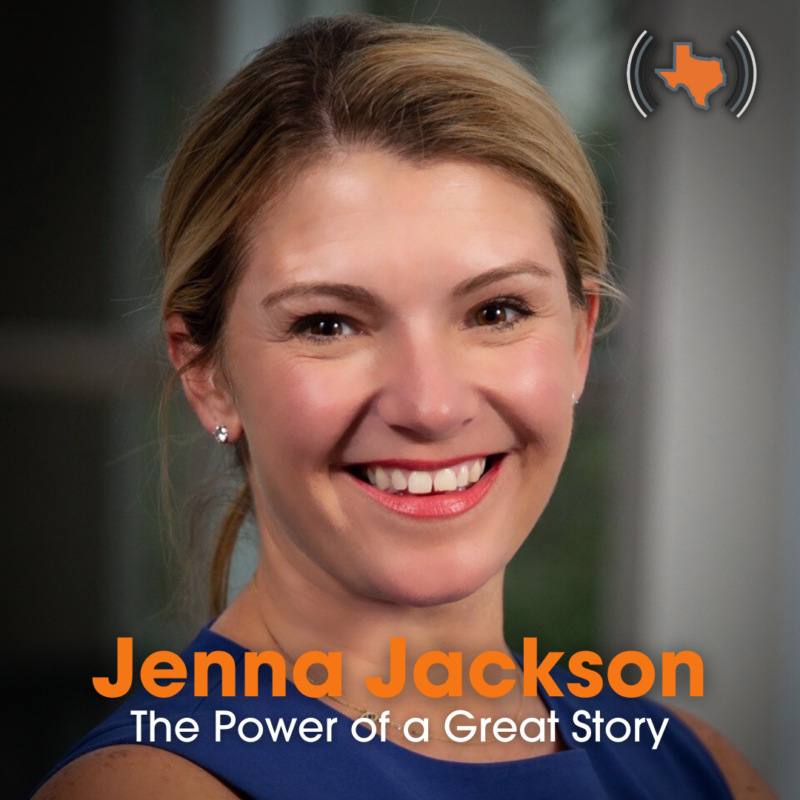
Jenna Jackson, Founder and CEO of P+R Creative Group, joins the Building Texas Business podcast to tell us how she took 20 plus years in TV production and built her company with a focus on telling great stories.
P+R Creative Group is a Texas based full service creative agency that helps its clients around the world through the entire creative process.
Transcripts are generated by machine learning, so typos may be present.
Chris Hanslik: In today’s episode, you will meet Jenna Jackson, founder and CEO of PNR Creative Group. Jenna tells how she took 20 plus years in TV production and built her company with a focus on telling great stories. Jenna, thanks for being here today.
Jenna Jackson: Thanks for having me.
Chris Hanslik: I appreciate you taking time to join the show and I look forward to hearing more about your story. So let’s get started.
Jenna Jackson: Great.
Chris Hanslik: Tell us a little bit about PNR Created and what it’s known for.
Jenna Jackson: So we really our expertise is telling great stories, whether it’s for a company, a nonprofit, in a documentary, in a television series. You know, my history is in video production and producing television producing. So I’ve been telling interesting stories, crime stories originally, but interesting stories for a long time. you know, that’s really what I’m passionate about. My brother runs the company with me, so he and I are very focused on that. It is, yep. I named it after my twin boys, Parker and Reese. Yeah, my brother runs our Austin office, and he runs most of the video production side of things, and then I run more of the creative marketing, PR, social media side of things.
Chris Hanslik: Okay, so, and this may be part of you telling a little more about your background, but what inspired you to start the company?
Jenna Jackson: So I went to college at Sam Houston in Huntsville and I had to work to pay my way through school and I started working as a prison reporter in Huntsville, prison capital of the world for the local newspaper. covering executions, you know, visiting death row once a week. I was 20.
Chris Hanslik: I’m sure your parents loved that.
Jenna Jackson: They were really hoping it was a phase. They were like, please don’t be a journalist and please God don’t focus on crime. But I disappointed them in that way. So I, while I was at school at Sam, I met Dan Rather. He’s also a Sam Houston alumni. Turns out he played high school football here in Houston in the Heights, Reagan High School with my grandpa.
Chris Hanslik: Oh, wow.
Jenna Jackson: I didn’t know that at the time. But once he kind of made that connection, he took me under his wing and has been a mentor my whole life. He’s really cool. So he got me to CBS in New York, entry level, you know, getting people coffee, just kind of starting right after college, which was huge for a 21 year old from East Texas. Poor kid. You know, it was big. So that kind of started my career. I had a 15 year career producing for CBS in New York. Covered all kinds of stories all over the country in the world. It was really cool. And then I left in 2012. I helped Katie Couric launch a show at ABC. And then when my boss there left to take over CNN, I decided, you know what, I want to be able to pick the stories that I tell. So I started a video production company based in Texas. I was living back in Houston at the time already and then that’s just kind of morphed, you know, as our clients have needed more avenues to tell their story. It’s morphed into a full creative agency. It just kind of made sense. So it evolved over the years. And now we do social media marketing PR. tons of video production still, but you know, just kind of that full whatever your best avenue to connect with your audiences and build your business, which is so perfect for the show. That’s, you know, that’s what we try to help our clients with.
Chris Hanslik: That’s great. So you mentioned the Austin office, so two offices, Houston and Austin.
Jenna Jackson: Yes. Yeah.
Chris Hanslik: And roughly how many employees?
Jenna Jackson: We have about a dozen full-time employees and then we’ve got dozens of contractors, you know, we do a lot of video projects and or sort of per project kind of work. So we have a lot of guys who work with us only. But then, you know, we have a lot to who do films and television series and they work with us kind of intermittently.
Chris Hanslik: So, okay, so as you built the company, what are some of the things that you think you’ve done to kind of improve the hiring process to make sure you’re bringing the right people on the team?
Jenna Jackson: Yeah, I feel like making sure the team works together well and has that good culture, you know, and trust each other and we can trust them with our clients is really important. We’ve definitely made some mistakes over the years. We’ve gotten better. I’ve gotten better at just trusting my instincts. If I don’t feel good about somebody, I just don’t bring them on. You know, the other thing I think that I’ve learned over the years is just to be really clear about where the company’s going and what sort of we expect as leadership. And then, you know, also listening a lot so that people can feel like they, they can talk frankly to me and tell me where they want to go with their careers. And, You know, what kind of work they want to be doing. We’ve got a lot of variety at our team. So, you know, some people only want to do documentaries. That’s great. I need to know that upfront because we may not be doing a documentary this year, but I also want their passion to grow. I think it’s important to have happy, fulfilled team members. They do a better job. So. Just like that communication piece, I think is really important.
Chris Hanslik: I think two things you said there. One, having that gut when you are interviewing someone. I think so many times we see what’s on paper, we think they fit the job. And so we excuse away or want to try to convince ourselves that this could work. And I think so many times that initial reaction is, yeah, keep looking.
Jenna Jackson: Yeah, just for whatever reason, you don’t feel like they’re going to be a good fit. I’ve just learned over the years, it’s always correct. Yeah.
Chris Hanslik: And then I think setting the second thing, setting the clear expectations of where the company is and where it’s going and how they may fit into that or not. Right. I say this here at our firm, we’re not trying to be the biggest law firm in the world. We’re trying to be the best.
Jenna Jackson: Right.
Chris Hanslik: And if you don’t connect with our mission, it’s OK. It’s a better organization for you. It’s not this one.
Jenna Jackson: Right.
Chris Hanslik: It seems like that’s probably true for you. Small, creative company. But you just need the right people.
Jenna Jackson: Yeah. We’re very boutique, you know, but we pride ourselves on, you know, every project we do, we make it fun and enjoyable for the client. Like this shouldn’t be terrible, you know, it shouldn’t be awful to go shoot a video should be really fun, right to tell your story. And if we’re not doing that in the right way, and if there’s any drama our team brings, we’re not doing our job. So, you know that there’s kind of a no tolerance from my point of view on on that sort of thing. It’s like, you know, we’ve got to be very concierge. We’re boutique. Yeah, we’re not trying to be the biggest. I want to make sure as we grow our quality stays the same, you know, and our reputation stays the same. And you know, I mean, you run a business, it can change so fast.
Chris Hanslik: And certainly the last two years, right?
Jenna Jackson: Yeah. I mean, there have been so many additional struggles that every business owner has been through, I think.
Chris Hanslik: Yes. So let’s talk a little bit about that. So in the last two years, what have you had to change in the way you’ve run the company, whether that’s from hiring, day-to-day operations, what’s that look like for you?
Jenna Jackson: I mean, I think probably just like every business, you know, we really had to take a hard look at efficiencies and just make sure there’s no overspending, you know, sort of every dollar counts. I mean, when COVID hit, video production stopped, right? Everything did, even like Paramount wasn’t filming anymore. You know, so up to the largest filming studios in California, you know, there was nothing happening, right? So we had to morph. We had to add, expand some capabilities that we had sort of already been doing, but not officially. You know, the social media stuff became more important. Digital advertising became more important. You know, for me, my number one goal was to keep paying our people. I mean, and as a small company, that wasn’t easy, you know? So just trying to figure out, okay, let’s get creative and what kind of work can we be doing right now to keep everyone working and, you know, happy. And then we, I mean, I think it kind of was a gift for us because we really did evolve and grow, but it wasn’t easy. Sure.
Chris Hanslik: You know, did you keep your team together?
Jenna Jackson: We did. Yeah.
Chris Hanslik: Did you find that going through that together brought y’all closer and improved the culture?
Jenna Jackson: For sure. For sure. Because I think we all, we’re very grateful you know that was a huge blessing that we were able to do that and everybody keep working in some capacity and so i think you know i think we had really loyal customers during that time but we also really loyal teammates and employees because you know they probably could have gone somewhere else and made more money during kind of the that downturn and they stuck with us and it’s definitely, you know, it’s paid off. So, yeah.
Chris Hanslik: That’s great. Did, you know, now we’re in a world where there’s hybrid work, you know, work from home, you know, ushered in overnight in March, April, 2020. Were you already in somewhat of a hybrid mode before that?
Jenna Jackson: Yeah, we were. I mean, you know, especially when we were solely video production, we do everything on location. The only thing that our offices are for are, you know, meetings or editing. So we really just, we closed down our Austin office for about a year during COVID because we didn’t need it. Everyone, we moved all the edit equipment to our editors homes so that they could, you know, edit remotely. We’ve reopened because we did learn that it’s easier to be a little more organized and stay on deadline if you’ve got some kind of combo, you know?
Chris Hanslik: Sure.
Jenna Jackson: But I mean, our filmmakers and our social media experts, they’re sort of all over the place as it is. We have graphic designers all over the country that we work with. It was always a little bit of a hybrid.
Chris Hanslik: Right, so you were kind of ready for it in some ways.
Jenna Jackson: Yeah, in some ways we were. It was really just the, you know, the on location stuff that completely came to a halt that made it tough.
Chris Hanslik: So you started the company, I think, in 2012?
Jenna Jackson: Yes. Yep.
Chris Hanslik: And so, I guess, coming on a 10-year anniversary? Yep.
Jenna Jackson: We celebrated our 10-year anniversary in January of this year. It’s crazy to me. Congratulations. Well, thank you. I feel like it’s a big deal just to even get there.
Chris Hanslik: Of course it is. So thinking about those first 10 years, is there a setback or failure you encountered along the way that, when you look back now, you’re like, wow, that made us better. This is what I learned from it, and it made us better in the long run. Anything you could share along those lines?
Jenna Jackson: Yeah, I mean, I think there are probably several. You know, one thing that took me a while to get good at was the business side of the business. I’m a journalist, so I never took a business class. You know, I took all of my math classes in the summer to make them as quick and easy as possible. You know, I just, it’s not my gift. And I’ve had to, really try to learn from other great business people how to run a business properly. And I’ve definitely made mistakes along the way. You know, initially we hired everyone on salary and I’m like, okay, this is not the business model for us. We really Contractors are a better business model because we have a lot of per project things going on, you know, and that gives them freedom also. So like some of that side was definitely a learning curve. You know, I would say after doing television in New York for 15 years, I thought it’d be a whole lot easier to go out and like sell television series and documentaries. I was like, ah, I can do this in my sleep. It’s not easy. I mean, it’s a It’s kind of a saturated market on that side of things you know so it’s been harder than we thought to pitch. Good content and keep it authentic to what we wanted it to be which is really important to me so you know we we do that for clients as well but like a couple of documentaries that we’ve produced you know. We ended up doing them on our own and then selling them because I really wanted them to be real. I want them to be, which sounds dumb, right? Documentaries are real. Not when Hollywood kind of gets their hands into it.
Chris Hanslik: Get a little behind the scenes.
Jenna Jackson: Yeah. I mean, you know, they’re like, Oh, let’s make it more like this. I’m like, but that’s not what happened. You know? And so to me as a journalist, it was really important for me to, to make sure it was authentic and real. And we did justice to the stories and the characters. And so that’s been a learning curve for sure. You know? So there have been a lot of those things along the way.
Chris Hanslik: Right. Almost every day, it seems like something, right?
Jenna Jackson: Oh, every day. I mean, everyone’s like, what have you learned? I’m like, oh, I’m still learning. Every day.
Chris Hanslik: Well, speaking of, I guess, some of the documentaries or things, what are some of your, I guess, most popular that you’ve produced in the last 10 years that maybe some listeners would know about?
Jenna Jackson: Yeah, I mean, our most recent was it was a special two part 48 hours on CBS News. I was actually it was my first foray into being on camera, which I don’t love. I’m usually behind the scenes. I much prefer that. But this just kind of happened organically. I’ve been covering this case. A woman who has multiple cases. She’s been accused of multiple cases over the years, five different murders. She’s a criminal defense attorney. She lives here in Houston. She’s never been charged with any of them. So it’s pretty crazy. Wow.
Chris Hanslik: Yeah.
Jenna Jackson: It’s still ongoing. So that two part series was on 48 hours in May, I think. And it was called chasing Katherine Shelton. It was pretty intriguing. And I worked for 48 hours for 15 years, right? So I, it was fun to go back and work with my old team and in a different capacity. And then, you know, our other two documentaries that have sort of been out there and done pretty well. One is about a woman who was wrongfully convicted of killing her child in Corpus years ago. Amazing woman. She’s since been released from prison. We got to follow her whole journey, which was pretty cool. It’s called Until Proven Innocent. And then the other one is totally different. It’s about my hometown, Jacksonville, a mayor’s race. where there were three very different candidates running for mayor of a very small conservative town. And it was pretty hilarious and interesting. And it’s called Tomato Republic. So anyway, we’ve had fun. Yeah, we’ve told a variety of stories, but it’s been really fun.
Chris Hanslik: So just kind of going back to the business, we were talking about the hiring process. I want to talk about the flip side of that and that’s on the firing process. I think your experience when you’re dealing with employees that you’ve had to get rid of, that for any number of reasons, I’m sure, anything you can share about the kind of lessons learned from what was difficult about that and what you’re doing different as a result of that.
Jenna Jackson: Yeah, I was thinking about this this morning coming in here and You know, I remember one in particular, thankfully I haven’t had to fire a lot of people, but I’ve had a handful and it’s never fun. Right. And I’m always the one who has to come do it.
Chris Hanslik: Right.
Jenna Jackson: My brother is exceptionally nice and he will not do it. He’ll be like, I had a very serious conversation with them. I think they get it. And I’m like, they got it. So, you know, I think it, I think what I’ve learned from those is again, it goes back to communication because I think. In most of the instances where I’ve had to fire people, maybe the expectations weren’t as clear on our side as they should have been, you know, and that’s on us too. I mean, were they doing what they were supposed to working hard enough to meeting deadlines? No, but you know, was I sort of assuming that they knew what I wanted them to accomplish? I think I was. And so I’ve learned, don’t do that, you know, just be real clear and upfront and You know, the first time if someone misses a deadline, say I call them and I’m like, hi, you know what happened? Okay. Maybe you didn’t give yourself enough time. So next time you need to estimate it out better, but we can’t manage expectations with clients. If my team’s missing deadlines, right? So, I mean, we all deal with that. So I think, you know, just being really clear upfront, but then along the way at every touch point, you know, and if something doesn’t seem to be working to really stay on it and be vigilant.
Chris Hanslik: So that kind of leads into you as a leader. So let’s talk about that. How do you try to show up as a leader when you’re, you know, every day for your team?
Jenna Jackson: Yeah. I mean, I think, you know, the biggest way I try to show up is just by working as hard or harder as they do, you know, so that they see I’m in the trenches with them. I try to keep We try to keep a lot of transparency about what’s going on. Like everyone can see my calendar. You can see where I am. I’m a working mom. I have two 15 year olds and they’re a huge priority, right? So I’m also not going to miss a basketball game if I can help it. But I’m very transparent about that. If I leave early to go do something with my boys, I’m back on my laptop later that evening. I’m sure you know, you’re a parent. I mean, it’s all about balance. Right. And so I just try to be really transparent about that kind of stuff with my team. And I think they know how hard I work. They may not always agree with every decision. but they know I’m working and I’m trying to move the company forward. I’m not just expecting them to do it.
Chris Hanslik: I think that’s so important that one, that the people that work for you or with you know that there’s nothing you won’t do. Exactly. And you’re certainly willing to do everything you’ve asked them to do and they need to see that, not just hear you say it, but they see that in action. I think it’s so important. Yeah. And I do agree in today’s time. I think it’s I think it’s valuable for people to know. I am leaving to see a kid’s performance of something. But they know they can rely on you to be back engaged after that’s over.
Jenna Jackson: Exactly.
Chris Hanslik: I’m not so sure. I was reading a book recently. They talk about the work-life balance.
Jenna Jackson: There’s no such thing. If you figured it out, let me know.
Chris Hanslik: The authors of this book kind of said that. This has made it in to the vocabulary and it’s just not true. Doesn’t mean it’s bad, but let’s be honest about it. It’s just kind of juggling and finding what works for you. Everyone’s is a little different.
Jenna Jackson: Yeah. And some weeks are crazier than others. You know, like we had a basketball tournament four days in Fort Worth last week. I was, I had my laptop there in between games, but I didn’t get as much work done as I usually do. You know, you just. It’s seasons I think, and it’s juggling, but like I try really hard too, to just be honest about the fact that the balance is hard because I have my right-hand person just went on maternity leave. She’s much younger than me, obviously, but she’s got a one-year-old and a brand new baby. It’s going to be hard for her and she wants to work, you know, and she’s a hard worker. And it’s like, you can’t guilt yourself as a mom, as a parent, you know, you just got to keep moving, but it’s not always easy. I mean, but you know, you just. So I think that too, adds to the culture of a good workplace. You know, everyone has priorities, whether it’s your kids or your dogs or your yoga, because that makes you feel better and work harder and get more done. And whatever it is, your health, your, you know, your husband doesn’t matter. I think it’s important to know, yeah, there are times when you’re going to have to buckle down and work till 10 o’clock at night because we’ve got to get this project out. But then there are other times when I really don’t want you to miss that kid game, you know, so it’s just, you know, a constant balance.
Chris Hanslik: And I think that’s where the communication comes in. Clear, direct, transparent.
Jenna Jackson: Exactly. Yeah. I’m happy for you to leave early and do this, but I do expect this to get done by tomorrow. So you got to figure that out. Figure it out.
Chris Hanslik: So any mentors? You mentioned Dan Rather, obviously. I mean, he’s the coolest mentor probably ever. At least one of them, but he doesn’t know that name. So that’s obviously on one side of the profession, the creative side, but on the business side, leadership side, any mentors along the way that you’ve drawn from to kind of create your own style?
Jenna Jackson: Yeah, definitely. I mean, I feel like I’ve been lucky in that a lot of people have kind of Taking an interest and helped me along the way, you know, if a good friend of mine, John Wines are all he’s a very successful businessman in town and he was an investor for us for a while, but we are good friends and I’ve learned so much from him. On the business side, you know, I mean, Matt Bryce, the owner of federal grill, he’s what they’re one of our clients, but his visionary, you know, aspect and how hard he works. I mean, I’m learning from him now, you know, it’s really cool. Like we get to do all this marketing and stuff, but I also get the bonus of learning from this incredible businessman who’s, you know, worked really hard, worked his way up and is very successful now. So. Yeah, I feel like I learn every day. There have been lots of mentors.
Chris Hanslik: I think that, well, one, Matt’s been very successful with his concepts and they continue to grow. But I think what you just said is so true. You kind of learned if you’re observant enough as you go through the day, you’re going to learn from all kinds of people.
Jenna Jackson: For sure.
Chris Hanslik: And I think it’s just being aware of that and appreciating there’s something to learn from everybody.
Jenna Jackson: Yeah, I mean, I learn from my kids every day. I learn from these young, you know, people who work for me and do all of our social media because That I’m 47.
Chris Hanslik: This is clearly not my, that’s not how I grew up.
Jenna Jackson: For the record, I did not ask your age.
Chris Hanslik: That’s okay, I don’t care. You’re not in trouble.
Jenna Jackson: No, I learn, I feel like I learn every day for sure.
Chris Hanslik: So, you know, when you think about, what y’all are doing is are there things that you describe as innovative for your industry or maybe for a company your size?
Jenna Jackson: I think you know I mean this is obviously my go-to but I think how we incorporate video and sort of digital advertising into storytelling is pretty innovative. Now I do think people are doing it but You know, as a television producer for 20 years now, plus, you know, I, video is what is my go-to, right? So I feel like if you can’t sit in front of somebody like we’re doing right now, video is your next best bet, your next best tool. And I think, you know, it shows that in the numbers and the analytics, when you share, you know, video snippets on social media, people connect more, they see it more, they share it more, you know, So I think that’s, you know, a thing that we really try to do and we do it well. You know, we’re also just trying to constantly evolve. One of our big areas right now, which might seem weird given my background, you know, is ESG for oil and gas companies and energy companies. It’s the environmental social governance.
Chris Hanslik: It’s a huge topic for the last year.
Jenna Jackson: And everyone’s expected to do it. But really what it comes down to, there’s lots of data points and you know, expertise and constant evolution of what everyone expects. But really what it comes down to is telling your story in the best way possible, right? So you may not do the environmental quite so well, but you’re working on it. As long as you tell that story and you’re transparent about where you are and you show progress, it benefits your shareholders, your company. I mean, I think public companies are for sure expected to do it in this day and age, even you know privately invested privately held companies are having to kind of go that direction so you know some of that’s been. It’s been interesting for us to just kind of evolve into some of that.
Chris Hanslik: I can see why that’s the case because a lot of these companies never had to quote tell their story before, right? Certainly not in that way.
Jenna Jackson: And they’re really good businessmen, right? But they’re business people, but they’re focused on operations and making money, which they should be. Right. But, you know, sometimes I think they don’t even realize how well they’re doing certain things, you know, like We, we’ve done a lot of work for quanta services and awesome company here in Houston and another mentor, Duke Austin, their CEO, he’s a friend of mine and he’s, I’ve learned so much about business from him. You know, they, we started their ESG initiative a few years ago and it’s really benefited their stock price, you know, their customers. It’s been great for them. And they, I don’t think really knew how well they were doing so many things. They knew they were successful, you know, But they their culture is amazing and so to talk about that was incredible. I have tons of environmental initiatives which you don’t think about when you’re thinking you know they’re an electrical construction company right so it’s just interesting I think when you know everyone has an incredible story right company person whatever. It’s just about digging into it and getting to know them and telling their unique story in whatever way is the best for them. So that’s the fun part.
Chris Hanslik: So anything, you’re kind of on the front lines and spent your whole career there. So as you look at how things have changed and the delivery of television and media services and the proliferation of social media and digital marketing, right? In the last two years, where do you see that going? What’s your kind of prediction as things evolve?
Jenna Jackson: I mean, it’s evolved so fast. If you think about when I started in news, you know, there were three networks and everyone watched the evening news every night at five 30 or whatever, you know, it doesn’t happen anymore. I mean, the networks are sort of dying and there are a million new networks and streaming platforms and You know, like you mentioned, I think the probably the best way and the fastest way to get information out these days is social media, digital marketing. The fact that we can target where you’ve been from your phone is a little creepy, right? But, you know, we can then pop an ad up on your screen. I mean, it’s nuts, right? It’s marketing, email marketing. I think that kind of thing is going to keep going. I do think. You know, things like what you guys are doing here, building communities. I think that is where the future is going because while I think social media and, you know, digital marketing are key to that, I think it’s going to be more about connection points for people. If they feel like they belong to a community, they’re going to be loyal. They’re going to look at it. There’s so much noise now. I think people are starting to get rid of some of the noise. And so I think, you know, And the community building and the storytelling in an authentic way is going to be what keeps people focused on certain platforms.
Chris Hanslik: That makes a lot of sense to me because I think fundamentally, I believe as humans we want to connect and be in community. For sure. Right. Now, it may be the traditional ways of that are changing. Right. And so I think you mentioned kids. We both have 15 year olds. They live in a kind of digital world, right? That’s how they connect and they still get together. But I think about, you know, you know, my 15 year old daughter and those kids from all over Houston, where you would just traditionally when we grew up, you knew people in your neighborhood, right? Or whatever.
Jenna Jackson: Now, just in your school, you know, but.
Chris Hanslik: And it’s that community expanded, but it’s because of the digital presence, right?
Jenna Jackson: Yeah, it is. And, you know, it’s cool. Like, I worry about my kids growing up with all this social media, because there’s definitely a very big potential downside, you know, and dangers that you have to watch out for. But there’s also such upside. And that’s one of them. I mean, I’m sure our kids know each other, even though we just met.
Chris Hanslik: Right.
Jenna Jackson: So because they have multiple friends at multiple schools and, you know, they probably are on chat. chat groups together or social media or whatever. I mean, that’s a bonus to be able to expand your network. And I think if you can do it in a real way and, you know, stay authentic, I mean, exactly like what you’re doing here, you know, bringing business owners together to talk through issues that I know we’ve all had and we’ve all connected with, you know, I think that’s what builds a real community and is actually a real benefit to all the social media that’s out there. So it’s kind of exciting to see.
Chris Hanslik: It really is. I mean, I think, as you said earlier, it’s changing. Very quickly, yeah. You know, one or two things that you might share with an aspiring entrepreneur about, you know, if you’re thinking about starting your own company, here are two things you need to think of or to do or not do or watch out for any kind of takeaways that you might be able to share.
Jenna Jackson: Sure. I mean, I would say just know going in, it’s really hard work. It’s very worth it, I think, because you do have flexibility and freedom, you know, and you can see something grow, which is really cool. you know, surround yourself with smart people because, and loyal people have mentors. Get, you know, the business background, no matter what your, no matter what kind of business you’re opening, you know, I really, I can do television production in my sleep. Right. And that’s how our company started. So I was like, this is going to be easy. It’s fine.
Chris Hanslik: Right. Yeah.
Jenna Jackson: It’s not easy. You know, it’s just, you have to have some business sense and know some business philosophies and sort of how some of that works. And. So I think don’t underestimate that. And doesn’t mean you had to go to business school. I didn’t, but, you know, I probably learned it the hard way. So I would just say like, maybe study up a little, take a class or talk to people. That’s, I mean, my biggest thing, we talked about it a little bit, but it’s like, you know, just have mentors when you meet people who are amazing. successful humans, ask them questions. I mean, you know, find out. They love talking about it, right? Everyone likes telling their story. Everyone likes talking about how hard they work to get to the place where they’re at.
Chris Hanslik: Right.
Jenna Jackson: And most of them are still working hard.
Chris Hanslik: Most did it because they’re pursuing a passion.
Jenna Jackson: Exactly. And they like talking about their passion, right?
Chris Hanslik: So it’s funny. You say that people like telling their stories and their passion. That was the genesis for this podcast is to let people, you have entrepreneurs and business owners come and do just that because there’s so much that one, they’re interesting. They’re unique and they’re inspiring.
Jenna Jackson: Yeah, no, I love it. I love that you guys are doing this. It’s really cool. I’m excited to get to be a guest.
Chris Hanslik: Well, you’ve been a great one so far. So we’re going to wrap things up now and talk a little more personal about you. You’re from Jacksonville, Texas, small East Texas town. Yeah. So this ought to be actually, I think it’ll be I think I know what your answer may be, but Tex-Mex or barbecue? What’s your preference?
Jenna Jackson: I’m a Tex-Mex girl. I was born in Laredo, and so I spent every summer in Laredo. That’s a curveball. That was a curveball. That was a little tricky.
Chris Hanslik: I was pegging you for barbecue.
Jenna Jackson: I know. Well, I think I kind of got overfed barbecue as a kid, so I love some good Tex-Mex. I like barbecue too, but.
Chris Hanslik: All right, so Tex-Mex. So you mentioned being the prison reporter, but was that your first job or do you have some type of job before that?
Jenna Jackson: Well, in high school I worked, so I worked at a bank for a while. I taught dance for many years. I worked at Pizza Hut briefly, thankfully. But I kind of did everything. We grew up really poor. My parents were really young. I did everything. And then in college, I had like three jobs.
Chris Hanslik: So I had a lot of learning and, you know, working and learning the value of hard work.
Jenna Jackson: Yes.
Chris Hanslik: So many of my guests, you know, similar stories, right? They worked and from a young age and kept going.
Jenna Jackson: Yeah, me work ethic is everything trying to teach that to my boys right now. They start their bus boy jobs at federal this week. I’m very excited. Another bonus to another bonus to knowing the amazing that price.
Chris Hanslik: Right. So if you could take a sabbatical for 30 days, where would you go? What would you do?
Jenna Jackson: I would probably go to Italy. It’s one of my favorite places where I met my husband. But, you know, I think it would be less about I think I would probably just try to spend more time with my kids, knowing I only have them at home for three more years. It’s going really fast, you know? So I don’t know, if we could all escape, I think I would take them to Italy for 30 days and just travel around and go to the Amalfi Coast and go to Capri, which I’ve never been to, you know?
Chris Hanslik: Sounds amazing.
Jenna Jackson: Yeah.
Chris Hanslik: Well, good. Well, Janet, thanks for being on the show. You were a wonderful guest to have and your stories are amazing. I’m sure you could tell many we could be on the air for hours.
Jenna Jackson: Thank you so much for having me. It was really fun.
Chris Hanslik: All right. Take care. And there we have it, another great episode. Don’t forget to check out the show notes at boyarmiller.com forward slash podcast. And you can find out more about all the ways our firm can help you at boyarmiller.com. That’s it for this episode. Have a great week and we’ll talk to you next time.
With a deep understanding of your business alongside clear and honest communication, we help clients face challenges fearlessly.
Learn more about our services and how we help clients.