


With a deep understanding of your business alongside clear and honest communication, we help clients face challenges fearlessly.
Learn more about our services and how we help clients.



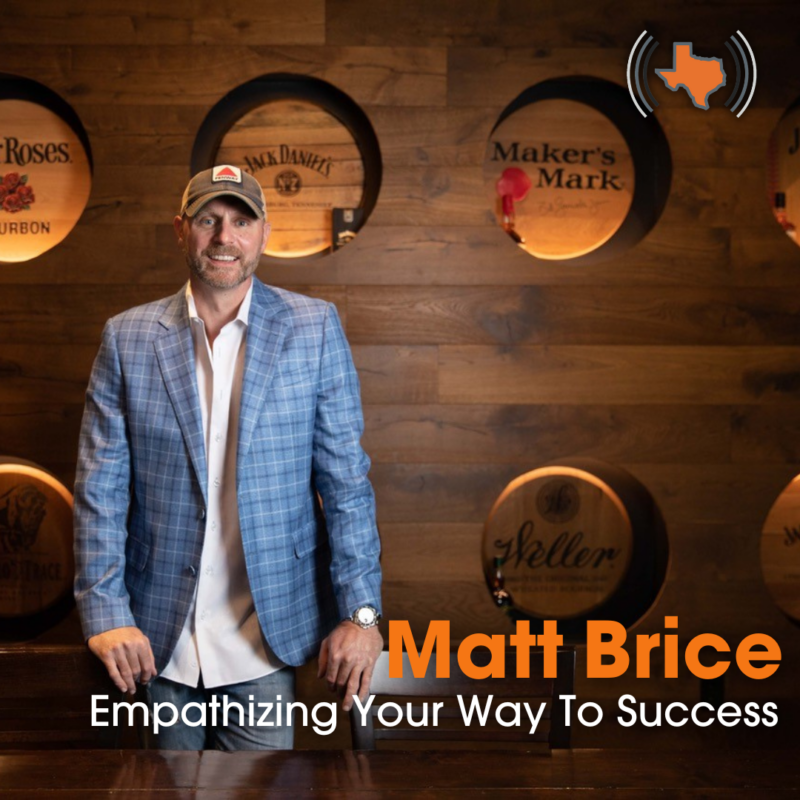
Matt Brice, Founder of Federal American Grill, shares his passion for treating people right. Matt discusses how his mission to improve the lives of everyone he touches has helped him build a company with a learning culture, grounded in values like empathy.
Transcripts are generated by machine learning, so typos may be present.
Chris Hanslik: In this episode, you will meet Matt Bryce, founder of Federal Grill. Matt’s passion for treating people right has led to impressive growth at his restaurants. In this episode, you will learn how his mission to improve the lives of everyone he touches has helped him build a company with a learning culture grounded in values like empathy. Matt, I want to thank you for agreeing to come on the podcast. Welcome to Building Texas Business.
Matt Brice: I appreciate you having me on today. Thank you very much.
Chris Hanslik: So I always like to start with you’re the founder of Federal Grill, Federal Grill Hospitality Group. Tell us what Federal Grill is known for.
Matt Brice: Well, we’re Scratch Kitchen, all made in-house. Every dressing, every sauce, you name it. Fresh fish every day. And then we’re also known for our whiskey side. So we have about four to 500 different types of whiskeys. So it’s a lot of fun. We’re an old fashioned bar. We make three different types of old fashioned. We have a barrel aged old fashioned, which everybody loves is my favorite. Then we do the flame in old fashioned where we light it on fire, your choice of bourbon. And then we do our smoking gun old-fashioned which is really unique and neat. So we use like a cherry wood that kind of, you know, smokes up the box that we’re bringing to you and then you open the box and it smells like a campfire. It’s really delicious. So, and mostly, you know, we’re known for our relationships. We’re really tight into our communities. We make sure we’re in the community, especially where we live. We have a place where our kids go to school. We’re very active in the community with schools and doing whatever we can for donations for the kids and whatnot. So it’s really a community that we’re trying to build here with Federal Grow.
Chris Hanslik: Sounds great. So it’s not just your normal restaurant. It’s in addition to community, just a gathering place.
Matt Brice: Yes. The managers, which we don’t like to use the title, like to use leaders that we’re hiring, are really genuinely hospitable people, right? Everybody, I love everybody we work with. And we talk about this all the time, is just create the experience. The food’s gotta be great, the atmosphere’s gotta be great, it’s gotta be fun, it’s gotta be clean, all that stuff. But at the end of the day, you gotta create the experience. Norm. When you walk in, you wanna be Norm. Everybody knows who that is, right?
Chris Hanslik: Yeah, I think I’m… can identify with that at a few places in town, including yours. So we were talking before we started recording and you’re talking about, you know, what the restaurant is to you and what you want it to be, the passion you bring to it’s, you know, inevitable. Tell us what inspired you to get into the restaurant and hospitality business to begin with.
Matt Brice: Well, at first it wasn’t inspired. I had to work when I was 12, but I didn’t come from much money. Great parents and all that stuff, a good life for sure, but I did have to work at a paper route and wash dishes. And then that family called Lucky Strike, it’s in my hometown in Chickpea, Massachusetts, really gave me my start and they taught me from dish washing to cutting fish and then starting to cook and all this stuff went all the way through high school. They’re the most amazing family. But what I learned most about them is how to treat people. It wasn’t so much about the restaurant. Everybody that came in to see these people, they were just so hospitable, shaking everybody’s hand. It was one big family. That’s where it stuck. That’s where I knew I said, I want to do what these guys are doing. And it was about the relationships in the community that they built that was just so amazing. The food was just food, right? And all that stuff. People came for them. So anyways, that’s where the passion started. And then it kind of just stuck. I tried leaving the business one time and I was miserable. I was making great money at the time, but at the same time, it wasn’t never about money. It wasn’t, it was about the passion. So I always came back to it, just stuck with it. How’d you get end up in Houston? So I was the general manager of Ruth Chris Steakhouse in New York City when I was 26. And so love and life, all this stuff. Well, a gentleman approached me out of Milwaukee, and he offered me a partnership. And he said, listen, I want to open up a restaurant. We tried to do it in New York. He wanted to open up a steakhouse in New York. And finally, after saying no a million times, I said, yes, long story short, we never got it open. And unfortunately, it was like $600,000 lost and all this good stuff. We made a commitment at that time. He needed help in Milwaukee. He said, do you want to just help me have eight other restaurants and nobody running them? I did that. But in the meantime, he had one restaurant here in Houston that wasn’t doing so well and it was on McKinney. And so I’d fly back and forth and I fell in love with Houston. So what happened is we found a spot location here. And it was on Post Oak Boulevard and I moved down here and the rest is history. I got out of that was in 08, but I met my wife walking in there too. So she was a patron and all that stuff. And she comes from a very big family here. It’s awesome. And I got out of that in 09 one year later because I wanted to do some on my own. And that’s kind of where. I landed here and this is my family ever since and this is home. That’s great. Love it here.
Chris Hanslik: So you’ve experienced a lot of growth at Federal Grille here recently, which is remarkable in any time, but especially the last two years of what’s going on in our world that you’ve kind of had this hyper growth. What do you attribute that to?
Matt Brice: Well, I opened during COVID. So the story of COVID really… So you got a lot of good press out of that. We got a lot of good press. You know, it’s the most trying time of my life for sure. My wife and I woke up one morning about four weeks into the shutdown and we’re getting calls from employees, can’t afford rent, all this stuff. I truly believe that if you’re in a position of power, I’m not saying I’m powerful, but when you’re an owner and you have the ability to do something, you need to do it for your people. It’s not about our business. We would have been fine. It wasn’t about that. When we reopened, we just made a commitment. We said, we’re doing it. We got a lot of backlash, but we had a ton of following, huge. That was our tipping point, to be honest. What we did, people I didn’t know what we were doing at the time right, you know, so yeah, how could you right? I just didn’t we were just gonna open quietly, but then I got a phone call on a Thursday before we were gonna open up that weekend and nobody knew and the phone call was from Michael Barry who was a radio talk show sure right? I know my I answered the phone I thought it was him I was jumping in the shower and I answered phone like hey Michael, what’s going on? It was Ramon his uh, gotta runs his whole studio and says, Hey Matt, get somewhere quiet. We got you on live air in 30 seconds. That was the, Oh no, do I take this or do I not take this? Once I took it, that’s where it all blew up. So that was a tipping point and we never stopped and we kept going and kept going and kept going and people knew why we were doing it. You know, we’re doing it for the community. We’re feeding every police officer. We’re sending out food to everywhere. We just said we’re all in. You know, we’re not making any money. So what? Just keep moving forward. And the whole team, we said, listen, if you don’t feel comfortable coming in because you don’t want to get sick, don’t come in. You got your job. Don’t worry about it. You know, you collect your money or whatnot. When you feel comfortable, come on in. We just kept going and that’s a big deal. When people saw that, we had people come in. We never were understaffed because everybody wanted to work with us.
Chris Hanslik: It was really neat. In your business, not being understaffed in the last couple years is huge because I know we have clients like you in the hospitality that, for example, have demand for a lunch service to this day but can’t staff it.
Matt Brice: I know. It’s crazy. I don’t understand. The, when I say lower and more casual restaurants have a little bit of a harder time than higher end restaurants because they tend to make more money at our restaurant. Sure. Right. So if you’re out of Chili’s or something like that, it is a little bit harder when they were getting paid by the government too. So they’re making more sitting at home. Right. Right. So that was a little bit hard. We didn’t have that. So we’re kind of fortunate there.
Chris Hanslik: So it sounds like you’ve done a very good job building a strong team. What are some of the things that you do when you’re in the interview process or have your leaders, as you call them, interviewing for their stores? I mean, are there characteristics or traits that you’re looking for as you go through the hiring process and how do you set that up? Absolutely.
Matt Brice: We have a set of core values in our company that we live, breathe everything by and they spell shield. And so actually, so it’s a sense of urgency, hospitable, integrity, empathy, lifetime learner and discipline. And we live by each one of those. And when we’re interviewing somebody. We’re using those while I’m speaking to somebody. So before I’m hiring, I’m saying, all right, moving on time, discipline, take care of themselves, discipline, you know, all these things. So we’re going through it all hospitable. Obviously you can check that one off pretty quickly or not. So those are the main, main characteristics, but the biggest, they’re all the same equal. There’s none bigger than the other on our core values, but empathy is a big one. I really love it. In the restaurant industry, I didn’t grow up that way, okay? After I left Lucky Strike, my original job, I was in kitchens for the next 15 years or so. And I worked seven days a week, you know, that old school way. I worked for chefs that would just yell at you until whatever, you know, I just knew how to take it. It’s not what I wanted for anybody else. So we added empathy. It was actually our last one we added. And I look for that in anybody that’s working with us. Cause I believe that the empathetic leader is truly the most powerful leader, you know? I don’t like people degrading somebody or whatnot. It’s always sit down, have a talk, have a discussion. So that’s what I’m looking for in an interview is can this person, all we do is take care of people, that’s it. Our employees come first, not our guests, sorry guests.
Chris Hanslik: That’s the thing, right? If you take, and despite the industry, any good leader I think will say, if you take care of your people, then they will take care of the customer. That’s it, right? Yeah, we don’t have to worry about them. We worry about, We worry about our employees. And I think the trap people can fall into as a leader or business owners. If you are so focused on the customer and lose sight of your people, you’re not going to be successful. You have high turnover, disenfranchised employees. And I just don’t know how you can be successful that way.
Matt Brice: I truly agree. You know, we work constantly with the leadership team in our office about what can we do next for employees always. So we’re talking about our growth that two and a half years ago, we had one restaurant. Now we’re going on five. And in that time, we’re adding all these people into the mix, right? So CO, CFO, marketing, HR. Well, this is extremely important. So now we have created the CLO, Chief Leadership Officer, C level all the way to the top. And it’s going to be Christina, who has been our current CFO, but she’s going to be going into the CLO. And what we’re doing is just teaching classes, helping people better their lives that don’t know how. Right now, we started teaching English classes at our restaurants. So we have a teacher that comes in and teaches those that are in the kitchen or in front, whoever wants to brush up on their English because they don’t have that. I mean, they do, but they don’t know it right. And the only way to get better and better here is really got to learn English. And then we’re teaching all these other classes. So her job is going to be to better the lives of everybody. And so she’s going to have classes and meetings and all this stuff. And it’s the true leadership part. So I’m so excited over this.
Chris Hanslik: I mean, it’s remarkable that you would be that thoughtful to offer that because the other part of that is, yeah, your people may have other resources to go learn, but how convenient are they? And the more convenient you make it, the more likely people are going to do it.
Matt Brice: Listen, I look at Google, right? They created something pretty special. They have a campus, right? dentist there, doctor there, childcare there. We really think about this stuff all the time. We’re not big enough yet. We will. Hopefully. Not will. Not hopefully. We will. When. When. And we love to have things like that to offer. So we talk about what else can we do? What else can we do? Of course, we all have the basics of, you know, we’re working on healthcare right now and Morgan Stanley we use for 401k and all this other stuff. That’s great. But then what can you do extra for everybody? So we’re really trying to figure this out and we want to make sure that we get back as much as possible.
Chris Hanslik: So we started by talking about hiring and what you look for. Everything you’re talking about reeks of culture. So how would you describe the culture that you got there at Federal Grill and what are the things that you think are important to do to continue to maintain it?
Matt Brice: Absolutely. Being on the same page is number one. So With all of our meetings that we have, we always, always bring leadership, what we’ve learned for that week, because we meet weekly. And everybody has to share around the table what they’re learning. And the stronger we can be and the more that we can educate each other. And again, I talk about this all the time, a lot of the stuff that we’re reading, you know, I’m reading, I love this book, by the way, it’s Obsessed or Be Averaged by Grant Cardone. If you haven’t read it, it’s a lot of fun. He’s a talker. And then there’s Ed Milet, which is Max Out Your Life. And then there’s all these other books, you know. Of course, Sting and Grow Rich is the best of the best, been around forever. But we’re all reading different books, but they’re all kind of saying the same thing, right? So when you talk about culture, that is our culture. A lot of times, we’re not even talking about federal. We talk about federal on an operations level and financials and all this other stuff. But during this meeting, it’s really for everybody there to build our culture to say, man, this place is a lot more than a restaurant. Yeah. All right. And then we bring to the restaurant levels and we have those meetings at the restaurant levels as well. And so then I think I told you part of the culture, too, is we created federal university. Right. Right. So exciting. So in different segments, we’re going to do it once a month. We’ll have different speakers come and all this stuff in terms of motivation, culture, leadership. What are we doing in the business? So it goes all the way to dishwasher, bussers and all this other stuff. We don’t want it to stop. at our management because that’s what happens in a lot of these companies right right it just doesn’t trickle down all the way i’m not seeing it’s going to be perfect but at least we’re trying something here to make sure that culture stays strong talk to johnny caraba about this because When I met with Johnny, I had one restaurant. And I asked Johnny, I said, hey, what was your biggest issue with expansion? And he said 100% culture. And that is the hardest thing to do is to keep that culture as you grow. So that’s where my emphasis is mostly on too is how do we keep this strong culture and have people really truly understand that we care about who they are.
Chris Hanslik: That’s good. Great stuff. So shift a little bit. And you talked a little bit about what the pivot point and turning point for the company was because of COVID. What were some of the challenges and lessons you learned going through the last two years of this pandemic and running a restaurant?
Matt Brice: Well, these challenges were different challenges, right? You could talk about some of the supply chain. That’s a big challenge. Sure. Those are common. I think Tillman was on TV yesterday again, giving people updates on it. It’s getting better. But still, that was a big, big challenge. You couldn’t get it. You couldn’t get straws. You couldn’t get your basic things that we just took for granted, right? And we’re calling and saying, how do you not have straws? Or how do you not have to-go’s? Because our whole life’s depending on to-go’s. We couldn’t get paper. So those were some unique challenges. But you had to learn to pivot, right? And we did. We had to figure out a new way of business. Other challenges was getting people, we didn’t lose anybody during the pandemic, it’s amazing, but there were a lot of people that had to sit out for a while because they weren’t sure what this thing was. And so you could only open as many people as you had. So if you have one server, you had to just take as much as you could with one server. I’m waiting on tables, I don’t care, I was there every single day. So those are different challenges, but you have to prepare for it too. We were in a good position. when we moved into this, when we had to shut down financially. So we’re very, very blessed to be able to open right back up. But moving forward, like I said before, helped a lot of these challenges because that’s why we’re not in the position that you see a lot of other restaurants in. I feel for them very badly because you just got to keep moving forward. But there’s other challenges. That was probably it is the supply chain. And of course, now with the increase in inflation has just destroyed a lot of these
Chris Hanslik: Yeah, the cost, I mean, I hear others say cost up 25, 30% across the board.
Matt Brice: Yes, crab, king crab, 100%. Chicken is over 40%. Wow. My chicken that we use, which is some of the best chicken, it’s crazy, $8 a pound. That used to be $4. Right.
Chris Hanslik: $4.50.
Matt Brice: But anyway, and then beef is up across the board, 30%. So it’s been really trying. Luckily the Carrabbas of the world and us federal and you know, the higher-end restaurants We can raise our prices a little bit to make sure that we take care of that where it’s harder I use chilies as an example You don’t want to go into chilies and have to get paid $50 a head, right? So that’s their struggle too. So we’re still struggling to you guys stay ahead of it you know, we have a we have a controller who buys for us so he has his eye and on the ball all the time on, hey, that price is going up, let’s buy here and there.
Chris Hanslik: Not everybody has that ability, so we’re able to stay ahead of it. Going back to your core values, very disciplined approach about how you’re managing and watching cost.
Matt Brice: Yes, and especially during that time.
Chris Hanslik: You grew up, you said, in a kitchen, working in a restaurant. you have become an impressive leader of an organization. How would you describe your leadership philosophy and how did you learn those things along the way?
Matt Brice: I had great parents, first off. They taught me great values on how to treat people, that’s for sure. So I give them a lot of respect there. But I also had The right doors open for me and I walk through them whenever I saw them. So the opportunities working with that guy in Milwaukee and then moving down here, working at Ruth Chris as a GM when I was 26, the busiest restaurant, that taught me relationships, right? So Chili’s, when I worked with them for four and a half years, they taught me systems. Right. And then that first job taught me about people. And then Ruth Chris taught me how to deal with great executive relationships and all this other stuff. So kind of roll that all into one. I just picked the right The right place is the work. I’ve worked in a sous chef in kitchens in Cape Cod and worked under great people. Life experiences taught me it. And then I failed out of college. I went to go play basketball. I wasn’t a great student. I’m an open book. I had a 1.7 GPA and it is what it is. But I didn’t really care about that. It’s the self-education part is where I started to grow.
Chris Hanslik: Yeah.
Matt Brice: Big time. So as soon as I understood that there was so much more out there, you just have to go get it. And I started reading and watching these podcasts and watching some people that are more successful than you. And I had a thousand names. And I think that’s really where I learned that too.
Chris Hanslik: That’s a great lesson. I mean, most people think go to big name college, MBA, or all this other stuff to be successful, and that can be true. But it’s also, the opposite can be true, but that’s only if you’re committed, I think, disciplined, and have some ambition.
Matt Brice: Yes.
Chris Hanslik: And see those advantages. I think you’re right. You’re telling these stories. At any one of those moments, you could have felt sorry for yourself or something. Instead, you saw the opportunity and took advantage of it.
Matt Brice: Absolutely. And I tell everybody this, too, is what I think I did right was I kept my world big. I kept my circle big. You know, a lot of people that grew up in their hometown, stay in their hometown, all that stuff, nothing wrong with it. You know, that’s different, but you tend to stay in your circle, right? Right. And I think the biggest thing that I try to teach is tell everybody, stay out of your comfort zone. If you’re comfortable, get out. And that’s the number one key factor for me that I wrote down. I always say to stay hungry, stay out of your comfort zone. And I always remind myself that if you get comfortable, that’s complacency. So, I think growth, so happiness, I can go really deep with this, but I love this kind of stuff. I’ve been trying to figure out what happiness is for people, right? And I know it’s different for everybody, but I know the number one thing that make people happy period is progress. That’s it. If you look at it, it’s not money, right? It’s not other things. It’s progress. So maybe you ate right today, right? Progress. Maybe you had a great workout, progress. Maybe you got a promotion at your job, progress. That equals happiness, right? So I’m always looking at these things to say, okay, what can I do for somebody else to get there? Because I love this. I mean, I’m living it. I’m very, very fortunate to be.
Chris Hanslik: Well, I think to your point, especially if you’re in charge of the responsibility of leading an organization, speaking for myself, I want everyone that works here to see an opportunity for growth personally and however they define that. And I think you tend to lose the engagement of employees if they don’t see that. And it’s not as much about money, right? I think there’s books that talk about that. The comp has to satisfy their basic needs, right? But after that, people want to pursue their passions, they want some autonomy in the work that they do, and they want to see their progressing towards something that fulfills them internally.
Matt Brice: Without a doubt. You don’t want somebody that just wants to clock in and clock out. We talk to all the employees all the time. I know I do personally. And I said, what do you want to do? That was just a stepping stone. If you want to stay in the business, I’m going to help you with the business. You want to be an architect. Oh, guess what? I know about six or seven architects that I can call for you. Yeah, that’s what it’s about. This is not federal. Always be fine. I truly believe that. And as long as everybody understands that in their own businesses, Your job is just to help everybody. And that’s what our motto is. And everybody knows, you could ask anybody in leadership is to improve the lives of everybody we touch. That’s our why. If you listen to Simon Sinek, most of the time in businesses you have the how, the what, and the why. What do you do? Serve food and all that other stuff. The how, what we need utensils, plates, silverware. But why are you doing it? That’s the hardest thing. most people in a company can’t figure out why they’re doing it. And our why is truly to improve the lives of everybody we touch. That’s it. And so we talk about that all the time. Delivery driver comes in, they had a really tough job. It’s noon, we’re at launch, we’re getting our butts kicked. You’re not gonna turn that person away. Offer them a glass of water and say, listen, I need about five minutes, really busy, but just hold on a minute. Because a lot of times what they do is they’ll turn them away and then they have to come back. We don’t do that, right? You just treat everybody the way you want to be treated.
Chris Hanslik: Simple rule.
Matt Brice: It really is.
Chris Hanslik: Again, I said earlier, I love your energy and passion and your philosophies about that because I can identify with them. People learn in all kinds of ways, but one of the ways I know for sure we learned is from mistakes or setbacks. If you can think about one of those that you’ve experienced in your journey at Federal, what was it? What was the low point and how did you grow and learn from it? And if you could share that.
Matt Brice: Of course. When we first opened, I truly thought I knew more than I did. I didn’t have ego or anything. I just, maybe it was a little bit. And I wasn’t listening to people that were telling me that I should do this and I should do that. And I really thought I knew what I was doing. and come to find out, you know, I should have been listening a little bit more. That’s when everything turned for us as well. There was a period of time for that first year and a half that I would actually call my wife. We never not pay payroll, but it was tough. And I’d call her and it would be delivered on Friday in a bag with all the checks. And I would call her and say, hey, can you go intercept payroll, I need to go, I had a $500 watch and I had to go pawn it to pay payroll. And she had a handbag and said, honey, can I, she was the best partner in the world. So Jen, I love her. And so she gave me the handbag, I pawned the handbag and we made payroll. And so it was very, very difficult for the while. We were on a string there. We were paying all of our bills and all that stuff, but we were just barely making it. But then, when I met Johnny Caraba, my wife called Johnny and said, hey, Johnny, do you have time to meet with us? And he’s just amazing, right? So he says, be here in 30 minutes. I’m like, done. And we ran right over there. And we sat up with him in his office, and he was having a little bit of trouble with Grace’s, same with us, you know, with Federal. And we just had aha moments. It was very sad. We were all kind of crying. And it was really rough. But we came to true honesty and said, figure this out. So we decided to all go back to our VIPs, friends, family. What should we have on the menu? What do you like? What don’t you like? We were playing Frank Sinatra. And man, I love Frank. Yeah. But nobody wants to listen to Frank. It’s boring in the restaurant. Maybe if you’re at a high, high, high end, right? So then it was Johnny. He’s like, what the heck?
Chris Hanslik: It’s a rainbow room in New York, maybe.
Matt Brice: Yeah, exactly. I won’t tell you how he said it, but he’s like, you should probably get that. I know Johnny well enough to know exactly how he said it. So we went back, we invited 10 people with us and we sat in the middle of our dining room on a Thursday night. It was the most boring experience we’ve ever had. That week is where it all changed. So we started listening as we should have. We added more energy for sure. We added TVs. We had fun music. My wife worked on thousands of songs that you could just dance to a little bit while you’re at your table. So it was really neat. So that turnaround was a big deal. The other part was I just wish I would have moved faster and sooner, and that was my biggest fault.
Chris Hanslik: I think that’s a pretty consistent theme. I think that people will say, I wish I had when there was a negative or not working, I would move quicker. I hear that probably the most in the firing process. You know you have someone that doesn’t fit your culture, doesn’t fit the purpose or why of your organization, and you move too slow. Experiences with that as well?
Matt Brice: Oh yeah, 100%. That is the cancer of your business, just that one person. And hire slow and fire fast. I hate firing anybody. I don’t even like using the word. When I say that, all of our leaders, I say, listen, give everybody everything you’ve got before you let them go, because it’s important. We’re talking about human beings here. Absolutely. These are people, so don’t just quick fire because, but yes, some people should. I’ve held on to people way too long. We all have. My other big mistake, huge, was up until a year and a half ago. This is literally a year and a half ago. I like people so much that you’d be sitting here and you’ve never been, let’s say you’re applying for a job for general manager at one of the restaurants, and I like you, great personality, this guy’s got charisma, he’s it, and I’ll hire you. You never had experience. Right. Because I like people way too much and then I’d set them up for failure. It’s called the wrong people in the wrong seat. Right. Right? And then we have to have that talk, say, you know what, maybe we’ll have you step down over here. That’s a horrible thing to do. It is. So I started reading books on hiring, actually Christina, our chief leadership officer, officer gave me books because she said, you need to stop liking people so much and read. So I did.
Chris Hanslik: But that was a tough one too. I’m laughing because we’ve all experienced it. I’ve had a previous guest on the podcast tell similar stories about the liking people too much and wanting to say, look, I’m really not that good at hiring. I have to have a team around me because I like everybody. And that’s part of your job. I think once you rise as CEO and leader, I mean, you are a people person by nature typically, and you are gonna like them. But it was a neat way to look at it. And I look at myself, yeah, we like people too much sometimes, and that can lead to bad hires.
Matt Brice: It certainly does. Now we have a proven process that we use. And yeah, we’re still gonna make some bad hires. All four, minimum four, people have to say yes. If there’s one no, it’s a no. There’s no arguing, no nothing, because we’ve all worked together long enough now in this level where we all understand what we’re looking for and our core values. And you know, just people that you want to work with in nature. Do I want to be with this person every day? Because that’s what’s going to happen in our office side anyways. So yeah, we’re learning from our mistakes and that’s the biggest thing that we can do.
Chris Hanslik: The other thing you said in that piece was I found interesting. There’s a tension between empathy and firing fast. I think as an organization, you have to be comfortable that you have done your part to give them the resources to be successful and then that decision becomes easier.
Matt Brice: For sure. What I always say too is don’t mistake empathy for sympathy. It’s not. Those are two different words and empathy comes with a high standard. As long as they’re meeting the high standard, then you know you have the right integrity and that you’re doing it correctly. But if they lower their standard and they’re hurting the business, you need to act on that. So that’s why I always tell everybody, just make sure you’re not too empathetic like me. I’m like, just don’t do what I do, okay? Do as I say, not as I do. But there is a standard there and it isn’t sympathy, it is different.
Chris Hanslik: Now a great distinction there. So, I like to ask people about mentors they’ve had along the way and how they’ve influenced their life. I’m sure, like many, you probably have more than one.
Matt Brice: Any you can share with us? Oh, for sure. My first mentor was Mike Dougrey. He’s the one that gave me my first start in my first job in my hometown. Another one is the gentleman from Milwaukee, this guy Johnny. So Johnny is a great guy. I learned the most from him than anybody because he kind of threw me to the fire. I came from all these corporations, right? When I went to him, he has eight restaurants and I go work with him. He said, all right, we got to figure this out. I got to sell to close to, you know, it was like, all over the place. I learned more doing that because I had never done that before. So it was great to actually learn a lot from what he was doing because I just had to figure it out. So it was great. Johnny Krab I always refer to because I don’t meet with him often but he’s a phone call away every time and if you ever need anything, he’s that guy and he’s always been there. Soundboard. Anytime we have our meetings, we usually have a Matt Carrabba’s in the private room. He will make an effort to come down and he’ll talk to the whole crew with us. I just respect that. I want to be that for somebody. I’m always looking to see what I can do to improve people because they do that for us.
Chris Hanslik: The more people I meet in hospitality in Houston, I wonder what the hospitality scene in Houston would look like. if there wasn’t Johnny Caraba. I don’t think it would be near as special and successful.
Matt Brice: No, he set the standard. That’s all I can say. He set the standard. You feel like you’re at home, whether you’re at his original or you go to Rosie’s on Boss. You just walk in, you feel like family. And that’s something that we love to have at Federal. I know we’re doing a great job, but I look at him saying, man, he really did it. It was amazing.
Chris Hanslik: The listeners out here are a lot of entrepreneurs and business owners and people maybe have dreams of being such. I always like to ask the guest, someone like you, what are two or three things, kind of nuggets of wisdom that you might share to kind of pass it forward to someone out there thinking about taking the risk and going and starting their own deal, whatever industry it may be?
Matt Brice: Sure. Well, the first thing I’ll tell you, the most successful people in the world have time to think. Okay, that’s the number one thing that I’ve learned over the course of the last three to four years. The more time you have to think, the more you can think out of the box. Then the second part comes How do you work on your business, not in your business? That’s where you get to the next level. It’s hard. When I had one restaurant, I didn’t have that time. I’m not saying everybody’s going to start there or you can, but I do believe that you need to take the time. I get up at 5 a.m. every single day. I’m working out by 6 a.m. discipline, right? Then I’m creating more time for myself because I don’t take my first meeting to about 9.30, 10 o’clock. So I take the two hours in between to self-educate and to work on things that I want to work on, new locations, all this other stuff. So you need that time to kind of think out of the box. So I’d say that’s probably the number one thing for sure. Number two, if you’re young or not young and you’re ambitious, first off, you have to read Think and Grow Rich. There’s no successful person that has made it a millionaire that hasn’t read that book. Think and Grow Rich by Napoleon Hill is a big one and my favorite part about it is If I were young and I could do this all over again, I would find the person that’s best at the industry and I would go work for them for free. I would say, let me work for you for free. I’ll do anything you want. I don’t care about the money. Then maybe have a side job to try to make a little bit of money or something like that. Because that’s education you can’t pay for. You can’t go to any school and learn that. And that is just so huge. And then obviously with everything we’re saying, another piece is the self-education part. You know, you have to read. You have to watch these podcasts. They’re so important. Follow anybody, whoever it is. Just follow somebody more successful than or somebody you think is, right? Right? Because that’s what brings you up. It’s called manifestation. So if you’re thinking about it, you’re manifesting it, it will happen. I can tell you so many stories. I don’t know how I’m where I am right now. It’s unbelievable. Unbelievable. Never in a million years did I think that somebody where I came from can be where I am and I’m nowhere near where I want to be. But I’m happy, you know, but it’s everything that’s been manifesting. So reading, following these people, following, you know, and if you say I want to have that house, I want to have that house, I want to have that house, again, that’s in Think and Grow Rich, where it says look at yourself in the mirror and repeat it, forget what it says, 10 times every morning when you wake up. So I’m hoping these nuggets will help. the listeners here, but they’ve helped me very much.
Chris Hanslik: Yeah, no doubt they will. I think there’s been stuff throughout our time recording that has been educational and informative for anybody in any industry, and I appreciate you sharing the good stuff as well as some of the hard times, because as we all know, we learn from both. So let’s We’ll turn to a little bit lighter side. You mentioned earlier, I always ask people their first job. Yours was lucky strikes in the kitchen and a paper route, you said. Yes, sir. And so then you’ve been here in Houston, what, since 07?
Matt Brice: Yes, right at the end of 07.
Chris Hanslik: So by Texan standards, not too long, but we’re going to adopt you as a full-fledged Texan. So then you have to answer this question, which is, do you prefer Tex-Mex or barbecue?
Matt Brice: Tex-Mex.
Chris Hanslik: All right.
Matt Brice: Period. Without a doubt. I love barbecue too, but I prefer Tex-Mex.
Chris Hanslik: There you go. No worries. Both are good, right? Yes. Incorporate any elements of Tex-Mex in your menus?
Matt Brice: No, there’s not that much. Well, we threw a little quesadillas on there because you can’t be in Texas without something, so we did. We threw on those. Those are good.
Chris Hanslik: What kind of hobbies do you have?
Matt Brice: Mostly, you know, love working out, love pickleball. If you haven’t played pickleball, I’m all in. All in, okay. He’s the new fad. Man, my father’s been playing, my father’s 76 and he’s been playing since it came out. He lives in Florida and he plays seven days a week and he’s been trying to get me, I just started last year. And so it’s a lot of fun. I don’t have a lot of time, so I’ll only get out maybe once a week. Yeah. But I’m really, really enjoying that. That’s great. And, you know, trying to spend a little bit more time with my kids because they’re 11 and 9. So at that age, it’s a lot of fun. It’s very busy. It is. They have sport, sport, sport, sport. And those last few years will go fast. Yeah, very much so. But yeah, I enjoy it and I just love getting my workouts in.
Chris Hanslik: Good. I can identify with that for sure. The last thing is if you could take a sabbatical for 30 days, where would you go? What would you do? Man, I wouldn’t do anything for 30 days.
Matt Brice: Listen, and I’m answering that wholeheartedly. I love that answer. Anybody that knows me, I don’t take vacations longer than three days. I can take a three day and come back. My brain doesn’t work that way. It would be so, so difficult. And I guess the answer that I am going somewhere for six days and that is a leadership conference. So that’s just in who I am. I’m actually going to Miami at the end of this month. And so I’ll be at a leadership conference that has mastermind classes. So I’ll get to learn. So that’s my sabbatical.
Chris Hanslik: hey if that’s what recharges you then everyone’s different you got to figure that out right yes exactly i can’t do the long term my wife my wife’s the same way well that’s good so it works good for us yeah no pressure from from her then why are we going to europe can i ask where you would go me yeah it would be a beach somewhere uh and i would say Maybe a lot like you, I like the shorter ones. I can recharge in a couple of days, but I don’t mind a week or so. I might go crazy over a month. I might want to find out, but I think what I read from you is there’s some anxiety about that. Maldives or some crazy exotic beach I think would be amazing and just kick back for… period of time.
Matt Brice: I wouldn’t mind that as well for a few days.
Chris Hanslik: Of course, the coast in Italy.
Matt Brice: The Amalfi? Yeah. That’s where my wife wants to go. That’s on our destination. Yeah.
Chris Hanslik: I think every woman does.
Matt Brice: I know that’s not going to be a three-day, so I’m going to have to figure that one out, but I can probably take that for a little longer.
Chris Hanslik: You sound like you’re building a team that is going to allow you to do it.
Matt Brice: I am. They’re just amazing. Can’t do it without them. It’s been a great road these last few years. It’s been amazing.
Chris Hanslik: Well, great. Congratulations on the success. I know it will continue. Love being a patron at your restaurants. And most importantly, I can’t thank you enough for taking the time to come on, building Texas business and sharing your story with us.
Matt Brice: Thanks. It’s an honor to be on. I love what you’re doing. Please keep doing it. I mean, it’s great for everybody to watch. So thank you for having me here.
Chris Hanslik: You got it. Take care.
Matt Brice: Thank you. You too.
Chris Hanslik: And there we have it, another great episode. Don’t forget to check out the show notes at boyarmiller.com forward slash podcast. And you can find out more about all the ways our firm can help you at boyarmiller.com. That’s it for this episode. Have a great week and we’ll talk to you next time.
With a deep understanding of your business alongside clear and honest communication, we help clients face challenges fearlessly.
Learn more about our services and how we help clients.