


With a deep understanding of your business alongside clear and honest communication, we help clients face challenges fearlessly.
Learn more about our services and how we help clients.



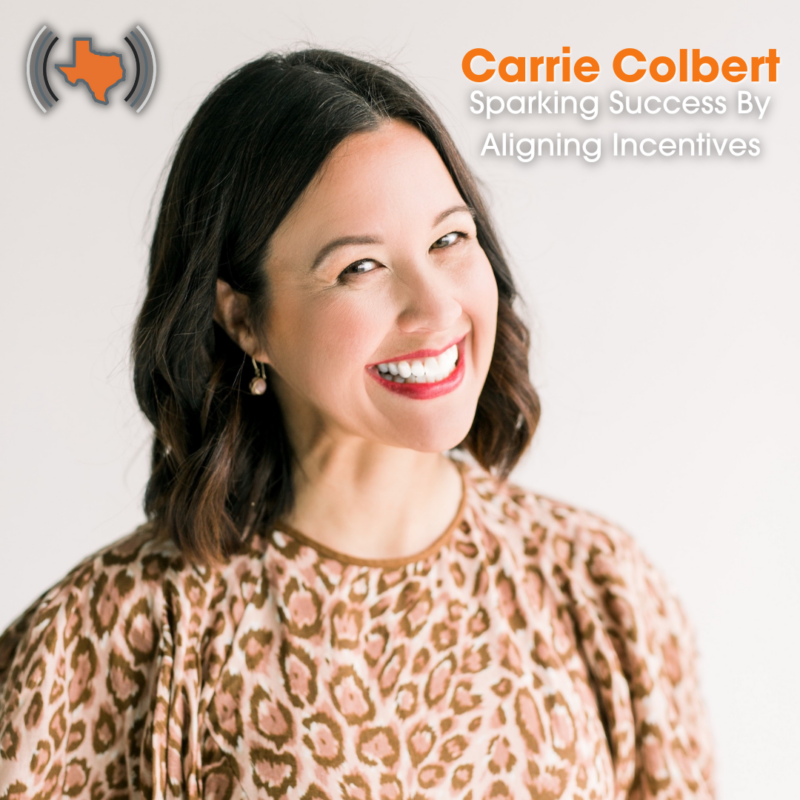
Carrie Colbert, founder of Curate Capital, a venture capital firm focused on investing in companies founded by women with products for women joins the podcast to share her unique story.
Carrie’s shares her beliefs in aligning incentives and being transparent in communication and financials have sparked her success.
Transcripts are generated by machine learning, so typos may be present.
Chris Hanslik: In this episode, you’ll meet Carrie Colbert, founder of Curate Capital, a venture capital firm focused on investing in companies founded by women with products for women. You also learn how Carrie’s belief in aligning incentives and being transparent in communication and financials has sparked her success. Carrie, thanks for being here today. I appreciate you taking time to come on the show.
Carrie Colbert: My pleasure. Thanks for having me.
Chris Hanslik: Lots of things I think we could talk about and looking forward to. But just start with, tell us about what you’re doing today, the company that you founded, and what is it known for?
Carrie Colbert: Sure. I founded Curate Capital. We’re a venture capital fund that invests in businesses by women for women. So what that means in practical purposes is that we invest in really talented, amazing women who are building the solutions that other women want. So the female consumer, what she wants, product wise, service wise, all those sorts of things. I like to say that officially we are industry agnostic, although we do have a slight bias towards consumer facing or consumer touching products because we have a big community of followers online, as well as the bulk of our investor base is over 80% women. So those women who have invested in Curate and thus invested in these female founded brands are eager to support those companies with their dollars and spreading the word and all the good things that will help the companies grow.
Chris Hanslik: That’s great. So an example or two of maybe one of the brands or companies that you’ve invested in.
Carrie Colbert: well the first brand i ever invested in and i invested personally as well as the fund has now invested as well in a company called packed party out of austin and it’s a great story this young gal and i can say gal at the time i think she was from like 23 or 24 and she founded this company it was essentially going to be kind of a party in a box you know you want to send a friend something well i can say now it’s expanded to this huge lifestyle brand with thousands of skews We’re on the shelves of all Walmarts. We actually have more shelf space in Walmart, I think, than any other brand. And, you know, the company’s just grown by leaps and bounds with all sorts of products that cater to kind of making life a party, so to speak. So that’s a really fun one, really resonates with kind of the millennial and Gen Z consumer. Another one that we just announced today, so you got the first one and now you get the most recent, is a company called Red Clay. It is actually a condiment company. So think hot sauce, seasoning, honey, all these sorts of things based out of Charleston, South Carolina. And it was started by a chef and then a very adventurous entrepreneurial woman fell in love with the hot sauce. She said, you know, we have to bottle this up and we have to sell this. And so they co-founded the company called Red Clay out of Charleston and it, they are just having phenomenal growth. And so we just press release today that we let their seed round and you know, they are just growing, you know, The metrics are just outstanding. I mean, doubling every year for the last four years or more.
Chris Hanslik: Wow.
Carrie Colbert: Yeah. Okay.
Chris Hanslik: So we’ve got your bookends there.
Carrie Colbert: First and most recent. First and most recent. So, you know, we look for products that are accessible, that a lot of people are going to want and can afford. You know, we’ll dabble some in some more luxury and consumer goods, but things like these are right in our wheelhouse where we know that with our, you know, engaged community that we can help on the influencer marketing side, we can help on the You know, just spreading the word among our investor base and we can help with brand awareness and sales and all those sorts of things. So we look to invest in businesses that already have a lot of good things going on. So, you know, I like to say I invest early, but not too early. So, you know, I don’t want to help build it from scratch. I don’t really want to help fix your problems. But if a lot of things are really working in terms of that product market fit and, you know, revenue generation, customer traction, we know that we can come in with our infusion of capital. and some of the other, you know, synergies and kind of value-add propositions that we bring to the table. And we know we can really help you speed up that growth at that point.
Chris Hanslik: Okay. Well, the listeners can’t see this, but your energy and passion for what you do is evident, which I think is a key to success one. But so it makes me want to ask you, what inspired you to start Curia Capital and get into the role of this helping women and seeding their investments and seeing them be successful?
Carrie Colbert: Sure. Well, I certainly don’t come from a traditional VC background, and I’ll give you way more background probably than you want. I’ll just do so briefly, but just to tell you just how much I don’t come from a traditional investor background. So I was in a small town in the Texas Panhandle, first in my family to go to college, and I mentioned all that just to kind of paint the scene that everything early on was very practical and pragmatic in nature. It was like, okay, what do you study? is determined by where you can get the best scholarships and then what job, you know, so that you can pay your own bills and all that sort of thing. So, yeah. So I studied petroleum engineering at the University of Texas, graduated the top of my class, moved to Houston for a job. And so that was, gosh, 20 plus years ago at this point. And so I actually worked in the oil and gas industry for almost 20 years, about 18. The bulk of that was spent at Hillcorp Energy. Sure. privately held oil and gas company. Now I believe the largest upstream privately held oil and gas company in the country. But when I started there, we were small-ish, less than a hundred million in value, maybe a couple hundred employees. And it was so entrepreneurial in nature. The way that, you know, the founder ran the company, the way he organized it so that everyone’s incentives were aligned was just really powerful to see that in action and see how it really did know, get the whole organization moving in the same direction. And so, you know, while I, you know, still was never necessarily passionate about the oil and gas industry per se, I was able to learn so many invaluable lessons from him and other people on the leadership team there, ran part of the engineering side of the business, got my MBA while I was there, and then worked in finance, strategic planning, relations, all those sorts of things. But, you know, part of that entrepreneurial culture was that we all had some sort of equity in the company. And so I was there during a time of high growth. And thankfully for me, that afforded me the kind of luxury of stepping away about seven-ish years ago, I believe, saying, look, I don’t know what’s next, but I know that I want it to fit two criteria. One, I love the entrepreneurial environment. And by that point, the company that I was in had gotten quite large, which is fine. And it’s a great company still, but I enjoyed a bit more of the smaller, nimble environment of the early days. And I wanted to take those same lessons apply them to an area where I was just more personally, you know, motivated and invested. And so I truly didn’t know what that was going to look like. In the meantime, kind of in the interim between oil and gas days and investing days, I was enjoying life. I was traveling a lot and posting a lot of pretty pictures of that sort of stuff online and whether it’s international travels or going to fashion shows around the world. I was doing a lot of fun things. And so kind of indirectly became a, you know, a bit of an influencer online before that term was even used. Okay. And I only say that because it’s important to where I am today. So that is how I started connecting with brands that I liked and founders and CEOs that I liked and businesses that I wanted to invest in. And so after leaving oil and gas, I very organically started investing in businesses that I liked, you know, with my own money and spend about five years doing that sort of angel investing. The same sort of investing I’m doing now with Curate Capital. And someone put it this way to me recently, and I thought it was well put. He said, well, you were kind of testing your MVP without realizing it. I said, well, yeah, kind of so. And, you know, three important things happened. One, I was having great fun and I would not have used the word fun to describe my professional life in the past. Totally appreciate it and valued it, but fun was not a word I would have used. So great fun. Two was great results. What I was doing was working and I have the return profile to show for that. But then three and maybe the most important one in terms of what prompted me to start Curate Capital was I was getting so much incredible deal flow. And, you know, there were more good deals than I could personally, you know, find out in my own pocket. So I thought, well, I guess we’re going to raise a venture capital fund so we can do more of this. And for me, the value proposition or the opportunity that presented itself was this. Okay. Female founded businesses get less than 2% of all venture capital dollars in the U.S. still today in this year, less than 2%. And it’s actually been trending downwards the last couple of years.
Chris Hanslik: That’s incredible.
Carrie Colbert: Yeah. And not a good way. Exactly. I think some of the mistakes that I’ve seen other people make and the reason it’s important to me to reframe this is Yes, that’s awful. Yes, it’s, you know, it’s absurdly low, all those things. But you know, what is the phrase or some idiom I’m going to get wrong, but you know, you attract more flies with honey than with vinegar or something like that, right? Like, let’s turn that on its head. Yes, it’s a bad thing, but I on my own can’t fix, you know, a nationwide, you know, bad statistic. But what I can do is realize that creates an opportunity arbitrage for me and other investors because, generally speaking, these businesses are underfunded, yet they’re overperforming. And so if I can go in and really negotiate a good deal because they really need and want that capital, they need and want that community and expertise and support and all that that comes along with the VC investment, we can really negotiate a good deal and then make really outsized returns. And so that’s really how I tried to frame it as I went to market almost fundraising. Like this is an opportunity arbitrage. Hopefully it won’t always exist, but it exists now. And so these are just really incredible women building solid businesses with good underlying fundamentals. They’re generating great revenue. Some are even profitable in the early days. All these great things are happening. where we can go negotiate a really good deal and make really good returns for all of us. So that’s what I see. This is a great opportunity to not only make good returns, but also bolster up these businesses that so sorely need and merit these investment dollars.
Chris Hanslik: It’s great. Sounds like those are concepts that investors get, understand, and want to be a part of.
Carrie Colbert: Yeah. You know, I had one investor who I have known him a long time and respect and matter him a lot. And he looked at me and said, Carrie, I don’t get the value proposition. Why is this company that makes these party goods? What’s so special about it? You know, why is it worth this much? And I looked him straight in the eyes and said, you know, Mike, I don’t need you to understand all these businesses. That’s actually exactly the point. I need you to know that I understand these businesses. I know, like, would I be a customer of this brand? Do I buy these products? Or, you know, would my younger sister or with, you know, so and so, I may not be the ideal customer for all of them, but I at least know kind of what’s trending, you know, in the female consumer’s mind, what she’s looking for, what sort of price points, what sort of products, all those things. I know what she’s gravitating for, so when I see a deal, hopefully I have that perspective that maybe an outside male investor might not have quite the tuned-in pulse of what the women are wanting in the market right now.
Chris Hanslik: Okay. It makes sense.
Carrie Colbert: Yeah.
Chris Hanslik: So as it relates to Curate Capital, how, at least from that company itself, how has that grown over time?
Carrie Colbert: Yeah. So we had the idea to start it in early 2020, of course, the pandemic kind of great time for about a year. Yeah. And so then we really officially launched in 2021, had about a year of fundraising and then just close our first fund. So just in case anyone’s not totally familiar, which is fine, because I wasn’t either until I was a venture capitalist, how it all works. Typically you’ll go out and you have a defined, you know, fundraising period. So ours was about 12 months. And so you set a goal and you go out and raise as much money as you can during that prescribed time period. And hopefully you meet your goal. Hopefully you surpass it. I’ll tell you that going into this, I was very naive. I think being an outsider to venture capital was a good thing in many ways. It allows me to kind of challenge and question some of the conventional wisdom. However, some of it is conventional wisdom for a reason, right?
Chris Hanslik: Right.
Carrie Colbert: So I’ve learned some lessons the hard way for sure. But one thing that I was clueless about was fundraising. I’ve never been in a sales position. I’ve never really been, you know, a fundraiser per se. And so that was a struggle for me. And I’ll tell you that there were a lot of, you know, days and weeks and months where I was in that valley of despair as they say, I could not move the needle at all. I was stuck at this one number. I mean, I was like, goodness, I mean, are we even going to meet our goal? And I think what’s frustrating for someone like me, if you’re used to, you know, more effort equals better results, right? We’re like, if I’m not getting where I need to be, I just put in more effort and we’ll get there. Well, fundraising is a different beast. Like more effort may not lead to the right results because you might not be putting the effort in the right things. And it’s so subjective, you know, when you cross paths with someone and if you’re opportunity aligned with their personal priorities, you know, just very subjective. So anyway, I, you know, we are actually in the process of getting some press about our closing, but I’ll give you a spoiler alert. Our goal was 10 million and we actually ended at 15. So when you see the story, it’s impressive. Yes. It’s going to look like, Oh, wow. She just blew past her goal.
Chris Hanslik: Easy peasy.
Carrie Colbert: If I can give you a peek behind the curtain, I’ll tell you how that looked for the first 10 months. I raised a grand total of $7 million. And then in those last 60 days, raised $8 million. And so I really was like, I don’t know if we’re going to make our $10 million goal. And then, you know, as it turns out, things all came together and it’s just going to look like this, you know, really great story. But there was a lot of blood, sweat and tears behind the scenes. I didn’t know we’d get there.
Chris Hanslik: Isn’t that true though? I think of entrepreneurs.
Carrie Colbert: Yes.
Chris Hanslik: Everyone thinks it looks easy. Right. It’s far from it. What you mentioned is getting into that moment of despair where you felt stuck. I know business owners and entrepreneurs find themselves there frequently, especially in the early days. What was it for you that kind of kept you going that you might be able to share with someone out there listening? You might be in the same position, say, you know, don’t give up. Here’s kind of what I drew upon or what I learned from that experience.
Carrie Colbert: Yeah, great question. I feel like I’m still kind of catching my breath and I need to take some time to distill some of the lessons there. But I think one thing is to just keep going because, you know, on the other side of that, you know, there is something good. And so where I was talking about it’s not always effort in directly equals results. You do just have to keep putting in the effort. And also though, take a step back because you might be putting your effort in the wrong direction. You know, like I thought I just knew like this person when they told me no, I was just a little bit devastated even, but little did I know this person had been watching in the shadows or this person saw me, you know, on some, some interview or this one saw some press or whatever. And so then people were approaching me. And so, Eventually that tide turns sometimes not because of our efforts, but even despite them, but just got to keep doing, you know, what you think is right. Just keep pushing through that valley because there is something on the other side. And once one domino falls, Then for me at least, it was like a lot of dominoes fell, right? So I think we had one strategic person step on board and it wasn’t even that big of a check. But then having that person’s name as part of our investor roster, I think led to a lot of other people then jumping on board at an even higher level.
Chris Hanslik: Sure. That makes sense. As you close the fund and start to look to make these investments, what are you hiring within Curate? And if so, kind of what is that looking like?
Carrie Colbert: Yeah, good question. So two points, I’ll say on that. One, an example of how we did not espouse conventional wisdom. Typically, people will go out and raise their pot of money, if you will, close the fund and then go invest it. I, however, was seeing so many good deals all along the way that I didn’t miss out on, didn’t want to miss out on that we’ve actually been making investments all along the way as we were fundraising. And so we’re already over halfway invested with the fund. So we’ve got a portfolio of about a dozen companies now. And one of the tricky things though with fund economics, which I don’t think I again realize going into this, is that a venture capital fund does not have the budget to really scale and build a team itself, especially with the first fund, especially when it’s relatively small. So yes, while we were oversubscribed and closed at 15 million, that is still relatively small in venture capital. Sure. What I have to work with in terms of a budget is called the management fees. And so that’s typically about 2%. And so if you do 2% of 15 million a year, you can figure out what that number is. It’s not a huge number. We’ll talk round numbers here. 300k a year. Okay. That has to support me, my family, and all the other expenses of the fund. And so what I’ve won next time I raise a fund, it’ll be a lot larger. So I have a bigger budget to go around. But with this fund, the reason that I point that out is because it’s actually really forced me to be really strategic about who I align myself with. And so as we were fundraising towards the end and as we’ve been making investments and as we’ve been doing different things, I’ve been having to really try to align myself with people that bring in expertise and skills that I don’t have. So to set up kind of strategic partnerships. So while I may not have the budget and the capacity to build out a team internally, this go round, we’ll get there eventually with the next five. But with this one, I had to think like, okay, what skills or expertise am I missing that would help our portfolio companies, help as we make investment decisions, and how can I align myself with people that have those? In practical terms, the way that looks for us is that we made a couple strategic. Well, we brought on a couple strategic partners in the form of investors, but we also have kind of operating partnerships with them, if you will, where they say, not only are we going to invest our money, but we will also lend support to you. with these skills that we bring to the table. And so really that’s how I had to get creative about building out our team, per se. So it’s not just about hiring people within the organization, but leaning on people outside the organization for this go round.
Chris Hanslik: So it sounds to be fairly innovative to, again, use your resources wisely, both your monetary cash resources as well as your relationship capital.
Carrie Colbert: Yeah, that’s the way I think about it. And so For instance, there’s a company in town called Soft Tech and Soft Tech has been around for 25 plus years and they know how to develop tech behind the scenes, websites, apps, all the techie things that I wouldn’t know anything about. They’re an investor in Curate Capital and conversely, they also provide support for me and my companies as we face decisions like, should we build out this platform ourselves? Should we hire a team internally or should we outsource this? We’ve got that resource we could call upon. We have another strategic partnership that is really angled in the influencer marketing space. And so not only did they and a lot of their influencers invest in us, but they also have that expertise so they can help us and our portfolio companies with questions about influencer marketing, questions about social media, all those sorts of things. So it’s really kind of building out our bench with those skills and expertise that are really going to help add value to our companies as we go along. It’s that whole ecosystem that really builds upon itself.
Chris Hanslik: So what on a day to day level, how involved are you in the companies you invest in and helping them set strategy, any kind of restructure of the company to kind of help them continue and grow?
Carrie Colbert: Yeah, great question. I’d say we’re still kind of figuring all that out in terms of it not being a one size fits all approach because every company is at a different stage and a different point.
Chris Hanslik: That makes sense.
Carrie Colbert: But one thing that I really am leaning into is Believing that the best thing I can do to help them is to connect them with each other because we’ve got this amazing group I’ve called a dozen or so women right now. These are some of the best founders in the country These women are Forbes 30 under 30 winners. They’re fortune magazine top world leaders One was just named a time magazine next generation leader I think they named maybe ten people to this list and wow one of them. She’s based here in Houston, by the way Okay. Yeah. So anyway really extraordinary women, you know who have put themselves on the map as, you know, really leaders in this country. And so the best thing I can do is connect those women, right? Facilitate their interactions. And what’s cool is because we’re not industry-specific or especially like segment or whatever specific, these women aren’t necessarily competitors with each other business-wise. So, you know, they’re tangentially related, but they’re not competitors. And so they share pretty openly what’s working for me or, hey, I just discovered this new tool that’s helping us You know, with our e-commerce side, or I just discovered this, or here’s what I’m struggling with right now. Do you have a solution for that? So, we look to foster those connections within our cohort of CEOs and founders and executives. so they can help one another just as much as we’re helping them. Because, you know, one thing that I can’t do is build your company for you. I can’t fix everything. And so, like I said, we’re not looking to help build it from scratch. We’re not looking to help fix things. But, you know, we do look to support you as much as we can. So.
Chris Hanslik: That in itself I think would keep you busy. I’ve talked to other business owners like yourself and that power of community and connection, there’s so much value in that, especially if you are, I think there’s more value if you’re in a community with people that aren’t in your industry. You learn how another industry does something. There could be some learning in there that you haven’t thought of before.
Carrie Colbert: Yes, absolutely. And so many of these women, you know, express a sense of feeling a bit isolated at the top, right?
Chris Hanslik: Oh, sure.
Carrie Colbert: Think of it from, you know, a woman perspective, and many of these are younger. maybe early 30s, which, you know, I’m well-aged now.
Chris Hanslik: Younger to us, right?
Carrie Colbert: Yeah. But, you know, on the weekends, are they going to go talk to their friend about this problem they’re having with their business? Are they going to talk to their employees? No, that’s not a good option. So they’re kind of left alone up here, kind of wondering what to do with certain situations. So just setting up that kind of community of someone that can, you know, relate to their struggles is a big value add in and of itself.
Chris Hanslik: I can see that. So helping these companies grow and build, when you think about leadership and your qualities and view of leadership, what kind of style do you think you bring to the table from a leadership perspective?
Carrie Colbert: Great question. I haven’t reflected on that in a while, but I think for doing this role, I try to take a humble approach. These women are building companies. I’m not the one actually out there building it. I try to support them as much as possible. I may be older than most of them, but it’s not, you know, any sort of kind of top-down thing. It’s more like, how can we support you? So it’s not about me. It’s about supporting them and their businesses and their dreams that they’re making. Because if they win, ultimately Curate Capital wins. So it’s just about propping them up as much as possible and that we all win together.
Chris Hanslik: And then going back to maybe your time at Hillcourt, you were in leadership roles there. Things that you did or learned in those roles that you think are helping you today.
Carrie Colbert: Absolutely. I carry so many of those lessons with me. In fact, two of the core values there are two that I probably reference daily. And one of those is this principle of alignment, right? When you get everyone incentivized correctly. and you empower them with the kind of knowledge and information they need to do their job, then they act in the right direction if they’re incentivized in that direction, right? So really getting everyone’s incentives aligned within an organization. The other one has to do with just transparent leadership. At Hillcourt we practice open book management, this concept of the great game of business, that sort of thing. And so, you know, I try to take that same approach with Curious as well, being very transparent with our investors about what we’re investing in, why we’re investing in any given company, what the company is struggling with, how they can help. And that’s another thing is, not only do we connect the founders to each other, but we’ve got this really incredible investor base of, gosh, over 80 people have invested. Over 80% are women, many of whom are successful entrepreneurs themselves, not just the women, the men in our group as well. And so we’ve got this incredible resource base at our disposal as well from that end. And so it’s really very much about connecting people in this role, right? With founders, with investors, just different resources as we see they could be plugged in and used effectively.
Chris Hanslik: That’s great. We talk a lot here at our firm about alignment and getting people aligned behind whatever strategy, whatever thing we may be talking about. And we also recently talked about how alignment doesn’t necessarily mean agreement, but so there’s some element of compromise that we can all get behind it and support it.
Carrie Colbert: Yes.
Chris Hanslik: Which isn’t always agreement.
Carrie Colbert: Right. Absolutely.
Chris Hanslik: Have you run into any issues with that or did you while you’re at Hillcorp in working with these founders?
Carrie Colbert: Yeah, certainly. I think for me, where I’ve found that breakdowns sometimes is you think the way you’ve incentivized someone is in alignment with the kind of overarching goals, but maybe there’s some aspect of it that is just a little twisted enough that they’re not totally aligned, right? so important to get those things structured right up front or else it will kind of reveal itself down the road where, oh, well, maybe they had an interest over here that was kind of competing with where we were going or maybe they had, you know, they benefit more to do X, whereas really, you know, we would have benefited more from Y. And so it’s really kind of paying attention to those nuances in terms of, you know, what’s motivating people and what’s driving them in a certain direction.
Chris Hanslik: Hillcorp is known for a very strong company culture, like you’ve mentioned already. When you think about culture and how important it is to the success of a company, what are you doing, if anything, with these companies you’ve invested in now to help try to, one, understand what is the culture, and two, to help maybe shape or influence it if it needs some correction?
Carrie Colbert: Yeah, certainly. Well, I think we stepped into a big white space here with Curate Capital. Insofar as there are other female-focused funds out there, there are other VC funds in general, but really stepping up and filling a blank in terms of that community aspect. And so, I take it back to not only connecting our founders, but our investors. And then one aspect I haven’t mentioned, as we were fundraising, I had this notion of bringing on more influencers as an investor. Like I said, I was kind of a small scale influencer, not even that big of a deal on the internet.
Chris Hanslik: Would my daughters know of you?
Carrie Colbert: No, probably not. But I was just early to Instagram and grew in the early days. And I saw as I was angel investing that brands were excited to have me as an investor just because I was an influencer and I could help a little with brand awareness, a little with marketing, a little bit with sales. And so I thought, how do we get this at scale? How do we get that tipping point? You know, I had a few friends who are influencers invest kind of one off like how we get the tipping point. Well, ultimately, we ended up partnering with an influencer agency based here in town. And I really give them credit, they just use it as trend. And essentially, what they approached me with was the scenario where They’ve got this roster of talent, this roster of women, predominantly as influencers who are killing it financially. They’re making great money right now. Like, really, you would probably be blown away. I thought I understood the space. I was still blown away by, you know, just how much money these women are generating at this point. So think young, 25 to 35, and they’re making incredible income now, so much so they don’t know what to do with it all. And so the scenario that, you know, we’ve met about was like, you know, they get approached about investing in law, but they don’t really know how to evaluate deals or want to deal with that. It’s a risky game. And so what if we partner together, you know, and curate invest in brands and businesses that are influencers and their community would like, and then it’s this whole flywheel effect where you know, they’re just investing like other influencers. But then if they start talking about our brands and companies, then that only helps the companies that helps all other. investors and so on and so forth. And so I think we’ve got a really powerful concept that’s only a creative to everyone. And that’s what we’re excited to test out.
Chris Hanslik: That’s awesome. No, it’s almost like a sports analogy at young athletes making a lot of money, not knowing what to do with it and setting. They can’t play forever. They need to invest it wisely. Sounds like a similar analogy for these influencers.
Carrie Colbert: Yeah. Yeah. And you know, they’ve got incredible selling skills. They know how to sell things on social media. However, at some point, they may not want to do that on a day to day basis. They may not want to be, you know, hawking all the latest, greatest fall fashion or whatever it is. And so really, you know, I give this agency trend credit for feeling a bit of responsibility for helping shepherd, if you will, their long-term financial trajectory, rather than just being willing to take a cut of what they’re making today. So, yeah, we’re very excited. So, you know, almost a third of the capital we raised came from those sorts of investors. And I really haven’t seen any other VC fund lean into that.
Chris Hanslik: That’s awesome.
Carrie Colbert: That’s awesome.
Chris Hanslik: Any mentors along the way that You helped you get to where you are today?
Carrie Colbert: Certainly. So many. So, you know, I think the concept of a mentor can be kind of daunting. You know, it’d be like, you know, what do you do? Like walk up to someone and say, Hey, do you want to be my mentor? So I always thought of it more in terms of like, who could speak truth and wisdom into my life in different areas. So kind of a board of directors, if you will. So like someone who could help me as I was starting this fund, someone that maybe, you know, speaks to me more on a you know, spiritual and emotional health sort of standpoint. So just kind of filling in, you know, my life with people that are older, wiser and in different areas than me. But I will tell you a great story, I think anyway, it was very heartwarming and touching to me. So like I told you, I was from a small town in the Texas Panhandle. And in the town that I lived in, I think there was probably only one engineer who lived in that town.
Chris Hanslik: It was Perrytown, right?
Carrie Colbert: Perrytown. Perrytown is fine. As far north as you could go and still be in Texas. Well, so in high school, I was valedictorian, good at math and science. And so when you’re good at math and science from a small town, the high school counselor said, well, you should study engineering. And you’re going, what is engineering? Well, you know, Mike Riley is an engineer. You should go talk to Mike Riley. And my mother actually worked for the small oil and gas company where he worked. And I remember this so vividly sitting across his desk from him. big fancy office, which now if I went back, it would probably look tiny.
Chris Hanslik: Right.
Carrie Colbert: And I remember him telling me, well, you should, you know, consider petroleum engineering. That’s what I am, petroleum engineer from UT. And he actually had a little flyer, a little brochure from the school of engineering slid across the desk to me. And he said, you know what? I’ve never recommended anyone else, but I’d be willing to put in a good word for you. Oh, that’s so nice. Thank you so much, Mike. And, and thus I went toward the school and got into the school of engineering. That’s where I got the best scholarships and studied petroleum engineering. And that was the last time I ever saw him because when I left the small town, I’ve never been back. Basically my family no longer lives there. And that was that, right? Well, fast forward to, gosh, it may be a couple of years ago at most. And I was back on campus at UT. I served on the executive advisory board for engineering and I was there for a semi-annual meeting. And we also were doing the groundbreaking for a new building. And so we were in the dean’s office having a little celebration, a little party and people were mixing and mingling. And I was speaking to Greg Finves, who was the president of the university at the time and visiting with Greg and this man walks up and he kind of staring me, you know, up and down and just kind of standing there awkwardly. He goes, you don’t recognize me, do you? And I, it was just wrong place, wrong time. Like you just, you’re out of context. He said, Gary, it’s Mike Riley. He said, I haven’t seen you since you left Perryton in 1995. He said, but you don’t know this, but I’ve been following along every step of the way. And he said, I got to tell you. And his eyes filled with tears. He said, you’ve made me really proud.
Chris Hanslik: Oh, how horrible. Oh my gosh.
Carrie Colbert: Yeah. And now I’ve run into him a couple more times at UT events. And he and his wife are just so lovely. And he’s been so supportive and encouraging. And he said, you know, you made the whole town of Perryton proud. And he said, I’ve never before and never again recommended anyone for admittance to the School of Petroleum Engineering. But I’ve watched your career every step of the way and I just am honored to know you and just really proud of what you’ve accomplished. And so that meant the world to me. Oh, I see why.
Chris Hanslik: What a great story.
Carrie Colbert: So I knew him. I made it sound like kind of a one-off thing, but I did know him the whole time growing up. And just the point being that those little things, those little actions, someone doesn’t have to being an official role as a mentor, someone to really make a difference in a young person’s life. And so I’m super grateful he did that and so many other people have as well.
Chris Hanslik: Yeah, I think, you know, to me, the takeaway, what’s important, two things are important. Having those relationships or those moments and someone taking time to invest in you when they do that you pay it forward by where you are now being able to do it not just with this company and helping younger women but I know you know in the other roles you play at the university doing the same thing.
Carrie Colbert: Yeah absolutely it’s all what it’s all about right it’s not only you know building something for ourselves but helping others build what they dream of and empowering them to kind of live out their their best path.
Chris Hanslik: So let me give you a chance to be a mentor, if you will, to our listeners. If there’s one or two things an aspiring entrepreneur or business owner that’s maybe listening is wanting to know from you, what would be a piece of advice or two that you might say, be sure and do this or don’t do that if you’re thinking about taking a leap?
Carrie Colbert: Yeah. I think one thing is just to step out and do it. I mean, if you have a passion and a you know, drive and a fire in you about something. Don’t wait until all your ducks are in a row. And this is coming from, you know, organized planning, engineering. So yeah, I think sometimes I would get my own way. Like I want to have everything lined out before I launch a new idea or new concept in the world. Sometimes you just seem to do it. Don’t be afraid to do it without knowing how it’s all going to turn out without having you know, everything in order. Just go ahead and step out, take that leap of faith, and you can learn on the go. You know, thankfully we live in this digital age where you can Google just about anything. And, you know, I would probably be embarrassed to tell you all the things I Googled in the early days about venture capital, right? What does this mean? What does that mean? But you can figure it out, right? Like everything is learnable these days. We’ve got so much information at our disposal, you know, whether online or through, you know, those around us. So, take that leap. You’ll learn as you go. You’ll learn some things the hard way. But if it’s something that you can’t stop thinking about and can’t stop dreaming about, do it.
Chris Hanslik: Yeah. Great advice. That’s great advice. Alright. So, a little less business, a little more fun. What was your first job?
Carrie Colbert: Ooh, very first job was at the golf course in Perryton growing up. I was a golfer, played competitively growing up, and so it was an easy summer job on the side. First job out of college was here in Houston. That’s what brought me here at Anadarko Petroleum, up in the woodlands.
Chris Hanslik: Okay, very good. So you’re native Texan, born and raised, Tex-Mex or barbecue, which do you prefer?
Carrie Colbert: Tex-Mex.
Chris Hanslik: Okay.
Carrie Colbert: Yeah.
Chris Hanslik: Without hesitation?
Carrie Colbert: Yeah.
Chris Hanslik: Okay. Any hobbies?
Carrie Colbert: hobbies.
Chris Hanslik: With two young kids, right? And starting a new business. I’m sure you have time.
Carrie Colbert: Indeed. So I should add that I did the kid thing later in life. I did not think I was going to have kids just the way life had worked out. I was very career focused and you know, relationships just hadn’t really worked out that way. Fast forward to today and I had two young kids. Both were total surprises in my 40s. So my daughter is five. She was born when I was 40 and my son is 20 months. So, and he was a pandemic surprise baby born on New Year’s Eve of 2020. Oh, wow. Yeah. So one and a half, a five year old and one and a half. So yes, we decided to start Curate Capital, have a pandemic, have an unexpected baby, all the things. And so there hasn’t been a whole lot of time for hobbies, but I do enjoy playing golf. Doesn’t happen very often. Enjoy traveling. Also looks very different these days with two young children. Yeah, so beyond that, just watching a little TV, reading a good book here and there is about as close as I get to hobbies these days.
Chris Hanslik: Okay, well then I’ll ask you what may be the toughest question, and that is if you could take a 30 day sabbatical, tagging on your travel here, where would you go, what would you do?
Carrie Colbert: Yeah, someplace with a beach for sure. Probably would be easy if I could dream without dollars being impediment. We would up that a little bit, I don’t know. Maldives or something. But yes, definitely a beach and warm weather sort of gal.
Chris Hanslik: Two places on my list for sure.
Carrie Colbert: Yeah.
Chris Hanslik: Well, great. Carrie, this has been so fun to hear your story. Get to talk to you and just get to know you better. So thank you.
Carrie Colbert: Thank you for having me. And thanks for all you’re doing to spread the word about these great businesses here in Texas.
Chris Hanslik: Absolutely. We’ll take care. And there we have it. Another great episode. Don’t forget to check out the show notes at boyarmiller.com forward slash podcast. and you can find out more about all the ways our firm can help you at boyarmiller.com. That’s it for this episode. Have a great week and we’ll talk to you next time.
With a deep understanding of your business alongside clear and honest communication, we help clients face challenges fearlessly.
Learn more about our services and how we help clients.