Cross Icon
Ep 038 – Work-Life Balance For Working Moms with Jing Johnson

Ep 038 - Work-Life Balance For Working Moms with Jing Johnson

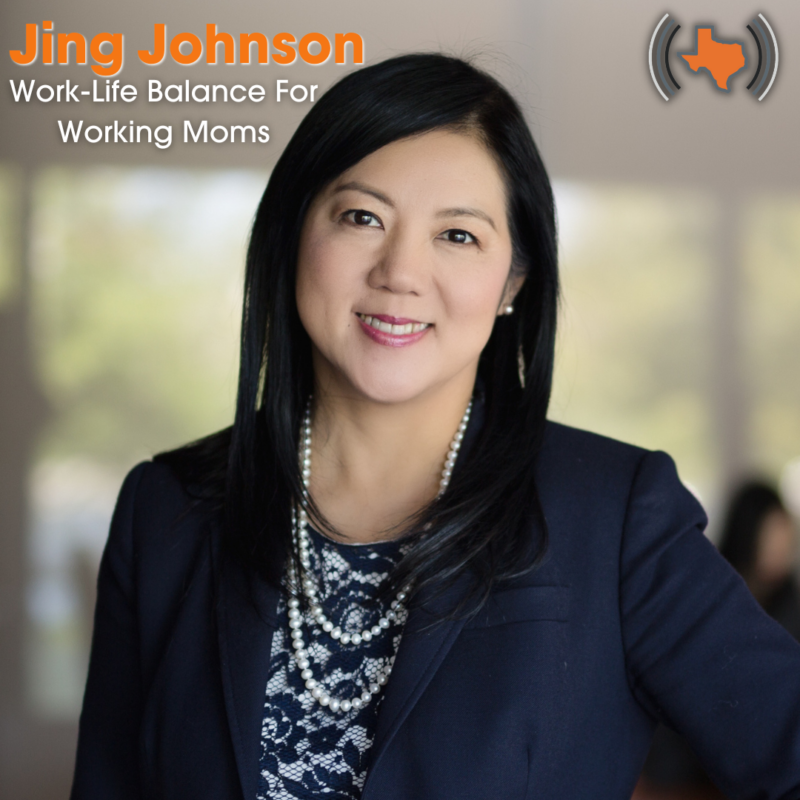
Work-Life Balance For Working Moms with Jing Johnson

Jing Johnson, Founder and CEO of Prism Renderings, joins the Building Texas Business podcast. Jing was inspired to start her own company as a way to balance her professional and family commitments. In doing so, she has grown her company over the past 16 years by building a team made up of all working moms.

Listen to hear the motivation behind creating Prism Renderings and how Jing created her own lane, based on the resources and training she already possessed, all while redefining time management in her own terms.

Transcript

Transcripts are generated by machine learning, so typos may be present.

Chris Hanslik: In today’s episode, you will meet Jean Johnson, the founder and CEO of Prism Renderings. You will learn how Jean was inspired to start her own company as a way to balance her professional and family commitments. In doing so, she has grown her company over the past 16 years by building a team made up of all working moms. Thank you for being here today, coming in to the office and agreeing to be on the podcast.

Jing Johnson: Thank you, Chris. It’s so great to be here. Thank you for having me.

Chris Hanslik: Well, so let’s get started. You’ve got the company that you built, Prism Renderings. Tell us what inspired you to start the company.

Jing Johnson: Well, actually it’s very simple. I was working in architecture. It’s very demanding. architecture professional. I have two boys five and eight years old at the time and I was just struggling between motherhood and my career at the time management so I want to do something related to my training architecture. design and also just have that flexibility to raise my voice. That’s how I started in the business.

Chris Hanslik: You took a rest to start your own business.

Jing Johnson: Yes. I had no training, business training. I just feel there’s a need in the industry and I have the resources and the training to start a service. So that’s why I started. Actually, I went to school, got my MBA at the same time.

Chris Hanslik: After starting the business? Yes, right after. So when you kind of jumped out on your own to start Prism, I guess what did you hope the company would be or become?

Jing Johnson: Actually, I wish I can say that I have a vision to build a team and have a thriving business today, but I didn’t. For me, it was very simple. It’s like a lifestyle business. It’s just have a vehicle to help me balanced motherhood and have a career. So that was very simple, but it evolved over the years since then.

Chris Hanslik: And you mentioned your training in architecture. I guess what led you into that as a, I guess a degree first and then a career.

Jing Johnson: Yeah, well, so my parents are structure engineers. So I grew up in China in this big architecture engineer company. Literally grew up over there. Went to their work every day after school. That’s how I get into architecture. That’s what I knew. And I had finished my degrees. I went to graduate school after I got my bachelor’s degree and went to graduate school, worked there a couple of years before I came over. So, you know, having this business is because at the time also, you know, the reason I got into this specific business is that We always have trouble to find a quality service provider in 3D architecture visualizations. Unlike architecture firms, engineer firms, you always have that, depending on what you’re looking for in the market sector, you always have somebody you know, pointed to, you know, this, those handful, you know, firms that specialize in this, you know, service, right. But in architecture, 3d visualization service, there’s no market leader. There’s no, you know, sustainable business that you can go to. So that’s why I saw the need of this, you know, just very trusted, you know, provider, service provider that I can be one.

Chris Hanslik: So it’s a good segue. So I think you covered, be specific and what exactly does Presum Rendering do?

Jing Johnson: Yes. So we help commercial real estate developers and brokers. to preview their vision with their stakeholders before the building gets built. It’s very difficult for people to visualize what’s the building or site development look like, right? Most people are visual, so we are helping them basically to get a fundraising for investors package or go to the city, get a zoning approval. or sometimes it’s for leasing purpose, pre-leasing purpose. That’s what we do.

Chris Hanslik: Okay. So as you were saying, you saw kind of a gap or a void in the market where you felt like a firm that’s focused on this type of service could make an impact.

Jing Johnson: Yes, it’s definitely bring a tremendous value to the developers, sometimes it’s institutions, for example, we have a big hospital to put together this marketing video to showcase their future expansion. So they were able to raise enough funding to start the project much sooner.

Chris Hanslik: You shared with us that you started the company somewhat out of personal need or desire, but that has changed and evolved over time to where at some point I guess you saw an opportunity to actually build a company. Tell me, I guess, how did that evolve? What was it that kind of triggered that vision for you that you actually had something that you could build and grow?

Jing Johnson: Well, it was why I started hiring when we grew in terms of the number of projects and I was not able to do that myself. So my first two hires are One is from my church, same Bible study class. And the other one is my previous, from previous client firm. And make me realize that they’re both moms, working moms. Make me realize that this business has really provided me opportunity to have that balance. And I want to do the same for other working moms. And that’s how it all started. So all team members are working moms. And even today, and that’s my mission now is to not just helping more clients to help them to, you know, make their business and projects successful, but also helping more working moms as we grow. And yeah, that’s my second why.

Chris Hanslik: So when you think about what you’ve done building Prism renderings as a company dedicated to helping working moms, anything you’re doing or have done along the way that you feel like was innovative for any company or one in the engineering architectural world?

Jing Johnson: Well, for us, we are totally virtual team. So we all working from home office, although we do have a co-working space. We hardly go there. Most of our clients want us to visit them. They are busy architects or developers. And if we do have client meetings, we will go to there. But we do get together. Most of us are in Houston. So we do get together, celebrate birthdays. holidays and work anniversaries so we do have face-to-face time.

Chris Hanslik: And so what were you doing, I guess, to keep the team together as it grew before everyone in this world had heard of Zoom?

Jing Johnson: We were Zooming before everybody else. So we do have from very start, we do have weekly meetings, video at a time before Zoom. We do video weekly meetings. That’s very important for us to keep in touch with each other. We also use Teams as a platform. So we actually communicate very frequently on teams. In terms of communication, we always celebrate. We get a new project. Everybody knows about it. There was somebody. We got really good clients’ feedback. We always share with the team. So we’ve been very intentional to keep everybody informed about what’s going on. And also, we do have open book policy. in terms of our financials. We are very open to that. Everybody knows how the company is doing right now, the number of projects, the number of revenue, the number of new clients, existing clients. We track that every week. So everybody is aware, even though we are not working in the same office, but we are very close.

Chris Hanslik: Okay. So then how would you describe the culture at Prism?

Jing Johnson: Well, I think our culture is very supportive, friendly, and empathetic. We’re just a very supportive group. I always say, family first. If you have sick kids or something happened at the family, you go take care of your family. They also will step up and fill in the gap. So this is a very, very close-knit group.

Chris Hanslik: That sounds great. It explains to me how you’ve been able to grow this company and keep a team together. Help the listeners understand what are some of the challenges you face as the CEO in fostering a culture like that that seems very family-oriented, very cohesive? yet you’ve done it from day one, virtual. What are some of the challenges that you faced in fostering that culture? And what are some of the things maybe you’ve done that you think have helped you enhance it?

Jing Johnson: Well, I think the biggest, biggest, biggest change I made over the years is to have that 101, weekly 101 calls with each team members. And we talk about everything from 30 minutes to one hour. We always start with family. I’m a firm believer that You know, your family life and your career is just so intertwined. You can’t separate, you know, them. So I want to make sure that I do my best to support them on the personal and in addition to their professional career, you know, goals and needs. So that really helps me to understand where they come from. You know, their frustrations, their wins, their challenges, everything, right? So just keep that open dialogue on a weekly basis. Obviously, we also talk between that, but that’s a specific time. I put aside and I just put everything else aside just for you, 100%. I think that for me is a key factor to keep that.

Chris Hanslik: It certainly communicates that you’re invested in them and that you care about them. Has, had there been any unique challenges for you running the company given the past two years and the pandemic that hit? I mean, obviously your team was already working remote, so that wasn’t a problem. But what about any unique challenges that, that you’ve had to deal with as a result of that?

Jing Johnson: Well, so it’s interesting that 2019, I read a book about rock the recession. I don’t know if you’ve heard of that book. It’s just because in the entrepreneur, you know, circle, we always talk about, you know, we have a, this good economy for years. You know, what’s coming, right? Everybody has guessed what’s next.

Chris Hanslik: What’s around the corner.

Jing Johnson: Yeah. What’s around the corner. And so I just happened to learn about the book. And as I read the book in 2019, I started to look at the business and really just, you know, we, The 2020 budget is just very lean and mean in terms of operation costs, expenses. And so walking into 2020, when COVID hit, it was not panic. It was concern for sure. And I think my concern was cash flow, right? We have a sizable AR and I was we were concerned that maybe our clients, because of the uncertainty, they might be holding the cash, you know, not paying those AR, you know, that could cost, but because the preparation we did in 2019, including we got a good size of a line of credit. And even we didn’t touch it, but that gave us a peace of mind. And then the, The essence of that book is about how you prepare yourself in those crises. Not just the recession, but also you lose a major client or you lose a major vendor, you know, those kind of challenges and how you prepare yourself to, you know, overcome that. So we just almost, we already got first gear, you know, before, you know, face that impact. So that’s that. And also we, I know I told you, we have open book policy and during COVID the first thing I did is even open the checkbook. So basically everybody knows how much money we have. I want to make sure everybody There’s no panic. I think when I worked as a W-2 employee before, and I went through some of those down time, slow time, I remember that a lot of people were concerned about losing their jobs. It was very unsettling. So when I start hiring my team members, I first thing I was like, I will do my very best to prevent that ever happening. So I always feel tremendous responsibility to, you know, just make sure if they like the job, they will have the job. They will have the paycheck, right?

Chris Hanslik: Right.

Jing Johnson: So that’s the one thing I am just very open to the team. This is what we have. If we don’t get the project, this is the wrong way we will have for doing the slow time. So the whole time just constantly communicate with our team and that really helps everybody just have that peace of mind.

Chris Hanslik: You see your shining example of the power of consistent, transparent communication inside of a company and how employees will respond to that and reward you by being dedicated to the company and your clients, right?

Jing Johnson: I have one employee, right after I had a team meeting, told them we’re not going to lay off anybody. We have enough cash to keep everybody. We’re not going to cut the salary until there’s something happened later. But just let them know what’s going to happen every step if something, if the situation get worse. So I have a team member come back very next day tell me that, please, I want to help. I can cut my salary, a certain percentage, but I still work the same hours. I mean, obviously I told her there’s no need for that, but for her to step up and doing that, she’s like, you always sacrifice yourself, and for this business, I want to be part of that.

Chris Hanslik: That’s impressive. I think you see your story about reading the book in 19 and kind of already having a plan in place. To me, one of the things that that highlights is the need for anyone really, but especially a leader in a company to always be learning and continuing that learning journey. Sounds like that was a key element for you leading into the pandemic.

Jing Johnson: Yes, I would say that. We have a learning culture as well.

Chris Hanslik: What other things do you do then to kind of continue to grow as a leader in learning and staying abreast of trends and things? What are some of the things that you do personally?

Jing Johnson: I’ve been part of this community for over six years now. And I joined Collective 54. It’s a great, top-notch community for professional service companies. In the meantime, I’m a big podcast fan. I listen to a lot of podcasts and learning so much from podcasts and resources I even get from podcasts. And I’m a big reader as well. I love reading books. So I mean, for me, I always have that thirst. to knowledge and just different resources and to be resourceful.

Chris Hanslik: That’s great. Through that learning, how would you describe your leadership style or leadership philosophy?

Jing Johnson: Servant leadership. I’m a firm believer of that. It’s really just outward. I always put myself whenever I face my team members, I always put myself into that I’m the other side, right? If I were in her shoes or in her position, how my leader can make me you know, effective in terms of make my work better and, you know, more effective. So I’m just be, you know, supportive, coach, like a coach, a mentor, and, you know, just find out what they need and try my best. Every week I ask them, you know, what is your goal this week and how I can help you to achieve that goal. So that’s my…

Chris Hanslik: Did you have any mentors or do you have mentors now that you have learned from along the way and continue to lean on?

Jing Johnson: Well, I consider a lot of people, they don’t know me, but I consider them or just by read their books and listen to.

Chris Hanslik: Sure.

Jing Johnson: But going back, I think, you know, my parents is a great example for my as my mentor. My dad is just he was an engineer, but he’s very resourceful. He has a huge net. Even back then it was not, you know, in China, everything owned by government. Right. And he always had that drive to help his clients, even though everybody is government-owned, to help them be safe. I mean, he designed buildings and structures, so not only the best structures he can design, but also help them to save their budget. He just made a lot of great friends along the way, and that helps me. to be that relational, you know, driven. And my mom is very caring. And she’s an engineer, but she’s just very personal, very caring. And I think, you know, both of them just great examples for me.

Chris Hanslik: Yeah. Sounds like you’ve taken the qualities from both, right? Merging together.

Jing Johnson: Try to.

Chris Hanslik: That’s great. Yes. What? So, you know, you stepped out and like most entrepreneurs at some point, you step out on your own and, you know, maybe Not knowing what you were going to do, but you felt like it was the only thing you could do. What are some of the lessons you’ve learned and that you would share with an aspiring entrepreneur or business owner to say, you know, if you’re going to go step out on your own and pursue your passion, here are two or three things you should keep in mind in doing so. Anything that you could share along those lines?

Jing Johnson: I think everybody has blind spots, you know?

Chris Hanslik: So true.

Jing Johnson: Yeah. So I would just be open. I wish I do this earlier. I was just put my heads down, you know, first few years and work, you know, provide the best service to my clients. At the time, I had no idea what’s out there. And so find a group, a community of engineers, you know, engineers, entrepreneurs, and just learn from them. I highly recommend the book by Jay Abraham. He’s one of the best marketers. That’s the first book I read when I hired a business coach. That was my homework.

Chris Hanslik: What was the name of that book?

Jing Johnson: Getting everything you can out of all you have. It’s long, but I think the main lesson from that book is Jay Abraham, he served, he helped. over a thousand businesses in four hundred different industries. So the main lesson I learned from that book is that every industry have their own way to do things. So if you are in the vestige that you have a cross learning from each industry and sometimes one industry their typical way to do things could be innovation to another business, you know, in a different industry. So I’m always have that, you know, after that I read that book. I pretty much highlight everything on that book. It was free. My marketing strategy, everything is from that book. And it’s just since then I’ve been very open minded to listen to other business owners, you know, story or journey or, you know, best practice, even they’re not in my industry. And I’m trying to incorporate those into our business along the way. recommendation. Another one is Profit First. You probably heard about that book. My lock, McCullough is, it’s hard to say his last name. But he has like about seven, eight books. It’s all really good for small businesses. But Profit First is the one that really help you to organize your business financials in a way that is really behavior focused. It just also changed our business as well.

Chris Hanslik: Very good note. What you said a minute ago I think is so true about how you can learn from other industries, what they’re doing, how they’re successful, and at least think through how can I apply that to my business or my industry. It may need to be modified or tweaked, but you can always learn from others.

Jing Johnson: Yes.

Chris Hanslik: So we talked about a lot of things. One of the things I always like to ask about, any setbacks along the way that You tried one thing or went one direction. It didn’t work out, but you learned and grew from it. Could you share that experience and what the learning was?

Jing Johnson: Well, quite a few. If I have to pick one, I would say, say no, learn to say no. And I think we are a group of very caring, you know, working moms. We always want people pleaser, you know, we want to help everyone. I think at the beginning, we just basically take any clients and we come to our way and we want to help everybody. And I think that’s, you know, we took some deep tour on that, on that direction. So, Now we’re much more clear, you know, who can we can help the best, provide the most value to. So yeah, just learn to say no.

Chris Hanslik: That’s not only a good one. It’s an important one because especially in a new business, you’re scared to say no because you’re so desperate for revenue coming in. So you can actually keep the doors open. You can say yes to some wrong things that could. hurt the business. So that is great advice there. We talked about saying no now and listening to your people. Any other advice you’d give to an aspiring entrepreneur about words to live by or any parting advice in that regard?

Jing Johnson: Well, I read a book about conscious capitalism. I just think as an entrepreneur, you are not just start a business and make profit, which is important. You need to have a sustainable business. However, just having taken out your stakeholders, not just your clients, your employees, your vendors, your consultants, just everybody that involved with your community, right? And for us, our clients make a big impact in our community, right? They develop really well-designed communities in us. We want to be able to just help them to realize their vision. for me is just not just looking at the profit, but also all the stakeholders, how we can help each other and to just become a much more well-rounded community.

Chris Hanslik: It’s great advice and so important because in the pursuit of profit that can be lost sometimes.

Jing Johnson: It can.

Chris Hanslik: So let’s turn to some lighter stuff. So what was your first job?

Jing Johnson: Well, my first job, I don’t know if it’s considered first job, but first paycheck. So I was in China, I graduated from my architecture school, and I went straight to graduate school. At the time, very few people can get into graduate school, so it’s considered job as well. So I started to get paid to go to graduate school. Not paying tuition, but you know, get paid too. So I do need to teach. a class each semester to, you know, but that’s my first, you know, job.

Chris Hanslik: You were a teacher?

Jing Johnson: I was a teacher and also a student.

Chris Hanslik: Very good. How long have you been in Texas?

Jing Johnson: Almost 30 January.

Chris Hanslik: Okay.

Jing Johnson: 30 years.

Chris Hanslik: Wow. So you’re here long enough to have an opinion. Do you like Tex-Mex or barbecue?

Jing Johnson: Well, I like Tex-Mex.

Chris Hanslik: Okay.

Jing Johnson: I like the variety of Tex-Mex. I love barbecue as well. I love, you know, but I’m getting to this age I can’t eat too much barbecue, right?

Chris Hanslik: Or Tex-Mex for that matter.

Jing Johnson: You can get a little lighter.

Chris Hanslik: Not like we used to, right? Yes. That’s great. What do you like to do for your hobbies?

Jing Johnson: I love dancing. I was a dancer when I was from my elementary school years. I just love dancing. I wish I could be a professional dancer, but I don’t have that talent. But I just love as a hobby.

Chris Hanslik: Very, so you still dance now?

Jing Johnson: I still dance, you know, go to dancing classes every week and also love travel as well.

Chris Hanslik: Well, thank the dancing, what a great app.

Jing Johnson: Yeah, it’s just totally you can put everything, you know, out of your mind, just enjoying the moment, enjoying the music, enjoying the movement. Yeah, that’s my hobby.

Chris Hanslik: So you mentioned travel, so where will your next big trip be? Italy. So many people say Italy. Oh, you’re already scheduled.

Jing Johnson: He’s scheduled. Yeah, we’re going back to Italy. And I like both if I get to pick. I know you were asking questions about even if you have one month.

Chris Hanslik: Oh yeah.

Jing Johnson: Right. I will have two months, two weeks in Florence. Just look at architecture history, you know, just in Florence. Yeah. Because my husband is also, so we just love Florence. And then the other half is the Scotland, you know, sky. I just love the nature hiking. And so just have, so if I have a month, uh, you know, away from work. I would just spend half of his time exploring, you know, cultural and architecture, history. The other half is just nature.

Chris Hanslik: Very good. That’s great. Well, Jane, thanks so much for coming on. Your story is so inspiring. It’s just really good to get to hear it and learn how you built a very unique company with working moms.

Jing Johnson: Thank you, Chris for having me. All right.

Chris Hanslik: Take care.

Jing Johnson: Thank you.

We provide clarity for complex problems.

With a deep understanding of your business alongside clear and honest communication, we help clients face challenges fearlessly.


Learn more about our services and how we help clients.