


With a deep understanding of your business alongside clear and honest communication, we help clients face challenges fearlessly.
Learn more about our services and how we help clients.



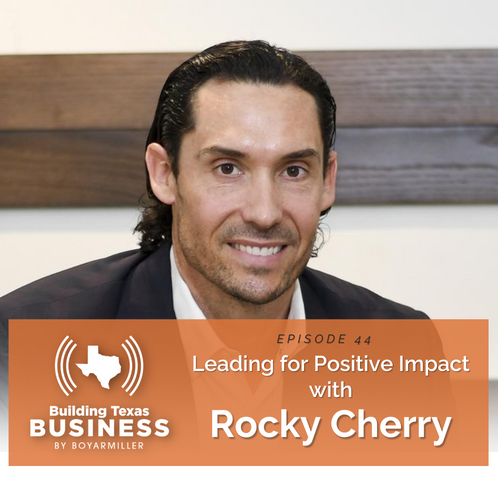
Rocky Cherry, Chief Growth Officer of Cherry Coatings, a commercial coatings contractor based in Dallas, Texas joins the podcast.
Transforming lessons learned from his time in the MLB into his leadership style, Rocky has built a team that focuses on its people and making a positive impact in their lives fueled by servant leadership. Hear how his experiences in baseball have changes his perspective on failure in every aspect of life, particularly in business, and helped him navigate future obstacles.
Transcripts are generated by machine learning, so typos may be present.
Chris Hanslik: In this episode, you will meet Rocky Cherry, Chief Growth Officer of Cherry Coatings, a commercial coatings contractor based in Dallas, Texas. And you will learn how Rocky literally grew up in the painting business and has taken lessons learned through that experience, as well as playing Major League Baseball into his leadership style, building a team at Cherry Coatings that focuses on its people and trying to make a positive impact in their lives as a servant leader with a servant heart. All right, Rocky, I want to thank you for coming on the podcast. It’s great to meet you. Thank you for having me. I’ll be here. So let’s get started. So I know you’re the chief growth officer of Cherry Coatings. Tell us a little bit about what Cherry Coatings is known for.
Rocky Cherry: So we are a commercial paint contracting company, also partaking resinous coatings as well for floors. And we service general contractors and direct owners.
Chris Hanslik: Okay. And this company’s a little over 50 years old, right?
Rocky Cherry: Yeah, a little over 50 years old. And actually we’re a second generation company, but really painting’s been in our blood from the start. My grandfather was a painter, had his own business called Ed Ray and Sons that my dad and uncle who started Cherry worked for. And he learned painting from his uncle, so he’s been in our blood. Okay, that’s it.
Chris Hanslik: Looks like taking just normal, what maybe some of them might think as painters, but to a whole new level.
Rocky Cherry: Yeah, that’s something that was really important to me when I was in high school and we used to work in the trade. My dad was like, hey, you’re either playing baseball or if you’re not playing baseball, you’re out in the field working. And I would go to, I remember we went to a subway and I was with a guy who’s still with us, his name was John Stowell. And we had our dirty whites on. And in the subway, people were looking at me and him like a lower class citizen. and didn’t feel like I was proud of what I did, and I felt like I wanted to change that. And I remember my mom used to tell my dad all the time, like, I don’t want my sons to be a painter. It just wasn’t a respectable or as respected trade. So little did they know when I was in that subway and people looking at me like this dirty, smelly, white guy that I had a college scholarship to the University of Oklahoma. I was being recruited by all the major universities. I had professional baseball teams looking at me and I was going places that people had no idea about. So the one thing that when I came in and my brother as well, we wanted to make it a respectable trade. We wanted our people below us to be proud and to know that when they go back to their families, that their families are proud of them as well. So by us growing the business and putting us on the map, it’s allowed people to be proud and grateful for being a painter.
Chris Hanslik: Yeah. So it sounds like that experience you had of being unfairly judged kind of sparked a passion in you to really transform this company.
Rocky Cherry: 100%. One of our missions is to change people’s lives. And we try to change people’s lives not only to allow them to be grateful for being in the trade that they are in and being proud of it, but also changing their lives to help them grow. Typically, when people think of a painter, you’re just out there doing the trade. And what we want people to do is we want them to cultivate themselves and to grow. and to continue to move up. And what we’ve allowed people to do is start as a helper and grow all the way to being inside the office and becoming part of the corporate world. Okay.
Chris Hanslik: So give us a little background on how, obviously you started in high school or before out there in the field, but fast forward a little bit. How did it come to pass that you got into the business kind of more full-time? And what’s that journey look like for you to get to where you are today?
Rocky Cherry: Well, I’m going to start at the beginning because my brother and I both wanted to be like that. And my dad was just a hardworking, you know, Vietnam vet that showed up in our lives into the office and in the painting world as a leader and a businessman. And I wanted to be like him and my brother wanted to be like him. So when we were young enough to not even drive, he would hire our neighbor who could drive to take us to the job sites. And he really wanted us to teach a lesson about hard work and like painting might not be the best career. There might be other things there for us. But what happened was when he was teaching those lessons, it allowed us to really learn the business and to grow to love it, even though it was dirty and waking up early was not the most fun. It was something that made us appreciate the hard work that people were doing. So then, as I grew up, when I got drafted and went into the minor league system, fortunately, I was drafted and I got offered $1,000 to play.
Chris Hanslik: And not like the contracts you read in the paper, right?
Rocky Cherry: Yeah, it was an opportunity to play. Now here’s the funny part was is that I was coming off an injury that year and they required me to get an MRI to show that was structurally sound. And I was like, okay, just tell me where to go. I’ll go get it. And they was like, no, you need to do it. And I’m like, well, me, I don’t have the money to do it. I’m like, I’m a college student. And they’re like, well, we can’t sign you until you show your structurally sound. Well, that MRI cost $1,200. So I actually paid to play baseball for that opportunity. But that was such a blessing because since I needed money to survive, is a minor leaguer. My first year I made 850 bucks a month and I only got paid the months that I was working quote unquote during the season. Right. So I was the most I ever made as a minor leaguer I think was probably around $8,000 in a year and I had to supplement that with work. Sure. So it forced me back into the family business and who’s going to hire somebody for three months, five months a year?
Chris Hanslik: Right.
Rocky Cherry: My dad.
Chris Hanslik: Perfect.
Rocky Cherry: So it allowed me to get into the business, dive into estimating is what I spent a lot of my time in the office. So throughout that time, I was cultivating myself in the business and becoming a part of the business consistently. And I would never really took a break because from the before I could drive all the way throughout my career, I was utilizing the business to supplement income to survive, basically.
Chris Hanslik: Gotcha.
Rocky Cherry: So it was just a process that just when I left baseball, finally, like I have told people, I stopped on a Friday and I showed up to work on a Monday because it was that’s kind of what I knew. And you hadn’t stopped since. I haven’t stopped since and you know people always ask me about baseball like what was it like to be in the big leagues and man it was awesome. I cannot explain some of the things what it was like the first day I showed up at Wrigley Field and I got that first call up and just Putting it see my jersey with my name on the back and all the reporters coming up to me asking me questions and like Lou Pennella the manager like who’s been a legend played Major League Baseball. You know shaking my hand saying congratulations son and sitting next to Alfonso Soriano and I’m like wow the guys a stud you know one of the best of the game and going outside and just seeing the perfectly cut grass and just. the sound of the balls hitting mitts and you know the baseball bats cracking yeah just everything you think of a dream come true yeah is come true and so that was a fantastic experience but i think i find more fulfillment and i actually enjoy the business side and what cherry has provided me more than what baseball was that’s amazing i was going to ask obvious question of
Chris Hanslik: some of the lessons learned through your playing career, how have they been beneficial to you in your corporate career? What has kind of, I guess, ended and crossed over?
Rocky Cherry: Oh man, I think athletics in any capacity, whether it’s high school, college, professional, It helps people become better entrepreneurs or an employee or whatever you want to say. The one thing I’ll say is that in baseball, The valleys that I went through when things weren’t well, having to fight through those, having to get up out of the bed in the next morning and keep going at it. That was something that really taught me a lot about like hard work, perseverance, you know, turning challenges into opportunities. And when things happen bad nowadays, I feel like it’s less impactful because baseball was everything to me at that point and I was defined by baseball. So when I hit a valley, my ego, everything went down with it. So it was kind of a very low time when I hit those and those would happen often because baseball is a humbling sport.
Chris Hanslik: Lots of failure, right?
Rocky Cherry: Lots of failure. That’s right. So it taught me a lot about how to persevere. And now I have a different perspective on that. I still embrace those challenges, but I have a different perspective because I don’t allow the business to define who I am. And those valleys are still there. They happen consistently throughout my life, whether it’s in family business or baseball. But at the end of the day, I’m able to take them in a better manner and it’s because of my experiences of going through those during my baseball career.
Chris Hanslik: I think it’s a great lesson for anyone running a business or that wants to run a business. Failure is just part of life, right? Whether it’s personal or in your business and you can’t let that stop you. You got to learn from it, right? What are the lessons to learn so you don’t make the same mistake again and embrace how it makes you stronger to keep moving forward?
Rocky Cherry: Yeah, I think that the lessons that I have learned from it is, so the best way I can tell it is a story this way. In 2021 as our business, we were the number two paint contractor in the United States in volume. We were on top of the world. We’d won top business this, SMU 100 this, like all kinds of awards, recognition. We were up for entrepreneur of the year. Things were like going extremely well. 2022 hit and we have gone through this past year was one of our toughest years we’ve ever had to deal with. And when we were going through this, it was like one month came in and we were like, okay, we lost some money. maybe it’s an odd, then the second month came in, then the third month, and it just continued and continued. And it was just amazing how you were at the literally the peak of a mountain heading the right direction and then all of a sudden just the bottom dropped out of it. And the one thing I can say is that if I would have gone through that valley with the stress that I would have carried when I was in baseball, I would have been short with people. I would have been quick to anger. I would have been less patient. I would have carried that to my home life. And I would have probably maybe caused more damage to my team and to others by not responding to it properly. Gotcha. So the one thing I can say from that is during 2022, that was one of my best years of my life. But yet one of the most important things to me, my business, my brother and I’s business was
Chris Hanslik: Yeah, it was going through a tough time, but you weren’t personally.
Rocky Cherry: I was not personally. I remember I was preparing a speech for somebody and I was talking to my wife and this was the third quarter of 2022 and I was telling them about this story. My wife was like, What? Like, we’re not doing well financially? And I was like, what do you mean? Like, I’ve told you this so many times, but it was the way I presented it and the way I carried myself. I would use the words of like, hey, we’re going through a tough time, but it’s gonna be worth the effort.
Chris Hanslik: Yeah.
Rocky Cherry: And I always made that, but, and it made her feel comfortable about the situation we were in. And in fact, another thing was, is that when we got, I did, I do my blood test results and I got my blood test in August of 2022 and my doctor, you know, called me up and the same doctor I’ve had for over 20 years. And he was like, Rob, what’s going on, man? I just got your blood test results back. And I’m like, Oh man. Is it bad? What’s the problem? And he’s like, everything’s through the roof. I’ve never seen you be so healthy before. And I was like, really? And I started thinking back, like, how can this be in such a valley that I’m affecting so many people’s lives? We’ve had to make fires that we don’t want to. We’ve had to take people’s bonuses away that hurts their pride and makes us feel bad. Financially, we’re in a tough position. We’re having to borrow money with something that was new to us. We’ve always been able to financially support the business. So we’ve had all these stressors, but yet my blood test was showing that I was thriving. My home life was thriving. And it was really all about my perspective of my mind.
Chris Hanslik: Yeah. The mindset you had, right?
Rocky Cherry: The mindset I had.
Chris Hanslik: It affects so much. So let’s talk a little more. You started off earlier in the conversation talking about the things that are important to you are kind of building that opportunity, creating opportunity for your employees here at Cherry Coatings. Tell us some of the things that you do to kind of make that happen. How does that tangibly inaction?
Rocky Cherry: So I think the biggest thing is that we’ve created opportunities by growth internally when I say that like at our current markets. So if I our revenue is grown in each market that we’re in another way we grow is by going into new markets. And then the last way we kind of grow is through market segments. So different. So if we’re commercial painting is our original strength, we then added the resinous floors, polished concrete, and then we’ve added our maintenance side. So those have created opportunities. So basically we create those opportunities in those segments. And we have allowed people to step up and become leaders in those areas. We’ve hired people from the outside, but we’ve also offered opportunities for our people inside. So people have climbed the ladder pretty rapidly. And that’s one thing where I think we’ve kind of made a mistake. My brother and I, we grew probably too fast. Okay. And it caught up to us and we had a lot of green people that we weren’t training properly and touching enough. And I think that was part of the reason why 2022 was a tough one. I think there was COVID was also another one that kind of affected us. It was a combination of inflation, a lot of different aspects, but it did teach us a lot that Good sustainable growth is better than just these huge leaps.
Chris Hanslik: I think some people don’t understand that, right? Sometimes rapid hyper growth can be unhealthy to your business because you can outgrow kind of your foundation. And when that catches up to you, That’s when things can fall, right? Break, you know, the analogy is always right. The house has to have a strong foundation. If not, you know, things can start to crumble. I guess in assessing what happened in 2022, is that kind of where you find some of where there were some weaknesses in the business that because of rapid growth?
Rocky Cherry: Oh, yeah, rapid growth for sure. You know, sometimes in our business, if we are billing more than our cost, it feels like you’re succeeding. And what happens is when you finally start to like plateau a little bit, you see that you’ve been over billing and the costs keep coming. And all of a sudden you’re like, whoa. And you feel like, oh, I’ve got a pulse on my business. We’ve got enough reports. We look at our financials, all those types of things, but we missed on that. And when it started catching up, we were like, uh-oh. We’re in trouble.
Chris Hanslik: Yeah. So with the allowing your people to kind of grow in the business, what are some of the things that you have found to be effective as far as training them so that they’re prepared to take that next step up?
Rocky Cherry: That’s a fantastic question. In our business, there is no manual for training people. We are the training when I say that I can’t go, you know, look up at SMU and say like, Hey, give me paint contractors training. It doesn’t exist. So that’s been a really good opportunity for us. If we’re going to change people’s lives. They’re gonna have to grow, they’re gonna have to cultivate themselves and we’re gonna have to cultivate them. Well, how are we gonna do that? So we really put a lot of effort into training programs. So we literally sat down and wrote training programs. And we would then, every Thursday we have a PM meeting, which we bring everybody virtually and that’s where technology has been such a great asset because we’re located in several different cities. and it allows us to come together and we go through the training program and we are trying to take the knowledge that we’ve learned from our father and skill transfer it to everybody else. That’s been one good way. Another good way we’ve been able to do this is we have a Tuesday talk or an I.I. captain. Oh, I like that. Yeah, I.I. captain. So do you know where I.I. captain comes from?
Chris Hanslik: Pirates, right?
Rocky Cherry: That is right. I captain. So it’s actually your conscious mind makes decisions and the subconscious mind follows what you say.
Chris Hanslik: Okay.
Rocky Cherry: So what happened is when you get on a boat, the captain of the ship is your conscious mind. And when it tells the ship where to go or the people on the ship, what to do, they all say, I, I captain, the people on the ship and the boat, that’s your subconscious mind. So the subconscious mind operates all your muscles, your blood, your things that you don’t have to think about that are happening. So why we call it I.I. Captain is we got it from Thomas Blackwell, who’s a motivational speaker who came and spoke to our company. And when he did, we want people to say the right things. that allow their bodies to react properly. So like positive talk, you know, talking to yourself properly, tell people what you want them to do, not what they’re not doing.
Chris Hanslik: You know, the way you critique versus criticize.
Rocky Cherry: Yes, that’s right. Because criticism can cripple, especially if you do it in the wrong way.
Chris Hanslik: Right.
Rocky Cherry: So we want to make sure that we tell people what we want them to do in a loving and kind way because we want their subconscious and conscious mind to work together in their bodies to be. That’s interesting. So how do you all handle performance reviews here? So we do, we use EOS, Entrepreneur Operating System.
Chris Hanslik: Very familiar with it. In fact, there was an EOS, there’s an EOS trainer in Houston and they were, he was having a session using conference rooms in our office yesterday. So yeah, tell us more about it.
Rocky Cherry: Powerful program, but within that, they have your yearly review. We have our five, five, fives, which five, five, fives are basically like a quarterly talk where you say like, how are you doing your core values? Like, do you represent them? You know, what’s going well, what’s not going well. And it’s just really a touch base. And that’s how you, we feel like we help retain talent is because during those times, you’re just listening and asking the questions. And if you are a good leader, you can pick up on like, Ooh, they might not be happy with this or these are some things I need to pay attention to. And it helps us retain people. And then we grade off of our core values, review off our core values. And that’s all, a lot of that’s all from the EOS.
Chris Hanslik: Gotcha. So, I mean, all the things we’re talking about, right? All the great minds and leaders would put all that in under the umbrella of culture. So how would you describe the culture of Cherry Coatings?
Rocky Cherry: You know, culture to us is probably one of the most important things for our company. When people come in here as a new hire, typically they’re like, wow, you have a great culture. So defining what that looks like with Cherry is tough, but the best way I can say it is I think that you’ve got to have a servant heart. That’s one of our core values. We’ve got to lead from the bottom up. And if you put others first, I was telling on the II captain on a Tuesday talk, I actually told the story. that a professor took his students and he had everybody write their name on a piece of paper and put it inside a balloon. Then they took the balloons, they put them in the hallway, and he had them mix them all up. And then he said, all right, everybody, go find your name and your balloon. And after a couple of minutes, he said, all right, stop. And no one had their names, no one had their balloons. So he goes, okay, this time, mix them all back up again, grab the first balloon that you come across and go hand it to the person that it belongs to. After a couple of minutes, everybody had their balloon. And he said, these balloons are like happiness. If you are searching for your own, you’ll likely never find it. But if you are helping others out and putting others first, then you’ll likely find yours. Oh, I like that. Yeah. Yeah. And that’s how we… That’s powerful. That’s powerful. That’s how we kind of try to view things. Like we have got to have a servant heart. And if we are cultivating ourselves, cultivates another one of our core values, you have to be ready to cultivate others as well. So it’s all about giving back. It’s all about serving the person next to you, cultivating them from what you are learning. Because if I’m cultivating the person underneath me, that person below me needs to be cultivating that. And if people continue to push down that and serve each other, You’re going to change people’s lives and that culture is going to be a happy culture that’s able to love on others.
Chris Hanslik: That’s interesting. So we, one of our core values among our five, there’s mutual respect and we call it mutual respect, support and authentic communication. My experience has been when someone feels like you’re treating them with mutual respect, they’re more likely to reciprocate, not just to you, but then to others, right? It’s kind of that pay it forward mentality of, and I think the opposite is true. If they don’t feel respected, they’re disgruntled, whatever, they’re likely, one, they’re going to give you that back, but they’re going to probably treat their coworkers or their subordinates in a bad way. So I think, you know, I truly believe in kind of the Momentum can build on itself just like negative energy can build on itself and you’ve got to as a leader set the example of we’re going to be in an environment with positive energy, positive outcomes, you know, and try to have that positive mindset.
Rocky Cherry: Yeah. And I love that. Is that a core value of yours?
Chris Hanslik: Yeah.
Rocky Cherry: Yeah. I love that. I tell my daughter about this and we’re talking in this in communication. She’s three and a half, almost four years old. So I mean, we’re talking about basic stuff, right? But I’ll take a ball and I’ll throw it to her and then I’ll say like, throw it back to me. And then she throws it back to me and then I’ll hold the ball. And then I’m like, is it fun if I don’t throw the ball back to you? And she’s like, no. I said, that’s like conversation. If I throw the ball, that’s me saying, hey, how are you doing? If you don’t throw the ball back to me, that’s you not answering. So you’ve got to answer. And I think that’s the same thing with the mutual respect or the positive energy. I’ve got the ball, and it’s full of positive energy and mutual respect. And I throw that ball to you. respond back in that same way, that relationship’s… It can’t go anywhere. It’s not fun.
Chris Hanslik: It can’t go anywhere, right? No, I think you’re spot on and people respond to that. And even if they’re not, if you talk about Myers-Briggs or whatever, they’re introverted, they still want to be engaged with. And if you’re an extrovert, I think you have an obligation to try to help that introvert feel safe so that they will communicate.
Rocky Cherry: I love that safe. So one of my favorite authors is Chris Voss, never suppose a difference. Have you ever read that? Yes. It’s fantastic. One of my favorites. And one thing he talks a lot about there is people want to be understood. They want to be feel like they’re a part of something.
Chris Hanslik: Right.
Rocky Cherry: And they want to feel in control. And so like when you’re talking about that introvert, like even though they are an introvert, they still want to be accepted.
Chris Hanslik: Right.
Rocky Cherry: They still want to be understood. They still want to feel in control. And if they are, they’re going to perform.
Chris Hanslik: At a better standard yeah so it’s that feeling of connection. It’s a basic human need and so if you can and basic human needs people don’t understand this in my I think all the time when we take basic human needs. And we compare it to corporate world we think they don’t transfer but they do cause humans make up companies so for so long I think there was this different mentality around corporate America when I think what we’re seeing in our society today is maybe a realization that we need inside corporate America to understand the basic human needs and. foster and cater to those like inclusion and being belonged and being treated respectfully, people will respond to that. Yeah.
Rocky Cherry: Yeah. We’ve been in a, I think of the leadership in the past and I didn’t get this from one of my coaches. They used to talk about leadership was like kind of a dictatorship, right? From the top down, everybody’s like, you know, this is how you do it. And now I think it has evolved because we’ve learned more about the psychology of people, the innate desires like you were just describing, in that now it’s a two-dimensional or three-dimensional leadership where we’ve got to be able to show empathy. We’ve got to be able to connect with people. We’ve got to allow them to feel. Part of something because money is no longer the driver and it’s about being Grateful where you are and loving what you do and a passion for it and the people you’re around Yeah, so I think I know your answer because we’re on the subject.
Chris Hanslik: How would you describe your leadership style? so
Rocky Cherry: It has changed. When I first got in the business, don’t take this serious because I remember watching The Last Dance with Michael Jordan.
Chris Hanslik: Yeah.
Rocky Cherry: And I remember when I was watching that movie, I mean that documentary, I saw that he cared so much about winning that he pushed people to limits where really at the end of his career, he didn’t really have that many good friends from his teammates, but he pushed them to elite level. And that’s how I was a guy that, I mean, if you have enough hard work, enough tenacity, you can get there.
Chris Hanslik: Yeah. Pin your ears back and go.
Rocky Cherry: Let’s go. And not everybody responds well to that. And I even saw that with Michael Jordan. He was dealing with elite players and those people were like, yeah, I’m late, dude. Like back off. Right. Well, I’m in a business world, in a painting contractor world, and I’m trying to push people to their limits. And I kind of, could repel people, some people are motivated, but also I could be polarizing at times. And so it’s been a really big focus on me to change that really innate person who I was and I had to mature as a leader. And right now as a leader, I want people to I don’t want to give them the answer. I want them to figure it out. I want to understand where they’re coming from, which takes a lot of time and a lot of patience. And so I have to manage my schedule properly to make sure that I’m not over committing myself, that I’m having time to spend time with people, that I have the time. And it’s been a training of myself of how do I lead in a way as a true servant leader. So it’s been a challenge, but I will say that it has been a noticeable difference. People tend to respond better. They tend to be more accountable because it’s their ideas and not me just forcing it on them. They’re more bought in. So it’s been very, very powerful.
Chris Hanslik: What you describe, I think, is natural that if you’re willing to be introspective enough about yourself, you should evolve as a leader, right? Because you’ve learned more and you’re growing and you care enough and have the passion about your business to know that you have to show up and get better every day. You’re telling your people that, right? So you got to walk the walk. And that’s what you’ve done, sounds like. So that’s great.
Rocky Cherry: Yeah, the journey has been great and I think my dad did a fantastic job and my mom.
Chris Hanslik: Don’t forget mom.
Rocky Cherry: I know.
Chris Hanslik: Shout out to mom.
Rocky Cherry: She was a huge part of our growth and they did a great job setting us up for success. Instilling the values that we needed to And then I think that over time, I think all these life experiences helped me bring me to where I am today. And even my brother has been a really big, my business partner, the CEO of the company. He’s challenged me. He’s made me better. And then my family to being a husband has taught me how to love and then my kids has taught me a whole nother aspect of love.
Chris Hanslik: Yeah.
Rocky Cherry: And so like all these items throughout my life has really brought me to the place I am today, which is a more complete leader. And I kind of I’m looking forward to the future too.
Chris Hanslik: Yeah, I can imagine that what so Most of our listeners, business owners, maybe aspiring entrepreneurs, what are one or two things that you would, if you had to just say, look, here’s one or two things, if you’re gonna do anything, do this, or maybe avoid this at all costs. Based on your experience and your learning today, what would that kind of vice be?
Rocky Cherry: Wow, I think my list would be long. Because there’s so many things I’ve learned in life that have been very valuable. The one thing I can think of that’s a simple thing that you can always ask yourself is, you know, am I living a life worth repeating? Because if you can say yes, then that means you’re doing the things right. It means you’re being honest. It means you’re treating people with respect. It means you’re giving your best self. And that’s just a simple question. Like if I’m living a life worth repeating, I feel like, and you can say honestly yes, that means you’re going to be true to yourself. It doesn’t mean you’re going to be successful. It just means that you can wake up in the morning and look at yourself in the mirror and know you are a good person.
Chris Hanslik: Yeah, and success has many definitions, right? So I think that’s another thing that it seems people need to be clear about. What is your definition? And it can be a couple things in different aspects, but be clear about that.
Rocky Cherry: Yeah, you’re right, because my success, that’s a great point, because typically what I see is everybody’s climbing the corporate ladder. and they get to a certain point and then it’s all of a sudden like, oh wow, that’s it, like I feel like I want more and it’s not satisfying and then people mature.
Chris Hanslik: It’s never enough.
Rocky Cherry: Never enough. I know the example I always like to use, it’s like an airplane. So life starts off, you take off and you start climbing and you’re like, okay, when I finally get up to 30,000 feet, I’m gonna plateau and I’m gonna take it easy. But you get to 30,000 feet and then you’re like, well, this isn’t good enough. I’m gonna go up to 35. And then you just keep going and it never really stops. And then your new norm becomes this higher level of like 35,000 feet is where I can live. Oh, now 38,000 feet is where I can live. And we just keep stacking more and more on our plates. And at the end of it, we do that because every time you hit those goals, the satisfaction is kind of like, I want more. And so I do think that young people, I think my pastor used to say, Todd Wagner, he used to say, the only good thing that rich people have over poor people is they know that happiness is not in money. And the poor people think that there is. And I think that’s the one thing I’ve learned as an entrepreneur is that with all the success I’ve had, praise me to God, is that being climbing the corporate ladder, the success is not in that accomplishment. I feel like the true success has been me changing people’s lives, leaving people better than I found them. and helping them reach their goals and grow as a person, not only in business, but in their personal life too. And I think that to me is more of the definition of what success looks like.
Chris Hanslik: Love it. So, Robbie, I mean, you shared a lot of great stuff. I want to wrap up our time by getting a little less serious about business. I usually ask people what their first job is, but we already know yours, the painter. I was one painter and that’s where I stuck. What did you want to be when you grew up?
Rocky Cherry: I wanted to be a baseball player. I didn’t even know that I wanted to be one early on. It was something I was really good at. And then all of a sudden, the better I got at it, it was more like, huh, I want to be like, Will Clark was one of my favorite baseball players. And I was like, I want to be a major league baseball player.
Chris Hanslik: Gotcha. So you’re born and raised Texan. Ask all my guests this question. Tex-Mex or barbecue?
Rocky Cherry: Right now, with the diet I’m doing, I’m going to go with barbecue.
Chris Hanslik: Are you like heavy on protein or?
Rocky Cherry: Yeah, yeah, I’m like low-carb. But there’s nothing better than a good tortilla and fajitas, whatever. That’s fantastic.
Chris Hanslik: That’s great. Okay, so if you could take a sabbatical for 30 days, where would you go? What would you do?
Rocky Cherry: You know, I’ve been thinking about this lately just because that’s something that I want to put on my calendar. The one thing I think I would want to do is I’d want my family and I to part of the trip to be missionary. So I’ve been looking into like, how can we serve others? I feel like God’s blessed us with resources. And I think that it’s important for my kids and myself to just see a different perspective.
Chris Hanslik: Sure.
Rocky Cherry: The one thing And I don’t mean to go on a tangent, but being in a successful position that I’m in, I want to make sure that my kids don’t grow up with entitlement or the wrong perspective. I want them to still be intertwined with society, how it’s meant to be that they learn hard work, that they learn that things aren’t just handed to you and all that. So I think missionary type stuff would be a good avenue for that. And then I’d probably, I haven’t been to Hawaii yet, so, you know, it’d be nice to maybe hit a place for three to five days and then just maybe spend some time in Hawaii because I’ve heard tons of great stuff about it.
Chris Hanslik: Yeah, so have I. So, you know, I love what you say about the kids, right? Kind of help them stay humble and hungry.
Rocky Cherry: Humble and hungry. Man, that’s fantastic. I’m gonna write that one down.
Chris Hanslik: Okay. Well, Rocky, this has been great, man. I loved just getting to know you and hear your story. I know in part, it’s so many good things for our listeners to take away too. So thanks again for taking the time.
Rocky Cherry: Well, thank you. And any listeners out there, I love to go talk to clients. I mean, not even clients to people’s businesses, to talk about culture, to talk about things, to help them out. I love sharing my story with people and to try to help people out.
Chris Hanslik: Great. Well, this has been a great episode and I look forward to the response we get from it.
Rocky Cherry: Awesome.
Chris Hanslik: Thank you. And there we have it, another great episode. Don’t forget to check out the show notes at boyarmiller.com forward slash podcast. And you can find out more about all the ways our firm can help you at boyarmiller.com. That’s it for this episode. Have a great week and we’ll talk to you next time.
With a deep understanding of your business alongside clear and honest communication, we help clients face challenges fearlessly.
Learn more about our services and how we help clients.