
Cross Icon
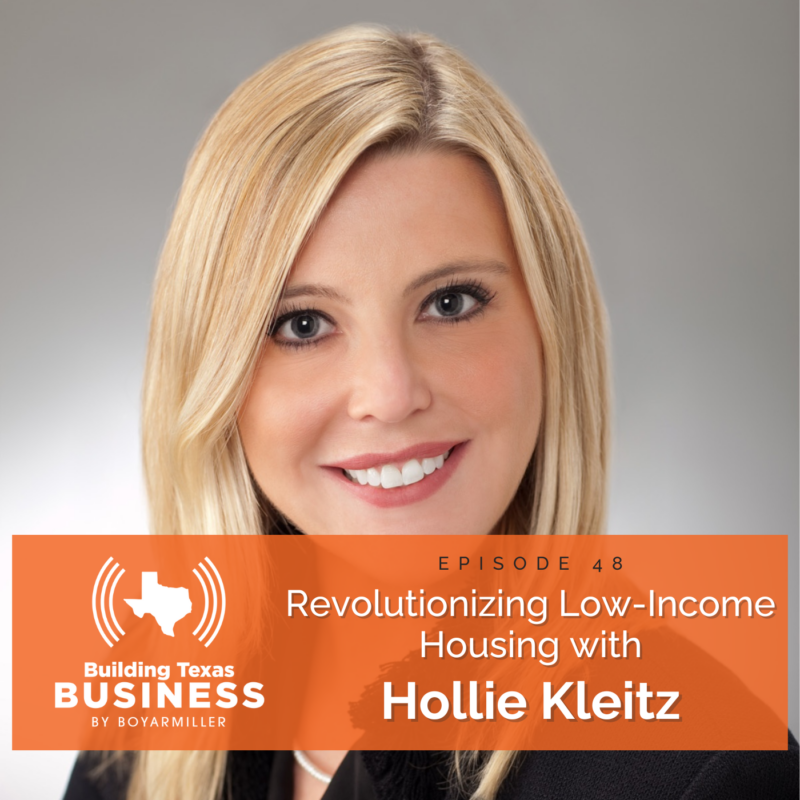
Ep 048 – Revolutionizing Low-Income Housing with Hollie Kleitz

Ep 048 - Revolutionizing Low-Income Housing with Hollie Kleitz

Revolutionizing Low-Income Housing

Hollie Kleitz, Founder and Managing Partner of Continuum Pacific Real Estate, joins the podcast. Holly has brought a unique perspective to multi-family investment projects by focusing on what she calls moderate housing, addressing the gap between low-income and luxury multi-family housing.

Listen as Holly discusses the importance of collaborative leadership in real estate development, how she vets her team members when working on a project, and the significance of proactive communication and collaboration, especially when things don’t go as planned.

Transcript

Transcripts are generated by machine learning, so typos may be present.

Chris Hanslik: In this episode, you will meet Holly Kleitz, founder and managing partner of Continuum Pacific Real Estate. Holly has brought a unique perspective to multifamily investment projects by focusing on what she calls moderate housing. Addressing the gap between low income and luxury multifamily housing. Holly, I want to thank you for joining us on Building Texas Business.

Hollie Kleitz: Thanks. Thanks for having me.

Chris Hanslik: So you’re the founder and managing partner of Continuum Pacific Real Estate, correct?

Hollie Kleitz: That’s correct.

Chris Hanslik: Why don’t you tell us a little bit about your company and what it does?

Hollie Kleitz: Okay. Well, Chris, I’m a multifamily real estate developer. A lot of people want to be in the real estate game, find that they don’t have the time or maybe the capital to do that. So what my company does is work with a lot of wealth managers, high net worth individuals, family offices that want to be in the multifamily space because they know it’s a great investment, but maybe that’s not their core business line. So I work with them to go through this whole process from finding land to working with engineers to working with a management company and really realizing how to achieve their investment goals with multifamily real estate.

Chris Hanslik: Very good. So what inspired you to get in this line of business?

Hollie Kleitz: That is something we could spend a long time talking about, but I worked in real estate on Wall Street, worked in investment banking, then had the opportunity to work for an equity fund. private equity fund. And I realized that there are so many issues that I had as an apartment dweller, things that I just hated about living in an apartment that nobody was willing to really talk to me about. And when I boiled it all down, it was essentially like this. Elon Musk is building a rocket ship, but he doesn’t ever consult astronauts about this product that he’s building. So people that build and design apartments typically don’t use their product. It’s highly regulated, lots of engineers, lots of specialists. But really, if you don’t have the firsthand knowledge of living there, you really don’t know what the day-to-day problems are. So that’s really what inspired me to get into the business.

Chris Hanslik: That interesting perspective and a good one, right? So a view from the inside.

Hollie Kleitz: Right.

Chris Hanslik: So you started the business in 2007?

Hollie Kleitz: I did.

Chris Hanslik: At what point did you get to the decision of stepping out on your own to start your own company?

Hollie Kleitz: In 2007, I originally started the company to invest in real estate deals and work with other general partners that were out there doing deals, mostly rehab deals, and I knew that I needed to start a company to be serious about investing. That’s evolved over time. I had to learn the development industry by working with other developers. I can’t just say I went out and learned how to make changes all by myself. It took a long time. I definitely had to take positions as developer with other organizations while running my business. So I’ve had the opportunity to work with some really great developers. And that’s really how I learned more about how the business really works. And that’s inspired me to now work with people that don’t have in-house developers that want to get into this space.

Chris Hanslik: Okay. So that’s been about 15 years now. You’ve seen a lot of ups and downs. What has it been like over the last few years? How has the COVID hit and things changed? How did that impact your business from a development perspective and opportunities for development?

Hollie Kleitz: Sure. I had several deals coming out of construction when COVID hit and those deals did great. That I think speaks to the niche that I’ve really helped build a concept around is I’ll call it moderate income housing. So it’s housing that there’s a crisis in our community for, and I think around the country, we have affordable housing, which is what government subsidized and those folks can make, you know, a certain amount of income to live there. But once you make a certain amount of income, you then can’t live there. So the housing that I’ve been working on the concept that I developed was really around the gap in the middle of new housing that costs, you know, around $3 a foot today. And the housing that I was developing during COVID was around $1.40 a foot. So really targeting those households that need places to live that make about anywhere from $35,000 to $75,000 a year. And I think there’s an abundance of those need for that demand and not a lot of supply. So we went on leasing up really well during COVID because people were staying at home. People still had jobs, but you know, they wanted to move into a nicer, newer product that was available. Yeah.

Chris Hanslik: It sounds like there’s a ton of opportunity in that space you’ve identified.

Hollie Kleitz: Yes.

Chris Hanslik: And I guess did that tell us how did you evolve into kind of identifying that space, you know, as the right opportunity for you and your company?

Hollie Kleitz: Sure. It was kind of born out of those same key things that made me want to start doing development on my own. And that was, you know, we see housing for people that make over a hundred thousand really, if we boil it down, that’s the income need for most new housing. And there was no, no housing for people that were in the middle and, you know, carpet in the bedrooms. I have severe allergies. So, or if you have a pet and you have allergies, you know what that’s like. to have carpet. And no apartment didn’t have carpet. They all had it. Everybody did it. Hot water heaters. Gas, tankless water heaters was a big thing. If you have more than one or two people living in your apartment, you have a 30 or 40 gallon water heater, somebody’s taking a cold shower. And you know, when I was a kid, we didn’t live in an apartment per se, but you know, we had that little water heater and my mom and dad were always the last ones to take a hot shower. And so coming up with ways that we can be energy efficient, keep costs down and really deliver a really quality product that people that don’t have a lot of options really want to live in. That’s been the focus. And I think that’s why it’s been so successful.

Chris Hanslik: That’s great. I mean, I love the kind of innovation behind that. And, you know, so I guess you think about the developments you put together. What are some of the things you feel like you do that are innovative, you know, in this space of moderate income housing? Maybe that in and of itself is innovative, right?

Hollie Kleitz: I think it is a lot of even in the past, you know, where we’ve worked, I’ve worked with some people that do this type of housing for the moderate income have, you know, kind of gone off the way, gone to just making really, I’ll call it inexpensive, cheap. They’ve taken a lot of the amenities that, you know, if you work hard every day and you come home. you know, you want these amenities, you want these unit features like a tankless gas water heater. If you’re living in an apartment and you work hard all day, you want to washer and dryer in your apartment so you can do your laundry. You want to take a hot shower. These are things that people that don’t live in an apartment that don’t have to think about that every day, don’t worry about. But if we can bring these things to the market, to our customer, I think that inevitably has proven to be beneficial for all stakeholders, including investors.

Chris Hanslik: Very good. So in the more current environment, obviously we’re in an interest rate environment that’s higher than we’ve seen certainly since you started your company. What changes or what impacts are you seeing that kind of flow through into your current business plans or projects?

Hollie Kleitz: Well, there’s definitely a need to reduce cost. Again, most of the other thought leaders in the industry that I talk to and that I’m friends with tell me, you know, they’re cutting costs by taking out those amenities and taking out, you know, things that they consider to be a luxury before. I’m working with engineers and designers to figure out how we make this more efficient. I’m working with people in local government to figure out how we can find dollars to fund the gaps, to make sure that people that work hard every day have these amenities still. I don’t really consider them amenities. I consider them necessities, but that’s debatable in our space. But those are the two key things I see. We can cut costs in other ways besides just throwing parts out the window.

Chris Hanslik: Right. So let’s talk about lessons you’ve learned through setbacks or failures. So think of a setback or failure that you’ve experienced since starting your own company and, you know, tell the listeners kind of what that was and what was the learning from that experience and then how has it made you better in running the business?

Hollie Kleitz: Sure. I think the first thing, you know, when you get started with the business, my first setback was, you know, I had a contract with a group to do development and they, you know, we talked about it a long time and everybody was on the same page. We papered the contract and everything was fine until it came time to pay me. And then everyone wanted to that one little detail, that one small detail about paying me, you know, for four or five years of work that I had done, because these are not quick, you know, these, the life cycle of a deal is long, but it’s interesting that people usually If there is an issue with your work product or something that you’re doing, and I’m sure you’ll agree with this as being an attorney, but it’s best to bring it up as you go along. And usually if there’s a real problem, there’s an opportunity to work that out. For sure. Not usually, oh, it’s payday and oh, I really have a lot of issues and don’t want to pay you. So best advice, get an attorney, get a very good attorney that you trust, that understands your business goals, that understands your business. and that will help you work through that process, especially the first time.

Chris Hanslik: Yeah, great advice. Yeah, I think to your point, don’t wait till the end, especially if there’s issues, you know, that thing you did two years ago that really, you know, upset me or had a problem with it. Mention it real time and address it and move through it, right?

Hollie Kleitz: Sure. It’s like a prenup, right? I mean, isn’t that? You work out all of the details ahead of time that way. You’re anticipating that people aren’t going to want to. give you the money that you’re entitled to, similarly to folks that are in a marriage. I think it works out the same way.

Chris Hanslik: Right. So tell us a little bit about how you put together your development teams. I know you get contracted or entered agreements with people to develop multifamily housing, but you don’t do it all on your own. So give us an idea of kind of the process you go through, what you’re looking for as you start to interview different specialists to make sure that you’re going to have a good fit to achieve the goals of the project and the goals of your investors.

Hollie Kleitz: Sure. That’s a great question. I think that’s where I add a lot of value. as a developer because I’ve worked with a lot of groups in town, engineers, architects, designers, those are all critical pieces to making any multifamily project and comes with a lot of trust and experience and understanding where their specialties lie and where their strengths are because you really want to be working with other folks that specialize in the type of asset that you’re delivering and I think that could span across industries, right? I could use real estate examples, but if you want to buy a sports car, you’re probably not going to go to a Kia dealership to buy that sports car. Or, you know, if you’re in the market for an economy car, you’re also not going to go to Fortune North Houston to buy that, right?

Chris Hanslik: Right.

Hollie Kleitz: You stay in your lane and you find the experts that are going to help you. In the past, it’s been trial and error. And I’ve worked with a lot of really great people But I think I’ve gotten it down to a good team just by really knowing what people do when things are difficult. When there’s a challenge, are those people going to step up, admit and own, you know, whatever mistake they may have made and work with you to fix it? Or are they going to point fingers? And I want to work with those people that are collaborative and, you know, we do live in a litigious environment unfortunately for some of us, but we really don’t.

Chris Hanslik: Right, I had to preface that, but in development we definitely try to work together to

Hollie Kleitz: figure things out, not threaten to sue each other.

Chris Hanslik: Yes. Well, I think especially on the real estate development side, you know, having represented a number of developers over the years, I think the one common thing that makes things successful for developments and the partners in that is collaboration because the only thing that is certain that I hear from my clients or real estate developers, the only certainty is it’s not going to go as planned.

Hollie Kleitz: Never.

Chris Hanslik: There’s always something, multiple things that will come up along the way and it makes the importance of that real-time communication and collaboration towards keeping your eye on the goal, the end goal so important.

Hollie Kleitz: Absolutely, absolutely. You know, I’ve had in the past mistakes were just made and there’s, you know, I say there’s two million moving pieces to every project and If you don’t have a mistake, then you have to be sitting there wondering where there’s, you know, what is the mistake? Where it’s hidden, right? There’s something. Yeah. It’s inherent and there will be mistakes. And it doesn’t mean that, you know, it’s a bad person or a bad company or bad team. It just means we’re going to have issues. And I want to really work with people that are proactively wanting to. collaborating work to solve that together.

Chris Hanslik: Well, I like the way you phrase that is you want to work with people or you want to know how they behave when things get difficult. I think that’s when the true colors show up.

Hollie Kleitz: Sure. Yeah. That’s been my experience. And, you know, having gone through some, you know, challenging experiences with the team, I know the people that I can trust, you know, the people that stood up and said, yeah, that was my team. That was our mistake. Look, I have insurance for things like this. I want to fix it. I’ll pay for the time for everyone else on the team. Fix it. That that’s really going above and beyond when that person could have just sat in the corner and, you know, pointed the finger and said it was everybody else’s fault because it’s, you know, we’re about getting deals done on time on budget and really making impacts in neighborhoods, not about you know, trying to figure out, you know, where to place blame on such a complex problem.

Chris Hanslik: Have you faced the challenge in the middle of a project of having to replace one of the team members?

Hollie Kleitz: Yes, I have. That was a difficult decision. You know, you hire, again, this is where you have to hire to people’s expertise and their experience, really hired someone thinking they would be great for this type of product. So, you know, I built three story garden style. That’s the concept. You know, we have to figure out how to keep costs down. And right now that’s how we keep costs down. But to work with someone that isn’t specialized in that is used to building a very different kind of apartment. And I brought them in thinking they were, you know, so cool and so experienced. And I loved working with their group, but it just wasn’t a fit for what we were trying to do. Everyone else on the team. was really geared toward a three story wood frame garden style apartment. It’s not sexy by nature if you just think about what it looks like and you don’t necessarily want that on your cover glossy magazine that you send out, but the impact is really where you really feel the work that you do is important and you feel the impact for the families and the generations of people that will come after you. And that’s really focusing on that. With this particular consultant, it was a big firm and they just weren’t able to really see it that way. It was really more about fees for their business. And that’s fine. It’s a different model. But then again, that goes back to you know, hiring the right people with the right expertise.

Chris Hanslik: Sure. So let’s talk a little bit then about your leadership style because you’re in the position where you’re having to lead a team of different disciplines, communicate with the investors to keep them apprised of the project and the progress. So how would you describe your leadership style?

Hollie Kleitz: I don’t know if there’s a NBA term for it, but I like to call it like the no surprise is a good way to do business, especially in real estate most of the time. We know if there’s something coming up. We know it’s coming. It shouldn’t ever be a surprise to investors or members of the team if we’re collaborating and working together. So as far as leadership style, I think I’d really like to identify those experts that work well together and people that also will answer questions if I have them or if investors have questions. Work with a lot of people that are such experts, they really love to just argue about why they’re right instead of answering the question of, hey, can we do this? Well, we don’t do that and you shouldn’t be asking or not good answers for questions. You know, hey, can we fix this or can we change this in the next project? If you’re defensive, that’s scary. So leadership style, I’d love to be proactive and just be really open and honest with everybody to avoid surprises.

Chris Hanslik: Very good. Yeah. No one likes surprises except maybe on their birthday.

Hollie Kleitz: Right.

Chris Hanslik: So you’re dealing with these different personalities. I mean, I guess as you’ve run this company now for 15 years, how have you evolved in your leadership style from where you started to where you feel you are today?

Hollie Kleitz: Oh, that’s a great question. So starting out, you know, I was really young, hadn’t been in the business that long and was a little intimidated by other people. You know, that can’t be done. You don’t have any right. You don’t have any business to ask these questions, you know, really trying to not give me a seat at the table. And today I really feel like I have a seat at the table. I’m going to ask the questions. Maybe it is a dumb question for someone else, but if I’m asking a question, it’s sincerely because I don’t know the answer. You know, I’m not an attorney. I don’t know the answers before I ask them, but you know, I think that’s important to know that and to know that when you’ve earned your seat at the table and you take advantage of that position because oftentimes for whatever reason, people that I’ve, you know, mentor to people that I’ve worked with, they always say they have that like fraud or they feel like it’s a facade that they’re running a business or that they are the one making the decisions. You know, that’s how I felt when I started. So to not feel that way now is kind of liberating.

Chris Hanslik: Something that, you know, some of the listeners may value in hearing is that I’m sure you felt a lot of uncertainty when you started about it. Was it, should I be doing this? Is this the right decision? Did I make a mistake? What kept you going?

Hollie Kleitz: Of course, those questions, you know, I’d be lying if I say that I don’t still ask myself some of those questions, you know, have to be. really transparent and honest about that. It’s a vulnerable spot when you say you don’t know, but today I’m trying to stay focused and really bring the value of the expertise that I have and really try to help other people see their value and how they create the value of what we do.

Chris Hanslik: Along the way, have you had any mentors that have helped focus you and keep you going?

Hollie Kleitz: Of course, yes. I have to throw a shout out to Jane Harrison, who’s a commercial lender in Atlanta. I would say that she was the first person that really, no hole is barred. She just gave it to me straight. She gave me the chance and she gave me the rope to hang myself and I really owe it to her. Our call one Friday afternoon, it was casual Friday and coming from the investment banking world, it was cool that we could wear jeans and sneakers on Friday to work. We were in a client facing business and I’d worn my favorite University of Kentucky t-shirt and my jeans, sneakers, and she was appalled. Said, I don’t know why you wore that to the office today. And I said, what’s jeans Friday? Everybody else’s wish. You are a woman, a professional woman. And we have clients coming into the office today, so you will not be attending these meetings. And that really has stuck with me my entire life, my entire career, because sometimes you just need people to tell you what the problem is instead of beating around the bush or letting you try to figure it out yourself. Claire, Jane was a mentor. Someone needed to say those things to me and that she did that. So she really helped me understand that just because you can wear jeans or just because you can or just because that’s what everybody else is doing, that is not necessarily the way that you need to conduct business.

Chris Hanslik: I said, yeah, some of the lessons, sometimes you learn the hard lesson, it’s the best way to learn it, right? And it sounds like that was cold and brutal, but honest.

Hollie Kleitz: Yeah, it hurts, right? It hurts when someone’s giving you that type of feedback, but when you know that it’s coming from a good place and you know that it helps you, and you know, it’s not just helping me to make decisions on whether or not to wear jeans to the office, it’s helping me make other decisions. Is this, you know, What I want people to see is just the perception in business that I want to have.

Chris Hanslik: Very good. So as you sit here today kind of thinking about your business and your plans, what does the future look like? You know, to the extent you can tell us kind of things you’re working on and what goals you set for the rest of this year and the next few years.

Hollie Kleitz: Sure. Well, I’m talking to a few wealth managers right now. Given our interest rate and inflation environment, there’s a real need and a desire on behalf of you know, high net worth individuals, like I said before, and wealth managers to really directly invest in multifamily. So really working with those groups to help them understand the benefits. You know, we also have to discuss any potential downfalls, but really understand how this can be beneficial to them for their investment strategy. I think working with banks to figure out how to manage the interim of, you know, interim curiosity or interim period where we don’t really know what’s going to happen. There’s a lot of uncertainty about interest rates and what the government’s going to do as far as regulation and banking and housing. So really working through that, working through PACs and different associations through the National Multi-Housing Council to really figure out what best practices are going to come as the landscape changes. We’re not sure if there will be new banking regulations, so it’s really you know, kind of focusing on the product, focusing on how we make money for not only our investors, but how we contribute to communities and grow, you know, communities of people that have good places to live for, and that’ll be generational change. So I think if I can focus on that and focus on, you know, the concept that’s in place, we’ll be okay. We’ll get through this. Interest rates are of course going up. Costs have gone up substantially, I really don’t think those are, you know, a hundred percent impediments to getting deals done today. We still need housing.

Chris Hanslik: Yeah, that’s good to hear. And again, I love the focus of this, the gap for this moderate housing. I think it is so underserved in the multifamily space that you’ve kind of focused in on it is unique and can see why you’re staying busy with your investor base.

Hollie Kleitz: They’re very excited. They’re, you know, the uncertainty is what’s killing a cat right now, but they’re still on the sidelines and they want to jump in and we’ll get there with the banks.

Chris Hanslik: Yeah. Unfortunately, that uncertainty is pervasive throughout all industries, not just yours or mine, right?

Hollie Kleitz: I think you’re right.

Chris Hanslik: So let’s turn a little bit maybe to the lighter side. So what was your first job?

Hollie Kleitz: My first job was at an amusement park in Cincinnati, Ohio. I wanted to work on the rides, but quickly realized that you could make $2 more an hour by working in food service. So I worked in a pizza joint at the amusement park.

Chris Hanslik: Okay. And you said you’re not a native Texan, but I know you’ve been here a while. So do you prefer Tex-Mex or barbecue?

Hollie Kleitz: I knew you were going to ask me that. And can’t you just have both?

Chris Hanslik: A lot of people pick both. I’ll let you go with that. Since you’re not native Texan, you like them both, that’s okay.

Hollie Kleitz: I mean, brisket is by far one of the most delicious. You know, God gave us brisket for a reason. So if you’re forcing me to pick one, I pick barbecue.

Chris Hanslik: Okay. Well, and then now we have places that use the barbecue in their Tex-Mex, so the rest of both worlds. And I know sometimes I ask guests about books they’re reading or some of their favorite books. And so I’m going to ask you some books that you recommend or there’s some of your favorite reads. And if so, what are they?

Hollie Kleitz: Sure. I knew you were going to ask this and I came prepared. I thought I would go on a lighter note since we can read the top 10 lists of business books or anything. But during COVID, I was on a Zoom call with a top military official. I can’t name names, but It was a Q&A session and someone had the great question of, how do you deal with your enemy psychologically? How do you prepare for that? You know, when you’re in the room with someone being difficult or you can’t negotiate or you’re past your, you’ve lost all sense to deal with this person. And the guy literally picked up a toddler psychology book and he said, Toddler psychology will teach you everything you need to know. I read this every day from letting someone set out a tantrum to explaining choices to just leaving the room when someone’s being completely inappropriate. Toddlers psychology will do it all for you. So I brought toddler discipline tips by Lisa Marshall I really like the part about just letting them cry it out a little while right that’s in business When people are they keep going back to the same thing and you know, you’re not getting anywhere You just have to let them be with themselves and think about what? what that issue is.

Chris Hanslik: So in case you listeners in here, it’s Toddler Discipline Tips by Lisa Marshall. It kind of goes in line with everything you learned or need to know you learned in kindergarten. Exactly.

Hollie Kleitz: Yeah. But coming from a top military official, I had to give that advice because that was really, you know, when I’m having difficult days or working with people that are just being difficult, I’ll flip through there. So I love it. That’s a good one. The other one I hadn’t bring to was Grumpy Monkey. by Suzanne Lang, and I give this to everybody, so I’m going to give you a copy of it as well.

Chris Hanslik: Oh, okay. Grumpy Monkey. Tell me about this one.

Hollie Kleitz: Essentially, we came across this book by happenstance. It was in an Airbnb that we stayed at during COVID, but we found it so interesting. This little guy, Jim, is the monkey, and he’s having a bad day, and his friend keeps You know, kind of harassing him. No, Jim’s in a bad mood. You’re in a bad mood. You know, Jim’s in a bad mood. And first of all, you’re in a bad mood if people keep saying, oh, you’re in a bad mood. You’re grumpy. It makes it worse. So it’s really about letting people be grumpy. and giving them time to kind of work through that. And it’s a cute book about that for adults and for children. But I like that one a lot.

Chris Hanslik: All right. I can’t wait to read it. Thank you. So wrap up the last question. If you could take a 30 day sabbatical, where would you go? What would you do?

Hollie Kleitz: Great question. I actually just did that. We went to South Africa for almost a month. How fun. Yes. Amazing people. Things I’d never seen. People talk about going on safari. We spent a week in Cape Town, a week in the wine lands in Stellenbosch, and then we spent a week near Kruger Park in South Africa. And the safari really was unlike anything I’d even imagined. I was tearful when we had to leave to come home. I’d forgotten what it was like to not be plugged in 24-7. They had TVs there, but we did three game drives a day, saw all kinds of animals that we had never seen. and just really a chance to decompress and look at nature in a different way.

Chris Hanslik: Sounds amazing.

Hollie Kleitz: Yeah. So I’d recommend that to anybody.

Chris Hanslik: Great. Well, Holly, thank you so much for coming on the podcast and sharing your story about your company and the opportunities you’ve seen in the marketplace and how you’re taking advantage of them.

Hollie Kleitz: I appreciate you for having me. If anyone has any questions in general, I love to talk about multifamily housing. I bore all my relatives. I’ll bore anyone that wants to have a conversation about it.

Chris Hanslik: Well, to that point, how can they contact you?

Hollie Kleitz: I can be reached by my websites the best way. It’s ContinuumRE.com and my email address is on there as well.

Chris Hanslik: Very good. Well, thanks again for being on the podcast.

Hollie Kleitz: Thank you.

Chris Hanslik: Thanks for tuning in to Building Texas Business. For more information, episodes, and summaries, head over to boyarmiller.com forward slash podcast. If you enjoyed this episode and found it informative, Please take a moment to rate, review, and share it with friends and colleagues. It really helps others find our podcast. As always, we appreciate the support and feedback of our podcast community. More episodes are coming soon, so be sure to check back. And there we have it, another great episode. Don’t forget to check out the show notes at boyarmiller.com forward slash podcast. and you can find out more about all the ways our firm can help you at boyarmiller.com. That’s it for this episode. Have a great week and we’ll talk to you next time.

We provide clarity for complex problems.

With a deep understanding of your business alongside clear and honest communication, we help clients face challenges fearlessly.


Learn more about our services and how we help clients.