


With a deep understanding of your business alongside clear and honest communication, we help clients face challenges fearlessly.
Learn more about our services and how we help clients.



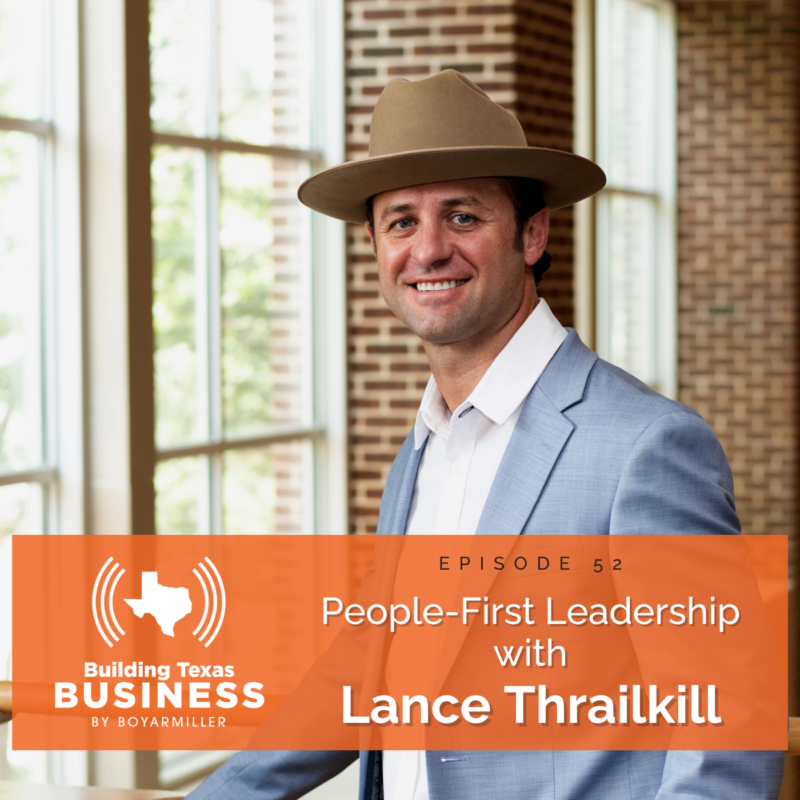
In this episode of Building Texas Business, Join us as we sit down with Lance Thrailkill, CEO of All Metals Fabricating, to discuss his family’s 70-year-old business and how their focus on putting employees first has led to their continued success.
In this conversation, we explore the challenges and rewards of running a family business and the leadership lessons Lance has learned along the way. Discover his unique approach to hiring, firing, and innovation and how he maintain a successful business through open communication and a “”whatever it takes”” mentality.
Transcripts are generated by machine learning, so typos may be present.
Chris Hanslik: In this episode, you will meet Lance Threlkeel, CEO of All Metals Fabricating. Lance is a third generation leader whose focus and passion is to put his employees first and defines his company’s why as serving others with excellence. All right, Lance, I want to welcome you to Building Texas Business. You’re currently the CEO of All Metals Fabricating. And I just want you to start by telling the audience and our listeners What is All Metals Fabricating? What do you do? What are you known for?
Lance Thrailkill: Yes, sir. Thanks for having me, Chris. Appreciate the opportunity. All Metals Fabricating is a third generation family owned business with me being the third generation owner. We are a contract manufacturer, more commonly known as a job shop. We specialize in sheet metal fabricating, machining, powder coating, and assembly, including electromechanical assembly. And the family, the business was built on the backbone of the telecom boom of the 80s and 90s. It’s a 70 year old business. I’ve been in my family for 45 years. So my grandfather bought the business in 1978. My dad joined him that next year. And they built the business and my grandfather retired coincidentally the same year that I’d come on board back in 2008, 15 years ago. And yeah, so the company is built on the telecom boom with the eighties and nineties. Then in 2000, that boom, that bubble busted and we diversified quite a bit. And so now a telecom still about 30% of our business. And, but we’re in virtually every industry OEMs, which stands for original equipment manufacturers, our primary. biggest customers and that goes into different industries. Primarily alternative energy and medical is our biggest OEM customers.
Chris Hanslik: Okay. That’s impressive. So a couple of questions. I want to follow up on that. So what inspired first your grandfather to buy this business in 1978? Yeah.
Lance Thrailkill: So my grandfather is pretty cool. I’m gonna say the classic American dream story, but he got married when he was 16 and I had my dad when he was 17, worked three jobs. He actually worked at AC Horn, which is another third generation owned business. I think they might actually be on their fourth generation, the Horns. And they’re in Dallas and a sheet metal shop and primarily focused in the food processing equipment space. And my grandfather just was inspired by the way the Horns invested in their people. And he wanted to create real wealth for himself. And so he had saved up enough and took out a loan from the bank to buy all metals fabricating and modeled a lot of what he’d learned from the horns, especially in the way that we take care of people and have our rich benefits plan. And so that was kind of his inspiration.
Chris Hanslik: That’s great. That is inspiring. So then the next question from that is what inspired you to want to work in the family business and eventually take over the family business?
Lance Thrailkill: Yeah, so that’s a great question. I would say just the way that my dad and my grandfather have just, they’re the most selfless men you’ve ever met. And so the way that my dad just selflessly put me and my sister’s needs and our family’s needs before his own, and even just all his employees’ needs before their own, just how hard he worked, how hard my grandfather had worked. I just wanted to come in and help give my dad the opportunity to retire. And if that’s what he wanted to do. And so that was really just given back to the two men that have really given me everything that I have as was the main driver.
Chris Hanslik: Well, I think you’ve seen this. It sounds like both your grandfather and your father, but it has to resonate reside inside of you. You have to have a passion for what you do to really do it well. So you clearly must have a passion. this business and being able to lead it as its CEO now for what, is it now five, six years?
Lance Thrailkill: Yes, sir. Yeah. Yeah. I, you know, I would say you have to have a, you have to have a greater purpose. And, you know, our why to what we do is to serve others with excellence. We follow, you know, Jesus and He laid down His life for us. And so we believe that that’s how we’re supposed to treat others. And so while I wouldn’t say I’ve learned and grown to become passionate about manufacturing, that is not at all what drew me in or what continues to drive me daily or motivate me daily. It’s the people. It’s serving and caring for our people and putting them first and seeing the lives impacted and their family’s lives. That’s really what motivates me and keeps me going.
Chris Hanslik: That’s great because as you know well, without good people, and you’re not going to have good people unless you take care of them, you’re not really going to have a very good business. Especially one that’s going to span as long as your family’s has. So tell us, what are some of the things that you do at AMF to show the people that you care about them, that you’re taking care of them, so that they feel it and they see it in action?
Lance Thrailkill: Yeah. So just, you know, following in my dad and grandfather’s footsteps, they had put a lot of the fundamental pieces in place in terms of compensation and things like that. So really starting with that, we have a 15% 401k contribution that they’ve done every year, even in years when we’ve lost money, they’ve done that 15% 401k contribution. And so that’s very significant. We have a welder who’s been here for 47 years and he’s got over a million dollars in his 401k. And so, you know, I tease him that only Jesse James is the only welder that has more money than him. You know, you do, so the fundamental business, the way the business is set up and doing that and fully covering their healthcare, which is Certainly not common in manufacturing industry, really not any industry anymore. You have to pay, you know, out of pocket something for most insurance at most companies. And so fully covering that we also do quarterly bonuses is something they’ve kind of had in place and that I’ve really doubled down on. And then a guaranteed Christmas bonus, no matter what their performance is. Uh, that we do early at the very beginning of December, along with a big Christmas party that’s very family oriented and a big deal to our employees. And we do that early in December so that they can have that money to go buy Christmas presents for their family. And so just starting with those things, you know, that having the structure there is key, but, you know, that’s not really enough. You know, you’ve got to really care for people in a radical way. And so that looks, you know, different at different times. You got to look for opportunities and your true colors really show during the difficult times, of course. So during COVID. You know, we had food brought in for our people every day at the start of it so that they didn’t have to go out and risk exposure. We were having the place sanitized every night. We spent several hundred thousand dollars over the first six months of COVID just making sure people were cared for because we were a mandatory business. That’s one example. But, you know, it’s the little opportunities where people, you know, go through life difficulties and, you know, sending flowers to the funerals. And then some other things we have in place is we have a company chaplain that comes out and walks the company once a month and checks in with people, offers counseling services, prayer to people. We do about four times a year. Well, he’ll do an encouragement, a message during lunch for people, for everybody, for the whole company. and just encouraging the team. And so just, but then even just knowing what’s going on in people’s lives. So I walk the floor every Friday and hand out people’s paychecks myself and check in with them to ask how they’re doing. That forces me to really engage and know what’s going on in people’s lives and with their families and follow up on those things. So you just, you have to put things in place that help you fundamentally do it. And then when the big opportunities arise, you have to be ready to show your true colors and step it up.
Chris Hanslik: And that’s impressive stuff. I mean, you’re clearly bringing the true definition of family into your business and treating your employees like they’re an extension of the family. That has to foster a very cohesive culture there at AMF. Tell us a little bit about that. How would you describe the culture? Are there things in addition to what you’ve just described that you do that you think helps foster, build the culture you have there?
Lance Thrailkill: Yeah, absolutely. So I think one thing that really defines us is, you know, the, we care more. So it starts with us as leadership, caring more for our people and putting our people first. You know, a lot of businesses put the customer first and really as an owner, your customer, as your employees, first and foremost. And so by doing that, we care more for our employees and they in turn put the company before themselves often and our customers before themselves. Just last week we had You know, Erickson had this big prototype order that they needed to get out. And it was very critical. And we were kind of behind the eight ball and we had people stay until eight, nine o’clock at night. They’re back at five in the morning here working around the clock. Then we lost power on Friday morning and we had the whole team, our, you know, director of operations is out there on the floor, assembling these things. And we got them all done, you know, right in the nick of time. And so you just seeing people rally together is something that really defines us and this whatever it takes mentality really defines our culture, which was instilled by my grandfather and dad. Just, yeah, the grandfather used to walk out on the floor and be like, do whatever it takes, get the work done, you know, and, and that we’ve, I coined that and, and it really does define our culture a lot. It is certainly a family, family environment, which, you know, can be a bad thing for some people, but for us, it’s good. And, you know, just being able to have open and honest conversations, give each other feedback. But culture is something that you have to constantly be working on. You can never be satisfied. You can never get comfortable, especially as you grow. really keeping your culture refined. And so we really went hiring, you know, a lot of people in a manufacturing space, especially in this work shortage, if you have a pulse and you know how to do the job, you’re going to get hired. Well, we have a different approach. We make them take a personality survey before we’ll even interview them so that I can better understand how they’re wired as a person. in preparation for the interview, we make them go through our core values and exhibit how they show our core values or have shown that in recent jobs. And so really making sure people align with our culture before they come on board has been a huge help for us as we’ve grown to keep that culture intact.
Chris Hanslik: That’s really important because the key, I think, to a good hire that you actually retain over the long haul, which is to the benefit of your business, for all kinds of reasons is making sure they’re a cultural ad on the front end because they’re more likely to work out and stay longer. And the opposite is true, right? If you don’t really take the time through the interview process to figure out this person is going to really add your culture. In fact, if they’re a cultural, you know, detriment, then they’re not going to last long. And you’ve got turnover and you’re going to spend more time and money trying to fill that position. You’re going to have downtime because you don’t have someone in that position. It’s just, there’s nothing good that comes from it.
Lance Thrailkill: Oh, it’s been a game changer. Yeah. And it’s always, you know, harder to fire people and it’s, you know, the impact that it has on your culture. Just like when you have people training new people that don’t end up working out, that is very draining to, to your people. And so really making sure, and even bringing them in on the process, bringing the leads in on the process, having you know, the Department of Leads meet the new candidates has been helpful as well.
Chris Hanslik: Speaking of that, you kind of mentioned it, you know, it’s never easy to let someone go or make that hard decision, you know, but everything you read is that as soon as you know, the faster you make that decision, better everyone off is. What are some of the things that you’ve learned over these years on when you have to make that decision to let someone go to actually, you know, make it more decisively and act rather than let it linger?
Lance Thrailkill: Yeah, I’m not the best at that. I’ll tell you that I’m a little bit too compassionate, but I think that once you know, it is important to act swiftly. And so I would say really the key is outlining what the expectations are. And the way I say it is like people should when it comes time to fire them. they should already know that it’s inevitable because the expectations have been so clearly outlined and it’s obvious that they are not meeting them, that they’ve essentially fired themselves. And so while I may not act quickly enough sometimes, that’s the key right there is that they understand that they’ve fired themselves by not meeting expectations. I think where you get in trouble is where people don’t know that they’re not meeting the expectation And then they’re just kind of lingering around. And then it hurts everybody’s morale because they see this person, you know, just hanging around and they’re just a poor performer.
Chris Hanslik: Another couple of good points there. One, I think you’re right. I think clear communication is the key, right? Clearly communicate the expectations and then clearly communicate whether they’re being met or not. In both cases, I think you praise and reward when someone’s meeting or exceeding expectations. So that reinforces that good behavior. is critically important, just as you should, when they’re not meeting expectations, communicate why that’s the case. Unfortunately, I think, I don’t know about you, but I find as a leader, a lot of times we’re always focused on the problems, why they’re not meeting, and we neglect some of our star performers and the praise to make them even better. And that’s a challenge, right? But it’s very important to make sure you’re spending time on both.
Lance Thrailkill: Yeah, it is. It’s, you know, and That’s, you have to find opportunities to celebrate the wins and to pat people on the back. And it’s so critical. And you’re right. It is very difficult to do. So you have to systemize it to where it’s built into your habits. So you’re not having to think to go do that. And, you know, for us, like in the data-driven world that we live in, that’s the best way to do it is to have, you know, we have our, every employee has their own performance dashboard. So all they need to know to see how they are doing is to go to their dashboard and see how they’re performing on every job. You know that they’ve got their time and attendance there. They’ve got how much you know their efficiency is. They’ve got their rejects on there so they can see just in a snapshot exactly how they’re performing and their bonus based on that performance. So they know what’s coming and how they can the win is clearly defined and it’s at their available to them at their fingertips and know that they’re hitting it or not.
Chris Hanslik: You mentioned data driven and when I hear that it makes me think of the word innovate. So let’s talk about innovation. What are some of the things that you have done as CEO to innovate the business or you think are innovative in the industry and the way you’re doing things there may not be innovative in itself, but it’s maybe new to your industry or it is something that you’ve kind of come up with to try to move the company forward in this data-driven world we’re in.
Lance Thrailkill: Yeah. So we, our team is, is very innovative. That’s one of our core values. So I wouldn’t say that I per se have done anything, but our team has definitely implemented a ton of things and that innovative mindset came, you know, from my grandfather, my dad, just constantly reinvesting in new equipment. So that starts, you know, the top, you’ve got to be able to provide people with the best tools that they need. If you want people to be as efficient as possible, you’ve got to be willing to invest in new equipment constantly. And so we’ve always done that historically. And then just to take it to the next level here in the past few years, really we focus around data and software. So we have automated quoting software that is revolutionary and that we are an early adopter of. That’s been a huge thing for us and helped us really Get quotes out faster and more accurately more consistently. We have the machine monitoring software, which we were also an early adopter for, and I’ve gotten a lot of public recognition and awards for so we can I can see what every machine in our shop if it’s running what job it’s running on. how much it’s being utilized every day of every minute from anywhere in the world. That’s pretty cool. And that software also generates reports to our department leads each week, showing them how each machine in their department was utilized, what their utilization rate was with a look back of three weeks so they can see for trends and use that to drive their huddles. We also have the, as I mentioned, the employee performance dashboards. So that’s something that’s very innovative and that we’ve we actually co-developed with a software company. Our ERP system is the largest for manufacturing in the world and we co-developed it with them as it now it’s a common product offering. So that’s what I would say is very innovative and we built the bonus structure off of those performances. So the mindset, you got to connect employees to the big picture KPIs. And so the way that we do that is, They can so their efficiency rating everything over 100% that they hit they’re making us as a company more money. And so that’s how they impact the net income percentage. So they’re immediately on their dashboard connected to our net income percentage. based on how efficient they are. And so they’re obviously connected to sales by how much product they can get out. So by connecting them to the big picture goals and specifically profit margin, most importantly, we then put that money back in their pocket. So we’ll give them an extra $500 bonus for hitting over 100% efficiency. And we’re working even how to monetize that even more to where we can give even larger for larger percentages over 100 to where however much extra money they’re making the company, they’re getting a direct percentage of that instead of a flat fee as we currently have it structured. So those are just a few things that we’ve done here recently that have been very helpful and help keep us on the forefront and this industry 4.0 as they call it world that we’re living in.
Chris Hanslik: Right. Yeah, I’ve seen speaking of industry 4.0 that you definitely spoke about it and I know you’ve been asked about it before. Just maybe briefly educate our listeners that may not know about that. What do you mean when you speak of industry 4.0?
Lance Thrailkill: Yes, sir. So industry 4.0 is just for the fourth industrial revolution is what it stands for and it’s focused on really full connectivity. So having machine monitoring, even taking it a step further to have machine to machine communication. It’s a, it’s focused on data, live data being used to drive your business decisions. It’s focused on robotics. So having fully robotic, fully autonomous equipment and software as well. And so all these things kind of culminate together to To make up industry 4.0 as it, and, you know, a lot of times there’s these buzzwords that are just buzzwords. And I assure you that industry 4.0 is not that this is the culmination of a bunch of things that have been in the works for a while now and, and the hype behind American manufacturing that. that started with our previous administration and is still carrying on today. And this kind of reborn pride in America and American products and being self-sustaining has helped drive that even further. So the way that we’re able to be competitive globally in order to compete with slave labor and subsidized goods is through automation and being able to run things much more efficiently than we had done previously.
Chris Hanslik: That is interesting. And it brings to mind a question for me that I think you’ll be the first guest I’ve asked, but he’s kind of can’t avoid it these days. It’s kind of another current buzzword and it’s not going away. And that’s AI, artificial intelligence. How do you see AI impacting your business going forward? And how will you balance that with this family oriented culture that you have as automation starts to potentially replace jobs formerly done by humans?
Lance Thrailkill: Yeah, so great question. So I always say that automation is not a replacement for humans, it’s an opportunity. And so jobs transition, they just look like new opportunities, different job titles, different new opportunities for learning and experience. And so We do have some AI, our automated coding software does have some AI where it analyzes part features and looks for manufacturability concerns. I look forward to embracing future AI opportunities. So I even take it a step further and I tell people that automation, maybe not as much AI, but automation is job security for our people because what it does is it allows us to ramp up You know, we’re a contract manufacturer, so, you know, business might be booming one day and slow, you know, a month later. And, and so by having automation, it allows us to ramp up production and use technology to get product out in a short period of time. and then ramp down when we need to. So in the past, you’d have had to hire people and lay them off, whereas now we can use automation to run around the clock unattended and give people actually more job security by doing so. So that’s how we do it. It takes a level of trust with your people, but also I always reinforce it with people. Anytime we are getting new automated equipment, I just remind people that this is an opportunity for them and not a replacement of them. And even taking it a step further, I bring the people that are going to be running that equipment are actually the ones that make the decision of what we buy. And so you’ve got, we’re making them, you know, buying a million dollar piece of equipment and you’ve got a guy that’s a department lead. making that decision. Somebody that’s making $50,000 or $75,000 a year, maybe $100,000 on the high side, but making a decision on a million-dollar machine. But they appreciate those opportunities, and that’s where you get the buy-in, and the rest of the people in their department trust them and follow them and follow suit.
Chris Hanslik: That’s good. Sounds like you’ve got a great mindset about that and prepared for what the future is bringing. Change subjects a little bit. So, I said this earlier in the episode, third generation, leader of the company. Let’s talk a little bit about how that transition came about and kind of what were some of the struggles that you and your dad and or the company went through as that transition was happening because we have listeners out there probably facing the same thing and I think they can learn from your experience.
Lance Thrailkill: Yeah, I appreciate that. At a real high level, I got my master’s in accounting. And so I had worked in the business a little bit in high school and one summer in college. I’m an entrepreneur, so I’d actually started my own business all through college and grad school, an entertainment business, and then wound that up and came over to All Meadows. But I came in from the financial side. So I took over our accounting firms. activities, learned it from the books, and took over also a lot of my grandfather’s functions that were kind of more high level as well. And so I really just came at it from that. So I worked as a controller, then became CFO and then CEO. And so just that was what my career path looked like. And as CFO, I just looked for opportunities for improvement and attacked those, helped people be able to do their job more effectively and efficiently. And, and for me, it was actually, I think I tell people it’s an advantage to like be ignorant. And so even if you’re not, you think you know everything, you should come in, especially in a place where there’s really high, long tenure people, which is the case for me. I mean, we still have three that are over 40, one over 30 and a handful over 20. And so, you know, coming in as a young, you know. man, that can be pretty intimidating, but best thing you do is ask a lot of questions. So that’s where ignorance is a blessing. And like I said, the worst thing you do is come and act like you know it all. And so asking a lot of questions, coming in with a mindset of how can I help you do your job easier? How can I make your job easier? How can I help you do your job more effectively? and just asking questions to help people come to the conclusions that they might not necessarily come up with on their own. And if you come out of that approach and people start to see you helping them and know that’s your heart, you begin to establish trust. And that’s what was successful for me as far as it goes with relating to the team and building trust. And it was all about helping them. And it still is. I tell people today, like I would say it regularly, my job should be CSO, chief servant of all, you know, and because my job as a leader is to serve our team and position people for success by having them in the right seat and giving them the right tools to be successful and make their job as easy as possible in terms of efficiency and effectiveness. But as it relates to my dad, you know, I think that, and You know, that all comes down to the person who’s you’re taking over from. And so I, my dad handled it and has handled it, continues to handle it just as graciously as possible and humbly as possible. And I could not be more thankful for that. And so he’s made it easy. He’s just given me the reins in it. That was a conversation I had on the front end with him of like, Hey, if I’m going to come here. Like it’s gotta be, we gotta be on the same page that I’m going to make changes and you got to be okay with it. And he’s like, yes, absolutely. He’s like, the only thing I would say is like, if we’re ever going to make it, if we’re ever going to talk about anything, let’s make it valuable by always offering another perspective. And so, you know, Hey, you know, what, what it looks like is like, I’ll bring some, Hey, we’re thinking about doing this. And then my dad would say, Hey, I’m sure you’ve already thought about this, but another, something you may think about is this is a different perspective, maybe, you know, a drawback to doing that. And so that way, and you frame it up where you’re, it’s an under, it’s understood. And we, we restate that every time almost. It’s like, you know, Hey, I’m just going to give you another perspective. You probably already thought about this, but just in case you have it is our theory is if we’re going to talk about it together, then it needs to be value add. And the only way you can add value is if you’re really challenging one another’s perspectives and just reminding yourselves, that’s what you’re doing. And so it’s funny, I mean, if we don’t remind ourselves that’s what we’re doing, we can kind of get in and start in these little, you know, arguments back and forth. They’re like, you know, neither one of us are set in either way. So we just remind ourselves like, Hey, we’re just offering a different perspective, you know? And so that’s been super helpful for us. And, you know, I think just open and honest conversations is the biggest key for people, you know, having humble leaders that are willing to take ownership for their mistakes and, and then just being patient, you know, if people aren’t as ready and willing as my dad has been, then, you know, you just gotta just be patient and understand that’s their baby and that’s gonna take time. And you just gotta just take it one step at a time.
Chris Hanslik: Yeah. Humility definitely plays a big role in it. And I think you’re right. I mean, as you’re talking, I think I may wanna do an episode where I have, you know, someone like you and your dad, because I think your dad’s perspective would be interesting too of how to let go and give those reins over Cause it has to be hard when you run the show and he got said, I mean, it is, it was kind of his baby at the time, but to entrust it to you and give you the freedom to take it the direction you felt like it needed to go.
Lance Thrailkill: Yeah, absolutely. I know one thing I’d say is like, you know, as a young leader and you just got to come in and, you know, our culture, especially you have to just be willing to outwork everybody. You know, and you got to be willing to, you know, you can never ask somebody to do something that you’re not willing to do yourself. And by doing those things, it makes it easier on, you know, the prior generation to hand things over to you as you prove yourself trustworthy and willing to do whatever it takes to get the job done and to be faithful and excellent. So walking in the wisdom of others, the council of many, you know, I mean, like that was one of the first things I put in place was a leadership team. because, you know, there’s wisdom in the council of many and that’s, it’s not me making any decision. It’s I’m processing all decisions through our leadership team. One that gives additional perspective, but then it also gives extra buy-in. And so that’s a key component as well.
Chris Hanslik: I think that’s all, you know, very good advice for anyone listening out there that is, you know, coming in to lead an organization. And even if they founded it and it’s grown, they’ve grown it. You’ve got to have the trust of your people. And then when you’re coming in, like you did, you know, this generational thing, it sounds like it was done the right way. You came in somewhere at the bottom, worked your way up, proved yourself to everyone else, because you know, there are a lot of eyes on you. And that’s the right way to do it is hard work, earn trust. And there’s no substitute for that. Yes, sir. Thank you very much. So let me ask you this. We learn in a lot of different ways, but some of the best learning we have is when we fail or have some kind of setback. Can you think of a setback or two since you’ve taken over in a leadership role where you’ve had a failure but you’ve learned from that and it’s made you better and stronger because of it?
Lance Thrailkill: Yeah, I think making a decision without getting buy-in from others, even if it’s a small decision, you know, like a silly one. I mean, not silly, but recently it was, you know, I came, I went to this show, it’s called Fabtech. They came up with this new laser welders. And so it’s a, you know, it’s a $20,000 machine. I mean, for us, that’s. The cheapest machine we have. And so I’ve bought one. I was sold at the show. I came back. I’m going to have one of those, you know, and then I didn’t get buying from the team out on the floor. The guys that are going to be using it. And so it sat idle for six months. You know, I mean, I’m just like, Oh my gosh, guys, like this is a great technology. Like you need to use it, but I didn’t get buying. And so that was a good reminder. Thankfully it was not on a more expensive machine than it was, but just a good reminder that you got to get the buy-in no matter. how expensive or not it is, anything you’re trying to implement has to be bought in by your team. Even if it is a great technology or it is the right thing to do. If you don’t have the buy-in on the front end, that’s just not going to go well for you. That was a good reminder. Unfortunately, not as expensive as it could have been. And then I would say, I’m constantly reminded of dealing with conflict, pressing into conflict. Anytime I do not press into conflict, if there’s two employees having conflict, And I don’t, you know, make sure or have someone else make sure that is resolved and reconciled. Then it blows up in my face. And so I tell people like, we literally force reconciliation. I actually just last week had somebody quit because I told him, I said, if you cannot take owners, she had a conflict with another employee. You know, they got into a big argument. And I just said, you know, I let them cool down for a week. I just said, Hey, If you cannot take ownership for your part in that conflict, then you cannot work here. I’m sorry, but that’s, you know, you need to take ownership and accountability for your part of the conflict. And he said, I can’t, I can’t, you know, he got upset and walked out. And so just dealing with the conflict and honestly, even that one, like I was trying to give him time to cool down because I knew how heated he was about it, but I probably should have dealt with that a week earlier. You know, I shouldn’t have let it wait a week. Unfortunately, there’s some travel and things in there, but You know, just not you cannot put off conflict. You cannot do it. It is it’s affecting everybody around you, everyone out on the in your company more than you can ever realize. And you have to press into conflict. So that would, I would say is a tough lesson to learn and one we all have to be continually reminded of because dealing with conflict’s hard, you know, but it’s a really, you know, I tell people conflict is an opportunity. I just say that all the time. Conflict is an opportunity. It’s not a bad word. It’s not a bad thing. It’s an opportunity to grow closer together. and to improve. So it’s an opportunity to also do the opposite, you know? And so how are we going to take that opportunity and use it to bring the team closer together? And so we do that. We force reconciliation. We have a conflict field guide here for our team that shows people how to walk through conflict. And I would say that not dealing with it is impacting your business more than you could ever imagine.
Chris Hanslik: I think that’s great advice. And you’re right. Not dealing with it doesn’t make it go away. It’s still there and it just festers. And so you’ve got to address those issues head on sooner rather than later, because they will affect the entire organization. And you can’t, you give one person a pass, it makes it harder to enforce it on someone else.
Lance Thrailkill: Exactly.
Chris Hanslik: So Lance, these are all great points and great advice. Let’s turn a little bit to the lighter side of things. What was your first job that wasn’t at AMF?
Lance Thrailkill: First shot. Oh man. I got to think about that. I know it worked at a smoothie king one summer. My first job actually, I think was at AMF. I built, so when we were moving into this building, we, I moved the inventory from our old building, which was dusty and I’m allergic to dust and it was nasty. And I had to, so I’ve moved all the inventory from our old building to this building and built the shelving system to house our inventory here. and put it into our ERP system. So that was one of my first jobs one summer with a buddy of mine. And that was the worst job I’ve ever had. That job sucked. And then I think after that it was smoothie king and that job was a lot more fun. I just got to hang out with my friends.
Chris Hanslik: All right. And it was air conditioned.
Lance Thrailkill: Yeah. Yeah. One of the best jobs I’d say is waiting tables because learning how to serve people It is a powerful thing, especially, you know, when, you know, people are difficult. And so you don’t get to just like be ugly to people. You’ve got to serve people with a smile on your face, no matter how they treat you. And that’s a good lesson, I think, for everybody to learn.
Chris Hanslik: I mean, lots of people say the same, you know, that waiter position, you know, learning good people’s skills, because you have to deal with people when they’re happy and when they’re not so happy. And that’s one of those jobs that can teach you that. There’s pretty much everything out there. People say, oh, this is a people business. I think almost everything’s a people business, right? It’s all a certain relation, relationship driven. So here’s a good question for you. Do you prefer Tex-Mex or barbecue?
Lance Thrailkill: Oh gosh, man. That’s a, not a fair question. Part is one of the whole show, right? Oh, by far. Oh man.
Chris Hanslik: I don’t know. Gosh. I’ll say sushi. I’ve had some guests tell me like a brisket taco.
Lance Thrailkill: There you go. That’s the best. That’s the happy medium there. I love me some brisket queso.
Chris Hanslik: Yeah. I’ve had some of that this past weekend for sure.
Lance Thrailkill: So good.
Chris Hanslik: All right. Final thought would be if you could take a 30 day sabbatical, where would you go? What would you do?
Lance Thrailkill: 30 days sabbatical. Man, I’d probably spend two weeks in the mountains. elk hunting and just living in the back country and just enjoying the serene nature. And then probably go to the beach for two weeks. My wife said she’d enjoy that a lot more, get a like Maldives or something. Now you’re talking.
Chris Hanslik: Well, that’s great stuff, Lance. Thanks so much for taking the time to be a guest on the show. We loved your story. Can’t wait to get it out and let everyone else share in which all accomplished there at All Metals Fabricating.
Lance Thrailkill: Thank you so much. Thanks for having me, Chris. It’s been a pleasure.
Chris Hanslik: Thanks for tuning in to Building Texas Business. For more information, episodes, and summaries, head over to boyarmiller.com forward slash podcast. If you enjoyed this episode and found it informative, please take a moment to rate, review, and share it with friends and colleagues. It really helps others find our podcast. As always, we appreciate the support and feedback of our podcast community. More episodes are coming soon, so be sure to check back.
With a deep understanding of your business alongside clear and honest communication, we help clients face challenges fearlessly.
Learn more about our services and how we help clients.