


With a deep understanding of your business alongside clear and honest communication, we help clients face challenges fearlessly.
Learn more about our services and how we help clients.



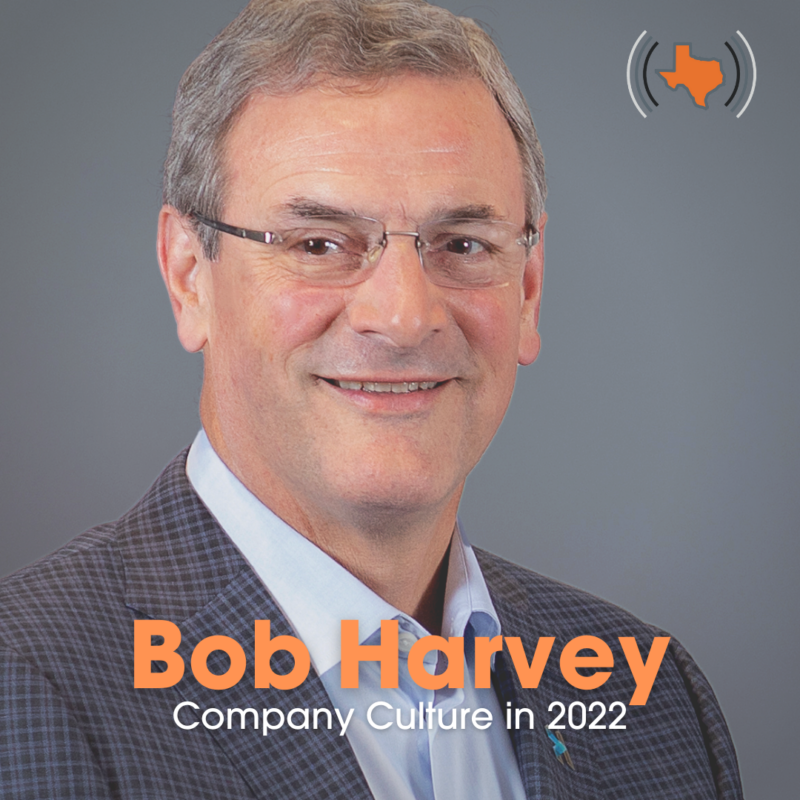
Bob Harvey, President and CEO of the Greater Houston Partnership, the Houston region’s principal business organization joins the podcast to share his optimism about the economic future of Houston.
Bob was a successful business leader in his own right before taking over at the Partnership 10 years ago, and in this episode, we discuss the trends he’s seeing in the employer, employee relationships, and company culture post-COVID, and how Houston’s corporate leaders are engaging more with the area’s institutions of higher education to produce a more employable workforce.
Transcripts are generated by machine learning, so typos may be present.
Chris Hanslik: In today’s episode, I’m excited to introduce you to Bob Harvey, president and CEO of the Greater Houston Partnership, the Houston region’s principal business organization. Bob is a successful business leader in his own right before taking over at the partnership 10 years ago. In this episode, Bob discusses trends he is seeing in the employer employee relationships and company culture post COVID. He also discusses how Houston’s corporate leaders are engaging more with the area’s institutions of higher education to produce a more employable workforce. Finally, you will hear why Bob is optimistic about the economic future of Houston. Bob, I want to welcome you to the show. Thanks for coming. Sure, Chris. Great to be here. Thanks for the invite. Oh, so I’m looking forward to this conversation. I know our listeners are. I want to start by just having you maybe introduce the organization, the Greater Houston Partnership. Tell us what that is and what it’s known for.
Bob Harvey: OK. Well, we describe ourselves as the principal business organization in Greater Houston. We have about 900 member companies. We have 140 people on the board. So we’re represented by the senior most executive, be it a corporation, a law firm, a hospital. They’re all sitting on our board. OK. And we’re all about making Houston better in the broadest sense, which we define as kind of growth and opportunity. How do we keep Houston growing? And how do we create opportunity for all Houstonians? Wow, okay.
Chris Hanslik: That’s a big job. It’s a big job. Houston’s busy. You’ve been at the partnership now how many years? Almost 10, beginning of September. And I know you had a very successful career before that. Could you give us a little bit about your experience as a leader here in the greater Houston area before you joined the partnership?
Bob Harvey: Okay.
Chris Hanslik: I’m a native Houstonian.
Bob Harvey: I always say there’s only two natives in Houston. The mayor and I are the only two natives. Only slight exaggeration. I’ve been here my whole life. I was with McKinsey and Company for 17 years. I was a senior partner with McKinsey and then went over to Rely on Energy for six years. I always say two years pre Enron, two years in the midst of Enron, two years post Enron. Oh, wow. Yeah. So really an exciting time, challenging time, frankly, at Reliant, but a fun time. It was a great time. And then I left Reliant and for several years just served on boards, for-profit and non-profit. Okay. And then 10 years ago, the opportunity of the partnership came along. What inspired you to take on that leadership role of the partnership? I think after serving on boards for those years, enjoying it, but never quite sinking my teeth into something. I love board service, for-profit and non-profit. But at some point you realize you’re not the CEO, you’re not the decision maker, and you just can’t quite go as deep as you’d like. So I started thinking, I’d either go back to for-profit, thinking that might be a path, or a non-profit. And at that moment, it seemed like the partnership called and said, hey, we’re starting a search, and would you come talk? So it was the perfect conversation. I love Houston, I loved it then, I love it now. So I was looking for something with a real intersection with Houston and of course, but better than the Greater Houston Partnership.
Chris Hanslik: Sound like a perfect fit. So the partnerships sits at a kind of a unique position in our community, kind of a bird’s eye view, if you will, of the business landscape and what’s going on. I want to ask you a little bit about that. From that perspective, when you think about the last two years, What challenges do you see employers having and efforts to keep employees or stay successful as they move through this pandemic?
Bob Harvey: You know, it’s been tough. It has been tough. I don’t think people realize as we separated and went home with COVID and started to work remotely what the implications would be down the road. None of us knew how long we’d be in that position. We thought it would be temporary. A lot of us went home on a Thursday thinking we’d be back the following Monday and we didn’t come back for two So I certainly remember they were saying, you know, at first in March of 2020, it’s two weeks. Two weeks, yeah. That was the view at the time. So we didn’t anticipate it. We didn’t do anything to prepare for it. But I think most of us down that initial period went better than we thought. I mean, I think we were all surprised by how productive we could be and how connected we could remain. But over time, I think we lost some of that sense of connection. So my word today would be it’s the relationship between employers and employees is strained. Sure, it’s just strained. And I think we’re adjusting to this new model. What happened, I think in a family situation, going on a business trip, thinking you’re going to be gone for two weeks and then being on for two months. I mean, you come back home, there’s some strains in the family. Right. Well, that’s kind of what it feels like now. They’re just strains. We’ve been away from each other. Employers and employees, but also among employees. You think about what brings you to work every day, what gives you satisfaction. It’s the purpose of your work, it’s the relationship with management, and it’s the relationship with your fellow employees. All of those, more or less, certainly changed if not disappeared. There’s a lot of strain today. We’re all trying to figure out now how to ease back in to an office and trying to decide what the future holds. We all thought initially that when we came back, we would come back to what we left. And now we’re realizing we’re not going back to that. We’re not trying to decide what we’re going to, but it’s not that. We all agree that it’s not that. And I guess to your point, what it may be for each company and even within companies, which functions? I think we’re realizing none of the gross generalizations work anymore. You have some companies, I have friends, I call them my, you have work from home. I have some people say, I still believe in work from work. When they say that, I know where they’re coming from. They’re the people who really are insisting that we go back. That’s a very small minority today who are thinking.
Chris Hanslik: That’s been my experience. Maybe a lot of people had that view and one of them may have been sitting at this table with you, but I think what we’ve learned as we’ve come back is that certainly has evolved and the work from home here to stay, and then it’s a matter of to what degree, I think.
Bob Harvey: To a degree, and yeah, and then how will we make that work? I mean, let’s assume that’s gonna be some kind of hybrid. We’re gonna spend time in the office. We’re gonna spend time at home, but somehow we still have to have an office culture that works. We have to have relationships within the office. We have to bring new staff on and train them and indoctrinate them, orient them and all those things. How are we gonna do this in this new hybrid world? But I think the notion of some form of hybrid is here to stay.
Chris Hanslik: You mentioned something that I agree with, and that was things feel strained. We talk a lot up here about the fact that, look, when you’re at work, you’re in a relationship with other people. When you’re not together in a relationship, it’s hard for that relationship to blossom. I think that’s what we… We’ve experienced some and are trying to get to work at it. And I hear it from other friends and clients of mine about this kind of erosion of culture. And it kind of boils down to that when you’re not together, you can see each other on Zoom, but when you’re not together, there’s just you lose that connectivity. Any trends that you’re seeing within the Houston area, what businesses are trying to do to counteract that?
Bob Harvey: Well, one is when they bring people back to the office, it’s largely for that purpose. I mean, they’re being very intentional about it. It makes no sense to have them in the office not interacting with one another. So let’s be sure that we find ways to create interaction, almost initially artificially. They may be new things we’re doing. Now, people also say, yeah, but when I come to the office, I need to be productive. I’ve been very productive at home. Don’t make me unproductive. So we’re trying to find that balance. But I think you will find people being very intentional about how they create interactions in the workplace for that limited amount of time they’re going to be there. how we onboard employees, everyone’s rethinking that now. I mean, it just happened before. I mean, we were reasonably intentional. I suspect in a professional firm, you were more intentional, but we’re having to be even more that way now. How do you introduce people to a culture where you’re used to that and just say, walk down the hall, meet the partners? It’s just going to be very, it’s going to be thoughtfully redesigned.
Chris Hanslik: That’s kind of what I’m seeing. I think about what we’re doing here. I hate to use the word artificial, but you’re right. We’re having to plan things. historically happened naturally.
Bob Harvey: Yep.
Chris Hanslik: Right. And it felt good when it was natural. And that’s when you really got proud of the culture because you’re like, no, we are familial and collegial and things happen organically. And I’ll speak for myself here at Boarder Miller. We’re seeing some of that reemerge, which feels good. But I know that’s a huge topic around town with all business leaders as you talk to them. It is. You know, we thought we were going to
Bob Harvey: make that happen in the late fall. Things were moving in that direction. We all started coming back to the office and we all had to step back and go back to where we were months earlier. So that was a real setback. So now here we are thinking this time we’re back into it. It’s going to develop. We’ll see. I think it will. Now the other aspect, we think about days in the office, work from home, work from the office, how many days per week in the office. But the other aspect is, I think the day is changing. Coming into the office doesn’t mean necessarily coming in during rush hour, being in the office all day, going home with the, you know, it’s going to be much more, hey, I’m coming into the office for a reason. I’m going to do that. I’m going to get that done. Then I’m going to go back home and finish my work day.
Chris Hanslik: Yeah.
Bob Harvey: You know, and maybe Hey, I can go back home earlier, be productive, avoid rush hour, actually have a more productive day if I can be flexible about it. So I think employers are going to change the days per week and the hours per day and it’s just, it’s going to be a more flexible model. Trust enters into that, and I’m not one of these who’s so naive to think that you don’t have to maintain some level of supervision, but we’re going to have to learn how to do that.
Chris Hanslik: A big element of trust. A big element of trust. One of the things I’ve heard people talk about is, as you think about this flexible work environment, is don’t let a work performance issue bleed into a where you work from issue, right? And so if someone’s not being productive, don’t necessarily blame because they’re not here. Maybe there’s a performance issue that would have been there even if they’re at the office 24-7.
Bob Harvey: I think you’re right. And as managers, I think we used observation sometimes as a basis, which was never really a good basis, whether someone looked busy, looked productive. But we all can rely on that. You walk past someone’s office that didn’t seem very productive. You start watching their performance and you think, well, you know, that person’s not very productive. Well, that’s not going to work anymore. We’re going to have to look at more objective measures of output and quality and then react to it and give feedback in a more programmed way.
Chris Hanslik: Again, it’s not going to happen just casually like it did before. Is there anything that the partnership is doing to create some training programs or as you were talking about, just having to rethink things for your member companies to learn how to adapt or come up with maybe some of their own ideas on how to adapt going forward.
Bob Harvey: We’re really just starting to, you know, the chief HR officer, the CHRO, was not a person who typically connected with the partnership all that much. They kind of had their own things going on in town. We have found the CHROs in Houston much more desirous of getting together and talking with us and talking to each other. I think it’s because everyone’s working this issue. One of the things a partnership can always do fairly easily is just convene We’re good catalysts, we’re good discussions, we’re good conveners, we know how to facilitate meetings. Right now we’re bringing those CHROs together to talk about this topic. Our board consists of the senior most executives, so we’re having one conversation there. Frankly, it’s the CHROs who’ve been given the task of figuring out what the answer is. They’re in the trenches. They’re in the trenches. Yeah, absolutely. They’re getting the feedback from the employees. I think a lot of executives are still kind of living in a bubble on this topic in terms of what the employees are really going to accept, what that future looks like.
Chris Hanslik: Everything I see the market speaking loudly. It is. That flexibility is what they want. And the thing that’s interesting is I think before COVID, there was companies that dabbled in the flexible work schedule, of course, with the every other Friday off had been around, especially in the energy sector forever. As an example, some flexibility. A lot of times that flexibility came at a cost where you would maybe your comp would be quite as high in trade for the flexibility. Is it true? My view has been that now there’s no compromising comp now. It’s full comp with flexibility.
Bob Harvey: Is that your expectation? The power balance, if you want to call it that, between employer and employee also shifted. And that’s not directly related to COVID. It’s related to how the economy has come back, the people that are not in the workforce. And so right now, the power is all with the employees. So we’re having this conversation at a time when the power balance favors them. So they can be demanding. They want flexibility, demand flexibility, and they want more compensation. That’s hard to deliver.
Chris Hanslik: What are you seeing out there with regard to, you heard the word, a resignation. I heard someone call it the Great Reshuffle recently. Bottom line is, we have businesses in Houston that can’t open at times when there is a customer demand for their services, but they can’t staff it. And I guess anything you could share that you’ve seen in that or what maybe people are out there trying to do to solve that problem? Well, it’s real.
Bob Harvey: I can say that first. It’s a real problem. It’s a real issue across all types of employers, across all job categories right now. People have not come back to the workplace in the way we thought they would. We just assumed they would all come back where they were two years ago. It’s not just the style of work. Some people are deciding they really don’t want a full time. They’ve moved on with their life. Some are moving away from the for-profit sector. A lot of people are moving into the nonprofit, looking for more purpose-filled lives and all this. I don’t have any words of wisdom. I think employers just have to be very conscious of this. I mean, they can’t be in denial. This is real. maintain their workforce and attract people, they’re going to have to be competitive in this new way. Flexibility, compensation, maintaining a workplace environment that’s more attractive. Increasingly, I think as senior executives, we’re going to have to turn this over to them and say, what is the workplace you want? I’m going to tell you what my expectations are, what kind of output we need. but you all decide what kind of workplace you want. It’s scary for senior executives to let go of that, right?
Chris Hanslik: Let go of the wheel like that, but I think you’re seeing that happening. I mean, I think we’re just being forced into that. Sure. So one of the things I think is an interesting dynamic is the interplay between the large corporations or any of the employers, the companies here in Houston, and the types of people they’re looking to hire and how that plays with higher education in this general area, in the greater Houston area. How, in your role at the partnership, what are you doing to work with the institutions of higher education that we have here, we have plenty we’re blessed with that are all great in their own right. What kind of conversations are you having with them? What are you hearing from your partners or your members, companies, and what are you conveying to the educational institutions about that?
Bob Harvey: You know, we brought a group together, we call it Higher Education United with Business, HUB. I like it. We’ve run out of good names at the partnership, but we brought the presidents or chancellors of the universities together with a like number of employers and said, let’s just talk about what are the employers looking for What are the higher education leaders looking for? It was a dialogue, I would say, that had never happened this way. We had one-to-one, one-off conversations, but never before had we had all the higher ed leaders sitting down with an equal number of corporate leaders. The corporate leaders, interestingly, had not really relied on Houston for talent. One aspect of Houston is our employers, by and large, hired nationally. They were as likely to hire from Ohio State or Penn State as they were from University of Houston or Rice. I mean, that was, they were global companies with big wide footprints and they weren’t really tied to the Houston higher ed institutions. They wanted to change that. They really see the opportunity to tap into that talent here at Berkeley. And the most diverse city in the country. And that’s one of the reasons they’re doing it because they weren’t getting the diversity at some of those other schools and they could get it here. So that is what drove them to it. Also a sense, I think, of commitment to Houston that we were creating a roadblock for talent. Young people in Houston didn’t have the opportunities that they could have. Now, something like internships, you know, the higher ed officials are saying, well, my kids have got to have internships and you all are offering internships around the country. You’re not offering any to my institution. So we’ve had a great dialogue beginning last spring about how to tighten this up. And again, not just, well, I made reference to the University of Houston and Rice. You’re always going to start with our lead public and our lead private. Well, in Houston, there are nine institutions of higher education. And we’re saying, hey, to the employers, don’t just look to those two. Look at the full breadth. If you want the diversity, if you really want what this community has to offer, we have two HBCUs here in the community. We have St. Thomas. We have HBU. U.H. downtown. I mean, you think about the richness of higher ed we have in Houston. So we’re trying to make the employers more cognizant of what they can find in Houston. But they have to start talking early, recruit early. You have to make the connections. They’ve built those connections elsewhere over decades. Now they have to build them here in Houston.
Chris Hanslik: In some ways, they’ve got to help the institutions of education know what they’re looking to hire. Can you create a curriculum that does this? That’s who we need or want.
Bob Harvey: Yeah. One of the first things that the employer said is we need more digitally literate workers, not just our computer science major. Everyone we hire, we want to be digitally literate. Well, that’s a strong signal to universities. That means they need to offer digital courses to their entire student body. Some colleges have gone as far as requiring their entire student body to take some kind of introduction to computer science, just with this idea that employers are simply demanding that skill set today.
Chris Hanslik: Does it make sense? No, it makes sense.
Bob Harvey: It’s progress. Again, you’d think that communication would have taken place, but there was just no real vehicle for that communication. I think all the colleges are beefing up their corporate relations, corporate, you know, that’s just become much more of the fabric of things, which is nothing but good.
Chris Hanslik: So we touched on this a minute ago, just talking about the strains from COVID. I want to step back because that was all kind of, to me, a conversation around culture. I want to take a minute to just talk with you about culture, maybe from a more traditional standpoint, whether it’s been a pandemic or not, you’ve run companies, you’re running a company now effectively. What’s your view of, you know, culture, how you cultivate it? What kind of culture are you trying to create at the partnership and when you were at Reliant and other places to make the institution successful? Well, two things I would say.
Bob Harvey: One is people need and want to be purpose-driven today. I mean, I think more so, I think this quote, this generation, whatever we’re talking about, really of all ages, but people today want a purposeful life and therefore they want to be in a setting that’s purposeful. So you spend more time talking about purpose, mission, vision, those things. I mean, culture really starts there and connects to that. People, you know, you as the employer want accountability. They want freedom. So how do, you know, what we’re talking about for, how do you marry those things, which you need to do? People today want feedback. that is developmental, not just, they don’t want a grade as much as they want. Tell me how I can be better. Because that serves my purpose and your purpose. So, you know, we’re developing cultures that are more open, more communicative, rich in feedback, rich in development opportunities, rich in advancement opportunities. Again, I think people today are not willing to sit still for long, right? Right. And I don’t blame them. I mean, that’s the right attitude. Yeah. You should be demanding advancement. You know, push forward. You push forward.
Chris Hanslik: But the culture has to deliver that. Yeah, that’s great. Okay, yeah, I love the developmental feedback aspect of that and certainly purpose-driven, I think. You’re right. That word is used a lot for good reason lately and it maybe wasn’t 20, 25 years ago, but I think people still wanted purpose. They just didn’t maybe use that word. I have to believe that was true. Yeah.
Bob Harvey: But maybe not Christian. Maybe. You know, we grew up, I’ll say, you’re younger than me, we grew up at a time when kind of career advancement for its own sake It’s kind of the model, right? And you went somewhere where there was growth and advancement, compensation. We were more willing to say, hey, I’m in it for the money. You don’t hear that as much today. People care about their compensation. Don’t be wrong. They’re going to start with purpose. They’re going to start with fulfillment.
Chris Hanslik: So maybe a little more personal to you real quick, just as a leader, how do you try to show up every day as a leader?
Bob Harvey: One aspect, particularly in this setting, is connecting with people more as just fellow human beings. I mean, you have to spend a little bit more time asking how you’re doing, how’s your family, how’s COVID affecting you, how’s this whole transition working. You don’t just jump right into the business question. Whether it’s a Zoom call or an in-person meeting, you have to spend more time. And I have to spend more time, you think, at the partnership. why would I still be talking about purpose? We’ve been around forever. Well, you know, people still need to understand how purpose relates in 2022. You know, I have to bring it, what are we working on today? How does that relate to that purpose that we talked about when someone was hired? So everything has to start there. I just, I can’t go right to the, you know, what have you done for me lately question. But you know, you get there, but you just, you spend a little bit more time and you have to connect as human beings.
Chris Hanslik: Makes sense. And people, when they, as a leader, if the people that you’re having your organization feel like you care and you’re trying to connect, they’ll reciprocate. So as a leader, we talk about this on every episode, so I’m not picking on you, but we learn from failure. So has there been something as a leader that you look back and go, man, I botched that one, but you learned from it and it made you better going forward. And you wouldn’t be the leader you are today, but for having experienced that failure.
Bob Harvey: Yeah, it’s a form of failure. I’ve never considered myself good at hiring people, selecting people. I’m probably better at motivating a team. that I didn’t pick. And so I let other people pick the team. It’s kind of a strange notion. When I hire someone, I’m gonna involve a lot of other people in the process. I’m gonna listen to what everyone else thinks about a candidate. I’m gonna really assume that they’re probably better at judging someone that way. I may be better at working with them and motivating them and I’ll get the results, but I’m not good at making that initial decision. Sadly, I think I form an opinion of someone in the first two minutes that may be completely wrong. I have a hard time shaking it. It’s human nature. Some people are better at knowing that about themselves and finding a way to manage around that. I’ve had to learn, frankly, to not put as much confidence in my own judgment about people early on. That’s not a hard lesson in a way. You can keep that in mind. And I, you know, I probably grew up at a time when diversity was not so evident and therefore I’ve had to learn to be kind of more accepting of a more diverse group. You know, we all seek that today. We’re proud of Houston and its diversity and its inclusivity and all that. But for some of us, that’s been a learning journey. That’s not the environment we grew up in. And probably for too long, I was willing to kind of stay in a sheltered environment. And the last 20 years, you would say, in Houston, where all of a sudden, diversity is present everywhere. And we welcome it and embrace it. And we’re still getting better at kind of managing in that environment. But we didn’t start trying until.
Chris Hanslik: 10 or 20 years ago. Right. Good. So I know that the partnership, y’all just had your annual meeting, right? Just a couple weeks ago, maybe? Last week? Yeah. 20 a week ago. Okay. So what can you share coming out of that meeting? What are some of the key areas of focus for the year that the partnership has?
Bob Harvey: Yeah. Well, one, it was great to get together. I mean, to get together in person, 900 people felt wonderful. That was risky. I mean, in the midst of all this, COVID numbers were getting better. We were pretty confident that our timing was right, but it felt wonderful. Thad Hill, the CEO of Calpine, is our new chair. And every year, a few months before the chair takes over, their vice chair the year before, we sit down and start talking about, here’s the strategy of the partnership. What interests you in that strategy? Where do you really want to connect? We always say, what’s going to be your theme? And for Thad, it was pretty clear from the beginning. He wanted the theme to be around economic development, competing with other cities for investment. That’s what it amounts to. Which is fine with me because that’s a major priority of the partnership year in, year out. But frankly, we have not put a great external emphasis on economic development. We’ve been fighting battles in Austin. We’ve been fighting battles at City Hall. We call that policy. We’ve been doing a lot of work in policy. Economic development somewhat got shoved aside. Not that we haven’t had a team working on it. Not that we’ve not had some successes. But his thought and my thought is, hey, let’s take 2022 and really focus on this idea of how to make Houston more competitive with the other great cities. I mean, we only compete with the best. I mean, we’re competing with, you know, I’d say it because they’re so nearby, we’re competing with Austin for tech jobs, Dallas for fintech jobs, and with the the research triangle for life science jobs. I mean, the good news is that Houston’s right up there competing with the best of the best, but that’s a tough competition.
Chris Hanslik: Are we fortunate, not to interrupt it, that we’re competing in three different domains? Thank goodness for that. Not every city can do that.
Bob Harvey: And I didn’t even say energy. That’s right.
Chris Hanslik: It kind of points to a whole other level of diversity that this city has that some people don’t appreciate.
Bob Harvey: They don’t appreciate, and frankly, we didn’t have it 20 or 30 years ago, and we still need more of it, let’s be clear. And in the energy space, of course, this transition to a low-carbon future. I mean, that’s what an opportunity for Houston, again, to lead and contribute to the world, right? Right. And in the last two years, we went from being somewhat defensive on this topic to being, we can lead on this. Why are we being defensive? This is really our issue. We have the skills. We have everything it takes to lead. So those are the areas that all fall into economic development. Immediately, within days of that meeting, ExxonMobil announces they’re moving their headquarters to Houston. So everyone said that was just an incredible speech. We didn’t think it would have that kind of impact.
Chris Hanslik: So that’s kind of a little bit strange.
Bob Harvey: But, you know, obviously getting headquarters to move to Houston. We’ve had three Fortune 500 headquarters come to Houston in the last 13 months. You know, HPE, NRG, and now Exxon. Now, all of them had a huge presence here. It’s not like they weren’t here. Now, I tell people, that’s even better because it validates. They knew what they were moving to. I mean, there’s no doubt that they decided to. come to Houston. Makes that move likely more sticky right? I think so absolutely and but we want more than that and we don’t want you know it shouldn’t just be companies that are always already here we’d like to see some others so sure so that’ll be talking about headquarters they’ll be talking about our we have five other areas industry sectors that we’re focusing on and he’s going to talk a lot about how the business community can participate in this what we have found is other cities that are really good at this the CEOs in that city participate in the process if there is a prospect It’s going to be a CEO to CEO conversation that really convinces that prospect that everything they’re looking for is here in Houston. And we just haven’t been leaning on our leadership much. It was kind of a staff-driven effort when that’s not how you win today. You’ve got to have CEO to CEO. That strategy makes sense.
Chris Hanslik: And if it’s that, I mean, he’ll be a great leader. Sounds like he’s off to a great start. I think so.
Bob Harvey: Yeah, it can’t be that. I told him, no, what’s he going to do this week? Right. It’s Monday afternoon.
Chris Hanslik: That’s right, that’s right. So anything beyond 2022 that, you know, the partnership has got its eye on working towards from maybe a little, maybe a midterm type of plan.
Bob Harvey: There’s some longer term efforts. You know, we launched One Houston Together, which is our DEI effort, which clearly grew out of the George Floyd killing. But it’s our intent in Houston to really focus on two things. One is to create a more diverse talent pipeline in Houston all the way to the boardroom. It’s not just about hiring, it’s not just about advancing, but literally diversity in the executive suite, diversity in the boardroom. So that’s one. The other is minority procurement, for lack of a better phrase, people call it different things. How do we get more of Houston companies buying more goods and services from minority vendors? And we’ve been talking about that in Houston for a long time. But this time, what are the barriers that have to be overcome? And it’s not going to happen overnight. But again, we have the corporates at the table saying, all right, what do we need to do different than we did 10 years ago, 20 years ago? We’ve talked about this before. We didn’t see a lot of progress. What barriers have to be overcome? So that’s in the DEI space. I mentioned the energy transition. This energy transition issue is the big issue that’s going to determine Houston’s success. I mean, we always say it this way. Are we going to be the next Detroit or not? We don’t want to be the next Detroit.
Chris Hanslik: No, we don’t.
Bob Harvey: We don’t have to be. There’s no reason to be.
Chris Hanslik: But it’s going to take a very conscious effort on our part to reposition our energy economy. I wasn’t certainly in Detroit or around, but I still feel like the fact that we have you and your group of the partnership and then those senior leaders on the board thinking about that and committed to that, that we’ll be in good hands. We still have to figure it out. We still have to execute and do it. Chris, I agree.
Bob Harvey: That’s what gives me confidence, that we have the leadership all bought in, literally putting their signatures on a document saying we’re committed to this. And you’re seeing, most of them have set up a low carbon business unit by some name in the last six months. They’re saying, hey, we’re going to find a way to play. We have something to bring, and we’re going to start investing, and we’re going to expect a return. This isn’t altruism here. This is free market capitalism at its best. But we think we have something to bring to this. I’m very optimistic on that point.
Chris Hanslik: That’s great. So my takeaway is you’re very optimistic about the future of Houston and what, from a business economic standpoint, we had to look forward to.
Bob Harvey: Yeah, this 2022 feels very good to me. Now, maybe that’s just in comparison to 2020 and 2021. You know, but you think about we just we had COVID and we had an energy downturn. I mean, Mark, some of that was COVID related, some of it preceded COVID. Sure. We’ve gotten in some respects both of those things behind us now. We have an energy transition coming, but we’re doing well. Energy economy is doing well the diverse aspects of Houston’s economy are taking hold What’s happening in life sciences around the medical center and elsewhere? I mean a lot of the things we’ve been talking about for years are now happening our innovation ecosystem startups You know 600% increase in VC capital in Houston since 2016 2016 to 2021 600% approved Wow a lot of these things that we’ve been talking about working on in don’t happen overnight, they’re starting to get traction. So yeah, I really couldn’t feel better.
Chris Hanslik: And we hadn’t even mentioned the ION, right? Which is part of that, which is part of that. And it’s just getting off the ground.
Bob Harvey: Absolutely, yeah. And the Green Town Labs across the street, Cannon, all this is happening all around town. You know, the ION, I’ll just say, what a commitment by Rice. I mean, this is the Rice management company, the endowment. You know, they’re in the real estate business. This is about them developing Midtown, the acreage they control. But they recognize that what a perfect spot to locate the hub of the innovation system in Houston. And now it’s a beautiful new building and a lot of things happening there. So yeah, there’s a lot of reason to be up.
Chris Hanslik: optimistic right now in Houston. That’s great. Bob, I can’t thank you enough for coming on to share these insights and views. Before we wrap up, I do have a few personal questions that I’d like to ask my guests. And so first was, when you were a young man or young boy, what did you think you were going to grow up to be? What did you want to be?
Bob Harvey: You know, I didn’t want to be a fireman or a policeman. I really wanted to be an engineer. My dad was an engineer. I knew I was going to A&M. People said, how did you choose A&M? I didn’t choose A&M. You know, you’re born the son of an Aggie. That was just what I was always going to be. So I really wanted to be an engineer. And at some point that morphed a little bit into I wanted to be a leader, a CEO. You know, I wanted to. And so my dad was a lifelong engineer. I mean, his notion was to engineering was that he had no interest in management. I said, no, I’d rather be in management, but that’s always been my desire.
Chris Hanslik: Got you. Lifelong Houstonian, so Tex-Mex or barbecue? Tex-Mex. I really am, yeah. A lot of diversity in Tex-Mex, too.
Bob Harvey: No, that’s true. I can live on either one.
Chris Hanslik: I really could. You and me both? Yeah. Okay, and then, so if you could take, say, a one-month sabbatical, where would you go and what would you do?
Bob Harvey: I have a piece of land. I wouldn’t go far. I have a piece of land halfway between here and Austin. And my desire is to go out there. I’ve got cattle. It’s my idea of heaven. And anytime I can get away, I spent 15 months during COVID living out there. But that was nice. That was nice. And then I came back. You get a lot of projects done? I got a lot more done than I ever thought I would. But that’s still my favorite getaway, and someday it will be my retirement home.
Chris Hanslik: Very nice. Very nice. Once again, Bob, appreciate you doing this. Always love being with you and hearing your thoughts, and I can’t thank you enough.
Bob Harvey: Well, thanks for doing this, Chris.
Chris Hanslik: Great seeing you, and glad to hear the firm’s doing well. Thank you. All right. And there we have it, another great episode. Don’t forget to check out the show notes at boyarmiller.com forward slash podcast. And you can find out more about all the ways our firm can help you at boyarmiller.com. That’s it for this episode. Have a great week and we’ll talk to you next time.
With a deep understanding of your business alongside clear and honest communication, we help clients face challenges fearlessly.
Learn more about our services and how we help clients.