


With a deep understanding of your business alongside clear and honest communication, we help clients face challenges fearlessly.
Learn more about our services and how we help clients.



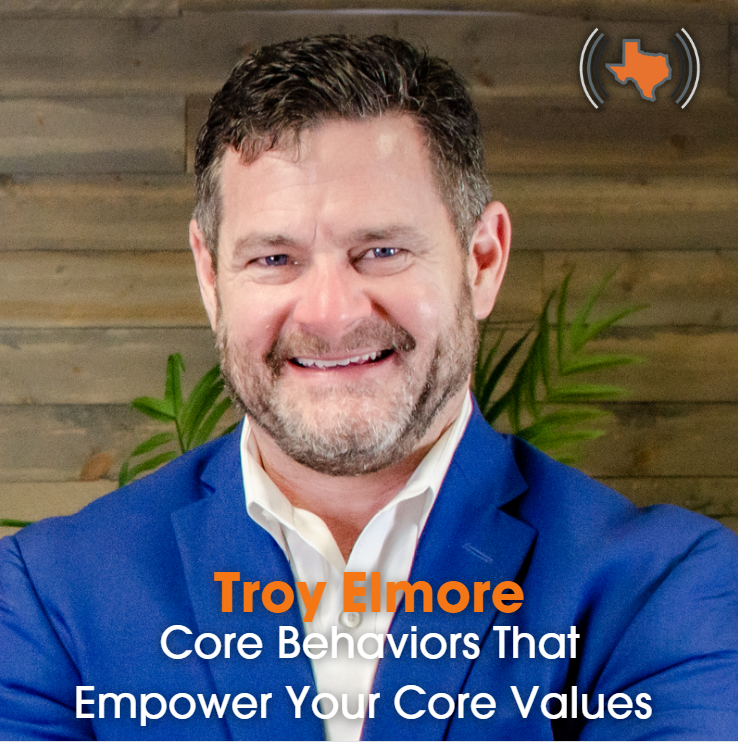
Troy Elmore, President of Sandler Training, a Houston-based company established in 2003 joins the podcast. Troy shares why he thinks, in addition to having core values for your company, it is important to have core behaviors so that you can make those values action.
Troy also discusses how he uses a concept titled the “Three P’s” to help motivate his people.
Transcripts are generated by machine learning, so typos may be present.
Chris Hanslik: In today’s episode, you will meet Troy Elmore, president of the Houston Office of Sadler Training, a company he started in 2003. In this episode, you will learn why Troy thinks in addition to having core values for your company, it is important to have core behaviors so that you can make those values actionable. He will also talk about how he uses a concept he calls the three P’s to help motivate his people. Troy, I want to welcome you to Building Texas Business. I appreciate you taking time to come on the podcast. Thank you, Chris. Appreciate it. I’m glad to be here. So let’s start by introducing yourself and your company to our listeners. Tell us more about you, and more importantly, Sandler and what it’s known for.
Troy Elmore: Well, this probably could take up a lot of the podcast. So I’ll try to keep it short and sweet, but effectively what we do at Sandler try to explain to people that, you know, companies, generally companies have a place they want to go. You know, they want to grow. They want to grow profitability. They want to kind of take it to the next level. We’re sort of the sales engine that helps them get there. What I mean is we help them build the engine. We’re not the engine. Right. And so, you know, or sometimes companies think they should be somewhere and they’re not there and they’re kind of looking back on what’s not working on the sales side of our business. So we help on the sales side of the business. A lot of times on strategy, where they’re trying to go, we help them with what kind of structures and processes need to be put in place to help them scale. And then we help them evaluate the existing team, what are some of the strengths and weaknesses and what type of people they should hire. And then lastly, a lot of skills, do a lot of skills. But ultimately, I would call it a business development partner, similar to a lawyer who’s a partner. or an accountant who’s a partner who helps your business, we’re on the business development side of it. Okay. How did you get into this business? How long have you been doing it? What was your inspiration? So we started, I had a partner back then, but I think we started in 2003, December 2003. So it’s an interesting story. So I have a mechanical engineering degree, never used it. 1993 A&M, I went into sales and I get into sales probably because I saw the sales guys and I was like, oh man, that guy’s playing a lot of golf and he’s making good money and he’s eating free every day. I’m behind the deck.
Chris Hanslik: It’s a heck of a job.
Troy Elmore: I know, it’s like this job looks great. awesome and so what I realized it wasn’t a whole it was a whole lot more than just that but I got into sales that way I did technical sales right out of college and then somewhere’s about 98 or 99 I was working for a company called flow serve back then and you know I wanted to go sell software because it’s sexy right so my what you know I got sick of wearing a Nomex suit every day in the refineries and us you know it was 99.com and everything right so I went to work for a company called BMC software and probably have heard of that company. Heard of them. And one of the interesting things there is that I hadn’t had any sales training ever before. It was just, you know, I was successful just because I worked hard. If I could work a little bit harder than someone else, then that was why I was successful. My wife told me that was not going to be a good model. I told her she didn’t know what she was talking about. She did. She was real smart. She said, why do you have to work till nine o’clock every night? I said, you have no idea what you’re talking about. Ultimately, here’s how this played out. I went to BMC. I walked in about two weeks in. They brought us into sales training. It was a guy who walked in. He looked like ZZ Top had a beard down to his belly button almost, kind of a rumpled shirt. I’m like, really? This is the sales trainer? I’m like, I’m already God’s gift to selling, because I was 27 and I knew it all, right? You know how that is, right? But two hours in, I went. I’m so bad at selling. I had no idea how bad I suck at this. Wow. And I took the stuff that was taught in that two day and I just kept coming back and it started to just change the way I thought about the world and sales and changed everything and just this, I could have a process and I could learn this and I could, you know, it was amazing the transformation. So I left BMC, which is still a great company and I didn’t leave it because it was a bad company. I left it because it was just traveling so much. But I got an MBA. Of course, when you get an MBA either you’re gonna climb the corporate ladder Are you going to start your own company? So I felt, actually what I felt was just longing to be challenged to do something different. And I didn’t know that I could do this for a living. I was just on the Sandler website one day, kind of messing around looking for stuff, more stuff to learn. And it just said, opportunity is available, this very small portion of the website. And I clicked on that. is what I want to do. So that was September 2003. December 2003 quit the job which I was doing well in and started that and just figured if I don’t do anything if I invest all this money it goes away and it doesn’t work out I still got some seriously great sales training on top of what I already had but if it does work out how much can I change not just my life but other people’s lives? How rewarding would that feel every day to be able to do that stuff? So that’s my story and it’s been 20 years later and I still have the same passion today that I had back then. It’s a little bit probably more fun because it was really hard in those first couple years, right? And so that’s my story and I feel very fortunate and blessed to be able to do it.
Chris Hanslik: So let’s go back. That’s great and thanks for kind of sharing all that. Let’s go back to the early days. What was it like starting that company on your own, basically from scratch? What were some of the things that when you look back now go, man, I actually did those right maybe despite myself? And what are one or two things you’re like, I missed that and thankfully they didn’t take me down?
Troy Elmore: So I had a business partner we first started. I got to tell you, I don’t have one now, but we needed each other at the time. We helped each other. We leaned on each other quite a bit. If you said, what did we do right? I think we did the right behavior, right? We did the right behavior as much as we could on a daily basis. That means You know, if we were supposed to go to three networking events a week, we did what we were supposed to do. If we were supposed to make a certain amount of calls, if we were supposed to ask for intros or do talks, we did what we were supposed to do. And I think that just took a little while for the ball to get rolling. But at the minimum, I knew when I went to sleep on a Friday evening, when I was thinking this is taking longer than I thought and costing more than I thought it was going to cost, this is going to work because I’m doing the right behavior. That’s what I knew we were doing right and that did and that it paid off tremendously It’s just hard to tell because it takes a lot. It’s like the flywheel, right? It takes a lot to get the fly wall turn Oh sure, you know and so what we should we had done different We should have listened to some of the people in our Sandler Network because there’s about 300 of us Who told us to do certain things that we just sort of kind of ignored a little bit Maybe it was more about not just doing the right behavior but working on what was going on between our ears So they taught us, I give you one example, some of the guys who were super successful on our network were big time into journaling every day. They journaled every day about a lot about what they’re grateful for. Journaled about the behaviors they need to be doing. They journaled a whole lot about what they needed to think. And they just stayed in every day and we were like, oh, that’s… I kind of like all this other stuff, but that seems a little bit like a diary. And so, you know, we said, I’m not going to do that. So about six months in, after you get to the point where you’re like, well, this is not working. You go to them and they say, well, I’ll help you, but not to you. Do the journal. And so we started doing a whole lot of that. And it really was about what was going on between our ears, because we had all the things to, we knew what to do, we knew what to say, we knew how to train it. But we just our beliefs weren’t quite there yet, right? Our beliefs, our convictions, we also call it equal business stature, our ability to sit in front of a CEO, who I’m making no money when I first started this. In fact, I’m spending money as fast as I can spend it. And you’re sitting in front of a CEO of a $50 million company, and you’re having to put yourself in a position to say, why does this person want to hear anything I have to say?
Chris Hanslik: Right, sure.
Troy Elmore: When you start to kind of get that working, everything else starts to kind of click. So I’d tell you that we didn’t do as good a job. I didn’t do as good a job of really taking that into heart until it got to be really painful after about six months of things not working out the way you thought it was going to work out.
Chris Hanslik: Well, I think something you said there is true in a lot of cases, and that is it took longer and costed more than you thought when you were starting out. Yes. And the second piece is you never gave up. Yes. You saw enough progress to know it’s going to get there if I just stay at it. And that may not always be true either, but at least you could feel it. And with slight adjustment, it worked out.
Troy Elmore: It did. I mean, I remember sitting around talking at that time with my business partner thinking, You know, we’re not making any money, but we’re having a lot of fun. Imagine when we’re making good money, helping a ton of people and still having fun. And so we know this is the right thing. So we didn’t want to give up. Also, there’s a part of you that doesn’t want to go back to the people who are saying, I told you so. Right, so that pretty much energizes you a little bit, too.
Chris Hanslik: But the fear of failure, right?
Troy Elmore: Yeah, the fear of someone just, all the people who said, well, you know, businesses fail, and you sure you want to do this? I mean, you got a great job, and you know, all that kind of good stuff. They didn’t have ill intentions, right? The people who were telling you that, a lot of them, you know, had your best intentions in their heart, but I didn’t want to go back and say that I’d failed.
Chris Hanslik: So, you talked about behaviors and having the right behaviors. You know, that’s a lot. like culture and creating a good culture in the beginning and then fostering and enabling and nurturing that. So when you think about your business, how would you describe the culture that you have created there and what are you doing to sustain it and nurture it?
Troy Elmore: So it’s, I was thinking about that question, that culture question. When I think of, you know, people think of, you know, what is their core purpose? And they think of what are their core values? And I think of core purpose, and I think of not just core values, I think of core behaviors, right? And so a lot of times people say, oh, I have this core value of integrity, right? This core value of, you know, of humility, but they don’t really tell you what that means. What’s that behavior look like? And so if I say, we have a core behavior, that is specific to the value of humility, I might say, look, the behavior we need to be exhibiting in our company, because we’re getting people to do it, is we always have to be learning and growing, and always taking it to that next level. And so as part of our culture, it comes straight from those core behaviors. And so when we’re doing this, my team knows that I’m going to be pushing them. to take it to that next level and to expand and to grow their comfort zone. Because we’re asking our clients to do it. It’s a little bit hypocritical for us not to do it. But then I also push them in a way that they know that I care. I’m not pushing them just because I just feel like pushing someone. It’s like my kids have basketball coaches. They play a lot of basketball. I have two that love dance and two that love basketball. And I watch their coaches. And I watch how they respond to them. And I think this has a lot to do with company culture. This one coach can just rip them a new one. You just can tell them I mean things that you know, that was the stupidest shot I’ve ever seen I can’t believe you did that and they do not take it in any bad way And I said another coach you could say the same thing and then they’re like, oh my god, he hates me, right? What’s the deal? And these are 13 year old girls And so of course there’s emotions tied to it and I started to think about what’s the difference there and the difference is because they perceive that one coach Absolutely, no matter what happens loves him to death right? Loves him to death. And so they see that where he’s coming from seems like it’s helping them. And the other one they perceive, now may not be true, that he’s more about himself. So they don’t take it the same way. And I think culture is very much similar to that. The way I think about it is, you know, I’m going to push them. We’re going to, we’re going to but we’re going to be, I’m going to push them, but they’re going to know that it comes from a different, it’s come from a place of love, right? And so I think hopefully that’s the culture I foster, which has a lot of vulnerability, a lot of transparency, a lot of belief in what I think they can get to. A lot of leaders don’t like that, right? They think vulnerability is weakness. I think it’s huge strength. And I’m not saying I’m perfect at it by any means, but that’s where we’re trying to go with it.
Chris Hanslik: Well, that sounds great. I agree with you. And it’s not weakness. It takes a lot more strength to exhibit it. I think it’s the right thing to do, especially in any organization because organizations are built of people. And I like what you said about core values versus core behaviors, because at the end of the day, the behaviors are the things that make it actionable. And you have to be able to, I know we do this here with our core values, have defined what are the behaviors that exhibit and demonstrate that value in action. Because if you can’t put it into words of what the action looks like, people will never grasp it.
Troy Elmore: Agreed. And they put their own definition of what that means.
Chris Hanslik: That’s true. And that’s dangerous. That will erode culture.
Troy Elmore: It is dangerous. And then you hire people who you shouldn’t hire and so on.
Chris Hanslik: We’ve been going through some interesting times the last two years. How have the last two years affected or your business? What have been the positives and negatives? Because I assume you did a lot of your business on site. It’s training sessions and things like that. What was the impact? What was the pivot you had to make?
Troy Elmore: So we’ve done a lot of consulting, a lot of training, was a lot of live face-to-face type stuff. But we already had a portion, I’d say about 20 to 25% of portion that was already virtual. Because I had been introduced to Zoom back in 2014 by a client of mine who had 35 salespeople across the US. And she was like, I’m not flying them in. you know, every month or whatever to do training, we have to figure out different ways. So she said, have you ever used this thing called Zoom? I said, no, never even heard of it. And so it was way back when before it was a household name. And so she introduced me to it. 2014, my gosh. It was the way it was at the beginning of when it first came out. And so we’d already started doing it to kind of help out some clients and do some stuff like that. And so when it came around, it was just a matter of just doing what we’re already doing. But we improved the technology quite a bit. We went out and bought way better cameras. We bought a lot better systems. We just made a pretty big investment. We already made some investments in technology, but we made bigger ones. Sure. And so it wasn’t too hard. It was interesting how we thought… I was a little bit concerned, obviously, that we were like, what’s going to happen here? It’s like 2009. Is this going to just fall off the cliff? And it did for a month. But when people were sitting around doing nothing, like, well, what can we do? We should probably train for our people. We need to teach them how to do things differently. A lot of them didn’t know how to sell via video. They hadn’t gotten training in a long time. Their T and E budgets were slashed because they weren’t traveling a lot. So now they had a little bit more money to train. So it really tremendously helped our business. Interesting. Yeah, I can see it would be the case. Yeah. But I never believed it would. And we really haven’t looked back. We do hybrid now, so we’ll have some portion that’s in-person, some portion that’s virtual. But I think I look at it with a lot of gratitude that it allowed us to be able to reach people that maybe weren’t ever going to be reached, right? Because people, a lot of times when they’re doing really, really good, they don’t think about companies like ours. They think that whatever they’re doing, it’s working, keep doing it. Now there’s probably a lot of efficiency that they’re not getting, but usually when things are going a little bit down is when they think about companies like ours.
Chris Hanslik: So I guess along those lines, it gave a company like yours a lot of exposure, because people probably, to your point, Maybe we need to do some training. We have some idle time and use that. Everyone saw, or not everyone, maybe certain industries saw sales go up, cleaning products and whatnot, but everyone else saw sales go down. It’s like, first thing you think of is what are we going to do to get our salespeople back out there and effective?
Troy Elmore: A hundred percent. They were trying to figure out ways to differentiate themselves. They were trying to find ways. How do we reach customers better? How do we get people? So here’s the example. In COVID, when people were working at home, They it wasn’t like they could just walk down a hall and just happen to pop in someone’s office now you’ve got to reach out to them and Actually have the right messaging to get people motivated to want to actually return your call or return your email And how do we do that? We don’t know how and then when we do get these opportunities How do we take that and differentiate ourself and get them to be? Motivated to actually spend some money because that people weren’t spending as much money then right and so now it wasn’t literally people said oh you know what people spent money more on need to have than nice to have pre-covid they might spend money on nice to have now it was only need to have so all these skill sets that people didn’t have and the processes all became super valuable and then also one level of decision maker because it started to go one or two levels up the approval started getting harder to get by so now i’m trying to get wallet share of a much smaller wallet Right? Right. So that’s how it all started to really play out. We could have never thought it was going to play out that way.
Chris Hanslik: Yeah.
Troy Elmore: We were all freaked out just like everybody else.
Chris Hanslik: Sure. I mean, it sounds like you just stuck to your basics and your principles and let your core business model work.
Troy Elmore: But what we did was, that’s what I thought was interesting, which I thought I didn’t think that much at the time, is we had people who said, hey, look, we got to stop. We do this consulting. We got to stop. We don’t know what’s going to happen. We just need to quit. And I just said, no, you’re not quitting. They go, we can’t pay you. I said, don’t pay me then. You’re not quitting. We’re going to stick with you. And so they said, what do you mean? I said, look, we promised you we were going to help you get to this success. Just because you’re having a tough time right now doesn’t mean that we should quit on you. We’re not quitting on you. And so I don’t know, that just came out of me just, it’s part of our core values, right? Just do the right thing. And so that paid huge dividends. And it wasn’t a marketing effort or a sales party. It was just like, no, you’re not. We’re not leaving you in the hardest time of your lives. We’re gonna be here for you.
Chris Hanslik: Well, it may not have been a marketing strategy, but I can’t imagine how much loyalty you’ve built in doing that and sticking by your clients.
Troy Elmore: Yeah, it did build a lot more than I’ve ever expected. It just felt like the right thing to do at the time.
Chris Hanslik: So let’s talk a little bit about just leadership and what’s your kind of philosophy on leadership and how do you try to show up as a leader?
Troy Elmore: So, you know, this leadership is a very broad statement, right?
Chris Hanslik: Sure.
Troy Elmore: You know, when it comes to being a good leader, I think first it’s really so not about me, right? A great leader is just not about me. It’s really about my people. And I’ve tried to teach our clients that too. I mean, as a leader, I first have to understand why did my people even show up to work? What are their goals and aspirations and dreams? And so we do spend some real time understanding that stuff. Why do they do what they do? But also, I think, as a leader, it’s my job to set the vision of where we’re trying to go. It’s also to help them realize that we can get there. It’s to tie in how their goals tie into where we’re trying to go, right? Because they don’t really care. I mean, as much as they do care about the business, people care about their own. Girls and dreams, right? So as a leader, I have to say here’s where we’re trying to go Here’s how this ties specifically into what your goals and dreams and ambitions are. I think there’s another piece That’s super important. We know I try to provide this almost what I call safe environment. It’s not a wimpy environment It’s a safe environment because if we’re gonna try to do some cool things and try to grow and try to stretch our comfort zones Then I have to help them feel safe enough to do it and I have to help them feel safe enough to fail without judgment. So we call it like, we say it’s called PPP, not like the lung, right? P stands for potency. So I have to give my people, potency, I have to give them the ability to be able to make the decisions they need to make based upon whatever their role is, right? And then some. So potency one, I have to also give them what we call permission. Permission is to say, hey, as you’re reaching up these higher levels and I’m pushing you, I give you permission to fail. And then the last one is called protection and the protection stance. And if when you do fail and I expect you to, it’s protection from judgment. And if we can just drive them, right? Drive them to where I need to understand them. Here’s where the company needs to go. Here’s what we’re all about, right? We have our core purpose. Here’s why we do this. Here’s how you guys come into this. Here’s how to achieve your goals. And by the way, you guys got potency, you got permission, you got protection. And then they’re like, all right, let’s go. And they still have their own comfort zones. I have mine, but you’re trying to make it a safe environment to get to where we’re trying to go.
Chris Hanslik: I like that. Easy to remember. It’s so important. As you describe potency, I think of autonomy, right? Giving them autonomy to do their job and let them know it’s okay. You’re going to make mistakes and it’s not the end of the world. And I expect you to. Yeah. Let’s learn from them. And that’s kind of part of no judgment. I expect you to. We just work through it, we’re gonna find the learning in it, and it’ll make us all better.
Troy Elmore: And find the learning, lessons learned. But you don’t learn from succeeding, you learn from failing. Right? That’s the way I’ve always said you learn. Because when you’re succeeding, you don’t know what you’re doing wrong. You don’t really realize it. From failing, you can learn a lot from what?
Chris Hanslik: There’s two points, right? It’s a great segue. There’s a saying about you can be successful if you spite yourself. Yes. And the problem in that is, you’re right. when we’re successful, we rarely stop to wonder why. And from the military, we have after action reviews where no matter what you do, success or failure, you always break it down and figure out why. So let’s talk, you said- We call those post-call debriefs in sales.
Troy Elmore: A debrief, exactly right. I love that, after action.
Chris Hanslik: So you talked about learning from failures. Give us a story or two on some failures you’ve had in your career and what the learning was from it. I can give you how much time we have, right?
Troy Elmore: So I can give you a story about how we have failed in terms of with clients and I can tell you what we failed with employees too. And so wherever you want me to start, but I can give you both of them. Let’s do one of each. So with clients, I know that Have failed in times when I got a little when I took a client on first I might take the wrong client on and so But I when I don’t have the really hard conversations up front in regards to who needs to be involved with what who needs to be responsible for what I’ve let leaders off the hook and Okay. Well, don’t worry about this. We’ll just take care of your people and you don’t have to be involved here you can support it and I’ve wound up We found up coming back many times where there are people who will say, I don’t know if this applies to us. And they don’t know if this is something. And it’s really all about the fact that they don’t want to change. And of course, the leader who was not involved, they were supporting it. They said, oh, OK, well, if you guys don’t want to do it, they were out. And I watched myself do that. And I thought, I just completely did a huge disservice to that whole company. Because I wasn’t willing to be, if you will, five seconds of guts enough, brave enough to have those tough conversations up front. And so we could go down a list. and the lessons I’ve learned, and a lot of them come around for me, doing the things I know I’m supposed to do, especially as we’re getting to the point of trying to engage somebody. And then through the process, just letting people off the hook from an accountability perspective, especially the leader. Those are huge failures because do they get some results? Yes. Do they get what we probably promised them? Probably not. And that kills me at my soul level.
Chris Hanslik: The core of that, listening to what you were describing, is that looking at what you did or failed to do, and it happens all the time with us, and myself included, is we get in situations where we’re afraid to have the hard conversation. Yes. When we know the conversation that should be had, and we don’t, and then it just starts down the trail, right? And the problem grows and amplifies as time goes on. getting it gets you to a point that you knew was, if I had just said something upfront, we could have avoided this whole thing.
Troy Elmore: Or we might not have been a good fit. We could have figured that out and been friends and not even worked together at the very beginning. But for whatever reason, I let something inside me. And it’s really a selfish thing, right? Whether you don’t ask a question because you’re worried about conflict, that’s still making it about me. So if you were to say, where did the failures come in? It’s when I made engagements more about me than the clients and their success. because of fear, anxiety, whatever it was at that time.
Chris Hanslik: All those things that run through our veins, you know, daily, but no, I think that’s a great lesson for the listeners about that. Same thing with employees. Absolutely. You know, confronting the hard conversation and in a way that’s respectful. This all has to be kind, right?
Troy Elmore: Hard conversations can be kind. They don’t have to be trying to make someone necessarily feel bad. You can say whatever you want to say, it’s how you say it, right? And so again, even if you have to let someone go, they may not like it then, but if you do it the right way and respectful and kind, and you know, they’ll eventually come back around, I believe in my heart and look back and say, thank you for that. They just may not believe it at the moment.
Chris Hanslik: True. You’re not the first to have come on and said every, not every, but most difficult employment decisions, especially when you’re letting someone go and you, as the leader, angst over that decision, more times than not, that person ends up better off. Almost every time. And so that’s the thing. After you do it enough, I think you get to the point where that experience helps you get there, but it’s still never easy.
Troy Elmore: It isn’t. It makes me think, try harder to be very selective and choosy about our process and not be emotional when I hire. It’s when I get emotional and I’m a passionate person and someone might say emotional, but you know, I call it passion. But so I can get, I can let my emotions make decisions. So I have to be very process driven to try to avoid having my emotions get in the middle of something.
Chris Hanslik: I like that because. That’s one of the benefit to having healthy processes, right? You have a place to fall back to no matter what’s going on. And the high highs or the low lows, you can stick to something that’s grounded.
Troy Elmore: Yes. And that’s the same thing in a sales. You know, we teach salespeople or sales leaders is that you need to rely on your process. Don’t worry about the result as much as the process and the result will come. Right. You know, some people, leaders, they worry so much about a result, even in my company. And so I think like, you know, we didn’t make our numbers, you know, and so then they concentrate on that versus thinking about what was the process? How did we get here? It’s like, you know, racing like a NASCAR or something, right? You’re going 200 miles an hour in a NASCAR. Well, when someone hits the wall, they didn’t make the decision right then to hit the wall. There was some behavior or some process that wasn’t followed a half a mile up the strip. Caused the you know caused the issue they’re into now and so it was say you’re concentrating on the wrong things How did we get here? What was the process that you either didn’t have or you ignored if you ignored it? Why do you ignore it? What probably something between your ears, right? You know that made you ignore it And so, you know if you want to remove the emotions a lot just intellectually gonna lean on the processes Yeah, so
Chris Hanslik: I’m always interested to know, do you have any mentors along the way that helps you get to where you are, either before you start your company as a young boy growing up?
Troy Elmore: Yeah, well, so of course I had, my two grandfathers were big mentors. I worked summers with them and they were huge mentors in my life. And then my first boss was a huge mentor. He was always there when I needed to chat. you know, especially when you’re a young 20 year old guy trying to make it in sales and you’re like, there’s no way I can do this. And he was like, come sit down. He’d help me. He’d walk me through to get me thinking about how I could do certain things. So those are huge. But I think now I lean a whole lot on, you know, I’m in Vistich and so my chair who’s been on your show, Robin Stanland, I lean a whole lot on my group. I lean a whole lot on her and she understands the way I think. And she helps me kind of Bring it back down to kind of sort out the simplicity of what I’m thinking. I’m thinking, you know, maybe it’s about this issue. It’s like, are you sure it’s about that? You know, or maybe it’s about this. So. mentors, a lot of them, and I expect to have a lot more in my life, but those are the ones that are coming out now.
Chris Hanslik: You’re right. Well, yeah, I think a good lesson for people out there is it’s not unusual to have more than one, and it’s not unusual to have them evolve as things in your life and what your needs are evolve.
Troy Elmore: And they show up when you need them, which is what’s interesting about that. I’ve always found that.
Chris Hanslik: As long as you’re open, eyes open to look and not afraid to ask for help.
Troy Elmore: Yes, and that’s a humility piece, right? To say, I don’t know it all. The older I get, the more, the less I know. That’s how I figured it out. I mean, I feel like I’m getting stupider by the day. And that’s a good thing, right? Because that makes me stay humble and think, I don’t really know this, right? And so it’s funny you just mentioned about that. I have a mantra that I write down almost every day or think about. And it’s really that I’m, especially in those days which are tough, right? I’m open and receptive to all good the world’s going to bring me today. And I will write that down even before my own sales calls. I write it down before big meetings. I think about it all the time. Because if you’re not saying that, you find what you’re looking for.
Chris Hanslik: Yes, absolutely.
Troy Elmore: So I have to say that to myself all the time. I’m open and receptive to all the good the world’s going to bring me. And it’s amazing how much good it’ll bring you if you just open your eyes to it.
Chris Hanslik: Right. I think you’re right. I think you’re right. Whatever you’re focused on is kind of what you’re going to experience. And you have the choice. to set that mindset or establish your mindset.
Troy Elmore: It’s the one thing I can control. I think a lot of people, and I’m very passionate about the belief systems in your mindsets and how you feel about yourself and your value, because I think it’s our core purpose to help people realize what we call the biggest and brightest version of themselves. We say help sales professionals, some people are sales professionals or sales leaders, help them realize the biggest and brightest version of themselves. And so to that point, to get there, I mean, everybody’s got it inside. Everybody’s got it inside. They just don’t realize it. But I think a lot of people listen to themselves way too much. They listen to all the negative crap that’s in their head. And unless you learn how to tell yourself something differently, So I heard a guy, an author, John Gordon, one of the really good author. He said, don’t listen to yourself. Talk to yourself. Stop listening to yourself. Cause 80 something percent of the messages has been studied over and over are all negative. Right. You listen and if you listen to the crap you told yourself every single day, you know, you wouldn’t want to be friends with yourself. You wouldn’t want to be hanging out with this person, right? And so it’s, you know, I think anybody can learn from that. They just learn how to talk to themselves better and tell them, because your mind doesn’t care what you put in it. It doesn’t care. Yeah. Just put it in, and it just takes it in.
Chris Hanslik: That’s great. I think that’s, again, another good piece of advice, not just for business owners and entrepreneurs, but for about kind of that positive mindset, positive reinforcement, and kind of thoughts of gratitude.
Troy Elmore: And it’s not, gratitude’s huge. It starts the day, right? What am I grateful for? It’s the antidote to unhappiness. If you’re grateful, you can’t be unhappy. The perspective because life is a perspective and if your perspective is gratitude How can it doesn’t mean you’re not irritated by certain things going wrong or that you don’t get in a bad mood sometimes I don’t believe in you being positive every single second sure but being a pull yourself out of it, but gratitude is always the start to anything that you’re gonna do if you want to have a life that you look you feel You know, you feel great about you feel good about yourself. You feel good about this It’s all about putting the right perspective
Chris Hanslik: Well, that’s all great stuff, Troy. And I appreciate you sharing so deeply on that. So let’s just ask a few maybe more personal questions. What was your first job?
Troy Elmore: So my first job is I worked on a gun range. It’s called, it’s still in Houston, Greater Houston gun range. Greater Houston. And so I worked there for three years. I pulled trap and ski. It was way before they had sporting clays. They had one sporting clay tower. Now they have a ton of them. But I pulled for, you know, 60 hours a week. summer job and I worked during the school year too and pulled trap and ski but what was really interesting about this I got to pull for the Olympic festival which I could remember exactly what year I think it was like late 80s so I got to watch these people shoot trap and ski one guy on a unicycle you know shooting from his hip shooting ski and they’re faster skate for the Olympics it’s not slow they speed things up so I thought that was so cool and I learned how to shoot really well, but not actually shooting sometimes, because I watched it so much. So that was really cool. But I had a couple of other interesting jobs from that. I worked for my grandfather on a golf course over here in the summer’s River Oaks golf course, River Oaks Country Club, for some of y’all might know it. He was the superintendent for 30 years. So he let me do a couple of summer stints where I just weeded it. I shoveled sand from one side of the trap to the other. I pulled beads, everything you could do. I mowed greens and teas, not until the second summer, because he was like, you’re not mowing our greens the first summer. But that was the coolest job for … One, I learned a lot of Spanish, because I think I was the only guy … I learned a lot about that, but I learned I mean, there are some hardworking guys out there and I really wanted to go to college after those two summers.
Chris Hanslik: I bet you did.
Troy Elmore: Yeah. But I got to see a different side of my grandfather. I love, love, love that. And I was pretty proud of him. I got to play golf out there a couple of times too, which is cool. I mean, and I also got, I can’t remember which Harmon it was that was the pro-op, but I also got lessons from, I can’t remember if it was Butcher Dick at the time. Yeah. I got lessons from him and I had no idea who he was as an individual. Later on I went, what the heck? I got lessons from this guy because he was really good friends with my grandfather. And then the other last one was I got to work summer internship with my father at a company called Nalco Chemical Plant. What was cool about that is I got to work with reactors. I was like a mini operator with a lot of volatile chemicals. And they trusted me to do things that my dad would say, look, if you mess this one up right here, this is going to be an explosion that you don’t want to even think about. And I was like, really? Does anybody know around here? Sugarland doesn’t. That’s why a lot of stuff’s moved out of Sugarland. But they trusted me to do things that were pretty dangerous. And it builds your confidence quite a bit into what you can do. And so those are three main jobs I had up through high school and into college that I think helped me think about how to work really hard. had a bit of a lot of confidence, how to realize what you wanted, what you didn’t want. Yeah, great experiences. And at the gun club, I got to meet people who were very, I learned to deal with a lot of different people. Some were very affluent, very affluent. And I never would have understood how to deal with that either. And to realize that those are just normal people.
Chris Hanslik: You’re right. Nobody else. Very good. All right, so question I like to ask everyone. Do you prefer Tex-Mex or barbecue? Tex-Mex. I love barbecue, but Tex-Mex. It’s becoming a popular answer. People are hard on Tex-Mex, but still love barbecue. I’d probably fall in that same camp. Yeah. All right. the family man and all that. So if you could take a 30 day sabbatical, where would you go? What would you do?
Troy Elmore: Well, it’s funny that you say that because I actually did take a 30 day sabbatical in July. Okay. That’s what you did.
Chris Hanslik: Where did you go and what did you do?
Troy Elmore: It’s going to be unexciting. We, you know, we took a trip to Florida with some family kind of right past Destin in Rosemary beach and all that. But then we have a little lake house that we bought and I spent a lot of time out fixing it up right now. So a lot of alone time working out there, you know, building on stuff and rebuilding that. And that was just incredible just to get away. And my family was out there. We skied a lot and such. But, and then, you know, my kids had back, there was two of them, you know, play basketball at Coliseum earlier. And so they had basketball tournaments. So I got to really enjoy going to those and cause they were during the day versus and so. You think that I would be going to do this crazy trip somewhere, and we’ve taken some great trips in my life, but to me, I just wanted to go think about nothing. I just wanted to enjoy my time with my kids. I wanted to go out in the lake house because I love building things. I love rebuilding a lot of times. And certainly, we took one family vacation, but I think probably the solitary time was really nice because I don’t get a lot of it. I have four girls. I don’t get a lot of solitary time.
Chris Hanslik: Well, that sounds great. It sounds like it was a time well spent, recharged. A lot of fun. Well, Troy, I want to thank you for coming on the podcast. It’s been great hearing your story and learning more about you.
Troy Elmore: Thank you for having me. I appreciate it. Enjoyed it. Probably could keep going for another couple hours if we wanted to.
Chris Hanslik: Yeah, I love that. But we do have to bring it to an end. So thanks again. And maybe we’ll find a time to bring you back on. Appreciate it. Thank you, Chris. Take care. And there we have it, another great episode. Don’t forget to check out the show notes at boyarmiller.com forward slash podcast. And you can find out more about all the ways our firm can help you at boyarmiller.com. That’s it for this episode. Have a great week and we’ll talk to you next time.
With a deep understanding of your business alongside clear and honest communication, we help clients face challenges fearlessly.
Learn more about our services and how we help clients.