


With a deep understanding of your business alongside clear and honest communication, we help clients face challenges fearlessly.
Learn more about our services and how we help clients.



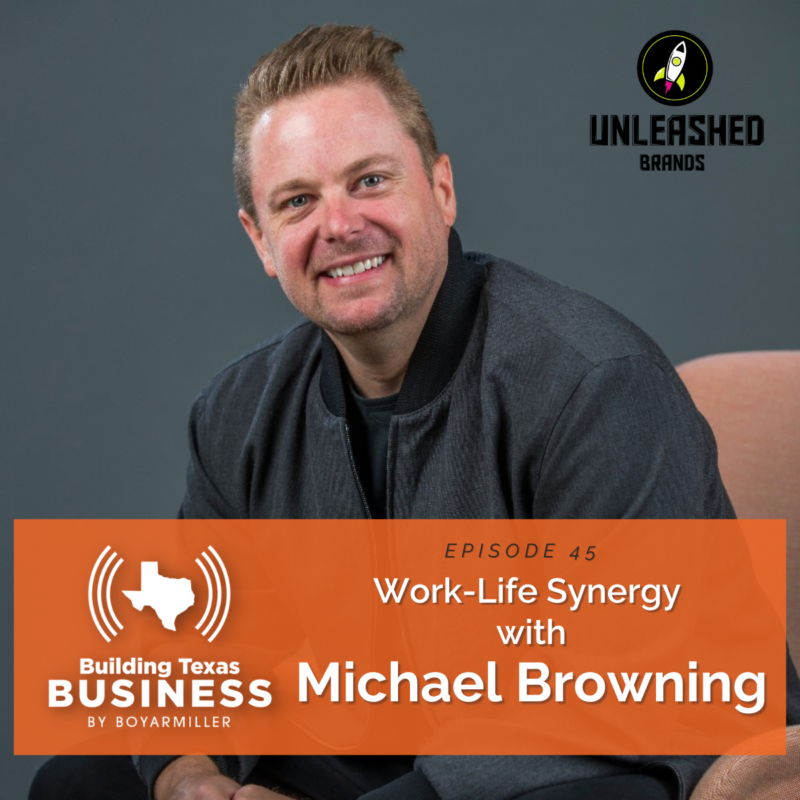
Michael Browning, CEO and Founder of Unleashed Brands, a platform company that houses brands to help kids learn, play and grow, joins the podcast. Browning launched Unleashed in 2021 after noticing a void in the market for parents looking for a trusted resource for kid’s activities. The growing portfolio currently includes Urban Air Adventure Park, Snapology, The Little Gym, Premier Martial Arts, Class 101, and XP League.
Hear as Michael shares how as a young entrepreneur, he leads his team with true insight into the challenges that new businesses face. Additionally, he doggedly pushes the team to look for new ways to overcome obstacles and break down barriers to achieving success.
Transcripts are generated by machine learning, so typos may be present.
Chris Hanslik: In this episode, you will meet Michael Browning, founder and CEO of Unleashed Brands. Michael shares his story on how he has built a company focused on helping children learn, play, and grow, and how he and the other employees at Unleash Brands strive for work-life synergy as opposed to balance. Okay, Michael, I just want to first just thank you for taking the time to come on the podcast. It’s a pleasure meeting you.
Michael Browning: Yeah, likewise. Thanks for having me. Looking forward to it.
Chris Hanslik: So let’s start by telling the audience, you’re the CEO of Unleashed Brands. What is Unleashed Brands and what are you known for?
Michael Browning: Sure, Unleash Brands is the world’s first youth enrichment platform. And so what we do is we help kids learn, play, and grow. Learn the basics, science, technology, engineering, arts, and math, identify and grow in their God-given talents and skills, and then play. So we believe kids just, they need an opportunity to disconnect from the screen, get out of the house, and just go let loose. And in that play, it’s play with a purpose. They can try new things. They can be courageous. They can socialize all the things they didn’t get during COVID.
Chris Hanslik: Yeah. So what was your inspiration to start this company?
Michael Browning: So the foundation of the company was built off of my original idea, which was Urban Air Adventure Parks, which I founded in 2011 with my family. And at that time, we had built from 2011 to 2019, we had built the world’s largest indoor entertainment company. It was larger than Dave and Buster’s. I was really serving kids ages six to 14. And March shows March 16th of 20, which many business owners probably listening to this experience, we had to shut down for COVID. And it was in the stillness and the quiet of COVID that we I told the team I said, you know, let’s take a minute to really reflect on what we had built over the last 10 years. And what we realized was, we had our heads down just grinding for 10 years. And when we looked up what we had really built, other than the world’s largest indoor entertainment company was a platform company that knows how to sell, design, construct, open, operate, market, and support franchise businesses. And where there’s turmoil, there’s opportunity. And in COVID, there were a lot of franchisors out there, which is what we are, that were having to lay off employees and staff, turn off systems. And as I was talking to them, I think we can help because we’ve got a large team. We’ve got all this infrastructure. What if we start buying? businesses and plugging them into this platform that we had built. And so we’re like, all right, that sounds good. But we’re not just going to have some disjointed portfolio of companies. We really want it to be a true platform. And so we started going back to our roots of who is the customer that we serve. That’s a big thing for us is know your customer, know why they frequent your business, what value you bring to them. And so we said, okay, well, really, over the last 10 years, we’ve served families, predominantly kids ages six to 14. And we had over 25 million families in our database.
Chris Hanslik: And just from the urban air.
Michael Browning: Wow. from US-based families. And I said, OK, how could we bring additional value to these families? And I started studying platforms. And what I saw in the marketplace was Neighborly, which is a Dallas-based company. And they’re in home services. So they own 26 companies in the home services space, all under the umbrella of Neighborly. And then I looked at Driven Brands, which owns a couple dozen automotive brands, many of which people listening to this are probably frequented. and driven brands and neighborly and support all of the brands underneath. And I said, oh, I like this. I said, what’s the most important asset to the family other than their car or their home? I was like, their kids. And I said, so how can we, let’s build a platform that serves the most important asset in the family, which is the kids and help them learn, play and grow. So we bought five companies in roughly 18 months and we’re off to the races.
Chris Hanslik: Wow, that’s a great story. So it sounds like then, from hearing that, you almost had two beginnings of the company, right? I guess 2011, you started Urban Air, and then in the middle of the pandemic, you go on this acquisition spree, but it was almost like, sounds like a whole new company or concept or strategy.
Michael Browning: It absolutely was. It was a completely new company, completely new strategy, all using the world-class team that we had built here, the systems, the infrastructure that we had built here, but it was absolutely a brand new business. There was a reorganization. We had to go to our shareholders and get approval to start buying companies and making investments. But we’re known for disruption. We disrupted the entertainment industry. And in the midst of COVID, we disrupted the franchising industry by launching the world’s first platform. And so I’m always the one that’s crazy enough to do something during COVID whenever they shut down. We have no revenue.
Chris Hanslik: Right, I mean, no one’s gathering in public places like your trampoline parks and you decide to go buy five other companies. Tell the listeners, so other than Urban Air, what are the other five that make up the portfolio?
Michael Browning: Sure, so the way we look at this is our brands lay out from four months old all the way to 18. So starting at four months, you can enroll your children in the little gym. And then from there, they typically age out between the ages of five and six. You could enroll them in Snapology, which is a company that teaches STEM, science, technology, engineering, and math. From there, they could move into Premier Martial Arts, which is the world’s largest martial arts company. From there, they can move into XP League, which is the world’s first youth e-sports. program. And then from there we have Class 101, which is a college planning company. So it’s matchmaking for kids going off to college. And then all along that same spectrum, kids always need a place to host birthday parties, go play on banking holidays, which is Urban Air. So those are our six brands.
Chris Hanslik: OK, that’s good. So you have five companies in 18 months. Tell us a little bit about what the integration process, because that’s the first thing I think of. You had an existing company, you had five new companies into this that had to be one of the first things that you focused on is making sure you integrated these teams together.
Michael Browning: Yeah, for sure. Integration, you know, it starts really in the diligence phase. Diligence for us when we’re acquiring companies is we’re trying to close the gap between what we think we’re buying and what we actually get. And so there’s a lot of that. OK, what are we going to do with the team? What systems do they have that we may already have in is there system better is our system better so we’re looking at all that i think the people parts always. The most interesting can be the hardest thing in that we’ve learned a lot along the way the first acquisition we made up from an integration perspective i want to fast we hired smaller we acquired a smaller company. And so when we have hundreds of employees here and we’re pushing things over to a company with less than a dozen employees, they can drink from a fire hose. They can feel like they’re drowning. So the learnings from that one allowed us to create an integration plan that is a little slower. We spend a lot of time listening to those founders and those management teams around You know, what is the why of their business? What do they all do? How can they integrate here? So we’re just going slower now, so it’s been a lot smoother. You know, we’ve acquired companies that have been around for 45 years, right? And change is hard. But we’re having tremendous success. All the various brands, both from our ability to make change and improve them, but also their financial results, which are obviously extremely important.
Chris Hanslik: So bringing in You know, I guess you had a culture at Urban Air. You bring in five different cultures. What are some things you’ve done to bring those new cultures into the existing culture of Urban Air? Did anything have to change within Urban Air to kind of have a more global culture for six different companies?
Michael Browning: Yeah, so what we say is, at Unleashed Brands, we get out of bed every day to impact the lives of kids by helping them learn, play, and grow through fun, engaging, and inspiring experiences. That’s what all these brands do. So we can all rally around that. That’s the mission. Yeah, that’s the mission, right? And at our core, every one of our brands offers classes, camps, one-time events, leagues, and celebrations. And mom and dad are our customers and kid is our user. So we have so much more in common across the six brands than we don’t have in common. The question is once that individual, that kid gets inside of one of our six brands, the experience and the culture can be different and we promote that. But what we hold firm on is one team, one mission, one vision. We’ve got to get synergies across the brands, and that when the customer wins, all six brands win, and customer is mom and dad, kid is the user. And we’ve got to help our customers know what’s around them, make it easy for them to sign up, easy to know what is next in their enrichment map for their kids, and know how they’re progressing. And then we say Unleash Brands is really a technology marketing customer service company. And we deliver the service through the brick and mortar locations of our franchisees. And so having the layered approach allows all of the brands who have been world class before us and will continue to be world class with us to maintain their culture but tie them all together.
Chris Hanslik: That’s great. I love that. So as you’ve integrated these new brands, What, if anything, have you done in the hiring process? Has something changed as you look to hire people within those separate brands? And what have you done to try to promote that hiring and interview process?
Michael Browning: It’s a great question. It all comes down to creating an organizational structure where you’re one team. So everyone, regardless of what they work on, they could be in shared services, meaning they work on all six brands. They could be dedicated. to an employee dedicated to a brand, but everybody is paid by Unleash Brands. Everybody’s paycheck comes from Unleash Brands to create unity. And so when we hire, we have to understand, is this a role we need in shared services that can provide value to all the brands, or is this someone that would stay in the brand? And what we leave in the brand is subject matter expertise, day-to-day operations, franchisee relations, and compliance. That’s what we leave in the brands. So we would be hiring people going, hey, You’re gonna be for you’re gonna we’re gonna hire you on as an ops manager for the little gym. Or we would we could hire someone shared services hate we need an accounts payable person and they’re doing accounts payable for all the brands. So when you are recruiting for unleash brands people get excited because of its size scale its impact on the world and then they depending upon their role they may have a lean towards wanting to be in a particular brand but everybody gets to work on. a bunch of different things every day, which is very appealing. We always we pay competitively here, which is important, right? It’s a competitive market, both in Dallas as well as just in the industry as a whole. So we want best team. We want them to be competitively paid. We have a program here to help them keep growing through leadership development. They all always should know what their career path is going to be. Tell our chief people officer that they need to what they need. Someone needs to know how to go from an entry level position in our call center to my seat and have a vision for them. It may never happen but like we need to lay that out for people and that inspires them.
Chris Hanslik: What you’re talking about there I think is so important because If you want people to stay at your company, right, they need to feel like they’ve had an opportunity to grow. And so you’ve got to put in processes and programs so that they can actually see that in action.
Michael Browning: Yeah, I think I always tell people, you know, a beer keg or a ping pong table is not culture. That’s right. That’s a thing, although we have both. Culture is when people get up every day and know why they get out of bed and the impact they’re making on the world. They’re competitively paid, they’re growing, and people like to be held accountable. And when you do all those things within a flexible work environment, people love it and they want to stay with the company and they want to grow.
Chris Hanslik: You may have just done that, but I usually like to know from a CEO like yourself, how would you describe the culture at Unleashed Brands?
Michael Browning: I always use like the metaphor of like a sports team. Everybody knows they’ve got a, we want the best players on the field every game, every game, every day. And that we have a rule here that we take 24 hours to celebrate a win or we take 24 hours to sulk in a loss. But after 24 hours, either way, we get on with it. And so it allows people to have those wins, has those losses, and reflect. We say that we’re on the pursuit of perfection to which we will never achieve. But we’re on the pursuit. We say that we want people to fail. Failing is good, because if you’re not failing, you’re not trying. But what we say is we want to be on the leading edge of everything we do, just not the bleeding edge of everything that we do. Yeah, yeah, we don’t believe cash and and then you know, it comes down to the law of aggregation of small gains So if we get better just a little bit every day if you get better 1% every day and you look back at the end of the year You’ll be like 35 times better than you were when you started so we don’t look for silver bullets We don’t try to hit the grand slam on everything we do.
Chris Hanslik: We try to just get better and better using data Yeah, I like the kind of intentional The small improvements do matter. And you build that momentum. I think it also builds confidence.
Michael Browning: Totally.
Chris Hanslik: So you mentioned flexible work environment. Obviously there’s a ton since in the last three years about work from home, flexible work environment, hybrid work environment. Tell us what that looks like at Unleashed and how that’s kind of how it came to be and how you’re managing that.
Michael Browning: Yeah, I think you have to start with the philosophy of, you know, we don’t believe in work-life balance. What we try to shoot first is work-life synergy. And what I tell people is you try to balance anything for too long, like nobody’s perfect, and you’re dropping one thing or the other, whether that’s your family life or your home life. We don’t believe that you can have a crappy family life and a great life at the office, or vice versa, a bad life at the office and a great family life. Nobody’s that good at compartmentalizing, so that’s why we’re shooting for synergy. We know that there’s peaks and valleys in the workload, there’s peaks and valleys in your home life. So when you have that philosophy, it allows you to then tactically lay out a plan. And we’re always trying to improve our plan, but I tell people, like I’m the lead by example, like I, you know, if you’re someone who wants to be involved in your kid’s life, which we absolutely promote here as a kid based company, I want you to be going to those practices. We want you to be going to those games. So where we are today is we have work from home Wednesdays. And then we’re in the office monday tuesday thursday friday and i tell the team like hey let’s just all try to be here by nine if we can all say let’s try to be here by nine thirty and not waste time and work traffic then we know that at nine thirty the cooler talk can happen the drop in meetings can happen we can start scheduling meetings. And it’s been going great. We rolled that out probably, I don’t know, fall of 2020. Now, as I’ve started to reflect on it with the team, we want to try to reach even more flexibility because that structure of work from home Wednesday only really works if somebody’s can get all of their repair guys to come to the house on Wednesdays and all of their kids practices fall on Wednesdays. So right now we’re even retool, trying to retool it based on customer or excuse me, employee surveys, meetings, subcommittees to go, what is really the definition of flexibility, right? And how do we obtain synergy while also maintaining productivity, relationships in the workplace? And we have a huge March madness bracket going on right now. We have games when the games are during the day, they’re in all the conference rooms on all the TVs. So how can we still have some of that fun stuff? Without you know sacrificing flexibility.
Chris Hanslik: Yeah, that’s the challenge right is you only have a culture. without being connected. It may not be a good one, but to maintain that, your employees have to feel still personally connected to each other and company. And I think that sounds like you’re finding that synergy for your employees and like anything, you should reassess and reevaluate how it’s working, right?
Michael Browning: Absolutely right. I mean, our policy around flexibility and creating culture has to continually improve every day, just like everything else we do. So that’s why we’re taking a look at it and who knows where it will go, but we’re definitely shooting for it. But I agree. I’ll put a hybrid office work from home culture up against an all work from home culture any day. I believe there’s just something to be said about being together. And honestly, it’s what we all longed for in COVID anyways. The reason why we’ve been so successful in experiential-based businesses is because the millennial parent, which is who we serve, They were already pre-COVID 72% more likely to want to spend their money on experiences over things. You probably know people who are in that millennial age group with kids who are like, don’t get my kid a birthday present. Like, let’s just go skiing or we’ll donate. They don’t like stuff. Then you lock that large population up in their homes for six to two six months to two years and they were forced to buy stuff on amazon door dash all their food and that what they. It just made them realize that stuff is not filling in a long for relationships so those people came out. And are coming to our venues because it not only is it amazing experiences but. they’re able to invest in their kids, that most important asset. So it’s that same population that is also in the workforce. It’s the bulk of the workforce that’s going, yeah, I’d like the flexibility and I wanna have the ability to work from home every now and then, but I don’t long deep down to be at home all the time and never interacting with people.
Chris Hanslik: Right. It’s just human nature. Yeah. So I’m gonna take you back to the beginning. I think you said 2011, you found urban air. What were some of the lessons learned, the growing pains or mistakes that you made, that you learned from, that really kind of start a company from scratch?
Michael Browning: Yeah, I think, where do I even begin? In retail brick and mortar, obviously location is extremely important. And so we had an amazing location. And our first location, it was over in South Lake, was an old warehouse, that honestly, it was only given to me because my dad knew the guy. And every other landlord had laughed me out of town. Every bank told me so. It was literally we put every penny that we had into the first location. We only got a shot because on a piece of real estate because it was a friend of my dad’s. And so that real estate was great, but we outgrew it. It was 18,000 square feet. Now we’re in a 50,000 square foot location in that same market. So location is important in multi-site retail. So that’s a big one. You know, I think
Chris Hanslik: What I heard you just say though that I want to ask you more about was the location stuff I get. It was more about perseverance and what you had a passion for. Because you said banks were telling you no, people were laughing at you, but you believed in it and kind of talked a little more about maybe did it create doubt as people were telling you no? What was it that kept you moving forward to say, I’m going to make this happen?
Michael Browning: Yeah, I think that entrepreneurs, to get it done, have to have grit. You know, and that’s definitely one of my strengths is working hard and solving problems, right? I believe you can either go around, over, under, or through a problem. But like, you just gotta get there, right? And I think it’s all about perspective, too. An entrepreneur, I always tell people, you gotta look at your entrepreneurial journey as more of like a marathon, more of like a road trip than climbing a mountain. And the reason is if you’re a true entrepreneur and you look at everything as a mountain, you’re always trying to climb that next mountain. And then if you look at it as a journey, the problems along your road are really just the mile markers along the way. And so I always tell people if you can go get past those problems, those mile markers and become on the other side of them better, faster, stronger, then you’re always getting better. For me, it’s that tenacity, that grit, you know, people tell me no. And it’s not that, it’s not that. I wasn’t scared. I think there’s like, you know, I’m always, there’s always something. I always tell entrepreneurs in every venture, especially early on, there’s going to be five to seven times where you think like, it’s that, oh crap moment. I’m going out of business. I’m going bankrupt. And whether, I mean, there’s just a ton of things that like ton of moments like that for me, but you got to keep going. If you’re truly operating in your calling, then you got to keep going.
Chris Hanslik: I love that advice to them. Like the five to seven, something’s going to go, wrong, something’s gonna happen that was unexpected or unplanned, and then you’re defined by how you deal with it, and to your point, how you move through it and learn from it.
Michael Browning: Yeah. My dad always told me, like, fail to plan, plan to fail, which I think is great, so you gotta have a plan. But there’s also that saying of, you know, the plan goes out the window the minute you get punched in the face, right? Or the minute the first shot is fired on the battlefield. So and that’s an entrepreneur has got to have flexibility and be able to be fluid. And that’s how you get through COVID. That’s how you get through, you know, economic uncertainties. That’s how you rally and go raise capital when you can’t get anything from the bank or supply chain issues. Just got to keep going.
Chris Hanslik: What does talk a little bit about you? been talking about you, but more on a personal side of things. How would you describe your leadership style?
Michael Browning: Yeah, I mean, in my position now, my focus is on vision, capital, and people. So I need to know where we need to go, and I need to be able to be a good storyteller and a vision caster to create unity and get people to follow. So that’s vision. I need to be able to recruit Coach entertain the best team on the planet and so that and empower them so i’m always asking my team. Okay we got goals here tell me you know. What do you need to get it done and then when we’re in the vision stage and more planning i’m saying if you had all the money you needed. the people you needed, the time you needed, what could you achieve? Too many times when we’re trying to accomplish big things and build plans, people limit their, even their thinking, because they go into the planning going, I’m never gonna have that kind of money, or I’m never gonna have that kind of time, or I’m never gonna have those resources. And so we try to take that off the table.
Chris Hanslik: Self-limit the process at the beginning.
Michael Browning: Yeah, and then capital, just making sure that we have the capital that we need to execute on what the team says, it’s going to take to accomplish the vision. So that’s what I do. As an entrepreneur though, I’ve learned you got to fire yourself from every role and responsibility as you grow that you can and hire a subject matter expert that’s so much more talented than you at the role. And I think entrepreneurs, they hit a roadblock because they don’t realize you can either have control or growth, but you can’t have both.
Chris Hanslik: That’s a very wise counsel, I think, is that you, to your point, if you want that control, you’ll never get out of the way.
Michael Browning: That’s right. I mean, and so really I have an amazing executive team and there’s nine of them. And on some days, I’m just a glorified tiebreaker. There’s a ton of diversity around the table. Everybody’s passionate. Everybody feels they can speak openly. And sometimes I have to break a tie amongst the team. Sometimes I’m just like a cheerleader. Right? Where I’m like, this is, yeah, love it, let’s go. What do you guys need?
Chris Hanslik: And that’s because- Maybe like a proud dad, you’re like, this is great stuff, I don’t have to do anything.
Michael Browning: Yeah, exactly. And it comes from, I used to do sales. I fired myself and hired Josh Wall. My dad and I used to do accounting, really. We fired ourselves and hired Scott Perry. I used to do marketing, fired myself, got Jessica Correa. And so now we have this deep bench of talent on the executive team. And so now, again, I’m focused on vision, capital, and people.
Chris Hanslik: Gotcha. So obviously that leadership style evolved from the beginning and how do you think when you look back how has your leadership style evolved and what were maybe some of the resources that you used or called upon to kind of help you evolve?
Michael Browning: Yeah I would say I was probably I would probably grind people too much in the early days and not celebrate wins enough and sometimes I would move too fast And so those are two of the things that I’ve worked on. Also, picking battles. Not everything’s worth it. And also, my wife would always tell me, they’re just never going to love it the same way you do. And so also, knowing everyone I hire, we always assume positive intent. They’re always doing it for the benefit of the company. And no one’s out to cause problems. But some things, your employees just aren’t gonna care about as much as you care about it. And you can’t grind too much on every, you can’t pick everything and grind on it. You’re wearing yourself out. Yeah, and we’re them. Or them. Right? I mean, it’s just, you know, I always tell people, the only one going down with a ship here is me.
Chris Hanslik: Right?
Michael Browning: Right? Good or bad. And you know, like, there’s a point at which, you know, if you grind people too hard, they’re like, I’m gonna, I’ll go do something else.
Chris Hanslik: So when you think about, your industry and what you’re doing here. I think my assumption is there are going to be a couple of answers to this question, but what do you think unleashed brands or any one of the sub-brands are doing that’s innovative in your industry?
Michael Browning: There’s a ton of stuff, right? I mean, I think that from a marketing perspective, we’re one of the only companies that’s ever been able to cross-pollinate consumers, meaning customers will come in and sign their kids up for one of our brands, and then through our marketing programs and our technology stack, we’re able to take them and get them to sign up for 2.63 of our other brands. That’s something the other platforms in home and automotive haven’t really been able to do. It’s like, I can’t get someone to, when I clean their windows, to also let me clean their gutters. or I can’t get someone in the moment to do an oil change and a tire rotation. It’s a timing thing or a needs-based thing. For us, because of the brands we’ve purchased and how they all link together and how we’ve been able to tie the enrichment milestones to all of them allows us to partner with parents and move them through that journey. So the cross-pollination of consumers is something that nobody’s ever been able to do. On the franchise sales, We’re able to we host potential franchisees candidate candidates here and we talk to them about all six brands other organizations in our industry they don’t they won’t talk about multiple brands cuz they’re afraid it’s gonna link in the sales cycle. And so for us, we’ve been able to crack that code and figure that out. And now 57% of our franchisees own more than one location. We have multi-unit, multi-brand operators all over the country. And so we’re able to get economies to scale on our time, but also the cost that we had to incur to acquire that lead to begin with.
Chris Hanslik: OK, makes sense. That’s impressive. So mentors, any mentors you’ve had along the way?
Michael Browning: Yeah, yeah. When I was in college, I sold my first company to Roland Hansen, who was the chief marketing officer globally for Microsoft. He came up with the Microsoft Windows brand. So I spent a lot of time with him and Chip Conk out in Santa Barbara, and they mentored me on entrepreneurship, big business, philosophy theory. It was awesome.
Chris Hanslik: Great experience.
Michael Browning: Yeah, great. And still great friends. And then as I moved into the urban era, Ken May, who was the CEO of Topgolf, He was also at FedEx, and so he was one. Chris Tonko, the chief operating officer for 7-Eleven, huge mentor of mine, great friend, and there’s been a bunch. But I’m one of those guys that’s like, I like to find people with the wisdom. People can either learn through revelation or tribulation. I would love for someone to reveal to me how I should do this so that I don’t have to go fight the battle I could have skipped. And so I’m always looking for people who have seen the movie and have the t-shirt.
Chris Hanslik: I think you shared a lot of inspiring stories and lessons for our listeners. Let me ask you this as we start to wrap things up. What would you think about your employees here? What do you hope their takeaway is from working at Inley Springs?
Michael Browning: I always say that when people look back on working here, and especially if they report it directly to me, I want them to say he was the hardest boss I’ve ever had. in the sense that he pushed me to try things, he pushed me to achieve, and he held me accountable, but he always had my back, like I knew like in the moment. Like I always say, my job is to grab you by the face mask and say, hey, we didn’t do that good, but to also celebrate a great play or to tell you, hey, why are you down? Like get back out on the field and let’s go. So we operate like that here. And also, I would love for people to say, you know what, I dedicated a good portion of my life to a company that’s changing the world. And that’s why we have very little turnover here is because people know the impact they’re making because we see the stories from the families every day.
Chris Hanslik: Yeah, that’s great. So let’s get less business and more kind of fun side. What was your first job?
Michael Browning: Oh man, if you talk to my parents, I’ve always been an entrepreneur. So I sold like beaded bracelets with my sisters door to door. Then I got into trading baseball cards and going with my dad and valuing them via through Beckett’s. Then I started a website company in high school. Then in college, I started a data analytics company, which is what I sold to Roland Hanson and Chip. So I’ve always been, you know, like they don’t, I’ve had a couple of jobs, you know, I was a scorekeeper at an ice rink. Right. But I’ve always been hustling.
Chris Hanslik: Well, I mean, that’s one of the most common threads, I think, of entrepreneurs, right? From an early age, they were doing stuff like that. And it just continues as they find more ideas and new passions.
Michael Browning: Yeah, I think it all started with my dad because I got to watch him. He was an entrepreneur, a homebuilder, and, you know, was always at every practice, every game and, you know, controlled his own destiny. So I always looked at that like, I don’t know that I would ever want to not be that. And so it was modeled well for me. He was a good steward of his family and his resources. And so I don’t know, I think, and I think there’s a DNA component to it too.
Chris Hanslik: Couldn’t agree more. Okay. So do you prefer Tex-Mex or barbecue?
Michael Browning: Tex-Mex.
Chris Hanslik: All right.
Michael Browning: It has to have table side guac with bacon. So I’m pretty picky. I’m pretty picky.
Chris Hanslik: Table side guac with bacon, that’s a new one for me.
Michael Browning: Oh, you got to go to Media and Grapevine.
Chris Hanslik: Okay.
Michael Browning: Solid.
Chris Hanslik: You must have a specific spot for that to happen.
Michael Browning: For sure.
Chris Hanslik: And then think about if you could take a sabbatical for a month, where would you go and what would you do?
Michael Browning: I would go and take like driving lessons. for like race car driving.
Chris Hanslik: Okay.
Michael Browning: Yeah. I would, that’d be fun. I love racing cars. So I would love to devote more time to it, but I can’t get on the track very much.
Chris Hanslik: I got you. Michael, this has been an amazing episode. Thank you so much for taking the time to share your passion and this company, this great company built really appreciate it.
Michael Browning: Likewise. Thanks for having me.
Chris Hanslik: And there we have it, another great episode. Don’t forget to check out the show notes at boyarmiller.com forward slash podcast. And you can find out more about all the ways our firm can help you at boyarmiller.com. That’s it for this episode. Have a great week and we’ll talk to you next time.
With a deep understanding of your business alongside clear and honest communication, we help clients face challenges fearlessly.
Learn more about our services and how we help clients.