


With a deep understanding of your business alongside clear and honest communication, we help clients face challenges fearlessly.
Learn more about our services and how we help clients.



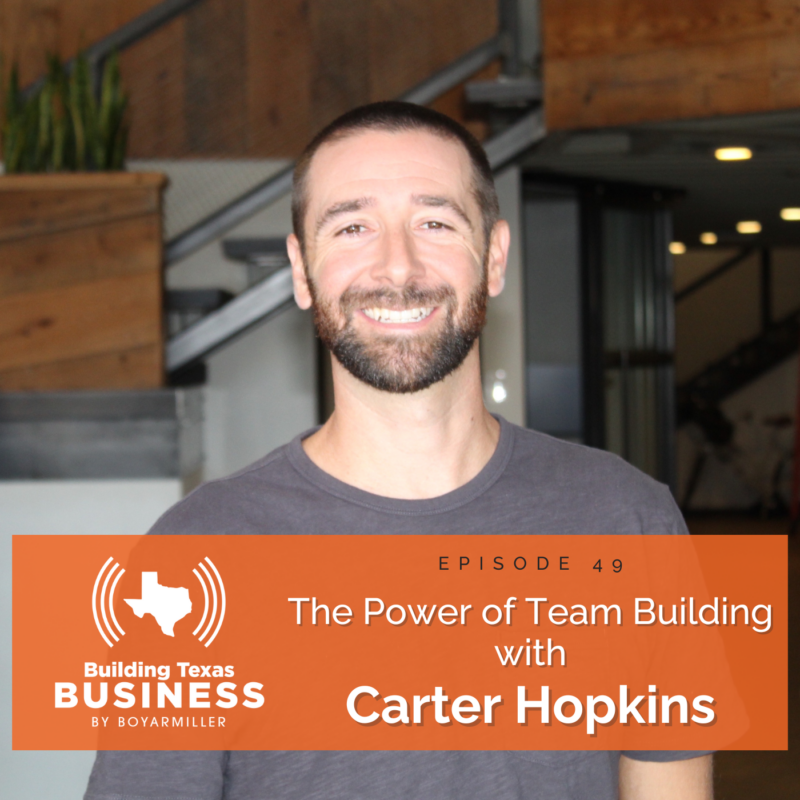
Carter Hopkins, Founder and CEO of Pursuit Sales Solutions, joins the podcast. Pursuit Sales Solutions is an innovative sales recruiting company in the heart of Dallas, Texas.
Carter reveals his unique approach to creating an environment of collaboration and success, where every team member feels known, loved, and valued. Hear as he discusses the significance of surrounding yourself with talent, building a team, and gaining wisdom from failures.
Carter’s story of navigating the challenges of contingency-based business operations is not only unique, but ever-changing. With an outbound approach to recruiting, Carter explains how his firm consistently secures top-tier talent for its clients while encouraging job-seekers during these uncertain times.
Transcripts are generated by machine learning, so typos may be present.
Chris Hanslik: In this episode, you will meet Carter Hopkins, founder and CEO of Pursuit Sales Solutions. You will learn how Carter focuses on each employee in his company being known, loved, and valued to help frame his company’s culture. All right, so Carter, welcome to Building Texas Business. Thank you for taking the time to join me today. Absolutely, Chris.
Carter Hopkins: I appreciate you having me and taking time to talk with me.
Chris Hanslik: So you’re the founder and CEO of Pursuit Sales Solutions. Let’s start by you just telling the audience, what is Pursuit and what is it known for?
Carter Hopkins: Yeah, man. Pursuit Sales Solutions, we are based here out of Dallas, Texas. We are a sales and marketing recruiting firm. We recruit mostly in the medical device and in the tech space, all the way from entry-level sales jobs up to VPs of sales, the same on the marketing side as well. So there’s a million recruiting companies out there. There’s not a lot of sales and marketing recruiting focused firms, and that’s where we come into play.
Chris Hanslik: Okay. So what was your inspiration for starting this company in that kind of niche space?
Carter Hopkins: Yeah. I wish I could tell you I had a great idea to start a company in the niche space, but it kind of evolved over time and turned into a sales recruiting company. But I mean, my inspiration, I think it kind of dates back to college. I had the opportunity to start a ministry called Vertical Ministries, my senior year of college. And realized through that, I was better at building a team and casting vision and going after the vision together than I probably was at finance and accounting. And my grades probably showed that as well. And I fell in love with that process. Obviously building a nonprofit is very different than building a for-profit at the same time. Like it was a ton of work and we put together a leadership team and it took off. And from that experience really knew eventually one day, that’s what I want to do. I want, I want to start a business and build it. with people that I love being with. And so I really knew from college, that’s what I wanted to do. Got out, started a business, failed a business after about a year, and then got into sales and was in sales for about three years in medical device. And then decided right before I had my first child, I’ve got three kiddos at home now, and decided before I had kids, like, hey, if I’m ever going to take a shot, I better do it before my expenses start adding up. So I started Pursuit about eight years ago. It wasn’t, as I said earlier, it wasn’t a sales recruiting company originally. I knew I needed to get into the game. And so Pursuit originally was an outsourced sales company where you had a product or widget and we would go out and sell your product for you. And when I say we, it was just me. And so I was doing that and about two or three months into it, my old company calls and said, hey, we need to replace you. We can’t find anybody in Trueport, Louisiana to take over for you. Do you know anybody? I halfway jokingly said, well, are you going to pay me? They said, yes. I filled the position in about two days with a friend of mine and realized I’d already made more money doing that than I had at the outsourced sales company. And the more that I thought about it, it was my shot. You know, I believe sales recruiting done well is a sales job. That’s what I love doing. And yeah, and it’s all history from there.
Chris Hanslik: That’s great. So I like what you said about you figured out you’re good or like building a team and that started back in college. So let’s talk a little bit about that. So you built that team in a nonprofit. Maybe, you know, what, that was the first time. So what did you learn from that maybe helped you as you started building or needing to build a team of pursuit that you learned from those early days in college?
Carter Hopkins: Yeah, I want, I think there’s just something I love playing sports and chasing after something with a group of people collectively together. It’s just fun. I love it. And I think for me, I realize it’s important to surround yourself with people that are smarter than you and really talented people early on. And so in college, we had that, you know, for me, I was a facilitator, casting vision and getting really talented people around us. in order to make it happen. And I knew as soon as I started Pursuit and we got to the place. I did it by myself for about a year and with high highs and low lows along the way, things started working and we started scaling the team about seven years ago. I mean, I was super blessed with the first, I think out of our first seven employees, six of them are still here to date. And now it’s been so much fun because originally we were all figuring it out together. I had never recruited before a day in my life before I started a recruiting company. which was a blessing and a curse for us, but all in all, we got super lucky with that group. And they’re now, it’s really fun because now they’re leading our company. They are our leadership team here seven years later.
Chris Hanslik: You also mentioned that, I guess you had started a company before Pursuit that didn’t go. So, you know, I think we learn more from our failures than we do from success. So let’s talk a little bit about, you know, maybe what did go wrong with that? What did you learn? in that business, not being successful. And how did that help shake you and prepare you for the success you’re having now with Pursuit?
Carter Hopkins: Yeah. Yeah. It’s funny to look back. So my, my co-founder at the time, it was a company called City Streak. Basic ideas. We hid kind of a crazy concept. We hid $500 in the city and we would send people an adventure through an app to find it. Right. And the business side of it is we could really, we had this massive people that were chasing after the $500 and we could then basically turn around and sell them to different businesses along the way to get there. Great in theory, terrible at execution. We had a ton of fun with it, didn’t make any money. But as I look back, it’s really interesting. My co-founder at the time is one of my best friends and he is now He’s running, he started and is running a tech company called Thrust and Will. And it’s been crazy successful. I’m having the privilege, I have the privilege of getting to run Pursuit. And so I think as we both look back on that, I agree with you. I don’t believe in failure. You know, for us, it did not work. And at the same time, we learned a ton through that process. It was hard. Starting business and growing is hard. And I think we were really naive. We were right out of college and you know, I, We put together an app and I’m not an app guy, right? That’s not my skill. I love people and building something with people. And I realized in that time, like, Building an app is not my strong suit by any means. So that was just one of a number of lessons that we’ve learned that I think we both took into our next venture, but it’s really fun because they’re now a client and he’s actually come in to speak to my team. And for me, we actually show the video of me and him starting city streak in our training, because I want our team not to be scared of failure. Right? Like I look back at that and like. Anybody that hasn’t failed at anything hasn’t tried hard enough. They tried anything hard enough where they could have failed.
Chris Hanslik: You’re not taking enough risks, you know, and that’s, there’s so much written about that, right? That especially at the early age, you teach children when they, well, they can, right? To push because failure is okay. It’s about the journey and the learning rather than a win or loss, really, as you’re developing and growing. So I think you’re right. Yeah, I say all the time, no bad experiences in life, just learning experiences.
Carter Hopkins: Yeah. Absolutely. And fortunately or unfortunately for me over the course of my 35 years, I’ve, I’ve had a lot of those experiences, you know, I’ve tried a lot of things that didn’t work in pursuit for whatever reason has worked and we’re grateful for that. But there’s been a lot that didn’t work along the way.
Chris Hanslik: Well, one of the things that, you know, it sounds like you and your original partner in the first venture, you both learned what you were really good at and what you liked and what you weren’t. And it looks like you both then kind of from that learning focused on that and look where you both of you are today.
Carter Hopkins: Absolutely. Yeah. So it’s a lot of fun to look back at. And, you know, I look back at that year and eating peanut butter and jelly sandwiches. Do we have any money to anything else? I’m like, I learned a pun from it. Wouldn’t trade it for anything.
Chris Hanslik: So you got a team now at pursuit and you mentioned a minute ago, the core group, original group, you know, some stickiness and tenure. to your workforce, how many employees are you now?
Carter Hopkins: We are at about 65 people to date.
Chris Hanslik: And so, yeah. So people don’t stay with the company unless they really like it. They have to start with connecting with that company’s mission and vision and they stay because they really like the environment that people are working with. And most people, at least in my world, we call that, aside from mission and vision of the company, that other stuff’s all about culture. Tell us a little bit about the culture of pursuit and how you’ve kind of fostered and built that over these last several years.
Carter Hopkins: Yeah, that’s a great question. I’m super thankful for the culture of where it is, and I would attribute it to different people and honestly to EOS as well. So we follow EOS, our criminal operating system, and there’s a couple of things I would attribute it to, but if I were to describe what I believe about culture is how we make people feel at the end of the day, and specifically our team. A lot of my Motivation for work comes around developing our people internally and pouring into them. And that’s where I spend a lot of my time. And so even today, as we sit here at 65 People, a lot of my time and effort is spent around culture and creating systems to where I believe that all people have the desire to feel known, loved, and valued. And so when I think about culture and kind of our sweet spot and work, we’ve worked really hard as a team to do is to make people, to make this a place where people feel known, loved and valued. And I think we all have that desire. You know, we have a really young team here at Pursuit. And I think it’s really easy. I know even for myself, as I was going in my career, it’s really easy just to kind of get lost in the mix. You’re not in college anymore and you’re still trying to figure this white thing out. And we try to create really a home base For people when they know, when they work at Pursuit, that there’s going to be people there that, that know them, that care for them and love them and value them. And so that’s something that we put systems in place to make sure that that happens. And it’s a priority for us. It’s really the why behind why we do what we do at its purest form.
Chris Hanslik: I love it. Well, I mean, how can you not get excited as an employee, if the company can deliver on one and say, we’re going to stand behind and all of you being known, loved, and valued, that’s got to resonate with people, especially when they can see an action that you’re actually following through. So maybe give us, share some examples of the processes or things where an employee in pursuit actually sees it in real life and sees those words in action.
Carter Hopkins: Yeah, it’s changed drastically over time. Like as our company has grown, Our systems had to change in order to be able to make that happen. And so, you know, when we started originally, I mean, there was, you know, four of us sitting around a table. It’s really easy to do that. And because like we were there every day, we saw the ins and outs of everything. And a lot of that was done through myself, to be honest with you. And then as we continue to grow. We wanted to find ways where are starting to get bigger company could feel smaller. Right. And so everybody at Pursuit is a part of a team and they have a team lead that is dedicated to them. And so when they walk into from day one, starting in our office, they have a somebody at our company inch is in charge. of knowing them and loving them and valuing them. Because of EOS, everybody, every role within our company is defined by four or five bullet points, and every direct report at our company, one of their bullet points is to know, love, and value the people that are on their team. And so that’s an example of one of the systems that we’ve really put into place because scaling a company and holding culture is super important. And I think that we had to put, it went from just being around people to systems and processes. And it’s been really fun for me personally to go watch people that I was in charge of knowing, loving and valuing early on. Now they’re in charge of doing that with teams of 30 plus people and they’re crushing it at it. And it’s been really. I think the other thing is core value. We hire based off core values. We fire based off of core values. We promote based off of core values.
Chris Hanslik: And so they truly mean something within our company. The hiring and firing, I mean, not to put aside, I mean, the known love value thing is remarkable and I love how you describe that and how it’s Sounds like it’s become institutional in your organization, so you don’t have to be you Carter as the founder CEO and having to enforce it. It’s permeated the entire organization.
Carter Hopkins: So what it looks like now is I’ve got five direct reports that I am in charge of knowing them, valuing them and loving them. And then they have their team underneath them that they’re in charge of that with. And so like, I still have responsibility there for sure, but I also can’t do that with 65 people and do my job as well. And so, so yeah.
Chris Hanslik: Would you put the stake in the ground so that even the most, the newest employee that’s the newest member of the lowest team has an expectation of this is what the company is going to do for me and can hold the company into account if they don’t feel like it’s happening.
Carter Hopkins: Well, and to me, it’s really interesting. And even in doing what I do, right? Like we’re a recruiting company. And so we see and talk to people that are changing jobs all the time. And don’t get wrong. There’s a lot of things that matter when it goes into people being happy and content in their work. But I truly believe people have a deep desire. to be known, loved, and valued. And we’re not perfect. We’re not perfect. I’m sitting here telling you these things. I’m not perfect at doing those. Our team is not perfect at doing those. No one is. No. And we lose people from time to time. But I would say the secret sauce to really the core of why, if you said, hey, Carter, at the end of the day, why has Pursuit had the success that it’s had? I would say it’s our culture. And we do culture advance. But a lot of people group culture into like, leaving early and go to play volleyball together or something like that. And we do some of that stuff too, because we prioritize it. But to me, it’s more of like creating a place where they feel like they belong, that they’re known, loved and valued. And I think that has been the biggest thing that has helped us be successful. Our team, I’ll tell you, it’s really funny, Chris, like they, a lot of them live together, they travel together. which is great and I love it and also during COVID, it complicated things because we’d come to the office and we’d spread out and then they’d all hang out together that night. So there’s good and bad with some of that stuff, ma’am, but they’re in each other’s weddings. We spend 40, 50 hours a week together. And so over the course of years, people go through high highs and low lows and we get to celebrate. We’ve got people on our team that I just officiated a wedding. with that somebody on our team had and there were several girls from our team that were in it. And I also sat there and cried with them as they mourn losses of family members and everything else. And so, you know, we just get to do a lot of life together. And for me, as pure as form, that’s what it’s all about. And I’m super grateful for that.
Chris Hanslik: That’s great. Not what you mentioned about Yeah, no one’s perfect, no company’s perfect, but you put a stake in the ground for what you stand for. You put some known systems in place so that you can hold each other and the company accountable to striving for that goal. Knowing every now and then you fall short. To me, the key when you do fall short is own it and commit to doing better. And people will give you grace over that because they see more consistency of you trying to do the right thing more times than not.
Carter Hopkins: Yeah, it is. I mean, for me personally, my faith is a huge part of I and there’s scripture that says like, love will cover a multitude of sins. If people feel no love and value, maybe you do screw up. I was like, they’re more willing to work through some of that stuff together when you’re working really hard to know love and value each other.
Chris Hanslik: So you talked about hiring and firing from culture and I agree 110% with that. Are there some processes that your company uses to make sure you are asking the right questions, evaluating candidates the right way so that they are a cultural add to your organization if you decide to bring them on.
Carter Hopkins: Yeah. Yeah. I mean, so as we sit here right now, we’re interviewing to hire more people at Pursuit. We’re looking for number 66, right? And I believe we’re still setting the foundation of what Pursuit can be 10 years from now. And so we’re a people business, right? Like intentionally, I didn’t want us to go start another tech company. We’re a people business. And so, you know, our people are everything. And so as we sit here right now, there’s two interviews going on. One’s in the room next to me and another one’s over there. And our first interview is all around somebody fitting our core values. When we say culture fit, what we mean is we’ve defined, hey, here are the six core values that we stand for. And whether we’re hiring a sales rep or an executive assistant or whatever the position is, they have to fit our core values no matter what position that they’re in. And so, yeah, we ask a lot of questions to try to figure out if there’s somebody that can come in and fit our core value.
Chris Hanslik: So let’s turn the conversation just a little bit because you built this company in a fairly short period of time to a nice scale. What do you think, if anything, that Pursuit is doing that you find to be innovative in your industry that’s helped you get to where you are today?
Carter Hopkins: Yeah, I, in our industry, I believe doing the right thing consistently is enough to separate yourself these days, which is also kind of sad to say to, you know, and we come for us, we’re playing the long term game and the recruiting industry, it has a bad rap for like, just looking for short, quick wins here and there. No, I’m moving on it for us. We built our business around playing the long term game. Working through hard things with our clients, having the hard conversations with our clients and being of our word. And so I hope that’s not a bad answer to your innovative side of things. But for me, I told our team this the other day, one of our core values is do the right thing. And I believe that we show up to work and we do the right thing day in day out internally with our clients, the way that we treat them and everything else. Like it’s enough to stand out in business today. I don’t disagree with you there.
Chris Hanslik: I mean, we say around here too, it’s not necessarily what you do that may be unique, right? There’s in our, in my world, there’s a lot of lawyers in this world in this, but maybe how you do what you do. Can be unique and different and set you apart. And that sounds like that’s what you’re saying.
Carter Hopkins: Well, I think that’s one way. And then I think as far as being innovative and doing it differently for us. We have a true outbound approach. We believe a lot of your best talent is in a job. They’re really good at what they do. And so for us, you know, a lot of what we specialize in is for these hard to fill positions. We go out and are seeking out people that are in a job, not necessarily looking, and we sell them on your opportunity. We listen for pain points and then we turn around and we sell. We’re not just passing a job description and passing resumes. We’re truly selling on behalf of your company to get those people in front of you. So I think because of that, we’re able to get top-tier talent in front of our clients. And then we do what we say we’re going to do and they continue. We’re fortunate enough, we have partners that continue to come back to us. time in, time out, because sales is for a lot of companies, it’s their, you know, lifeline.
Chris Hanslik: And so, yeah. Very good. So let’s talk a little bit just, you know, internally, because you mentioned a minute ago, you know, after the last three years, the world’s been upside down a little bit. Has that impacted your workforce at Pursuit? And if so, how, what were some of the things, did you have to make any changes to try to, you know, tighten things back up?
Carter Hopkins: Yeah, I, for sure. And I think, you know, even kind of going back to COVID and you said the last three years, so I’ll go back. That was obviously a big change for us. It was scary, man. I, you know, we’re in a business where everything can stop like that. We’re a contingency based firm. We are not promised any revenue the next month. And, you know, everything got frozen. All hiring got frozen real quick. It was, it was super, you know, honestly, I think Overall, I look at it, I look back and that side of it from a business standpoint, obviously COVID was a super sad thing. It ended up being a blessing. It forced us to slow down and forced us to figure out how to be really good at what we do, right? We had just been like kind of weighing it, scaling, weighing it, scaling, growing, trying to figure it out as we go. And it forced us to go, hey, we’re going to make it through whatever this is. We better be excellent at what it is that we do. I think that was a blessing. The other blessing was for me running business and for the first time, it is hard. And I had always been scared to death, you know, for five years leading up to that, we were getting punched in the face and it was going to knock us out. And I think through COVID, one of the things, like we did get punched in the face. We literally, for our industry, like it was unprecedented. We got hit in the face by Mike Tyson with the best punch that he could possibly throw. And we were still standing afterwards. And it’s given me a ton of confidence to move forward and not to have as many sleepless nights, right? Because we were able to make it through there overall. So I think that’s one side of it. And then now we’re facing something completely different with the changing of the economy and financial downturn, like it’s, it’s been tougher over the last six months. Like we have companies, we recruit heavily in the tech space and they’ve, they’ve gotten hit pretty hard. They’re getting punched right now, right? They’re taking it right now. They’re taking their Mike Tyson right now. And, and at the same time, like, you know, if there’s candidates that are listening on here or somebody that’s gotten laid off, I just, I want to encourage you that, yeah, it’s tough right now. At the same time, there’s some really good companies that are still You know, growing and still we’re working on 300 plus jobs across the country as we speak right now. And so I say that to encourage candidates out there that there is opportunity.
Chris Hanslik: Yeah. Well, that is encouraging. Yeah. Let’s get, I’m going to drill down a little bit deeper, go some granular on something you just said. Cause you talk about your business is all contingency based. You’re not promised any revenue the next month. So just from a operations standpoint, let’s talk maybe some listeners out there in a similar business and they have sleepless nights. They’re like, how can I forecast? How can I have a business plan if the revenue is that iffy or contingent? What are some of the things you’ve done or learned to do to help you the end of the future or even though the future may clear.
Carter Hopkins: Yeah, and chris I w out there if they underst and not have any sleepless me and tell me the answer There’s a couple of ways that I would answer that. I think the first one is the best, one of the best pieces of advice I ever got was super early on a mentor of mine say Carter, these are never as good as you think they are. They’re never as bad either. And I think that’s proven to be true majority of the time, right? Like we can ride these high highs and low lows and reality in my At times we can get into this thing where, Hey, this is where we are. We’re up here and this is never going to be, you know, and we’re not. And then you’ll kind of get kicked in the face a little bit. And then there’s other times where things are spiraling and you’ll lay in bed at night and go to worst case scenario. And a lot of times it’s things are never as good as you think they are never as bad either. And I think for me, Chris is like, I told you my faith. I can’t, my faith is a big piece of this aspect because I had to get to a place, even with my family, I’ve got, I’ve got an amazing wife. At home, I’ve got three little kids. And for me, it was important for me to understand where my priorities lie. And so for me personally, my faith is number one, my family is number two. And then I get a lot to work outside of that. And if that’s true, then I had to get to a better place where I could mentally be all there with my family. Because there was times where things would be spiraling and they would spiral in my head and I couldn’t get them out of it. And so In order for me to get to a place from a healthy perspective where I can run this thing for the next 10 years and still prioritize my family over business. I had to realize like, Hey, the circumstances are not going to change, right? Like not that we’ll hit, get hit with COVID again, but like, if it’s not COVID it’s a recession. If it’s not a recession, it’s a key employee leaving. If it’s not a key, it’s those are never going to stop happening. And so the only thing that can change is myself. Right. And for me. I think what I’ve done personally is I’ve had to learn to give my business over to the Lord and hand it over to him and say, God, like, Hey, it’s not mine. It’s yours. I trust you with it. You know, and I’m somebody that struggles daily with control. That’s just something that I deal with. And I like to control things. I like to be in control. And COVID, what it did is I wasn’t in control and I couldn’t control it. And it drove me crazy. And a good friend of mine and a mentor who supported me a lot said, man, I think you got to hand that control over to the Lord daily. And so that’s just a prayer that has run true with me over the last three years. And I’m telling you that because that is how I’ve grown personally in order to deal with those sleepless nights. It doesn’t mean I don’t ever have them, but it’s when I don’t, I have to pray that prayer pretty consistently to draw me back to a place where I can get to a place from a healthy perspective and run this thing and it not interfere with my priority in the family.
Chris Hanslik: That’s great. I love that. Thanks for sharing all that because it’s so important. I think I agree with everything you said there about having that faith. It’s hard for entrepreneurs because by nature, entrepreneurs are control freaks. Letting go of that is a challenge. Easier said than done. So that is a great segue.
Carter Hopkins: I want to say one more thing too about that and this goes back to because one of the things like you asked me in there is about financial forecasting and I would say that’s where I would go back to your team and having a team around you that’s way is smarter than you are right and that you trust and so I’ve got somebody that I sit down and we go through forecasting with I trust him And he reminds me in the bad months that things are never as good as you are, they’re never as bad. He coaches me as well as he’s putting forecasts and stuff together because our business does this, right? And through time, I’ve had to realize that. And he’s helped me with that going, hey, there’s a really good. quarter, right? And at the same time, we can’t plan that. That’s how it’s going to be next quarter. And then on the flip side, we have a terrible month with that. That may not be reality. We don’t measure things in a month. We measure in a quarter. So he coaches me through how to deal with that. And that’s where I think to the entrepreneur that’s working through that, you got to have people that are that you trust involved with some of that stuff.
Chris Hanslik: For sure. So I think you kind of brought up just talking about you and how you handle that to the next topic I want to address. And that’s just leadership style. How would you describe your leadership style and maybe in describing it, how has it evolved from, you know, when you kind of started out with your first company and started and then started pursuit to where you are today.
Carter Hopkins: Yeah, I think, man, I wish I could get my leadership team here and ask them and get them to tell you about leadership style. I think my hope is what they would say is that as I’ve grown personally, it’s helped, right? Because I used to stress out and it would be written all over my face and they would feel it constantly when I felt that stress. And I think as I’ve worked on growing personally, through some of that stuff with control and relinquishing that, I think it’s helped me be a better leader to them. You know, I think they would tell you that, you know, I make mistakes. I feel like I’m quick to own those mistakes and move forward with it. I hope they would say that. I hope they would say that I care deeply about them. and developing them. For me, I have a high bar around a few things. And I think, you know, for me, and it’s things that have gotten me to where I am, I have a high bar when it comes to effort. And that doesn’t look like, sometimes people take that and they hear effort and that means time and work. I have things outside of the office that matter more to me than things here. And at the same time, I care about things here. And so I don’t need people working till nine, ten o’clock at night. I don’t want people working. I want them to to not have that. And at the same time, when they’re here, we’re going, you know, so I think for me, my leadership style is I have. I’m not saying we’re running around praising mistakes, but I’m okay. If you make a mistake running a hundred miles an hour and giving it everything you got, I’ll live with that all day. Right. I want to be somebody that coaches people to be confident in their role and isn’t scared of making mistakes, opposed to being in a place that’s scared to make. I’ve made it. I make mistakes all the time. To me, we want to be a place that’s constantly learning and growing. So I think that’s hopefully a little bit of insight into how we run things and how we operate. here as we do, we have a high bar of effort and at the same time people make mistakes, we work through it.
Chris Hanslik: Yeah, I like that. So, you know, saying I repeat a lot is effort and attitude.
Carter Hopkins: Yeah.
Chris Hanslik: Right. Those are, in my mind, those are two things you can control. The efforts you bring to the task and the attitude and you give your best effort and have a positive attitude, then you’re going to make a mistake and I can live with that. Right. You’re not going to be perfect. You’re not going to get everything just right, but you are giving it your all with a positive attitude, trying to do your best. Yep. What more can you ask for?
Carter Hopkins: Yeah. And you know, for me, it’s like, you can’t stand for everything. And like, I, you know, you have to have a couple of things you care deeply about and you hold fast to. And we do. And like a lot of that’s through our core values. It was funny. I was like, you had Rocky Cherry on the podcast. Rocky’s been toward me. I think the world of Rocky, he’s helped me. As you can tell, like through this, a lot of people ask for help. I ask for help a lot, right? I’m a first time business owner. So if you notice a lot of things I’m telling you, it’s not from here. It’s from people that I’ve sought out that have taken time with me. And, you know, it’s funny because I was telling Rocky, like, hey, a lot of our leadership team, they can almost predict what I’m going to say in certain situations. And he’s like, you know what? That means you’re doing a good job. Because how I took it, it was like, man, I got to come up with new material. I’m too predictable. I’m too predictable. He’s like, Carter, no. He’s like, you’re missing it. He’s like, you got to stand for a few things and be very firm on those. And like if they can finish your sentence in some of the talks you’re getting, that’s actually a really good thing. It means that the leadership is flowing throughout your whole company. You know, which I thought was a really interesting.
Chris Hanslik: I think very observant, very true. So that’s good, man. Well, You know, Carter, this has been great. Your story is inspiring. I appreciate you sharing it. going to wrap up by kind of going to a lighter side of things. Yeah. Sounds like you’ve had an entrepreneurial spirit your whole life. Tell us what your first job was.
Carter Hopkins: And yard dog lawn service, professional quality without the professional price.
Chris Hanslik: You’re a marketer too, not just entrepreneur.
Carter Hopkins: Exactly. Yard dog lawn service. Yard dog lawn service. Me and Buddy mowed yards and yeah, our tagline was professional quality without the professional price. So yeah, I guess I’ve always kind of had that entrepreneurial Kick to me.
Chris Hanslik: I love that one. It’s near and dear to my heart because that was my first job with a buddy. Yep, for sure. Well, good. So, okay. So Tex-Mex or barbecue, which do you prefer? Cajun food, baby.
Carter Hopkins: I’m from Louisiana. So I, I have from the Texas podcast, dude, man, I’ll tell you because the Cajun married a Texas girl, something, you know, when you meet a Texas girl is you marry a Texas girl, you’re going to live in Texas. And so I’m from the wonderful state of Louisiana and I got to take up for my state.
Chris Hanslik: Is that Budan gumbo?
Carter Hopkins: All the above, crawfish, all the things. So I miss the food greatly. So all right.
Chris Hanslik: I’ll give you that one. I’ll give you that one. Okay. Last question. If you could take a 30 day sabbatical, where would you go? What would you do?
Carter Hopkins: And I, there’s no question, Kauai, specifically the North Shore of Kauai. Me and my family actually go there for about a month every other year. I work from there during that month. And it’s fun because I get to work from, I start work about 4 a.m., which is 9 a.m. their time. And at noon, my office is closed. And so I can spend the rest of the afternoon with my kids and my wife and just kind of be unplugged a little bit. And it’s my favorite place. If anything happens, you know, I will be on the beach of Kauai. That’s my spot.
Chris Hanslik: I like that, man. That’s great. Carter, thanks again for doing this. I really appreciate you taking the time, but more importantly, just being so genuine and open with your views and what you’ve done there to build pursuit.
Carter Hopkins: Chris, man, thank you for having me. This is a lot of fun for me. Congratulations on the podcast and the success with it. And I really appreciate you giving me an opportunity to hop on the call. I hope it was helpful. Absolutely was, no doubt.
Chris Hanslik: So thanks again. All right, man. Thank you. Thanks for tuning in to Building Texas Business. For more information, episodes, and summaries, head over to boyarmiller.com forward slash podcast. If you enjoyed this episode and found it informative, please take a moment to rate, review, and share it with friends and colleagues. It really helps others find our podcast. As always, we appreciate the support and feedback of our podcast community. More episodes are coming soon, so be sure to check back.
With a deep understanding of your business alongside clear and honest communication, we help clients face challenges fearlessly.
Learn more about our services and how we help clients.