


With a deep understanding of your business alongside clear and honest communication, we help clients face challenges fearlessly.
Learn more about our services and how we help clients.



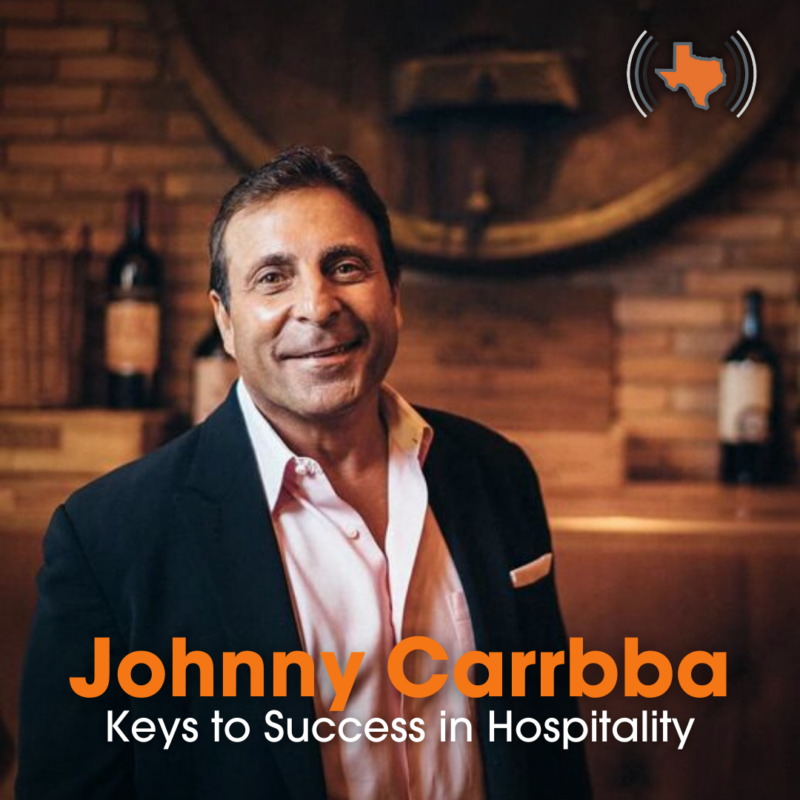
As we celebrate the One Year Anniversary of the Building Texas Business podcast, we are taking it back to Episode 1 with Houston legend, Johnny Carrabba. Johnny is the founder of The Original Carrabba’s Restaurant on Kirby Drive in Houston, Texas and the inspiration for the nationwide chain of restaurants.
Johnny talks about his passion for culture, humility, and good old fashioned courtesy as he shares his ups and downs with the evolution of the restaurant industry and his original vision for expansion.
He believes the keys to success are in the Carrabba’s fundamentals: food, service, cleanliness, energy and enthusiasm. Comparing running a restaurant to coaching a football team is not only a true mark of Texan, but he shares if he really was destined for this role prior to birth.
Transcripts are generated by machine learning, so typos may be present.
Chris Hanslik: Hello, everyone. My name is Chris Hanslik, and I’m the chairman of BoyarMiller, a midsize law firm in Houston, Texas. I want to welcome you to Building Texas Business, a podcast about corporate innovation, entrepreneurship, and business leadership in the Lone Star State. The goal of this podcast is to learn from some of the best business leaders in Texas in hopes that their stories of growth, challenges, and success will inspire our listeners in their own journey to building a successful business. Today’s guest is Johnny Karaba. Johnny is literally a living legend when it comes to the restaurant scene in Houston. He opened the original Carrabba’s in 1986 and then two years later, the second location on Voss. Since then, he has partnered with Outback Steakhouse to open over 230 Carrabba’s Italian grills nationwide and has started two additional concepts, Mia’s Table and Grace’s. Welcome to the podcast, Johnny.
Johnny Carrabba: Chris, it’s always a pleasure to be with you, and thank you for the opportunity.
Chris Hanslik: Well, it was a pleasure, and we were thrilled that you said yes to be here and be our first guest. I know you’ve got a lot of things to share, and I want to kind of get started with it. So I always like to start with passion and inspiration. So what inspired you to start restaurants in Houston?
Johnny Carrabba: Well, I went to school to be an accountant. And I have to tell you a little story, but you know, I’m graduating from Saint Thomas High School here in Houston and my uncle Siro called me one day and he goes, hey, man, I’m really proud of you, you know, getting ready to get out of high school. You know, what are you going to do? And this was my first really business lesson. And I said, well, Uncle Siro, I said, I want to be an accountant. He goes, really? Because I can’t figure you being an accountant. I said, yeah, I said, I did really well in that class. I think I probably made a C minus. I said, but, uh, and I have a friend of mine, his dad worked for a big eight accounting firm back when there was a big eight. And I said, man made, you know, $225,000 last year. And my uncle Ciro gave me a lesson. He goes, boy, you know, that’s back when uncles talk to you like that. He goes, boy, because you don’t ever do anything for the money. He goes, you do something you love and the money will follow. And so I went to school for six years to be an accountant. I’m proud to tell you, Chris, that I’m 18 hours short of my accounting degree. I’m still upset with my parents for cutting me off after six years, but so I landed in the restaurant business.
Chris Hanslik: Sounds like you were having more fun at school than studying accounting.
Johnny Carrabba: I was having a little fun, but I got really good at golf. skipping classes and going to play golf at Memorial Park.
Chris Hanslik: Well, I got to tell you, I agree with Uncle Ciro. I don’t see you as an accountant.
Johnny Carrabba: No.
Chris Hanslik: So Uncle Ciro calls and tells you to follow your passion and your heart. I guess that led you to the restaurants.
Johnny Carrabba: Well, I was very fortunate because restaurants were very popular at the time. They were like, you know, the thing to kind of be in and My uncle Tony Mandola, so my mother’s a Mandola. So the Mandola family, they were in the restaurant business and that generation, my uncle’s who are not much older than I am. But one of my uncle’s, Tony Mandola, he was dating and ended up marrying a young lady by the name of Phyllis Lorenzo. Her mother happened to be Nifa. And so we all know, you know, the, the history of name for zone navigation. And then from there, my Tony ended up opening up a restaurant with my uncle Vincent at Nino’s on West Dallas. Then the youngest brother, Damian, who’s only six years older than me and the co-founder of Carrabbas, he started a restaurant when he was a senior in college in Huntsville, Texas. And so that’s how. I just happened to fall into it, but I always admired them and always marveled at the way they ran their restaurants. It was just a natural kind of fit.
Chris Hanslik: It sounds like you hear that story in the lineage. You didn’t have a choice but to be in the restaurant business.
Johnny Carrabba: Especially when you do not have an accounting degree. They were very good to me. They’d call me up, hey Johnny, we need a bartender, we need a waiter. Uh, and you know, the other thing too, about the restaurant business, Chris, I like to share is that, you know, my grandfather, Caraba and grandmother, they started a little small grocery store on the East side of Houston. My dad was a butcher, small neighborhood, mom and pop. My dad, my dad was a butcher. My grandmother was the cashier. Then my parents bought the grocery store. My dad remained the butcher and my mother became the cashier. So being a hands-on, you know, family-owned neighborhood business, it was kind of instilled in me, you know?
Chris Hanslik: Yeah, sounds like it. Yeah, sounds like it. So what do you think is key to building a business like you’ve built at Carrabba’s?
Johnny Carrabba: Well, people generally think the restaurant business is really glamorous, you know, that all you have to do is really greet people. try to know their name, make them happy. But I would have to say that the restaurant business is the ultimate team sport. I kind of look at it as a football team, which you know a little bit about football. There’s a lot of moving parts. You have to order food, you have to order the right food. And then it has to be prepared and then it has to be served. But then you have to greet people. But there’s a lot of moving parts. There’s the business part of it, accounting, the front door, the building. So it takes a lot of people on the right page, on the same page, to become successful. And again, I go back to the analogy of football. Everybody has to be in sync. But even besides the football players, There’s a big support mechanism that allow the football players to do their job. You know, you have coaches, you have different coaches, you have, you know, recruiting, all those things I could talk about until I’m blue in the face, but it’s the ultimate team sport. I think you have to be a team oriented person.
Chris Hanslik: That’s great. I love the analogy. Of course, I use sports analogies all the time and I think you’re right. The way I hadn’t thought about it, but when you lay that out and you think about from the front of the restaurant to the kitchen, everyone’s got a role to play and if they don’t, take ownership of that role and do it well, then the system can break down.
Johnny Carrabba: Yeah. If you have a bad dish machine or you have a dishwasher with an attitude, you get dirty plates out, you know, they’re important too. And I pay attention to every moving part because they are so important to our success. You know, so a lot of people think that, you know, the glamour goes to all the quarterbacks and running backs and receivers, right? Well, same thing in the restaurant business. Everybody thinks that, you know, the managers and the servers are the glory players. We don’t forget the people that really make it happen.
Chris Hanslik: So how do you, I mean, on a day-to-day basis, Johnny, how do you make sure you’re showing up for everyone in the organization so they feel valued?
Johnny Carrabba: Well, I mean, I feel like, you know, I’m the straw that stirs the drink, the way I come in and come out of the day-to-day business. If I’m paying attention to the detail and I’m coaching and communicating all day long through the system, then I think that we’re going to be somewhat successful. But it all starts with, I hate to say this, but it kind of starts with the founder or the head person, lead person. I think the best teacher is really example. If I come in with my head drooping and don’t have really much morale, then I think my children, my employees, I think they’re going to emulate the mood that I’m in. I like to lead by a good example. Perfect. It’s top down, right? I think so.
Chris Hanslik: When you think about You know, the years you’ve been doing this, what are some of the setbacks or challenges that you’ve faced and you’ve had to overcome to get where you are today?
Johnny Carrabba: Well, I mean, in the old days, that’s a great question. In the old days, the setback was just the amount of hours. You know, we start off with a 3000 square foot restaurant, 92 chairs, seven bar stools. I was practically the only person with a key. So the big setback back then was working 115 hours a week, literally. I was the only one with the keys. I opened the door, closed the door. But that’s what owners do. Then later on, it’s just the amount of hours and just trying to put the team together. It’s kind of like the Bad News Bears, if you remember that movie. You’re hurting people you really don’t know. So the culture wasn’t there. I always talk about culture, but that was a setback. And then two of my setbacks that I remember vividly was getting in business with Outback Steakhouse and they were a public company. And then from a public company, they went to private equity through Bain Capital, the company out of Boston. And so then all of a sudden you’re taking a family-owned neighborhood restaurant. We had two units when we got in business with them and you’re going through high growth. And then all of a sudden, they start looking at things a different way. I’m looking at things from quality, personal service. Well, not to say they didn’t look at it that way, but they started looking at the bottom line a lot. Return on investment. And that really kind of rubbed me wrong. So I had to adapt to that. And then I think my recent challenge that it was when I opened up Graces. Graces on Kirby. I thought I had a vision. I had a vision. I thought it was the right vision. There’s a difference. Everybody has a vision, but I thought I had the right vision. And when we opened up, it just wasn’t accepted. So naturally, it was a blow to my ego. We all have a little bit of an ego here or there. But I felt like I misled my team. And we were losing a lot of money every month. But the money didn’t really enter the picture. Really, I felt like I let my team down with my vision. But then what we did was we retooled it. You know, and we started thinking about what this is named after my grandmother, Grace Mandolish, best cook I’ve ever met. What was she known for? She was known for real good comfort food. Not only was she from Sicilian lineage, but she also was raised in Louisiana. And so that food is very comforting. It’s real food. And we changed it. But the one thing, my lesson, Chris, to my younger people is, yes, I threw myself a pity party for a couple of days. But then what I did was I went to three of my very good friends, but my great customers. Individually, I went to them and I said, OK, do not worry about my feelings. I don’t have any feelings left. Right. What’s wrong with this thing? And they told me the food is good, but there’s really no rhyme or reason or theme to this restaurant. And I think the lesson that I try to tell my younger people is it never hurts to listen. You always listen to people and don’t be afraid of the truth. Some of us let our Some of us let our ego get in the way. I didn’t have an ego left. You know, I needed to survive. And I’m kind of like knowing you the way I know you. I don’t think we like to lose very much. That’s right. Right.
Chris Hanslik: Well, I mean, what you just said, though, is so true that one, having humility to ask people their advice or their thoughts and to listen to it. I think that those are key to, you know, I don’t care what business you’re in, what industry you’re in. If you’re going to run and be a leader in a business, those things are so important.
Johnny Carrabba: I think that the president of my company started off as a server for me 25 years ago. His name is Ewan. He looked at me that day when I was kind of down and out about graces. And he said, hey, Johnny, losing is not an option. And guess what? Truer words were never spoken. You know what I mean? Yeah. Losing is not an option. So, you know, what do you do? You get up and you tighten up that chin strap. Yeah, you figure it out.
Chris Hanslik: Yeah. Well, now that you tell the story, I guess, about your grandmother’s heritage, the menu there makes sense now. So, you know, something I’ve always been curious about, you know, the recipes. I know a lot of it’s family influence, but I mean, are there still many true family recipes that y’all use?
Johnny Carrabba: I think the basics, you know, I was very blessed to have two really wonderful grandmothers. One was the best. They’re both good with hospitality and warmth, you know. My grandma Karaba was just a beautiful person and my favorite person of all time. My grandma Mandela was the best cook I’ve ever met. And you learn through osmosis, by being around, smelling her food, letting her taste, let, you know, she would let us taste different things she was cooking. So you learn by just being around, you know, I always say, you know, a good football player has always tried to emulate another great football player. I know I go to football with you a lot, but we set the stands together a lot. Yeah, you know, but, um, None of the recipes, there are some recipes that are truly my grandmother’s. The chicken soup at Carrabba’s, right? The meatballs, the baked eggplant. Everything else like chicken brine and those kind of things, you know, we concocted those, you know, I didn’t know what goat cheese was growing up on the chicken brine. So my grandmother’s played a big influence in the flavors of our food. And I would say less than, you know, probably five percent of the of the dishes are really real true grandmas.
Chris Hanslik: I got you. OK, so I am from Brian, Texas. I got to ask you, how did chicken brine Texas get on the menu?
Johnny Carrabba: Well, really simple. When my family came over from Sicily, this is the Caraba side. They went from Sicily to Galveston, landed in Galveston. Everybody thinks all the Italians landed in Ellis Island, but Sicily sent a lot of people through the south. From Galveston, they got to Brian, Texas, Within a couple of days, probably. Yeah. And they formed in Brian, Texas. So my grandfather, John Caraba senior, he was very proud of Brian. So Chris, when I got in business, people say, man, are you the caraba boy from brine? And I was born here in Houston, but I said, man, everybody asked me that. And I wanted to kind of honor my grandfather. He was so proud of brine, Texas. So I called it chicken brine, Texas.
Chris Hanslik: Oh, that’s great. That’s the story. First time, the reason I remember that first time I ever went to caraba is I saw that on the menu and go, I got to order this because that’s where I’m from. Yeah. So when you think about things you’re doing today, whether it be Carrabba’s, Mia’s, Grace’s, just in general, what would you describe as being innovative over the last several years that you put in place that’s helped you be successful in these concepts?
Johnny Carrabba: Well, I think any business, there’s a certain amount of evolution that you have to take. It’s very easy to become a dinosaur. I’ve seen restaurants that never change. They don’t remodel. They don’t change the menu. They don’t innovate anymore. In the restaurant business, it’s like any other business. It changes. I think we’ve done a really good job at evolving our business. And again, the golden age of full-service fine dining restaurants, and we’re not fine dining, but that kind of restaurant, it’s kind of hard to make it because people are looking for convenience. So I had a friend of mine who was a founder of Outback Steakhouse named Chris Sullivan, one of my favorite mentors of all time. He always told me years ago, going back to 1995, 1996, he said, Johnny, he goes, I want you to head up to go business. And when people come order to go, he goes, it’d be really good if you deliver it to their car because they might have the kids in the car coming from soccer practice. They might have a dog in the car. They don’t want to get out. Make it convenient for them. Well, evolution he goes and he also said back then he goes look at grocery stores are starting to have prepared foods in these grocery stores he goes people aren’t going to be eating out like they used to because they don’t have the time he goes but they’re not going to cook so that’s part of our evolution and feed it. Like I said, the business lunch, entertainment dollars, they’re not there anymore. The millennials are eating in but drinking out. And then you have to look at what’s been going on lately is people really aren’t going to the offices as much. So you don’t have that lunchtime rush, you don’t have the entertainment dollars, So, yeah, you have to change and we have changed with the times. Got you.
Chris Hanslik: Well, I was going to ask you about trends you’re seeing. I think you just mentioned some that people are maybe eating out less and doing takeout more and any other trends that you’re seeing over the last year or so?
Johnny Carrabba: I think delivery is really important. I think prepared meals that people can put in the refrigerator and stay ahead of the game. that’s happening. Other trends, we have other issues right now, you know, coming off of COVID, you know, trends of, you know, just not being able to get labor or getting, you know, the food chain is really challenging right now, but that’s not really what you’re asking me. I just think, you know, like I said, the entertainment dollars aren’t there. People are, you know, want convenience. I know that We have eight restaurants right now, you know, three of them have delivery vehicles. The rest of the five will get them probably in the next three or four months. Okay. So just the convenience part of it. Gotcha.
Chris Hanslik: So now I got a question for you specific to your two Carrabbas, the original and the one on Voss. My observation is restaurants come and they get popular, the crowds are there and then over time, six months, eight months a year, that popularity can kind of wane. Right. Your places, Kirby and Voss Karabas, have been a hotspot for business lunches, happy hours. The crowds are always there. What do you attribute? I mean, you’re going on 30 years of being a go-to place. What have you done or what do you think has contributed to that?
Johnny Carrabba: Well, you’ve been knowing me a long time and I would like to think that I’m a humble person. You know, grounded.
Chris Hanslik: That’s a word I’d use for you.
Johnny Carrabba: Yeah. But and I don’t. So this is not coming across as being, you know, braggadocious or arrogant or anything. But the crab is on Kirby is going to be 35 years old in a couple of months. The one on Voss is going to be 34 years old next month. and we are at the top of our game. I think it’s very important that your business stays relevant. You always have to be upgrading it. People don’t like change, but people enjoy when they know that you’re putting money into their business. So I completely rebuilt the caravas on Kirby. I just spent a ton of money on a remodel at the place on Voss, the caravas on Voss. So I think people, you have to stay relevant, you have to stay fresh, you have to tweak things. But more importantly, I think what’s kept us at the top of our game is we stayed hungry. we don’t take things for granted so important but Chris and you understand this more than most but you have to have great fundamentals you have to have a great culture fundamentals culture and you have to have really strong principles and beliefs and even though the restaurant business has changed right like we talked about this previously it’s changed but good old-fashioned courtesy personalized service never goes out of style. And like I said, just a minute ago, we stay very hungry. We don’t take things for granted because you know how it is when you take your eye off the ball, bad things will happen. I have like a little bit of an attitude and I’ve talked about this and every day we start off our day with what we call a hudlup. We get our staff together and we talk about, you know, we try to educate them, motivate them and all this stuff. But I let them know is that I’m still wondering after 35 years, I’m still wondering if we’re going to make it. The restaurant business is a fickle business. And again, you can lose it, but the ones that make it, and I think we can name the people that make it here in Houston in the restaurant business, they have very strong fundamentals. They don’t get away from their game plan.
Chris Hanslik: Well, there are not many that have been around as long as you. So you and I, it shows in how you show up that being hungry every day. And I’ll tell you, my observation is, It’s because, uh, people know that when they show up, if they see you or your mom on boss, they’re going to be welcomed as if it was into your, you know, your family kitchen at home. Right.
Johnny Carrabba: Right.
Chris Hanslik: You make people feel welcomed and wanted.
Johnny Carrabba: Yeah. I think, um, I still, my, my son, Johnny and my daughter may laugh at me, but I still have an immigrant mentality. You know, that’s a very hungry mentality and, uh, and, and I still, We pride ourselves on being family-owned neighborhood. I think I learned that from the grocery store years ago. It’s hard to beat a family-owned neighborhood restaurant and that’s a part of their community. And when you take care of your community, they take care of you back. And I think that we’ve instilled ourselves in our beautiful communities that we’re in.
Chris Hanslik: That’s great. So you’ve talked about it. I’ve touched on it a couple of times. You’ve mentioned how important culture is. How would you describe the culture of your company?
Johnny Carrabba: Well, I do an orientation every three months for all my new employees through the company. And I think it’s one of the most important things I add to my company. But in this orientation, we have new employees, but I invite friends of mine that own companies that want to be a part of it, but also invite people that have been with me for a long time. And I’ve been very fortunate that I have a lot of tenure in my company. I think that’s what really makes us successful, is I take care of my people and they take care of me. We’re an old-fashioned loyal type, you know, owner, you know, company. But when we orientate them, I give them the history. And but what I start off with, I said, I asked them, first of all, I asked them to introduce themselves. Tell me a little bit about yourself. So they go around and I let them know that we all come from different walks of life. I don’t just like raising a child. You don’t want to break down their character, but we’re going to do things a certain way around here. But then I say, what do you all think is my biggest threat? our company’s biggest threat. And they, you know, naturally, they’re young, new, whatever, and they guess at it. But really, the biggest threat that I have, Chris, is the loss of culture. Culture is everything. And then when I think about culture at Carrabba’s, I’d like to say, repeat myself, that, you know, we pride ourselves on being a family-owned neighborhood business. And I like to pride myself in saying that the restaurant business or any business is a personal business. So take it personal. Live by the golden rule. Treat people the way you’d want to be treated. Give for the sake of giving and not for the sake of gaining. So I have about five of those little quirky little sayings, but that’s our culture. I can say this, we’re not a chain restaurant. And we’re not in business just for the money. Money’s a byproduct. of executing your fundamentals.
Chris Hanslik: So true. Sounds like that’s maybe what led you, you mentioned Outback Experiments as kind of a failure. Those, the opposite of what you just described may have led you to have that as part of your answer.
Johnny Carrabba: I think, I think it put a chip on my shoulder. Even though I love the founders of Outback, um they’ve been very uh outback’s been very good for me you know it’s allowed me to send my kids to nice schools and have a roof over my head so i don’t have anything negative to say but i just knew that uh the almighty dollar wasn’t going to be my god good for you got back to the fundamentals i never got away from them there you go so how would you describe your leadership style or philosophy well i It’s changed over the years. When I first opened up, I felt very threatened. Was I going to make it? Was it going to be successful? And I think I used the old coaching style. I played football and baseball at St. Thomas High School. And I wasn’t a great athlete. I was good enough for my coaches to call me up to ask me to coach when I was in college. And I learned a lot from them. And that’s how I run my company. Like I said before, like a team. And back in the old days, it was kind of a Vince Lombardi, take it or leave it. This is my ship. You know what I mean? This is my team. And I was a little bit on the hard side. Some people call it passionate. I think I was being, you know, sometimes being a little bit overboard, being so hard. But through the years, I’ve been mentored, you know, by some smart people. And I’ve kind of softened up and I started kind of coaching from a taking care of people, giving them everything they need to be successful. This sounds a little quirky, Chris, but I kind of look at my employees as kind of like my children. How would you want your child to be spoken to? When you have a child, you shelter them, you nourish them, you teach them, you love them. You have to be hard at times. I think that’s what I’ve done over the years. And it’s not to say I don’t fall off the wagon and you’ll go old school on them. Right. You know, I’m a pretty adamant, passionate person. So I’ll tell them what’s on my mind, but I kind of look at it as me trying to help them along in life. And I want them to learn. I think that’s the biggest thing is lately. for the last several years, I want them to leave my company being mentored and coached and being better at their next step of their life. Like raising a child again. That sounds a little weak. I think it’s a great analogy.
Chris Hanslik: Business is your baby. You hear that in business a lot from entrepreneurs that create it and those employees. It would make sense you look at them the same way.
Johnny Carrabba: I think the other thing I’d like to add to that, Chris, is that before it was I felt alone. It was me, me, me, me, me, me. Now it’s, you know, for the long, for the longest time is I let them know that they were very important. integral part to our success. They’re a part of the family and they’re part and they’re the reason why we’re successful. So I build them up a little bit more nowadays.
Chris Hanslik: They feel they’re part of the success they feel as you said before they feel part of the team. Yeah that’s right. You’ve mentioned a couple times I’m going to ask you mentors you’ve had any one or two mentors you would say you really made an impactful Difference or influence on your life either at early age or once you were professional that you’ve taken what you’ve learned in there You can see where you’re applying it today.
Johnny Carrabba: Well My two my grandparents were unbelievable, you know, just great family people hard workers my two grandmothers with most giving hospitable people I saw my parents work really hard in a mom and pop grocery store. They were there like, you know, they couldn’t leave. It was mom and pop. I don’t think people understand that anymore. I’ve been very fortunate to have uncles. My uncle Damien, who was a co-founder of Carrabba’s. He had a lot of faith in me because he asked me that, you know, wanted me to be the managing partner of Carrabba’s. He was a visionary. He taught me a lot about food, but he also taught me a lot about attention to detail, you know, having your head on the swivel and looking around all the time and making sure the lighting and, you know, the music and all of that stuff and the restaurant felt right, but he was a great food guy. And then I have to really, I have to give a lot of credit to Chris Sullivan, the founder of Outback Steakhouse, because he got me to think at a different level. Okay. He’s one of the sharpest restaurant minds that this country’s ever seen. And I was fortunate enough to work with him and he, uh, he wasn’t always kind of easy on me at times. He told me what he thought, but I’m coachable, I think, you know what I mean? But I have to give, you know, besides, besides Damian in business, I have to give Chris Sullivan a lot of credit. He, he, he brought my game to the next level.
Chris Hanslik: I think it’s what you said about Chris then is so important. He was willing to tell you what he thought you needed to hear, not what you wanted to hear necessarily.
Johnny Carrabba: Yeah, he’s one of my dear friends, but there was times where there’s a lot of times, Chris, where he didn’t candy coat it.
Chris Hanslik: But I think you mentioned earlier, you’re encouraging to your employees, you build them up, but there’s times you, you know, you go the other way. Sounds like you’ve learned that from him that it’s okay to do that. Right. So let me ask you this. Can you give us an example of what you would describe as a failure or two that you’ve encountered on this 36-year journey or whatever it’s been and what you learned from it, how you overcame it?
Johnny Carrabba: I think I would just probably have to repeat myself. You know, crisis, opening up crisis, Chris, was my biggest failure. You know, I I thought I knew what I was doing and I just missed the mark. I was just fortunate enough to have a good team around me that wanted to hang in there and change it. I really think that I’ve kind of had a blessed career. No major catastrophes. That was close to having one. And I really have to kind of think about that. But I think that would be my failure.
Chris Hanslik: OK. Based on what you said earlier, I can see that. So let me ask you this. You’ve opened up, you talk about graces, and you’ve opened up another concept, Mia’s Table. What was the inspiration for that?
Johnny Carrabba: Well, it’s named after my daughter, but that’s not the point. The point is that I had accumulated some property on Kirby Drive. And the original Carrabba’s, people don’t know this, but it was a pornographic newsstand when I bought it. And it was a restaurant to begin with. Then it turned into the Kirby newsstand. And we remodeled, you know, we did our own demolition. We remodeled it. We opened up the original restaurant and then we kept on, you know, buying property a little bit at a time, but then we kept on remodeling that restaurant. And then one day, We used to have some beautiful oak trees on Kirby Drive. And they cut them down to widen the street. And they cut all these beautiful oak trees. And I was at Mr. Car Wash across the street. And I’m looking at my original Carrabbas. And it looked like a haunted house. It was so beat up. And I said, this ain’t going to work on Kirby Drive. But I wanted to develop the property. But a lot of people wanted to put buildings on it and give me the bottom floor. I’m not that kind of developer. I said, I want to develop this into like, I used campus. I’m in the restaurant business. I want to continue to stay in the restaurant business. So I rebuilt the original Carrabbas. I built a garage. And I wanted to do a hamburger joint because everybody was doing hamburger joints and I really couldn’t find a hamburger that I was really that crazy about. So Mio’s was supposed to be a hamburger joint. But then when we opened it up as a hamburger joint, It really didn’t work that well. So then we started adding chicken, fried chicken, chicken, fried steak with jalapeno cream gravy. We wanted to look like an old house. My offices are above it. We wanted to look like a throwback, you know, like an old building that might have been a house and got turned into a grocery store or a cafe. But that was my inspiration. I just thought that talking about trends, Chris, you know, and I said this earlier is that, you know, people are not eating out like they used to. In general, they’re not right. Fast casual was the way to go at the time and if I think it still is fast casual and that’s what inspired me and also I wanted to have six of those and I wanted to have like a little bit of a growth vehicle in case my deal with Outback ever turned sour or I lost it. I wanted to have that. And I needed some motivation. I needed some stimulation, you know. But basically it started because I wanted to develop that property on Kirby, but I wanted to remain in the restaurant business because that’s what I know. I don’t know real estate and development. So that’s what got me.
Chris Hanslik: So when you started Mia’s, you’d again by anybody’s definition already been a successful restaurateur. Did starting it feel like you felt when you started from the very beginning? Like the butterflies and nervousness or you know, I got this?
Johnny Carrabba: Well, I think I felt more butterflies because when I opened up the original Carrabbas, even though I had the other tiger, you know, failing wasn’t an option. I was young, right? And so when you’re young, you have a lot more nerve, you have a lot more guts. Then when you start doing things later on in life, I was 27 when I opened up Carrabba’s, right? So but later on in your life, and you kind of taste a little success, you might not be as generally you might not be as hungry. But I felt more nervous opening up the new restaurants than I did the old because I had something before that I had something to lose. And a lot of it was, you know, a lot, you know, money to lose. But I also had a product was at stake. You know, I wanted to, I wanted to prove to myself this is almost back. Damien was the mastermind to Carrabba’s. He was the visionary, but he ran Damien’s downtown and I ran Carrabba’s, but he set me up. So I think that some of the pressure I had when I opened up my own restaurants on my own, I was maybe there’s a little doubt in my head. Maybe I don’t have what it takes.
Chris Hanslik: Does that make sense to you? I mean, it does when you say it, but knowing you and the personality and confidence you exude It surprises me, but I can get where starting something new, there always can be some sense of doubt.
Johnny Carrabba: That’s exactly doubt. And if I come across as being confident, I’m not a confident person. I’m glad you said that, but I don’t feel like I’m that confident. Like I said earlier, I’m still wondering if it’s going to make it. I still doubt myself a lot.
Chris Hanslik: Well, I go there, I go to Carrabba’s at least once a week for lunch. I’m doing my part.
Johnny Carrabba: So does your mama.
Chris Hanslik: She does. So we’ve talked about a lot of things. What if you had to talk to a room of aspiring entrepreneurs or business owners? What advice would you give them, whether that’s, you know, just kind of verbal advice? Is there a and or a book you’ve read or, you know, someone you heard speak that inspired you, any kind of tidbits or takeaways for someone in the audience that might be out there thinking about starting a business or has just started it?
Johnny Carrabba: I’ve been telling my children this, now they’re 21 and 20, so they’re not children, but I’ve told them this since they were a young person, young people. I always say, always try to be in business for yourself. Control your own destiny. always live your dream, do what you love. And again, it doesn’t have to be, you don’t have to be a lawyer or a doctor, you know, a CPA, do what you want to do. But when you want to do something, have the courage to do it while you’re young. Because when you’re young, you can afford to make a mistake or two, the older you get, you can’t. And, and I have a lot of people that I look up to. There’s a guy named Danny Myers who owns restaurants in New York and he started the Shake Shack, but he has a lot of other restaurants before he started Shake Shack. He has a book called Setting the Table that I’ve maybe have bought 500 of them and I’ve handed them out to a lot of the people that run Carrabba’s across the country. I do believe in that book. I believe in his mentality. He started his own restaurant when he was 27. But he started in the Big Apple, which is a little bit different than starting something back in Houston in 1986. But he gets it. So he’s the person in the restaurant industry. I look up to a lot of people. I look up to the Pappas family. I love the Houston’s organization. But Danny Meyer’s Setting the Table is a good one. And then Admiral McRaven, he has a book that I’ve handed a lot of people, Make Your Bed. I love that book. But I get inspiration from a lot of people.
Chris Hanslik: That’s great. Great, great pointers in books that you suggested that really appreciate it. I want to tell you, thank you for sharing so much with us. I’ve got a few questions to take you on the lighter side to wrap this up. Maybe personalize you a little bit, but what was your first job?
Johnny Carrabba: Well, my first job was when I worked at the grocery store as a young kid, but I was very lazy, so I really wouldn’t call that a job. And my mother and dad will tell you how lazy I was. I hated the grocery store business because it was long hours that I ended up in the restaurant business. But my first job was when I went to Sam Houston State in Huntsville for a couple of years. And I went to work at my Uncle Daniel’s restaurant. And like I said, a freshman in college. He had me peel garlic and I was getting paid two dollars an hour. So that was my first job and I’m still peeling garlic.
Chris Hanslik: So, you know, this is Texas based podcast. So even though you’ve got Italian restaurants, Which is your favorite, Tex-Mex or barbecue, if you had to pick?
Johnny Carrabba: I know this is rapid firing. You want me to answer directly? Tex-Mex. But I’ve invested in a company called Treat Barbecue. So I want to say barbecue right now. No, it’s Tex-Mex. Well, a lot of people are combining them now, right? You get like the brisket tacos. Yeah, brisket burritos and stuff like that. But Tex-Mex, man. I love Tex-Mex.
Chris Hanslik: All right. And if you’re going to avoid the answer, I was going to accuse you of being a lawyer. Any recent book you’re reading?
Johnny Carrabba: Think Like a Monk by Jay Shetty. Okay. Yeah, I’m trying to get my head straight as far as, you know, I really kind of like to meditate. I don’t meditate enough, but this book is really good. It’s about giving yourself time and learning how to say no every once in a while, you know, but that’s that’s my sister gave me the book and but it’s a good book. That’s my mindfulness. OK, and then what do you like to do for fun? What are your hobbies? Well, I’m a pretty simple guy, but my real hobby is golf. OK, I’m not playing enough of it, but I love golf. Kind of like one of your partners. Yeah.
Chris Hanslik: Well, then we should go play golf soon.
Johnny Carrabba: I’d love to. I love it.
Chris Hanslik: Well, Johnny, thank you so much for coming on the show. Love the stories you shared. I think people that are going to listen to this are going to take away a lot of Jim’s insight from the things that you’ve been through and how successful you’ve been.
Johnny Carrabba: Chris, I thank you very much for everything you’ve done for me. My pleasure. All right.
Chris Hanslik: Thank you. And there we have it, another great episode. Don’t forget to check out the show notes at boyarmiller.com forward slash podcast. And you can find out more about all the ways our firm can help you at boyarmiller.com. That’s it for this episode. Have a great week and we’ll talk to you next time.
With a deep understanding of your business alongside clear and honest communication, we help clients face challenges fearlessly.
Learn more about our services and how we help clients.