


With a deep understanding of your business alongside clear and honest communication, we help clients face challenges fearlessly.
Learn more about our services and how we help clients.



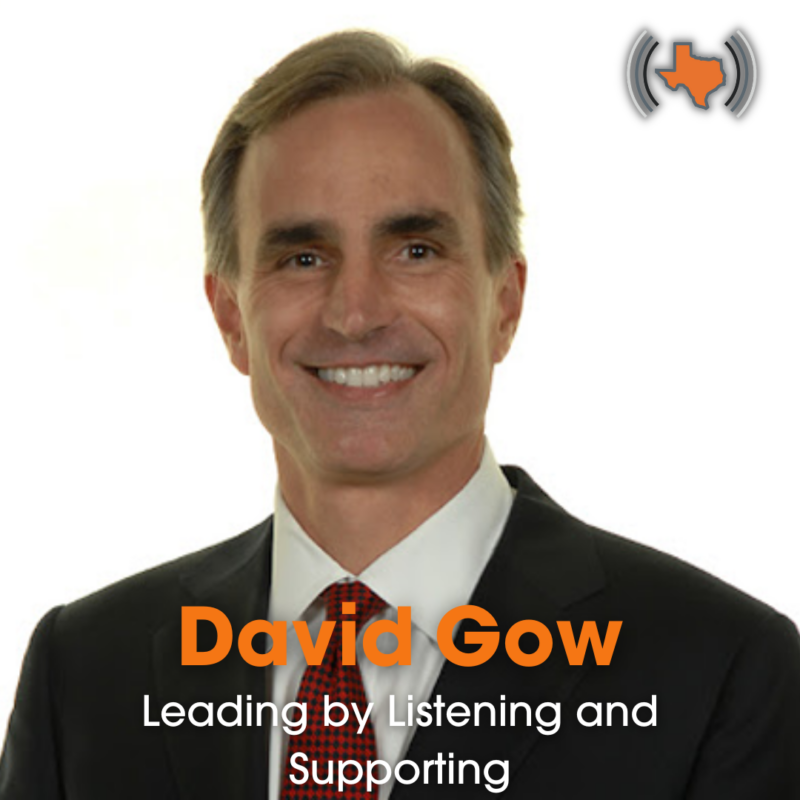
David Gow, CEO of Gow Media, a large multi-platform media company based in Houston, joins the Building Texas Business podcast to share his journey as a successful leader.
David has lead Gow Media for over 15 years, which has digital content sites including Culturemap.com, Sportsmap.com, and Innovationmap.com.
Listen to David give great advice on what it means to be a supportive, attentive leader who fosters consensus and cooperation.
Transcripts are generated by machine learning, so typos may be present.
Chris Hanslik: In today’s episode, you will meet David Gow, CEO of Gow Media, a large multi-platform media company based in Houston. which has a digital content sites that include culture map, sports map, and innovation map. David, I want to thank you for taking the time to join me today and be on the show. It’s great to be here. So let’s get started. I always kind of like just starting you telling the audience, you know, what is your business known for and what is it you do?
David Gow: Right. So now I’m working on two fronts. One is a SPAC opportunity, a SPAC focused on sports tech. And then the second is Galmedia. Galmedia is a large multi-platform media company with multiple content categories under a common map brand. So we own culture maps, sports map, innovation map. And then we own ESPN radio here in Houston, and then a national sports radio network business. So that’s a lot going on. It’s a lot going on. It’s a busy time. Gallimedia kept my plate pretty full and then adding the SPAC and the opportunity around the SPAC has made things very full.
Chris Hanslik: I bet so. So what inspired you to get involved in the media business? I sort of stumbled into it.
David Gow: To be honest, I’ve never really figured out what I want to be when I grow up. I realized time’s running out on me, but it was about 12, 14 years ago. I stumbled into, well, one of them was John Granato, who had been on the air and a successful show host at 610 Sports Radio for a long time. And he had a real passion and excitement around a radio station license that had become available for sale. And you may know most radio station licenses have been bought up by consolidators. So companies like Salem and I heart and CBS radio had bought them all up, at least in the major markets. Right. So when one was available, John was very excited. He’s very entrepreneurial, very savvy business guy. And we met sort of joined forces. I knew nothing about radio, but I could help put together a business plan to raise capital. And that was really where he was hoping to get some help. That’s great. So that was, you said, what, 14 years ago? That was about 14 years ago. And so John and I joined forces to raise the capital and buy that license. It was an AM license. It was 1560 AM. We launched it as 1560 The Game. And that was our beginning, I guess, back in 2007. And obviously, we’ve had lots of growth and changes since that time.
Chris Hanslik: Yeah. So then from there, how did Culture Map come to be?
David Gow: Well, we were operating as a sports media company, exclusively sports media, for a good seven or eight years. And that included our launching an FM signal. We’re now at ESPN 97.5 and 92.5. And we bought a sports network business, it was called Sporting News Radio at the time. When we bought Sporting News Radio, it was and is today still in the business of creating shows that we syndicate to other radio stations across the country. So we had national sports radio reach and we had local sports radio reach and that’s really where we lived but about five or six years ago we stumbled on this opportunity to buy Culture Map and the exciting thing there is that we could spread our wings we could make the transition from being purely sports radio and becoming more of a multi-platform business to have a website business Culture Map was founded has always been a pure play digital creation that was never a print entity associated with culture map. Culture map has been a leader online for content around lifestyle and food and fun and festivals and art and music society and travel. So to add that to what we had was a great compliment.
Chris Hanslik: That sounds like it. So you said you didn’t start in media, but you had business background. Give us a little idea of what that business acumen, business background that you kind of came up through to get you to where you were prepared to go into this media business and expand it like you have.
David Gow: Sure. So after grad school, I returned to Houston to work in the Houston office of McKinsey and Company, the management consulting firm. And I was there for about three and a half years. It was a great experience. It was sort of a generalist experience working on problem solving and strategic planning for a portfolio of different companies. And a good chunk of my time was spent with a client that was Compact Computers. Compact, the largest PC manufacturer in the world at the time, was based here in Houston with an amazing story in Houston. And I consulted out there and got to know the team there so well that I eventually took a job there. And so I was director of corporate strategy at Compact for about three to three and a half years. And then I had a chance to go work at a dot com in the early stages of e-commerce, the height of the e-commerce boom and that was 1999. I joined what became Ashford.com and got a really great experience there as a Pure Play, e-tailer of luxury goods, Astrid sold watches, jewelry, leather products, riding instruments, fragrances, sunglasses, etc. And we went public, had the crazy excitement of the e-commerce boom, and then the dot-bomb that happened, our share price went way up and way down, but it was a really great experience to be part of that company.
Chris Hanslik: So, I guess from taking that last one with Astrid, I mean, You had to have just a, I mean, a lifetime of learning in a short amount of time to help prepare you to what you do today.
David Gow: Well, it is interesting because at Ashford, I signed on as the chief financial officer of the company. And well, back then, I guess you could do that. I did not have a CPA. I was going to work hard to figure out what I needed to do to be the CFO of a publicly traded company. And I had a really good controller underneath me who filled in any knowledge gaps around accounting, but it was a very exciting time to get to be the financial spokesperson for a company through the IPO Roadshow and then ultimately as a public company.
Chris Hanslik: Okay. So, you have going back to you have gal media where you are now. What have been some of the key, maybe elements, characteristics that you have implemented to build your team? Because you have to have a pretty significant, I would think, skilled team to manage all the different things that are going on in Gal Media.
David Gow: Well, that’s true. And the amazing things that we’ve been in Gal Media to highlight is how significantly media has changed. When we got into this business, Twitter really didn’t exist. And when we would hire a show host from another radio station How are we going to tell the world that we now had, say, Lance Zerline on the air with John Granada? We’re reuniting John and Lance, but how do you tell them? Well, the first time it happened, it was a slow road. And then more recently when it happened, we had Twitter to promote the fact, and Zerline had built out thousands and thousands of Twitter followers so he could notify them that he made the change. So there’s been a lot of change in media over the last 12 to 14 years. What we’ve had to do, is look at where ad dollars are going. And the listenership on radio is still very solid and hasn’t declined very much. The ad dollars have migrated from older media radio to newer media digital platforms like Culture Map and Sports Map and some of our websites. So that’s been the big need is to build out those new media platforms where ad dollars are going. I guess the other thing that we’re highlighting in that is that it’s also meant that we needed to spread our wings from thinking of creating radio content to being more multimedia content. And so we do things like audio content that goes out over radio, but it’s also distributed via podcast as you’re doing here. We’re also creating a lot more written word because we’re creating written word for Culture Map, Sports Map, Innovation Map.com, all of our platforms, all of our websites. Written word and then now video content. So if you go to sports map dot com, you’ll see John Granado doing a video take on sports map and sort of step back from when you talk about people. It’s really notable someone like John Granado someone who is. normally or was a radio show host, now needs to think about being a multimedia content creator. So Granado has the capacity to do audio content on radio, he can write, and he does videos. And so we’re really looking for people who are more multimedia talented. That makes sense. It’s kind of like in baseball, the five tool player, right? That’s right. You’ve got to be versatile. Yes. But in this case, the game changed. You can no longer just be that radio guy. You really have to be able to touch all the different kinds of media platforms.
Chris Hanslik: So you’ve got these various companies under the umbrella of Galmedia. What do you do as the CEO to try to promote a consistent company culture across those various platforms?
David Gow: To be honest, that’s always a challenge. It’s perpetual effort. to get say legacy radio people to embrace digital and from some digital folks to embrace radio and to present ourselves to the market as one company and that’s been something that hasn’t happened in a revolutionary way it’s been much more evolutionary but we are today much better at when we talk about building a client solution for say their marketing needs What we really want to avoid is going in front of a client and pushing a particular product, like here client, take radio. What we really want to do is sit down with the client, understand their needs, go back and formulate a solution that may be heavy on one of our platforms and lighter on another, but it’s a holistic solution that meets the needs of the client rather than pushing a particular product line.
Chris Hanslik: So it’s a little more bespoke, I guess, because you have so much, the various platforms to offer. You bet.
David Gow: Yep, and we can work from the client’s needs backward and come up with a solution. The solutions we provide with Innovation Map are obviously very different than what we’re doing on sports radio. Innovation Map, where clients are mostly B2B clients, they’re clients, law firms, accounting firms, corporations that want to get in front of other businesses and market their services. Well, that’s the Innovation Map story. If we’re meeting with a law firm or an accounting firm, we talked about Innovation Map. We’re meeting with B2C Sports Bar. Well, then that’s going to fit really neatly on ESPN 925.
Chris Hanslik: Sure. So maybe just a little bit more about what Innovation Map does. is and does. You bet.
David Gow: So stepping back, we bought Culture Map five or six years ago. Culture Map, the leading online destination for lifestyle content. Next, we launched Sportsmap.com, which just made perfect sense because we had all those sports voices in our building. We could have them come down the hall and create content for Sportsmap.com. And Sportsmap.com has become The leading online destination in Houston for sports content for Houston and then. After that we launched innovation map.com and innovation map was born out of a lot of the city’s efforts around. building ecosystems, creating entrepreneurial activity that would create the next wave of exponential growth in the city. And so we were working with the entity Houston Exponential on how to tell the city’s story better. There was a common view that Houston had extraordinarily good attributes for entrepreneurialism, but we maybe didn’t present or tell our story well enough. part of the storytelling for Houston was to build a media outlet where the stories would all be placed. And so if the Greater Houston Partnership is talking to an entity, a company about considering moving to Houston, they can point to InnovationMap and say, look at this entrepreneurial ecosystem and all the stories we have there. And that’s what we capture on InnovationMap. Oh, wow.
Chris Hanslik: That’s a lot of that. So yeah, just a one-stop resource for learning all you want to about Houston.
David Gow: You bet. And what it really does is it highlights that there are some extraordinary entrepreneurial stories happening in this city. And one notable thing is we did not call it Startupmap.com, which we could have. It’s Innovation Map. So what we wanted to capture was all the innovation that’s happening with startups, to be sure. And there’s a tab for startups on Innovation Map. But in addition, a lot of innovation that’s happening in the city is happening by big corporate. It’s happening in places like the Texas Medical Center. And we wanted to be able to tell those stories. So innovation as a headline is a larger umbrella for all kinds of activities happening across the ecosystem in Houston. Sure.
Chris Hanslik: So let’s talk about the last two years. Yes. The pandemic and the effect it’s had. maybe in two realms. One, how has it changed your business, whether the strategy or how you’re going about delivering content or creating content? First and second, maybe just internally, what challenges have you had with employee staffing, et cetera?
David Gow: Well, I won’t lie. It’s been very stressful. COVID was rugged on our business. Thankfully, we’ve come out of that. But when COVID hit, for a variety of reasons, about 40% of our revenue went away. Our revenue is ad-driven. And you can imagine, well, the Houston Livestock Show and Rodeo always advertises on Culture Map, but there wasn’t a rodeo, so there was going to be no advertising. And you could line up dozens of stories like that. So revenues declined by 40%. And then what do we do about it? How do we respond? And that was a very stressful window. But several, I think, good things came out of it. One was, in the midst of that stress and declining revenues, we went to all employees who were making over a certain salary level and asked them to take a pay cut. And the logic was that we’d rather have some shared sacrifice than cast out, say, 15% of our employee base into an uncertain marketplace in time. And that really was gratifying to see that most of the employees embraced this idea that we collectively could sacrifice to enable the entity to stay together. We also were fortunate to be part of the PPP process. That was an important development. I’m grateful that the government saw the need to help us through that. And we just hunkered down and worked through it. Thankfully, we can see the economy coming back at spending’s returning and lots of the activities and events that do advertise with us are back in play. So I think we’re through the darkest window of COVID, but it was a really stressful season.
Chris Hanslik: I can imagine. I think, you know, a lot of many businesses shared some of the same stresses. I would have to believe we kind of did the same thing here where rather than getting rid of one or two people, shower reductions and if everyone took a little less, but everyone kept the job. That’s really what the feedback was. People appreciated that we were looking out for everyone and were willing to take a little less to help their coworker. Really, what I saw from our experience is it enhanced the engagement and maybe between our staff and the company. Did you see the same?
David Gow: Yes. For those who got that vision, I think it was a unifying element. And I feel grateful that people embraced it and were patient about the time of the salary reductions. I mean, when we all did it, we thought maybe it was gonna be a couple quarters, but then the COVID dilemma went on much longer. And so I feel very grateful to the employees who were supportive and helped us get through that difficult time.
Chris Hanslik: Is there, when you think about the hiring process that y’all go through at Gal Media, anything unique about The way you approach that, certain characteristics you look for in people that you believe tend to make them more successful than not in your company.
David Gow: I want to tell you, I’m not sure that I’m very good at hiring and interviewing. It’s funny to me, when I interview somebody, I immediately like them and want to figure out how they can fit. And so I may not be the best person at discerning the ultimate outcomes. So I need a village to help me with that. And so I do note, and I think a real lesson learned is the old argument that The mistake we have made and people can make is you can hire too fast and fire too slow. And that’s absolutely that’s not a statement that somebody is a bad person or a good person, but it is you’re eager to make things work out. And so you hire quickly and then you hate to have to acknowledge that it didn’t work out. And so you fire slowly and Honestly, most of the times when we’ve had to let somebody go it’s not that they’re bad people It’s just not a good fit and they’re gonna go off and do other good things whenever I’ve had to let somebody go I always remind myself that everyone has ever been let go of Galmedia because they just weren’t a good fit always landed somewhere and they went on to live normal lives they survived it and they came over and a good outcome so that whole process of hiring and letting go of people, I find a real struggle. It’s not instinctive to me, but it’s so important to building the culture and the organization well.
Chris Hanslik: Yes. Well, I couldn’t agree more. I mean, literally what you just said, I think I’ve said it in different places at different times. By the way, you’re not the first guest on this podcast to say, I don’t think I’m that great at hiring. I need the village or the team behind me. I mean, if there’s anything I think business owners can learn, that trick between hiring too fast and firing too slow, really on the firing too slow, right? So those, I believe, you’re spot on. My experience has been exactly like yours. I think we personalize the situation and I think rightfully so because we care about the people that work for us. When you get ready to let someone go because they’re not a good fit, it’s stressful, it’s tough because you’re affecting someone’s life. But my experience has been like yours, they always end up somewhere where they’re meant to be and they’re flourishing. And you have to remind yourself of that.
David Gow: You have to remind yourself, but that’s always been the way that it works out. It just, sometimes if there’s not a fit, you just gotta move on.
Chris Hanslik: And that’s what’s key, I think, is you gotta really know the purpose of your entity and who fits well. Just because they don’t fit in your company doesn’t make them a bad person. That’s right. And give them the chance to go find the right company for them. So it’s interesting that those experiences are universal.
David Gow: Well, the other interesting dynamic that we try to avoid is I’ve often found when someone is let go, The entity, the banter in the building can often be negative about that person. It’s almost a sort of a self-justification. Well, that person never really did this right, but they were always messing up in this way. And don’t take it literally, but it’s almost a demonization of the person after they leave. And we really try to encourage different behavior that say, look, this just wasn’t the fit. That person is someone we valued and still value and is still a friend. And one of the great things we do or have happened organically is most of the people we’ve let go remain friends of the company and come to our happy hours and are part of our community even though they’ve moved on other places.
Chris Hanslik: I think that’s so important because you’re right we it’s easy to do because you’re trying to justify as an organization why that person shouldn’t be here anymore and We got feedback years ago from some of our people, you know, that because it’s so natural to have that negative view that they were critical of the company and for that. And I think what we learned from that, you know, days, weeks earlier, there’s nothing wrong with this person. And now that they’re no longer here, all of a sudden you find the negative. And I think you really, your advice is so important and accurate to not do what’s that natural negative tone, keep it positive and yeah, why not have a raving fan that still you treat them well on the way out and they can be a friend of the company going forward. You bet. And I think those companies that can figure that piece out can really find success moving forward because your employees that stay, if you do the negative kind of talk once someone leaves, then they’re just thinking, well, when’s it going to be my turn? What are they going to say about me? Right, right, right. So very important stuff. Let’s talk a little bit about just leadership in general and like your leadership style. How would you describe your leadership style?
David Gow: I listen a lot. I enjoy listening. I like hearing the opinions of everyone in the organization. So I think it starts with listening. And then I do feel like we work hard to build consensus. I love to have consensus. We don’t always have it, but the world is just easier, better, more fluid if we can have a strong consensus on our direction going forward. And then I spent a lot of time communicating that consensus, that direction. And so maybe those three things, listening, consensus, and communication are sort of the keys that I think I’ve brought to bear over time.
Chris Hanslik: Did any mentors along the way that kind of helped you get to those three tenets?
David Gow: Yes, I think so. I mean, interestingly, I would highlight this one Sunday school teacher at church who was so good at communicating sensitive topics and always spoke the truth, the hard truths, but with love and in a loving way. And that combination of coupling truth with support is really essential, I think, to good communication and enhancing performance to be able to talk to people about not just what they’re doing right but what they can do better and to speak that truth in a supportive way is I think a wonderful coupling if it can be captured right I think you’re right I mean the being constructive not just critical yep right where someone sees opportunity for growth as opposed to a failure yes and sometimes it’s for The superior person that giving a review, it’s more fun to talk about what someone’s doing well. It’s a little harder to say here the development needs. But when I look back on my career, the times that I grew the most professionally in terms of skills and development. was when I was at places where they were very specific about the kinds of development they wanted me to experience, the things they wanted me to improve on. That kind of feedback I thought was very constructive and it really enhanced my growth by hearing that feedback.
Chris Hanslik: And I would assume in those same instances you felt supported in from a company and helping you achieve whatever that new development. That’s right.
David Gow: They didn’t just say, go get that fixed and not and just turn me loose. Right. There was ongoing ways and very specific ideas on how to develop the areas of need.
Chris Hanslik: So you obviously spread pretty thin, busy. What do you do to kind of stay on top of things now, whether it be leadership attributes, culture inside the company, kind of what are some of the things that you do to stay sharp and stay on top of things?
David Gow: Well, you’re assuming that I am staying on top of things. I’m working longer hours in this window when I’ve got both Galmedia and the SPAC. And really the interesting thing about the SPAC is that I’ve got a tight timeline on it. The SPAC has a lifespan of 18 months, so I’ve got to find a company with whom we can do accommodation in a short period of time. So that focus and that urgency has really pushed me to work harder, work longer. and make this an important season of work.
Chris Hanslik: Yeah and I guess because of that I guess you’ve got a team behind you at Gal Media that you’ve built that you know you can trust.
David Gow: Yes and so what’s interesting is I am working less on Gal Media today or really over the last four to six months I’ve been working less on Gal Media than I was but The team is probably doing better without me. They’re great. They have really stepped up and they recognize I’ve got this other initiative that is a distraction from Galmedia, but I feel so good about the team and the way they have filled in any gaps of my being distracted by the SPAC. And the interesting way, the way we crafted the opportunity is You know I’m CEO and Chairman of Gal Media and then I went off into this SPAC and I have lots of common investors between Gal Media and the SPAC so that helps with any potential conflict. But then the other is that we took some of the founders units in the SPAC and the founders units, of course, of the gold, the reason that people do SPACs is they have a chance to have shares in the ongoing entity. We took some of those founders units and allocated them to Gal Media. So that’s sort of the SPACs compensation to Gal Media for the use of my time.
Chris Hanslik: That’s good. I was going to ask you about some of the things, because that seems kind of innovative and different. Well, it addresses that conflict of interest of being spread between two entities. Yeah. And just kind of thinking about innovation, you touched on it a little bit, but going back to Gal Media, what are some of the things that you’re working on at Gal Media to kind of be innovative and keep that competitive edge moving forward?
David Gow: So the work at Gal Media has really been On the content side, creating more types of media. Video is really important now online and we are doing that in large scale. We’re creating lots of short form videos and that’s been a really great addition to what we’re doing. It’s not just by putting it on our website and of course all the content we put on our own website. So on sportsmap.com you can go see a video right now. but also taking that content and putting it out on other platforms to get in front of other audiences. So we’ll push the video out onto Facebook, Twitter, Instagram, of course. It creates click-throughs back. We also formed a YouTube channel. And so you go to YouTube and look at all the videos of Sports Map, for instance. And the point, I guess, is that it’s important when we create content to push it out onto every possible platform to reach the highest possible audience.
Chris Hanslik: I think we do a lot of the same where it always comes back to your website. It’s just more access points. That’s right. And everything that I’ve read and been told by professionals like you is the difference that video makes even if it’s a short video clip to get attention, readers attention to click and you know read more and go dig deeper in your website.
David Gow: Well and there are some platforms like Facebook and they’ve been changing their algorithms but there’s some that will give bias to video so if I share a video it’d be much more likely to show up in the feeds of all of my followers if it’s a video than if it’s just written word.
Chris Hanslik: Interesting.
David Gow: Okay.
Chris Hanslik: Well, so you shared a lot. I mean, listeners out here are entrepreneurs, aspiring entrepreneurs or business owners. What are a couple of takeaways based on your experience that you would want to share of, you know, if you’re about to start a company or just started a company, Here are two things you’ve got to keep in mind or avoid this thing. Any kind of tidbits that you could share to our listeners?
David Gow: Well, the first couple might sound negative and I don’t mean them to be so. My father, who was a serial entrepreneur and ended up teaching a class on entrepreneurship at Rice, used to always say that if an entrepreneur knew at the outset all the blood sweat and tears that was actually going to take to get that entrepreneurial endeavor going, he or she would probably run. So it’s always harder than you think and that’s okay because you’re passionately committed and that’s part of the fun and the excitement of being in an entrepreneurial effort. The entrepreneurs, I guess the second thing this might be that everybody the language is I want to be my own boss and I actually Feel like the entity of my boss, right? It’s sort of a funny way that it works out on the one hand on my own boss But on the other hand I can never really escape right when you’re an entrepreneur There’s not as large a team around you to provide a support when you want to disappear for a week on a vacation but right those are the pain points of entrepreneurship, but the rewards are rich. You know, one of the things about entrepreneurship is that the highs are really high and the lows are really low. The motions and the swings are much more pronounced than working at a big corporation. And if you’re constituted to ride those, that roller coaster, then I think entrepreneurship can be very fulfilling. And there’s really nothing like seeing a company go from small concept maybe even just a business plan into a real entity that’s serving needs of clients and has taken care of lots of employees and their families and lives and it’s really an enriching thing to be part of a startup that grows into something.
Chris Hanslik: I think you’re so right. Others have said similar things, but I think you have to have the stomach for it. It’s not a bad thing. And really, I think maybe another way to say that is a passion. You’re really passionate about what it is that you’re trying to bring to life, to a business. then all that, you can get through all that. And yeah, as I talk about what we do here and the clients we serve, they live and breathe their business. And I think that’s what you’re talking about. You may be your boss, but the entity is really your boss when you’re living and breathing the business every day. Right. It’s a full endeavor, no question. So let’s turn to a little bit, you know, get away from the business and talk just on some fun things to close this out. You grew up here in Houston.
David Gow: I did.
Chris Hanslik: What was your first job?
David Gow: My first job was delivering newspapers in the morning, early, early morning hours, back when there was that work where everyone was getting the newspaper. And then in the afternoons, I would work outside a honey store, wearing a bee costume, running around in the parking lot, trying to wake people to come into our honey store.
Chris Hanslik: Now, aren’t you glad it wasn’t social media then?
David Gow: Yeah, thank goodness, because I don’t think I looked very good in that big costume. But the best thing about it, so the honey store was at the corner of West Humber and Voss, high traffic, and it was heat of the summer. And they put this costume on me and I was supposed to wave around with a sign and tell everybody to come into the honey store. And the only saving thing about it was that the costume covered up my face. So nobody knew who I was. I was hidden behind the full costume and that certainly helped my cause. That’s hilarious. That’s great. So was it the post or the Chronicle? It was the Chronicle and it was At that time, I mean, we were delivering, I mean, I was delivering every day and it was great. It was a fun, good job and I really enjoyed that work. Although I didn’t like the early morning hours.
Chris Hanslik: I bet. So, okay, native Houstonian, Tex-Mex or barbecue, what’s your preference? text next. What you made me think about that one? It’s a hard one. That may be the hardest question I asked on the podcast. A lot of people want to hedge. The last question would be if you could take a 30-day sabbatical, where would you go? Would you do?
David Gow: That’s the hardest question. But I have a desire to go back to, and without any hard agenda, sort of roam the streets of Italy. And whenever I’ve been there, I’ve actually been to Italy once, but it was very programmed and had a tight timeline to get to certain places. And the idea of 30 days with no hard agenda and to sort of roam the streets and stumble into great restaurants and meet interesting people and experience that whole culture would be really exciting.
Chris Hanslik: That does sound nice. You’re also not the first to kind of mention Italy, so. Yes. Well, David, thank you so much for taking the time to come on the show. It’s been great to get to know you.
David Gow: Of course it went so fast. This was really great to be here.
Chris Hanslik: We’ll have to do it again then. Thank you. Okay, take care. And there we have it, another great episode. Don’t forget to check out the show notes at boyarmiller.com forward slash podcast. And you can find out more about all the ways our firm can help you at boyarmiller.com. That’s it for this episode. Have a great week and we’ll talk to you next time.
With a deep understanding of your business alongside clear and honest communication, we help clients face challenges fearlessly.
Learn more about our services and how we help clients.