


With a deep understanding of your business alongside clear and honest communication, we help clients face challenges fearlessly.
Learn more about our services and how we help clients.



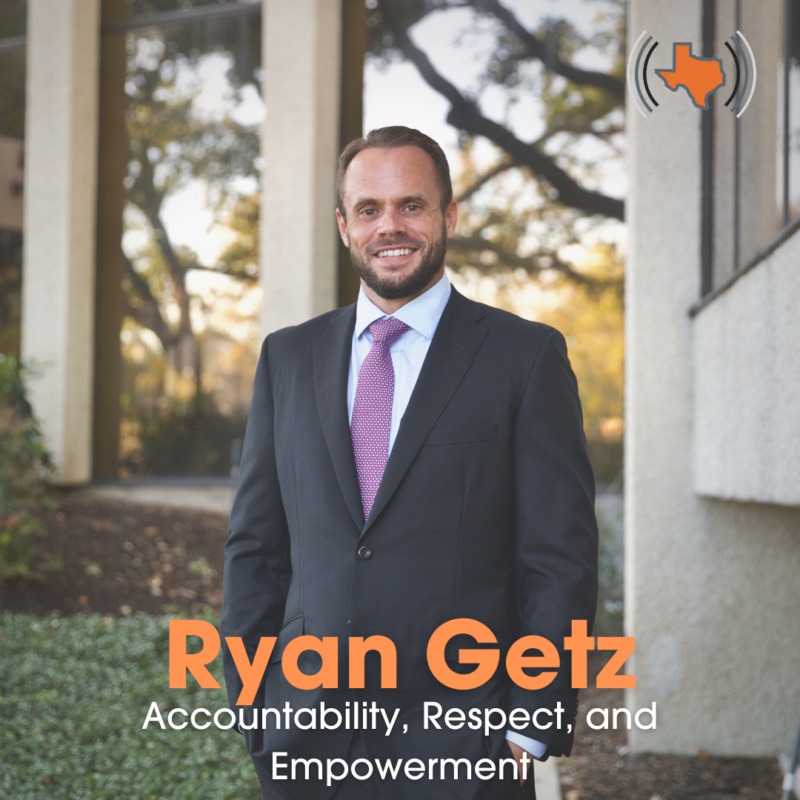
Ryan Getz, Co-Founder, and CEO of WGA Consulting Engineers, a civil engineering firm in Houston, Texas joins the podcast to discuss the critical need to have a team-building mentality in your company.
Ryan’s passion about his business radiates as he talks about the importance of setting a clear direction for the company and the need to establish core values – something WGA achieves by addressing accountability, respect, and empowerment.
Transcripts are generated by machine learning, so typos may be present.
Chris Hanslik: Hello, everyone. My name is Chris Hanslik. I’m the chairman of BoyarMiller. In today’s episode, you will meet Ryan Goetz. Ryan is the co-founder and CEO of WGA Consulting Engineers, a civil engineering firm in Houston, Texas. You’re gonna hear from Ryan, and when you hear his voice, you’re gonna feel his energy and the passion he brings to his business. Ryan talks about the need for setting a clear direction for the company, and that’s what they’ve done at WGA. And coming up with core values that he describes as three simple things to remember. Accountability, respect, and empowerment. Ryan also talks about the critical need to have a team building mentality in your company. And there at WGA, you’ll hear him talk about how they focus on effort and attitude. Ryan, I want to thank you for joining me today on the podcast. Appreciate you taking time to come up. Thanks for having me here. I appreciate it, Chris. So let’s get started with kind of telling us about your business, WGA. What are y’all known for?
Ryan Getz: So we’re a civil engineering consulting firm. And what that means is, you know, a professional service company like your firm or like an attorney’s firm, but we focus on civil engineering design. And so a lot of our products we do in the private realm and the public realm. And so a lot of our products people don’t really notice because buildings are built on top of them. or rows, drainage channels, water plants, wastewater treatment plants. And we also have an environmental division that does a lot of environmental studies. And so, again, people say, what do you do? It’s like most people don’t even notice it because they drive down the road or have streetlights timed perfectly. And there’s always some thoughts behind all that. It doesn’t happen naturally.
Chris Hanslik: Gotcha, so it’s kind of the dirty fingernail kind of side of the design?
Ryan Getz: Definitely. On the construction side, when I see construction, I see civil engineering being put into place, and most people driving down the road get upset about it because it’s shrinking down the lanes. And so for me, construction is growth, right? I got you. And so we also work on the private side. On the private side, we do site development plans for high-rise buildings, industrial big box. We do a lot of work out with mud districts where they’re planning roads and infrastructure and water plants, wastewater treatment plants for 15, 20, 30, 40 years. So it’s exciting.
Chris Hanslik: Yeah, but like I said, it has to be rewarding to see the city that you live in or the cities that maybe you travel to be a part of that growth and development.
Ryan Getz: For sure. And we’re extremely lucky to be in a great state that naturally people fought to for abilities to want to grow their business and just find a better life, better lives for themselves.
Chris Hanslik: So obviously to do what you do requires an engineering degree. So at some point you decided you wanted to be an engineer, I guess when it got twofold question. One, what was the inspiration to maybe become an engineer? But more importantly, what was the inspiration to go out on your own, which you did in 2007, 2008? Yeah.
Ryan Getz: So it’s an interesting answer because I grew up working for my father at an arena on Lake Conroe where I grew up, pouring concrete, building boat stalls, working outside, taking out trash, and learning a lot of different things of what to do and what not to do. And I remember graduating high school, my dad said to me, I got into A&M, and he’s like, what do you want to do? I said, I don’t know what I want to do, like every 18-year-old boy. It’s like I would rather race race cars, automatically be rich, not work, drive the big boat, have all the fun without any of the work. That doesn’t square up at all. And he said, well, why don’t you be a civil engineer? I’m like, sure. Let’s just do it.
Chris Hanslik: That simple, huh?
Ryan Getz: That simple. And of course you go to college, have fun, and don’t realize anything. You have to get a job until you’re like, oh, I’m about to run out of time. And so I just, I got my civil engineering degree and then got a job at another engineering company and realized I’m a terrible team player. because I’ve always been under working for my father as an entrepreneur. And all of a sudden I find myself a widget in the organization that I don’t necessarily fit in with. Got you. And then, you know, I changed one job to another job and find an organization where I really kind of fit in better. But then I started realizing this organization is kind of run on may be core values and beliefs that a business my father would have built or a business my grandfather would have built. And I found myself at every angle. My clients weren’t happy with me. My employees weren’t happy with me. My boss wasn’t happy with me. My wife wasn’t happy with me because I wasn’t given the resources to be successful. And I mean, we see that in a lot of industries. And I say to our members now, we should always have 10% more work than the staff because we’re always worried about the downside. And every member you have work within your organization, they’re tied to a family. And so we want to create long-term steady positions for all of our members. And you and I both know there’s no such thing as a full-time job because we work out in a market that’s volatile. And so Stephen and I, my business, my co-founder, Stephen Ward, we worked in the same building, but with different companies. And we always talked a lot about doing something different and both unhappy. Again, his members were upset with him as, you know, he had the same issues I had at different companies. And we discussed it, we thought about it, and he had a life changing event that took place. And he’s like, let’s do this. I’m like, let’s go. And if you fail, I have nothing, so I have nothing to lose. And if I fail, then we talked about, laughed about, I’ll become a fishing guide. You start over, right? Or I’ll be a fishing guide on the coast, make 100k a year in cash, just be super salty and by the age of 60, I’ll look 80. But at least I’ll be happy. At least I won’t be in this place where I feel like I’m constantly a failure to my members around me because resources weren’t there. Even though you’re given everything you have. And so it was that and with his trigger that caused us to just, let’s just do it. Because when you have nothing to lose, it’s easy to risk nothing.
Chris Hanslik: Exactly. So that’s how you guys started.
Ryan Getz: Yeah, just that. And from there, you talk to everyone you know, you talk to everyone you don’t know and act like you met them somewhere. And you slowly start to sell yourself because you have nothing to show besides yourself. There’s no projects. Now it’s easy. You go get a new project and you say, look, here’s what we’ve worked on. Here’s our successes. Here’s our failures. But when you start, you have none of that. Right. And so literally you have to sell yourself as an individual. And your first client is going to be the guy that wants to pay you fifth the value of the work that they’re going to give you.
Chris Hanslik: Because he knows you just need to get work.
Ryan Getz: Yes. And he might not even pay. And so it starts the process. And again, your first employee is going to be somebody who doesn’t necessarily who you employ later at a 50 person company because he’s just there because he wants a family work environment. And he wants to take off early on Friday and not really care on doing the work. And so you start the process. Right. Slowly building your organization. getting better clients and then also kind of having employees come and go and Then you slowly find yourself in a place where oh my god, you built a professional Engineering company, but it’s the same as yours It’s just it’s a team of professional consultants that have to believe in the core values of the company, right?
Chris Hanslik: So you talk about core values and you don’t necessarily maybe have them day one, but what? Whether it was core values or other things, what did you and your partner kind of establish or in those first few years put in place that you believe have been the foundations for the success that you’ve experienced over the last 15 plus years?
Ryan Getz: You know, that’s hard to say because we found ourselves in Nina pretty successful because our number one thing was return emails, communicate, pick up the phone. And engineers by nature don’t like to communicate. They tend to want to be plan-focused introverts. And Stephen’s an extrovert, and I’m an extrovert as well. Of course, the older I get, the more introverted I get, I think. But at that time, that made us step and look different from most other organizations. And also being 29, my first son was born the day we started our company. So at the time, I really didn’t have a lot of things holding me from having to go out as much besides obviously having my wife raise our first son. And it allowed us to be out there and put our face everywhere. And just the energy in that place kind of stepped us from them. And our number one goal was communicate, email, talk. Communicate, email, talk. Now that only got us so far. Because sooner or later you start becoming successful and you start adding new members to your organization, And that adds a whole other set of challenges. Sure it does. So I’m sure we’ll get into that because each stage has something different.
Chris Hanslik: That’s right. And so you mentioned, I guess, kind of immediate success. I assume, though, at some point, though, as the organization grew in those early days, you realized we need to put some processes in place to help sustain this success and maybe can have it continue to grow the right way.
Ryan Getz: Well, I explain it like this. It’s like starting on a little two-person boat on the ocean, right? When you’re close to shore, the waters are calm. The small boat’s good enough to handle two of you. And then you decide to add a member to that boat, and it gets a little bit heavier, and you get further away from shore, and the seas get a little rougher, and you’re constantly having to reinvent this boat.
Chris Hanslik: Yeah.
Ryan Getz: And it’s constantly leaking, so you’re having to repair it as you build it, and you want to add people to it, and the seas get rougher and rougher and rougher. All of a sudden you find yourself way out, nowhere near land, the seas are choppy, and you have 50 people in this boat. What’s holding it together as your core values? And those core values are such an important thing. And I know later we’ll talk about mentors and how to, what is a mentor? how to throw, how to have a mentor no longer be your mentor. You have to be able to choose that through your feeling. And we had this mentor come in one time and he said, Ryan, the thing you’re missing is your core values because we kept bumping up on this starting person level. We get that we build, build, build, get to 30, have struggles and then go back down to 20. And it couldn’t get through that ceiling. He said, you have to set your core values. And Being a small business guy, not a good team player, I’m like, oh, this guy’s cool. Yeah, we don’t need that. But then after sitting down thinking about it and talking to my wife about it, she said, Ryan, you need to define three simple things that anyone can look at and see and get a feel for your organization in two seconds. I started realizing we had members of our organization that didn’t fit my core values or Stephen’s core values or Stephanie’s core values. We brought in another partner, Stephanie Anderson, in 2012. As two guys from A&M, we bring in a female. Everyone knew we were serious because she’s the one that controls the center for us. It’s just funny because two C students from Texas A&M that everyone joked about. But we went through that process, and it was a very cathartic process. It was all day, very emotional, because you’re going back to, as a child, what is a person that sets you up to be successful within yourself. So it ties back to your parents. It ties back to your grandparents. It’s a very emotional day. And we ended up on accountability, respect, and empowerment, A-R-E. And after we did that, we lost about half of our employees. But then we hired two-thirds more, and the company shifted. It was a watershed moment, right? Yes. And I say this because, we’ll get into this later, the company shifted three or four more times, and I call it generational shifts. And if you’re going to start a company with a long-term end, you have to know what that end is. And you’re not going to get there gradually. It’s going to be in steps. And each time, some people are not going to want to come along. They’re going to get off the boat because they’re going to say, I did not want to go in this direction. I wanted a family office, not an organization. And you have to be able to stick to your own core values and say, it’s OK to go. I wish you the best. And we’ll bring on other members that fit this destination.
Chris Hanslik: You know, so you’re right, you know, so nail on the head because I think in my experience, right, it’s so fundamentally important for an organization and the founders or leaders of that organization to set the tone in the mission, in the values, for me, missions about purpose, right? Why do we exist as an organization? When you can get clear on that, you will have people come and go and that’s okay because they may identify and intersect with that mission and values of the organization at a certain stage of their life. And as the organization continues to go forward towards that kind of north star, if you will, someone that works for you, while they may have connected for a certain period or chapter of their life, things may change for them. And that’s okay. It doesn’t make them a bad person. It just means this organization is no longer the right one for them, and there’s someone out there that is.
Ryan Getz: You each serve each other a purpose at that time. And then you gracefully say, we are glad you’re here. I’m glad you had growth in your career. We had growth in our organization. Bless them as they walk out. And then what happens is more individuals come in that fit where that northern star is. As your northern star, it’s a principal’s northern star, which is your core values in the end game.
Chris Hanslik: Yeah, we talk about it around here all the time. We hire and fire from culture, which is the mission and values, right? Yeah. Sounds like you do the same.
Ryan Getz: But it’s really hard because you have to be able. Accountability is a tough one. I can see why most companies don’t do accountability, because it’s really, really, really hard to follow through. And we don’t put them on the wall because we want people to feel them, because I’ve been in a place where core values are on a wall that they weren’t following. And that’s a hard thing, because then you lose faith in the organization. It means no one’s really feeling them or acting on them. They’re just going to put them on the wall and be like, look at them.
Chris Hanslik: Yeah. It all comes down to behaviors, right? You got to behave consistent, whether it’s on the wall or not. If you have them on the wall and you don’t, behave consistent with them, then they don’t really exist other than artwork. So that’s a good background on how you’ve grown the company along the way. I’ve got to believe there were setbacks along the way. Any setbacks that you can share with us, what the setback was, what the learning was, and how it made either the organization better, or maybe you and your partner better leaders because of it.
Ryan Getz: Well, I was reading that question, and if I was to tell about every setback, we’d be here for about three hours. Because setbacks happen all the time. And I firmly believe that Everyone’s personal life comes first. Everybody’s personal life comes first. And that’s hard enough to navigate by itself. You know, we were talking about before, I’m still married. My wife and I have been very active in marriage counseling. We’re actually doing great. but it wasn’t always that way. And if you can’t wake up every day, full and with purpose and at your center, then everyone else around you is gonna feel it. And each of the partners have had their own personal challenges and everyone can feel it. Everybody can feel it and thankfully we’ve been able to navigate those. Again, still always pointing towards that Northern Star. Other setbacks in that, like I said, I could go for days on this thing because every single day you get something different than you expect you’re going to wake up to. Sure. And I remember one time I hired this consultant and I was looking for something very specific that sometimes I didn’t know how to put the right words around it because as an entrepreneur you don’t really understand what you’re trying to ask for. You almost feel what you need and you have to work your way through it. And basically this consultant over three months sent me a bill for $30,000 and I wasn’t getting what I was needing from it and so I changed consultants and they never even bothered calling me back. So obviously I wasn’t very important to them. I consider that a setback because that’s a lot of limited resources that can be used within the membership and the organization or for the owners of the company. And that’s just one example of probably 50 times that’s maybe happened.
Chris Hanslik: Yeah, okay, yeah, that makes sense. So, switching gears a little bit, y’all been around 15, 17 years, young, vibrant organization. What are you doing or what have you done that you believe is innovative within your industry?
Ryan Getz: So in civil engineering industry, you know, it’s pretty understood business from a standpoint of the product.
Chris Hanslik: Right.
Ryan Getz: You know, we deal a lot with drainage, water, wastewater construction, site development. A lot of the things haven’t changed in the last 30 years. But I believe what we do that’s innovative and different than everybody else, since we are founders of the company, Stephen and myself, and then Stephanie came on in 2012. we really don’t have any previous generational training into our organization. A lot of organizations have sold to the next level of owners, but even when that owner’s gone, the impacts of it then are still there. And so I consider our organization as like a clean sheet. And since I’m 44, kind of half Gen X, kind of half millennial, we get a better idea of the young professionals coming out of school. And so what I would consider our secret sauce is really buying in to our members and not focusing on clients but focusing inward on team building. Because young professionals coming out of school now are different than me and you coming out of school, right? Different than our fathers that came out of school and different than our grandfathers who probably didn’t go to school. You know, I can imagine my grandfather was just happy to have a job at a power plant. Sure, right? He probably didn’t know what 401k was. You can imagine our fathers maybe didn’t get a degree, had one or two jobs right at the time, was just getting a job so they wouldn’t be drafted to go to the Vietnam War. You can imagine just what the people would struggle with. I came out and graduated in 2000. I had two job offers and I’m just one or the other. Now, every single young professional has 10 job offers. And they’re different now. They think with their head and with their heart. And they will make more decisions based upon benefits and the core values and the feel of the business more than about logically what they’re being paid. And so what I believe our secret sauce is we really focus on creating an organization that creates a two-way relationship between the managers and the members. and you really communicate them and say, look, you choose to come work here. We choose to have you. So we want to know what your goals are, and we’ll tell you what our goals are, and we’ll make sure they align. And then we’ll say to you, We only want effort and attitude.
Chris Hanslik: That’s right. I don’t think my daughters listen to these episodes much, but since they’ve been born, they’ve heard me say effort and attitude are the only two things that matter.
Ryan Getz: It’s actually on one of our documents that new members get. All you need is effort and attitude. we’ll bring everything else. If you can’t pick up, if you cannot pick up what we’re doing, then it’s on us for us not training effectively. Two things, effort and attitude.
Chris Hanslik: They’re real simple.
Ryan Getz: Yeah.
Chris Hanslik: And I believe in wholeheartedly, you take care of those two, right? You always do your best with your best effort and a positive attitude. More times than not, things will work out. Yes. I mean, I mean exactly like John, but they’ll work out. True. And I think those are the only two things you can really control. Yeah. That’s it. And so I think that’s beautiful that you sit down individually with your team and your members to identify those things.
Ryan Getz: Well, and then you have to also get them to have trust, confidence at least in themselves. Right. It’s engineers naturally don’t have that. Engineers in general tend to be a little bit introverted, a little bit more plan oriented. And you have to give them a path forward and the options that are available. And you say, look, all this is available to you. If you want to be president of the company, it’s available, but here’s how we’re going to measure. Yeah. And you get that two way agreement and all of a sudden there’s no uncertainty. And they’ll stick with you forever because anywhere I say go, most organizations just say, here’s your job work.
Chris Hanslik: Yeah. Well, the part of retention is, in my view, people seeing a path forward, an opportunity, that aligns with their goals and ambitions, right? And if they don’t see it in your organization, they’re not going to stay that long.
Ryan Getz: Well, and it has to align with their strengths and weaknesses. Oh, sure. Because there’s a lot of people that want to be project manager, client manager, but they don’t have the ability to work as eight to five and five to eight as client manager. And it takes a lot of five to eight. Right. I talk to people all the time. I said, you can have whatever you want, but you got to make sure you’re 5’8 doing stuff, not sitting at home playing video games, watching YouTube, you know, not engaged in the business. And it starts from day one. You control your destiny, not me. I’m just built the vessel.
Chris Hanslik: Right. So you kind of talking around it, but you’ve got a clear set of values, very focused on team building. How would you describe the culture at WGA and what are some of the things that you think you have in place to help sustain it?
Ryan Getz: Culture. We have a very diverse culture. I never realized that we had a diverse culture because we just hired based on people, you know, rights between their ears. And I hired, I opened Woodland’s office eight months ago. They’re already up to eight employees, growing quickly. And we brought their team in and they walked in and they said, man, it’s so diverse in here. I think we’re like 55% female. You know, very culturally diverse. And I just never realized we got there and she, her eyes were just wide open. She’s like, I love it here because these other organizations tend to be very monolithic. And so I think our culture is very diverse. What is our company culture? Our company culture really ties into betterment of individuals from the very much at the bottom to the middle to the top. Everyone in that organization once to help the person next to them and it starts with our top. We just rolled out new benefits this year that we really get into like total wellness because you have an opportunity, you being the chairman of the board, me being the CEO of WGA, total starts with us. Right. And you have this opportunity to have influence on all these people that have the ability to influence their lives outside of work. How do you set up an organization that allows for great long-term investment in them, that sets up success in their life, that maybe sets up success in their child’s life later? Right? Right. And I think that goes all up and down the organizational chart within our company. That’s great.
Chris Hanslik: So let’s talk a little bit more specifically about you and leadership style. How would you describe your leadership style? What’s your kind of philosophy on leadership?
Ryan Getz: I don’t really have one. I’m working on that. It’s one of those things where it evolves. And I’ve also laughed with a couple of my mentors because I’ve never really worked at a large organization. And I’m kind of figuring out as I go. So I do a lot of reading, a lot of reinvention. One thing I was saying to one guy before is you always have to be able to reinvent yourself. I’m probably on Ryan gets 9.0. And the person I am today, probably wouldn’t have been very effective when he first started because I needed to be out social, getting to know, building your name, building your company profile. And I think my leadership style is a listen. I do really listen to a lot of people. Even if I don’t agree with them, it always kind of goes in there with everybody else. And in the end, you mix it with your own mentorship of yourself and you make a decision based upon that. And a couple of my mentors are like, you should read this book. You should read that book. I’m like, it’s in the line. Trust me. Because my leadership style two years from now is going to be different than it is today.
Chris Hanslik: Well, the world’s changing, right? I mean, it always has evolved. Clearly, what we experience is changing rapidly. And I think to your point, you’re exactly right. If you can’t evolve as a person, as a leader, whatever, you’re going to be left behind.
Ryan Getz: Well, one thing I say to our managers and our future leaders is sometimes they get uncomfortable with change. And I try to tell them there is no destination. By the way, there is no destination. Because so many people think, oh, I’m gonna get there, I’m gonna get there, I’m gonna get there. There is no there. It’s the process. And you have to be comfortable with who you are today is not gonna be who you are tomorrow. And so you have to almost enjoy the process of shedding skin. Enjoy the process of coming out someone different, then once you get there, what you don’t realize, you’re already changing again. There is no really period and you’re just set.
Chris Hanslik: Because then that would probably drive me crazy and say, why am I not changing? Right. So you mentioned a couple of times mentors. And so I want to ask you, who are some of these mentors that have had influences in your life and what made them in your mind such a good mentor?
Ryan Getz: Well, It starts with my parents. I mean, my parents, my dad taught me a lot about work ethic, how to deal with conflict. You know, not run from conflict, but go right towards it. The only conflict is the one that’s avoided. Right. You know, if you go toward it, most people don’t want conflict. And if you just deal with it, it goes away. So it starts with them and also my mother who taught me to be a very caring, centered person. And so you mix work ethic and caring together. It really sets you up for success. Now, after that, I’ve had It would probably take me three pages to write all the mentors I’ve had because they’ve all provided different aspects. I would even consider a mentor someone show me what not to be. And they don’t even necessarily know that they’re here or what role they play. Like I said, the one that taught me about core values also had some side effects of his and him. That’s like, that’s not very important here, right? And it’s also changed with a version of me that was needed at the time.
Chris Hanslik: You got to pick and like you said earlier, you take it all in and then you have to filter it out for yourself. What works for you?
Ryan Getz: Because you will find people that just want to consultant you like crazy and send you a bill for it. Yeah. Just because they see the abundance that exists there and you gotta be like, no, sorry.
Chris Hanslik: Yeah. So. Okay. So obviously the last, you know, almost two years now have been unprecedented, right? That may be an understatement. With the pandemic and all that it’s brought on, what have been kind of the big lessons learned for you and your organization? How have you all adapted? What are you doing do you think now that was brought on because of the pandemic and required you to shift so quickly?
Ryan Getz: Well, it really taught me the lesson that all your solutions as an organization have to be logical, but they also have to feel safe. because you have a logical answer, but if people were walking in the doors with their eyes like this wide open out of fear, you haven’t delivered the right message. But you can’t deliver the message that allows them to feel safe at the same time logically doesn’t make sense. So it’s really how to focus on messaging and creating answers that hit both the feeling and the thinking part of an individual. And so when they come in, they really, you grab the whole person.
Chris Hanslik: Right.
Ryan Getz: And again, like most other professional engineering companies or consulting companies, it opens up now we have to come up with a new benefit that allows work at home. And how do you structure that? Because I’ve heard a lot of people struggle with trying to pull their employees back into the office. We never let ours leave. Of course we did during that small period, but we created their logical safety measures that also made them feel safe and we were able to keep our core culture together, which I think in a lot of ways led to the mental wellness of our members as well because a lot of our young engineers live at home in an apartment by themselves and you know four walls can be imprisonment. Sure. And so I feel like we navigated it very well.
Chris Hanslik: It sounds like by doing that, you helped continue the continuity of Sense of Community in connection. Very much. So that was definitely what you’ve seen in other places and it’s been written and talked about, that isolation at some point started wearing on people.
Ryan Getz: Well, and when you’re dealing with a a 22-year-old individual versus a 75-year-old individual, they have very different opinions on what they want. And so you have to come up with a set of policies that grabs everybody. And again, if you do it with the logic side and the feeling side, you get most everyone. And as long as you’re getting 90% of everybody, you’re good. They’re always going to be outliers. You cannot make everybody happy.
Chris Hanslik: Lesson number one for any leader, someone out there that may be starting a company, Your decisions can be well-intentioned and grounded.
Ryan Getz: They’re never going to satisfy everybody. One of the best benefits, at least for our organization, is a lot of great people left. OK companies. because they just weren’t well run. And if you don’t have a great run organization, stresses like that will crack them. And it really opened up the door to us to have some amazing influence in that organization that wouldn’t have been available. So, I mean, this challenge was very fruitful for this organization in those aspects.
Chris Hanslik: Yeah, that’s great to hear. to sum things up on the business side, what are one or two takeaways you would want a young entrepreneur or someone thinking about starting their business like you and your partner did when you’re in your late 20s and said, hey, if you’re thinking about this, here are two or three things you need to know, maybe that you wish you had known based on your experience. What would those takeaways be for you?
Ryan Getz: Man, first is learn your trade. You have to learn your trade. You have to master your trade because, at least in this business, we are a seller-doer. then learn communication skills. Because if you have all the knowledge in the world and you can’t pass off the communication, then you can’t meet expectations of clients, you can’t meet expectations of members, and you can’t build confidence. And then you have to also learn that communication is not what’s spoken, it’s what’s received. And so I would pass off those two things, number one. And number two, give it a shot. There’s nothing to lose. Now, get ready for a ride. Everybody wants to do it. Every time I talk to people about this, they all say, I can’t wait to do it. I can’t wait to do it. I can’t wait to do it. And then 90% of them go home and watch YouTube. Because it’s hard. And I tell the story, like the first five years, I did all of our accounting, invoicing, project management for engineers. I handled all the business side. And you have to invoice every 30 days, no matter what. And nobody else is doing it but you. And I have this funny story, it’s like, I would be with my family in Colorado, my parents, my sisters and their family, and they would be up celebrating for New Year’s Eve, and I would be downstairs, remote it into my laptop through a little 3G cell phone on Excel building invoices because if you don’t invoice, you for sure won’t get paid. Even seeing an invoice, you still don’t always get paid either. And that’s every 30 days for the first 60 months until I can afford and pay someone to do that for me. And it takes commitment. So get ready for the ride. But sure, it’s fun, though.
Chris Hanslik: It’s fun. I think the other thing along with just go do it to give it a try is there’s no perfect time, right? Just if you really feel it, go do it.
Ryan Getz: And there’s a lot of people say, well, as soon as I get past this, as soon as I get past this. And when I hear that, I’m like, OK, OK, I’ve heard this before.
Chris Hanslik: Right.
Ryan Getz: You know, all you got to do is walk out the door. Yeah. Just walk out the door. It’s okay. I mean, everyone has their own path and everyone has their own fears and everyone has their own thing. I just give my two cents and then people can make their own decision their own way.
Chris Hanslik: Very good. So you mentioned a couple of times while we’ve been talking books that you read. What book are you currently reading?
Ryan Getz: So right now it’s, I think it’s, begin with why, the understanding of why things are taking place. Now when people say, what are the best books? It depends on where you are. I mean, the book I’m reading now has nothing to do with the book I would have read five years ago, six years ago, seven years ago. You know, I remember I wrote a book, I think, how to get out of the rat race with, I can’t remember the author’s name, just talking about how to get out of the spending cycle. I read that when I was 23. And so that’s where I am now. I think I’m about ready to move on to another one and have to find out which one that is.
Chris Hanslik: Very good. So Texas-based podcast here. So we always ask our guests, what’s your preference? Tex-Mex or barbecue? Always barbecue. Always barbecue.
Ryan Getz: One in particular in the area? I mean, there’s great barbecue everywhere. You can go to Lockhart and get amazing barbecue, Austin. Even Rudy’s is great. I mean, Rudy’s is perfected. Chain bar. Yeah, so and I’m not like a snob about that. I just like good greasy barbecue.
Chris Hanslik: Got you. So that’s great What would you do if you could take a sabbatical? Where would you go? What would you do for me?
Ryan Getz: I looked at that question and I thought about it and I don’t know and that’s something I’ve talked to my wife about because I’ve been involved chest deep in this organization for 15 years I really don’t mean besides traveling with my kids my wife and kids being at home with them work and I’d probably need to take one one day because I got to probably figure out what else is there. I could think of where I’d go for like four or five, six days, maybe two weeks. But if I get too far away from the organization, I start getting kind of, I joke, I get hives. There’s no hives, but it’s like, sure. I’m so used to being in this habit that I don’t know what I would do. Now that’s kind of one of my next challenges is get the organization to the place where It would happen just fine without me. It would. Are we really that important? No. We think we might be. But Jimmy, if you build great members and managers around you, and it’s like the book Good to Great, how great are you effective two or three generations down from your direct reports? And you could probably disappear for a month, and I could disappear for a month, and we could come back to an organization that’s probably 99% still the same.
Chris Hanslik: Yep. No question. Well, hopefully, if nothing else, it’s a thought-provoking question that gets you thinking and come up with an answer.
Ryan Getz: I’m going to have to come up with one for sure.
Chris Hanslik: Very good. Ryan, it’s been a pleasure having you on. Appreciate you sharing your thoughts and your story with us and our listeners. And best of luck to you in the future. Thanks for having me. I appreciate it. It’s a pleasure to be here. Very good. We’ll talk soon. Thanks. And there we have it, another great episode. Don’t forget to check out the show notes at boyarmiller.com forward slash podcast. And you can find out more about all the ways our firm can help you at boyarmiller.com. That’s it for this episode. Have a great week and we’ll talk to you next time.
With a deep understanding of your business alongside clear and honest communication, we help clients face challenges fearlessly.
Learn more about our services and how we help clients.