









































With a deep understanding of your business alongside clear and honest communication, we help clients face challenges fearlessly.
Learn more about our services and how we help clients.


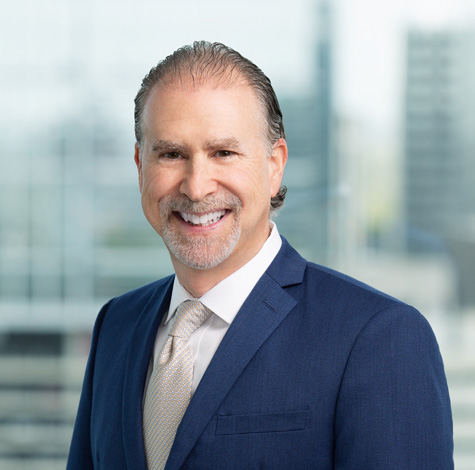
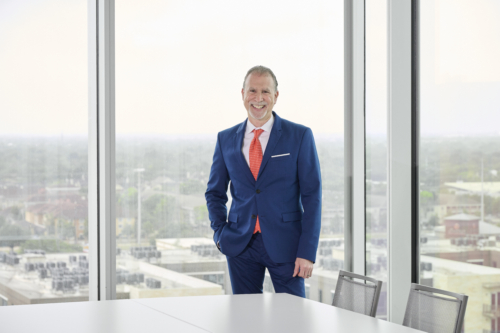
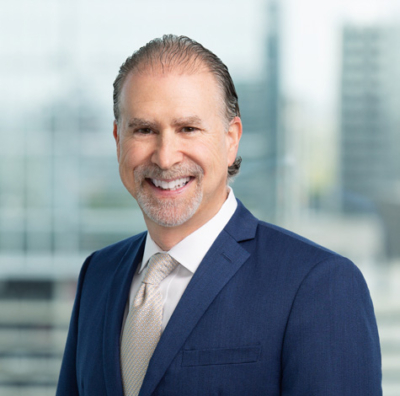
Shareholder, Corporate M&A Group Chair
Having practiced for more than 30 years, Steve Kesten is able to counsel firm clients in multiple areas of the law; however, his primary practice focus is transactional law. Steve’s practice includes specialization in mergers and acquisitions, private securities (including private placements and other sales and purchases of debt or equity securities); formation and representation of private equity funds, venture capital funds and hedge funds; entity selection and formation (including drafting complex limited liability company and partnership agreements and corporate charters having multiple classes of common and preferred stock); employment transactional agreements including executive employment agreements and incentive equity plans and general contract review.
He also has experience representing both lenders and borrowers in asset-based lending transactions involving senior lenders, mezzanine lenders and factoring companies. Most recently, Steve’s practice has centered on the purchase and sale of middle-market companies, private placements, private equity and venture capital investment and representing foreign companies with the expansion of their businesses into the United States, in particular the State of Texas.
Steve has been an active member of the Rotary Club of Houston since 1992. During that time, he served as a member of the Executive Committee of the Rotary Lombardi Award, and was the General Chairman of the event in 1997. The Rotary Lombardi Award honors the outstanding college lineman of the year while raising significant contributions benefiting the American Cancer Society. In 2007, Steve was named a Paul Harris Fellow by the Rotary Foundation of Rotary International for his 15+ years of “service above self” on behalf of the Rotary Club.
Steve is also involved in other social causes such as child literacy having served on various steering committees and on host committees and other projects for Literacy Now, an organization that provides reading intervention programs for kindergarten to third graders in the Houston and Aldine Independent School Districts needing the most assistance in getting to grade level reading. Steve served as a Co-Chair for Literacy Now’s 2022 Magnum’s Gala where he was instrumental in a record breaking fund raising event for the organization. Steve is also deeply involved with the Houston Chapter of the Association for Corporate Growth (ACG), having been elected to multiple leadership positions. He has been a member of the Board of Directors of ACG since 2011 and was the President of the Chapter for the 2015-2016 fiscal year. Steve has also been an active member of The Entrepreneurship Institute, an organization dedicated to helping middle market companies grow through the assistance of the right advisers and professionals. Steve has a massive network that he uses regularly to provide additional value to our firm clients.
Steve has been an active member of the Houston Bar Association Mergers & Acquisitions Section, serving as a Council Member, as Chairman of the Section for its 2014-2015 fiscal year and as Treasurer in 2013. Steve is a graduate of the Center for Houston’s Future which focuses on resolving some of Houston’s most difficult social and economic issues.


Manufacturing and Distribution
Manufacturing and Distribution

Energy – Oil & Gas

Healthcare
Manufacturing and Distribution

Private equity / Venture capital

Real estate
Financial Institutions
Energy – Oil & Gas

International
Private equity / Venture capital
Private equity / Venture capital
Real estate
Financial Institutions
Manufacturing and Distribution
Energy – Oil & Gas
International

Consulting
Construction
Financial Institutions
Environmental Services
Manufacturing and Distribution
Healthcare
Real estate
Environmental Services
Manufacturing and Distribution
Private equity / Venture capital
Healthcare
Manufacturing and Distribution
Manufacturing and Distribution
Construction
Private equity / Venture capital

Energy – Power
The knowledge and experience Steve Kesten brings to my business has been a key competitive advantage over the last fifteen years. Moreover, his wisdom with regards to focus and prioritizing issues has been a key to our success. Steve in an indispensable part of my team.
We often times have a hard time understanding business issues in legal terms and BoyarMiller has made the understanding of legal jargon a breeze. Steve Kesten and his incredible colleague, Lyndsay Fincher, have really become a part of our team and how our business runs.
Steve Kesten and Gary Miller have provided our firm with high quality legal and business advice for numerous complex private equity transactions. Their support and hard work has proved invaluable. We also rely on BoyarMiller as legal counsel to our management company. We moved our corporate work to BoyarMiller from a much larger international law firm. We haven’t been disappointed. The firm’s guidance has been timely, well considered and cost effective in all cases.
BoyarMiller has managed multiple transactions since 2011 in complex situations yielding overall successful outcome. Amy Holmes brought professionalism, integrity, and a sense of responsibility that aligned overall expectations within our timing and cultural constraints. Steve Kesten was an additional resource that helped broaden the approach for last minute closing changes. We have a reliance on their legal expertise and the strong and effective team to get the job done.
Weaver has been working with BoyarMiller for the past three years with great success. Andrew Pearce has been our main contact and has helped us resolve several disputes that could have resulted in litigation. Steve Kesten has handled our corporate needs and helped us work through several successful M&A deals. Andrew, Steve and their associates are extremely responsive and detail oriented. They resolve disputes and close transactions as efficiently as possible versus dragging out deals to their benefit. Weaver could not be happier with BoyarMiller and looks forward to a long prosperous relationship.
I’d like to extend our heartfelt gratitude to the exceptional team of lawyers at BoyarMiller, who collaborated closely with us throughout this process. Steve and Carl’s expertise, professionalism, and unwavering support were instrumental in navigating the transaction. We are grateful for their valuable contributions and look forward to future opportunities to work together.
Shareholder, Corporate M&A Group Chair
Shareholder, Corporate M&A Group Chair
Shareholder, Corporate M&A Group Chair
Shareholder, Corporate M&A Group Chair
Shareholder, Corporate M&A Group Chair
Shareholder, Corporate M&A Group Chair
With a deep understanding of your business alongside clear and honest communication, we help clients face challenges fearlessly.
Learn more about our services and how we help clients.